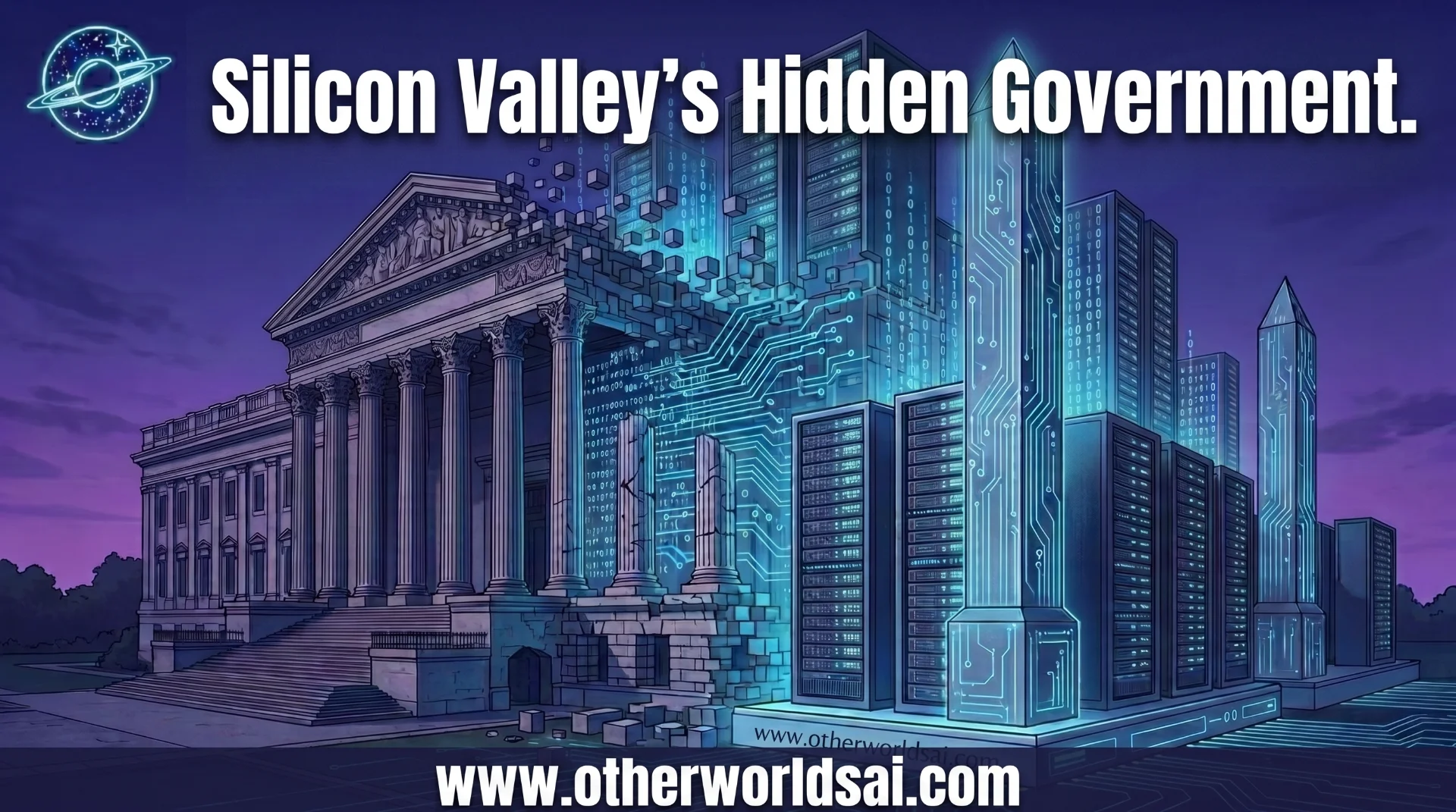

The Rise of the Artificial State.
Historian Jill Lepore Says Silicon Valley Is Building a Government — And Reading the Wrong Sci-Fi to Do It.
In her upcoming book The Rise and Fall of the Artificial State, the Pulitzer Prize-winning Harvard historian argues tech leaders are mistaking technological advancement for political progress.
1909: The year E.M. Forster wrote “The Machine Stops”
1984: The Macintosh ad Lepore traces to today's AI rhetoric
Harvard: Where Lepore teaches history and law
1: A Historian's Theory About Tech's Favorite Language:
Historian Jill Lepore has a theory about why tech companies often use soaring, almost governmental language to describe their products — think Twitter's old pitch as a “town hall in your pocket,” or Anthropic's published Claude constitution.
On a recent episode of TechCrunch's Equity podcast, Lepore told host Anthony Ha that the pattern isn't accidental rhetoric — it reflects something tech companies are actually doing. In her upcoming book, The Rise and Fall of the Artificial State, the Pulitzer Prize-winning Harvard historian and New Yorker writer argues that tech companies are gradually taking on the functions of democratic government, whether that's Twitter distorting the public's picture of the electorate or Facebook displacing local news outright.
Her core claim is that today's tech leaders routinely mistake technological advancement for political progress — all while, in some cases, stating outright that they intend to replace the nation-state itself. Malaysia's recent move to shut down Balaji Srinivasan's Network School is one recent example she points to of that ambition running into the actual limits of sovereign governments.
2: The Book's Bigger Argument:
Lepore frames The Rise and Fall of the Artificial State as a successor to Hannah Arendt's 1951 book The Origins of Totalitarianism, which examined how the machinery of modern life was rendering humans superfluous.
What Arendt glimpsed as an emerging danger, Lepore argues, has become the actual dream of today's tech oligarchs: government “without consent, even government without humans,” run by machines owned by corporations. She traces the throughline from the post-World War II spread of computing technology, originally built for military use, into commerce, journalism, politics, and governance — arguing that control over society's foundational systems has steadily moved from elected institutions to a small number of private companies.
Critically, Lepore's account isn't a claim that any of this was inevitable. Her argument is that the Artificial State can be dismantled the way other historical systems — she points to feudalism and other coercive orders — eventually were, but only once its origins and mechanics are actually understood rather than treated as unstoppable progress.
The dream of the Artificial State is “less a state” proper“ than the dream of being without one — the dream of the severing of humans... from one another” to be ruled instead by machines owned by corporations.

Meta's Next Big Bet: This New App Lets You Build Games Simply by Typing a Prompt
3: Why She Says Silicon Valley Is Reading Sci-Fi Wrong:
The podcast's title line — that Silicon Valley's leaders are bad sci-fi readers — comes from Lepore's argument that today's AI leaders are selling an old fantasy in new packaging. She draws a direct line from Apple's iconic 1984 Macintosh ad, which cast personal computing as liberation from centralized control, through to Anthropic's published Claude constitution and Sam Altman's own comments about an “AI president.”
In Lepore's reading, each generation of tech leadership has recycled the same narrative: that their technology represents freedom and progress, even as it concentrates real decision-making power in the hands of a small number of unelected executives.
Her clearest literary reference point is E.M. Forster's 1909 short story “The Machine Stops,” in which humanity lives isolated underground, entirely dependent on a machine that provides for every need until it begins to fail. Lepore says the story now reads like “the diary of a very unhappy YouTuber” — a description that lands specifically because Forster wrote it more than a century before video calls, algorithmic feeds, or isolated remote living were technically possible, yet described all three with unsettling precision.
Support our research
Independent analysis fueled by you.
4: Is the Artificial State Actually Sustainable?
Despite the book's alarming subject matter, Lepore has described it as more of a wake-up call than a eulogy — she believes the Artificial State is ultimately unsustainable, not because it will collapse on its own, but because nothing about its rise was inevitable in the first place.
On the podcast, she discussed what she thinks it would actually take to rein it in: naming the systems clearly, tracing their sources, and — as she put it in interviews around the book — telling a new history of how power moved from democratic institutions to private machines, so that the shift can be recognized and reversed rather than treated as a natural outcome of progress.
It's a notably different register from most AI industry commentary, which tends to frame the technology's trajectory as something to adapt to rather than something built by identifiable people making identifiable choices. Lepore's argument is that the second framing is the more accurate — and more useful — one.
Skip the Grand Claims — Get AI That Actually Does the Work.
Lepore's critique lands hardest on the industry's habit of dressing up products in the language of governance and inevitability. Otherworlds AI takes the opposite approach: no constitutions, no talk of replacing institutions — just practical AI that handles real tasks for your business.
The Agent+ platform, powered by Google Opal automated workflows, gives your team working AI agents for** $297/month,** with custom enterprise AI builds available for more specific needs.
Visit otherworldsai.com to see how Agent+ can start working for your team this week.