
Artificial intelligence is entering a new phase.
The first major wave of AI was dominated by large language models (LLMs), chatbots, generative AI, and tools capable of understanding and producing human language. But the next wave is beginning to move beyond the chatbot.
Two recent developments illustrate where the AI industry may be heading: AI startups are increasingly building proprietary physical AI systems for major enterprises, while a new generation of AI models is moving away from language altogether.
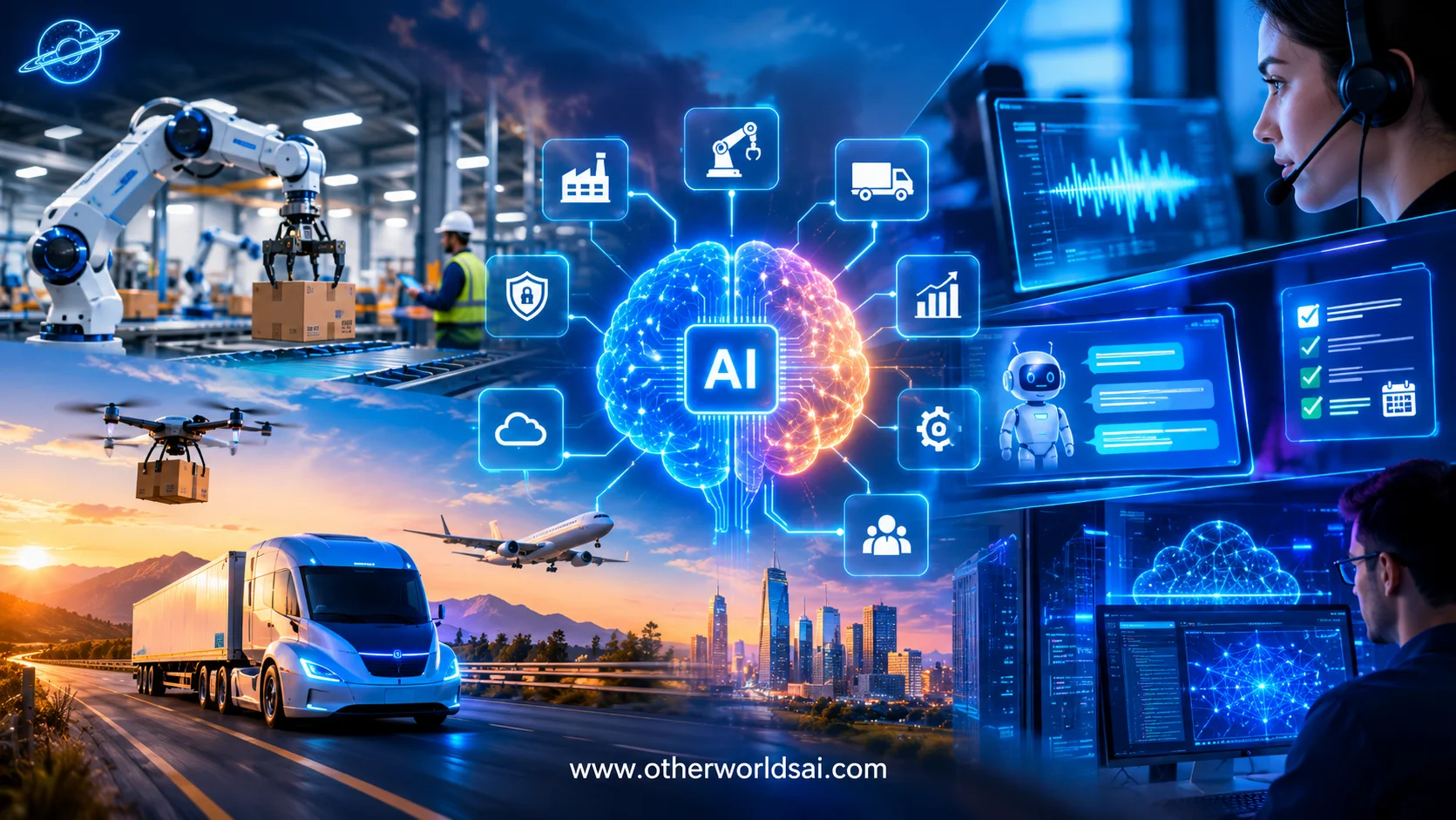
Together, these trends point toward a broader transformation — one where AI is embedded directly into machines, industrial operations, software workflows, and enterprise infrastructure.
For businesses exploring AI automation, private AI, AI agents, and intelligent enterprise systems, this shift could be particularly important.
Physical AI Is Moving From Experiment to Enterprise Infrastructure:
One of the most interesting developments is the evolution of Vantora, formerly known as UP.Labs.
The company was created to build startups around problems faced by large corporate customers. Its early partners included companies such as Porsche and Alaska Airlines, while later partnerships expanded into transportation, manufacturing, logistics, and other industries.
Vantora has now raised $100 million from Silversmith Capital Partners and is changing its strategy.
Instead of primarily creating startups that could eventually serve the broader market, Vantora is increasingly building proprietary AI companies specifically for its corporate partners.
That distinction is significant.
A large industrial company may want to use AI to make machinery autonomous, automate physical operations, analyze industrial environments, or modernize legacy equipment. But the resulting technology may be too strategically important to offer to competitors.
This creates a growing demand for private AI infrastructure and proprietary AI systems.
Imagine a Fortune 100 industrial company operating thousands of machines. Rather than purchasing a generic AI solution from a third party, the company could build an AI intelligence layer specifically designed around its own equipment, data, workflows, and operational requirements.
That is where physical AI becomes particularly powerful.
What Is Physical AI?
Physical AI refers to artificial intelligence that interacts with the physical world.
Instead of simply generating text or images, physical AI can help machines:
- Understand physical environments
- Navigate industrial facilities
- Operate autonomously
- Control equipment
- Predict mechanical failures
- Optimize logistics
- Automate warehouses
- Improve transportation operations
- Assist manufacturing processes
- Interpret sensor data
- Coordinate robots and autonomous systems.
The combination of AI agents, robotics, computer vision, sensor data, edge computing, and machine learning is creating a new category of intelligent systems.
This could eventually make AI a fundamental layer of industrial infrastructure.
Why Companies Want Proprietary AI:
The Vantora model highlights a broader enterprise AI trend: ownership and control of AI are becoming strategic assets.
For some organizations, sending sensitive operational data to a public AI service may not be acceptable.
Industrial companies, airlines, logistics providers, manufacturers, energy companies, and other enterprises often operate with highly specialized data and processes.
Their competitive advantage may depend on that information.
As a result, businesses are increasingly considering:
- Private AI
- Custom AI models
- On-premise AI deployment
- Enterprise AI agents
- AI systems with full data ownership
- Proprietary machine-learning infrastructure
Instead of asking, "Which public AI model should we use?" enterprises are increasingly asking, "How should AI become part of our own infrastructure?"
That is a much bigger question.
AI Is Also Moving Beyond Language:
While companies such as Vantora are pushing AI into the physical world, another development is happening on the software side.
Diogo Almeida, an OpenAI researcher involved in the development of ChatGPT and reinforcement learning from human feedback (RLHF), founded TypeSafe AI after becoming dissatisfied with a fundamental limitation of today's AI systems.
The problem, according to Almeida, is that computers do not fundamentally communicate in human language.
LLMs are exceptionally good at processing language. But many software applications don't need an AI system to write an essay or have a conversation.
They need an answer such as:
- Yes or no.
- Safe or unsafe.
- Approve or reject.
- Fraudulent or legitimate.
- High probability or low probability.
- Which model should handle this request?
This is where TypeSafe's new model, Jev, takes a different approach.
The Rise of AI Models That Don't Generate Text:
Jev is described as a transformer-based "System One" model rather than a traditional large language model.
Instead of generating paragraphs of text, it produces probabilities or what TypeSafe calls calibrated decisions.
That difference could be extremely important for AI automation.
A conventional LLM might be asked to classify an email, evaluate a command, or determine whether a transaction appears suspicious.
But using a massive language model for a simple classification task can be expensive and unnecessarily slow.
A specialized model designed specifically for decision-making could potentially perform the same task faster and at a lower cost.
This creates another important trend in AI:
AI models are becoming increasingly specialized.
The future may not be one giant model doing everything.
Instead, enterprises could deploy multiple AI models, each optimized for a specific task.
From AI Agents to Networks of Specialized AI Models:
Consider an enterprise AI agent handling customer requests.
Instead of sending every decision through an expensive LLM, the system could use smaller specialized models throughout the workflow.
For example:
-
Model 1: Detect the customer's intent.
-
Model 2: Determine whether the request is safe.
-
Model 3: Decide whether human approval is required.
-
Model 4: Select the appropriate AI model.
-
Model 5: Generate the final response.
-
Model 6: Monitor the agent's behavior.
This architecture could make AI agent infrastructure faster, cheaper, and potentially easier to control.
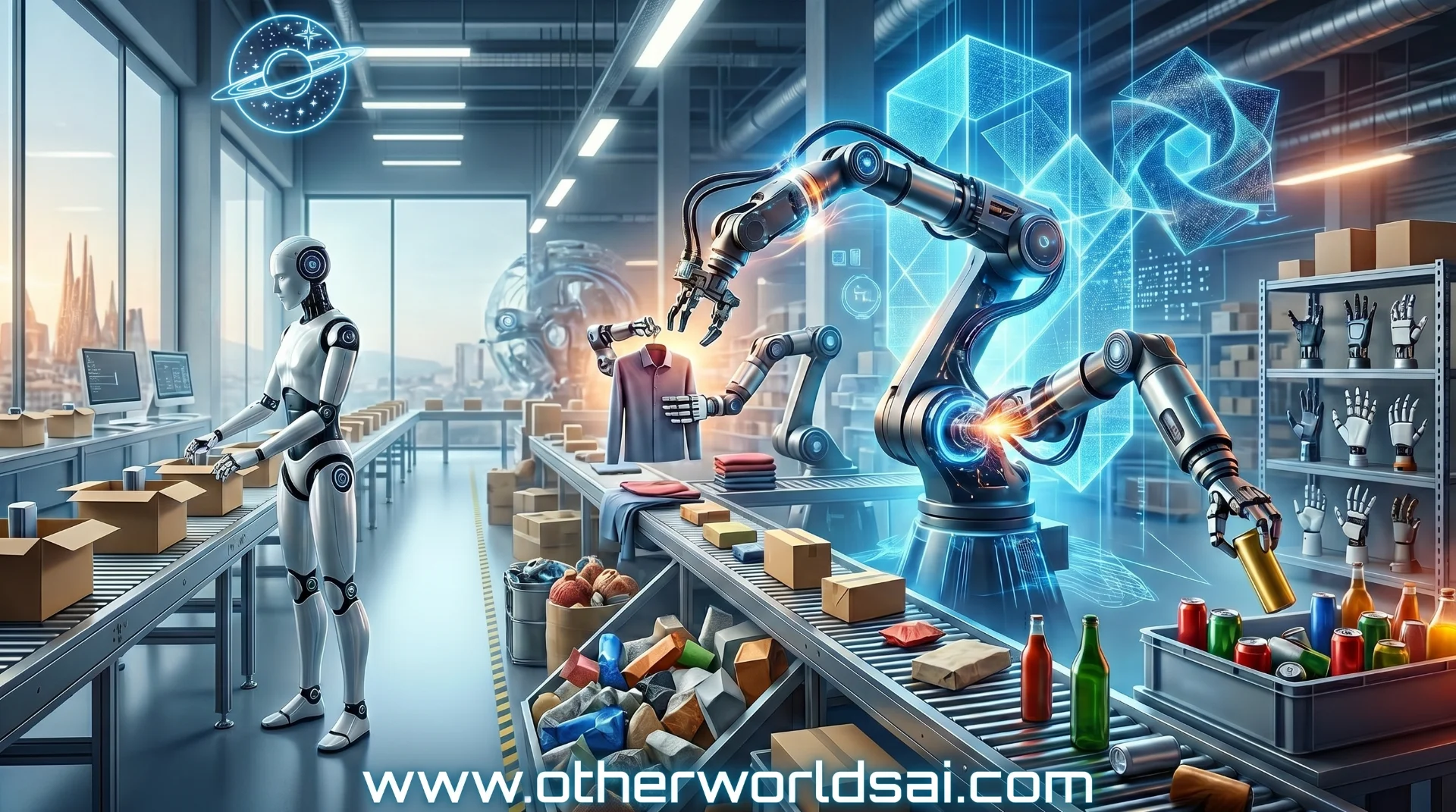
Forget Humanoids: This Startup Just Raised $85M for the Real Future of Factory Robots
It also introduces a concept that will become increasingly important: AI model routing. A lightweight AI system could determine which model is appropriate for each individual task rather than automatically sending everything to the largest available model.
AI Safety Could Become a Distributed System:
Specialized decision models could also play a role in AI safety.
Modern AI agents can perform increasingly complex actions. That creates new challenges around:
- Hallucinations
- Prompt injection
- Jailbreaks
- Unsafe commands
- Incorrect decisions
- Unauthorized actions
- Agent-to-agent communication
One possible architecture is to use AI systems to monitor other AI systems. A lightweight decision model could evaluate an AI agent's actions and determine whether they should proceed.
For example:
Is this command safe?
Does this transaction require human approval?
Is this response sufficiently reliable?
Should this agent continue?
Support our research
Independent analysis fueled by you.
Instead of using an expensive LLM for every monitoring task, specialized AI models could provide faster and cheaper checks.
This could become an important component of enterprise AI governance and AI agent security.
Synthetic Data Could Change AI Development
TypeSafe also emphasizes synthetic data.
Traditional AI development often depends on enormous amounts of real-world data. Collecting, cleaning, labeling, and maintaining that data can be expensive.
Synthetic data offers another approach.
AI systems can generate training examples designed around specific scenarios, allowing developers to build models for specialized tasks without relying entirely on massive real-world datasets.
For enterprise AI, this could be particularly useful.
A company could potentially create synthetic examples representing its operational scenarios, edge cases, security conditions, and decision requirements.
That creates an interesting combination:
Private data + synthetic data + specialized AI models + proprietary AI infrastructure.
Together, these technologies could allow enterprises to build AI systems specifically adapted to their own environments.
The Convergence of Physical AI and Intelligent Software:
The most important connection between these two developments is that they demonstrate the same fundamental trend.
AI is becoming less about chatbots and more about intelligence embedded into systems.
Physical AI puts intelligence into machines. Specialized AI models put intelligence into software.
AI agents connect those capabilities into workflows. Private AI infrastructure gives enterprises control over those systems.
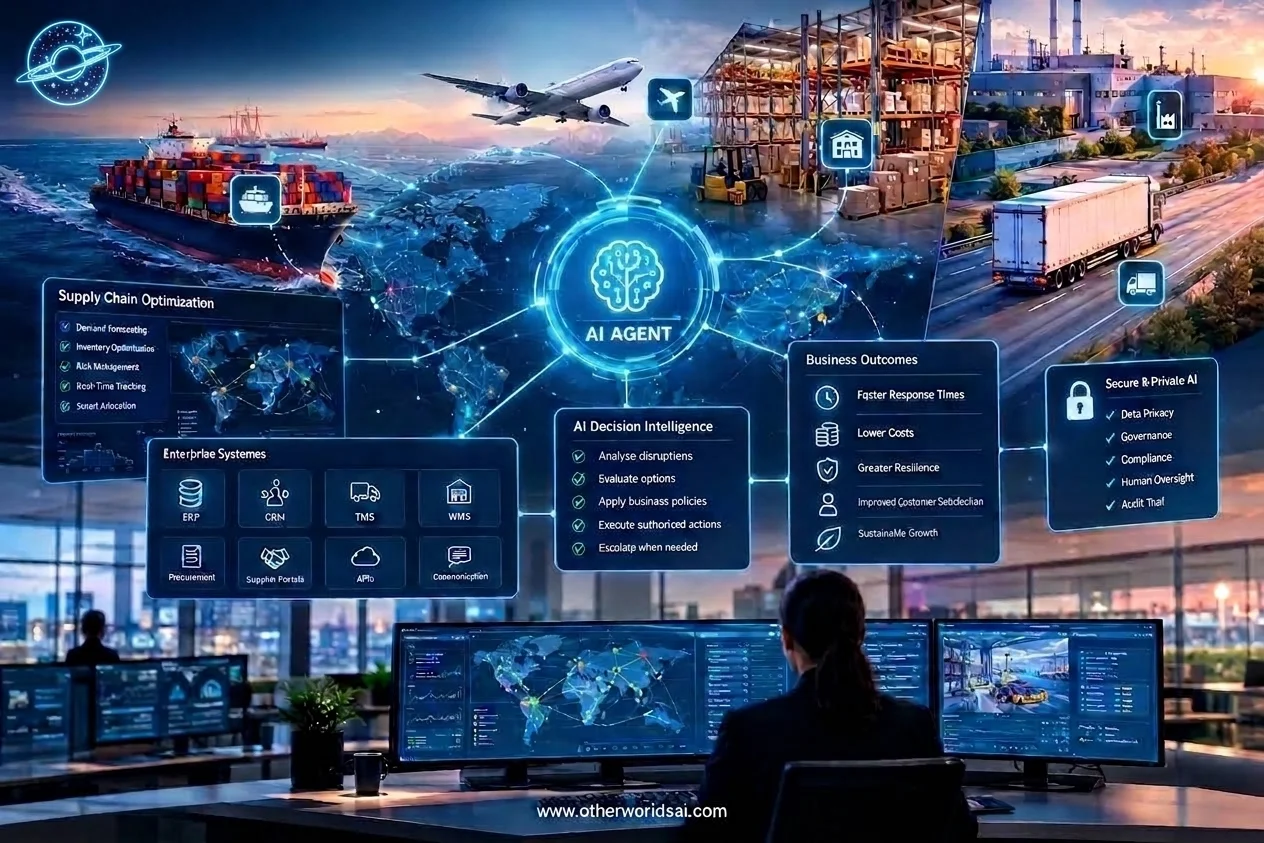
Consider a modern logistics company.
An AI system could:
- Predict demand
- Optimize routes
- Monitor vehicles
- Analyze warehouse operations
- Detect equipment problems
- Communicate with drivers
- Manage customer inquiries
- Automatically update enterprise systems
- Decide when human intervention is required
That is not simply a chatbot. It is an AI-powered operational infrastructure.
What This Means for Businesses:
For businesses evaluating AI adoption, the question is increasingly shifting from:
"How can we use ChatGPT?"
to:
"Where can intelligence be embedded into our business?"
That could mean an AI website assistant, an AI phone agent, an automated customer service system, an AI sales assistant, a predictive maintenance system, an autonomous workflow, or a proprietary AI model.
The opportunity is particularly significant for industries with repetitive processes and large amounts of operational data.
These include:
- Manufacturing
- Logistics
- Transportation
- Aviation
- Automotive
- Healthcare
- Legal services
- Financial services
- Insurance
- Energy
- Retail
- Restaurants
- Construction
Every industry has processes that can potentially be understood, optimized, automated, or augmented by AI.
The Future of Enterprise AI Is Specialized:
The AI industry has spent several years racing toward larger models.
The next phase may be about building smarter AI architectures.
Instead of relying on one massive model for every task, businesses could deploy a combination of:
- Large language models
- Small language models
- Decision models
- Computer vision models
- Predictive models
- AI agents
- Robotics systems
- Edge AI
- Private AI infrastructure
Each component can perform the task it is best suited for.
This approach could reduce AI costs while improving speed, reliability, security, and control.

Meta's Next Big Bet: This New App Lets You Build Games Simply by Typing a Prompt
OtherworldsAI: Building AI Into the Business:
This evolution is closely connected to the direction of modern AI agent development and enterprise AI automation.
At OtherworldsAI, the opportunity is not simply to put a chatbot on a website.
The bigger opportunity is to help businesses turn AI into an operational capability.
AI agents can answer calls, communicate with customers, qualify leads, schedule appointments, process requests, support employees, and connect with existing business systems.
For enterprises with more complex requirements, private AI agent development can provide an additional layer of customization, security, and control.
The emerging AI landscape makes one thing increasingly clear: businesses will not all need the same AI model.
They will need AI systems designed around their own data, workflows, customers, infrastructure, and strategic requirements.
The Next AI Era Will Be Everywhere:
The future of AI may not look like one giant chatbot sitting at the center of the digital world.
It may look much more distributed. AI could exist inside factory machines, logistics networks, vehicles, enterprise software, websites, customer service systems, security platforms, robots, and everyday business workflows.
- Some AI systems will generate language.
- Others will make decisions.
- Others will control machines.
- Others will monitor other AI agents.
And many of them may operate quietly in the background without users even realizing that an AI model is making a decision.
That is the larger shift underway.
AI is moving from something people interact with into something businesses build into everything they do.
From physical AI and robotics to AI agents, specialized models, synthetic data, private AI, intelligent automation, and enterprise AI infrastructure, the next generation of artificial intelligence will be defined less by how impressive a chatbot sounds and more by how effectively intelligence can be embedded into the real world.
For businesses preparing for this transition, the strategic question is no longer whether AI will become part of their operations.
It is where, how, and how deeply they should build intelligence into their business.