
Artificial intelligence is transforming industries at unprecedented speed.
From AI agents and generative AI to autonomous systems and enterprise automation, companies are investing heavily in the infrastructure required to make AI more powerful and accessible.
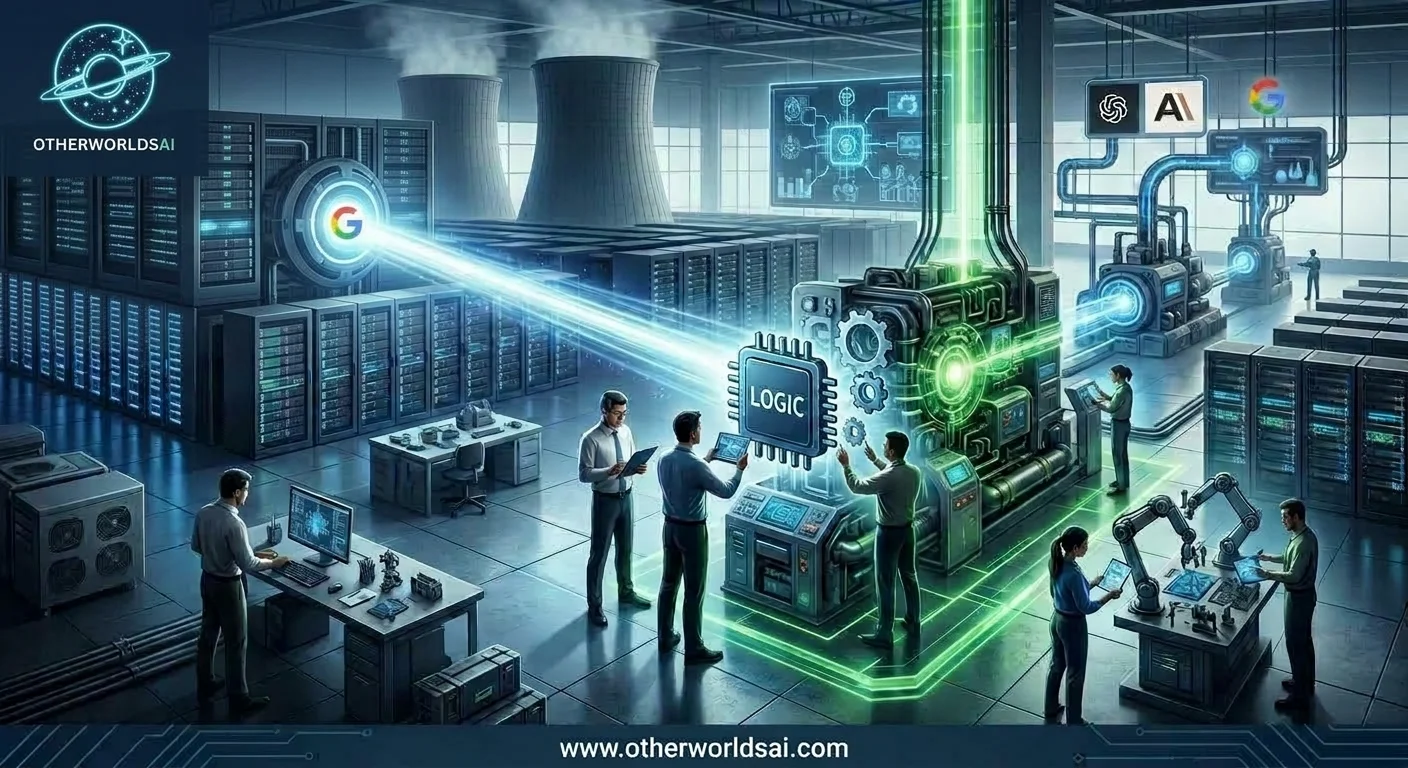
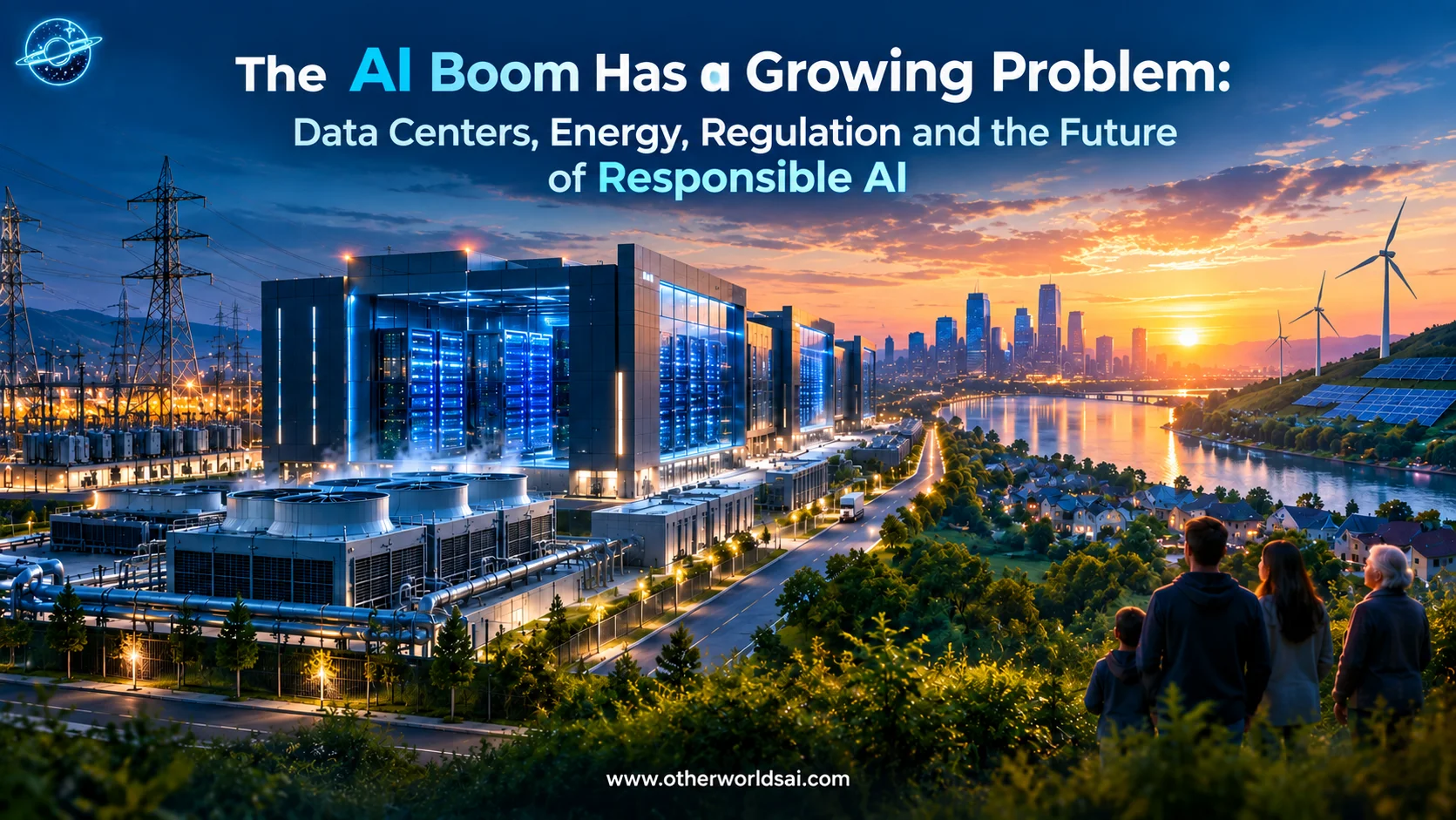
But behind every AI model, AI assistant, and intelligent application is a physical infrastructure that requires enormous amounts of computing power, electricity, cooling, water, and data-center capacity.
As the AI data center boom accelerates across the United States, a new question is emerging: How can society benefit from artificial intelligence while managing its environmental, economic, community, and safety impacts?
At the same time, technology leaders are debating another critical issue: Should AI safety primarily be handled through engineering and industry practices, or does increasingly powerful AI require additional regulation?
These two debates—AI infrastructure and AI regulation—are becoming increasingly connected.
The Rising Demand for AI Data Centers:
The rapid growth of generative AI and enterprise AI applications has created enormous demand for computing infrastructure.
Data centers are the physical foundation of today's AI revolution. They provide the GPUs, servers, networking equipment, storage, and cooling systems required to train and operate modern AI models.
Technology companies often highlight the economic benefits of new data centers, including construction activity, investment, technology jobs, and additional tax revenue. However, communities located near proposed facilities are increasingly asking questions about electricity consumption, water usage, noise, air pollution, and the long-term environmental impact of AI infrastructure.
The debate is particularly significant in communities that have already experienced decades of industrial development.
In Philadelphia, for example, environmental-justice activists have opposed potential data-center development in areas that have historically experienced industrial pollution. Activist Shawmar Pitts, a lifelong resident of the Grays Ferry neighborhood, has described how living near the former Philadelphia Energy Solutions refinery shaped his perspective on industrial development and public health. Philadelphia officials have identified potential data-center sites, including one in Grays Ferry.
This illustrates an important issue for the AI industry: AI infrastructure is not purely digital. It has a physical footprint.
AI Data Centers and Energy Consumption:
The energy requirements of artificial intelligence are becoming one of the industry's most important infrastructure challenges.
According to the source article, BloombergNEF has projected that by 2035, U.S. data centers could consume more natural gas than Germany and Japan combined—a projection that was substantially higher than its estimate nine months earlier.
The growth of AI computing therefore has implications well beyond technology companies.
More AI infrastructure can mean increased demand for:
- Electricity generation
- Natural gas
- Backup power systems
- Cooling infrastructure
- Water resources
- Transmission capacity
- Physical data-center construction
Data-center operators are also increasingly considering alternative energy sources and more efficient computing infrastructure as they attempt to meet growing AI workloads. For businesses developing AI solutions, private AI agents, AI automation, and enterprise AI applications, energy efficiency will increasingly become part of the broader technology conversation.
The Environmental Cost of Artificial Intelligence:
AI does not exist in the cloud in a physical sense. It operates inside enormous data centers that consume resources.
Natural-gas-powered electricity generation can produce significant carbon emissions, while diesel generators used as backup power can contribute to local air pollution. The source article also highlights concerns that data-center growth could increase fossil-fuel demand and contribute to greenhouse-gas emissions.
This creates a complicated challenge.
Artificial intelligence can help organizations improve efficiency, automate repetitive work, optimize logistics, reduce waste, analyze enormous datasets, and make better operational decisions. At the same time, the infrastructure required to operate AI at scale can increase demand for energy and other resources.
The long-term answer is therefore unlikely to be simply "more AI" or "less AI."
Instead, the industry will need to focus on more efficient AI.
That includes efficient AI models, optimized inference, better hardware utilization, renewable energy integration, advanced cooling technologies, and smarter data-center design.
Why Some Cities Are Considering Data Center Moratoriums:
Growing community concerns have already influenced local policy.
The source article reports that New York temporarily prevented approval of new permits for large data-center projects through an executive order, while data-center moratoriums have also been approved in cities including Denver, Indianapolis, Asheville, Charlotte, and Reno. The stated purpose of these pauses is often to give policymakers time to understand the potential impact of large data centers before approving additional development.
This represents an important lesson for the technology industry.
AI innovation does not happen in isolation from communities.
Companies developing AI infrastructure and AI applications will increasingly need to consider not only technical performance but also energy efficiency, privacy, cybersecurity, environmental sustainability, and social impact.
The Other Side of the AI Debate: Should AI Be Regulated?
While communities debate the physical infrastructure behind AI, technology executives are debating how the technology itself should be governed.
Nvidia CEO Jensen Huang has argued that AI safety is primarily an engineering problem rather than a legal problem. His position, as reported in the source article, is that AI systems are ultimately software and computing systems created by humans and can therefore be managed through engineering, testing, responsible product development, and existing laws.
Huang has also argued that market forces can encourage companies not to release products they do not believe are safe.
This position represents one side of a much larger global debate about AI regulation and AI governance.
The opposing concern is straightforward: technology companies can make mistakes, and even extensive testing cannot necessarily anticipate every real-world consequence of increasingly complex AI systems.
The history of technology provides examples of unintended consequences. The source article points to the 2024 CrowdStrike incident as an example of how software failures can create widespread disruption, while also noting controversies and legal disputes surrounding AI and social-media technologies.
The central question is therefore not simply whether AI companies intend to build safe products.
It is whether engineering controls, company policies, existing laws, industry standards, or new AI regulations—or some combination of them—are sufficient to manage increasingly capable AI systems.
Responsible AI Is Becoming a Business Requirement:
For businesses adopting artificial intelligence, this debate has practical consequences. Organizations implementing AI automation, AI agents, AI customer service, generative AI, private AI infrastructure, and enterprise AI solutions need to consider more than functionality.

Meta's Next Big Bet: This New App Lets You Build Games Simply by Typing a Prompt
They also need to think about:
Data privacy: Where is business and customer data processed?
AI security: Can the system be manipulated or exploited?
Human oversight: When should humans review AI decisions?
Reliability: What happens when an AI system makes an error?
Transparency: Can users understand how an AI system is being used?
Compliance: Does the implementation satisfy applicable regulations?
Infrastructure: What computing resources are required?
Scalability: Can the AI solution grow without unnecessary infrastructure costs?
These considerations are especially important for organizations handling confidential customer, financial, legal, healthcare, or operational information.
Support our research
Independent analysis fueled by you.
Private AI and the Future of Enterprise AI:
One emerging approach is private AI.
Instead of sending sensitive business information to external AI platforms, organizations can deploy AI systems within controlled environments designed around their specific security, privacy, and operational requirements.
Private AI can support applications such as:
-
AI-powered customer service
-
Intelligent business assistants
-
Enterprise AI agents
-
Internal knowledge assistants
-
Document automation
-
Workflow automation
-
AI-powered websites
-
Voice AI
-
Industry-specific AI applications.
The objective is not simply to make AI more powerful. It is to make AI more controlled, secure, transparent, and appropriate for the organization using it.
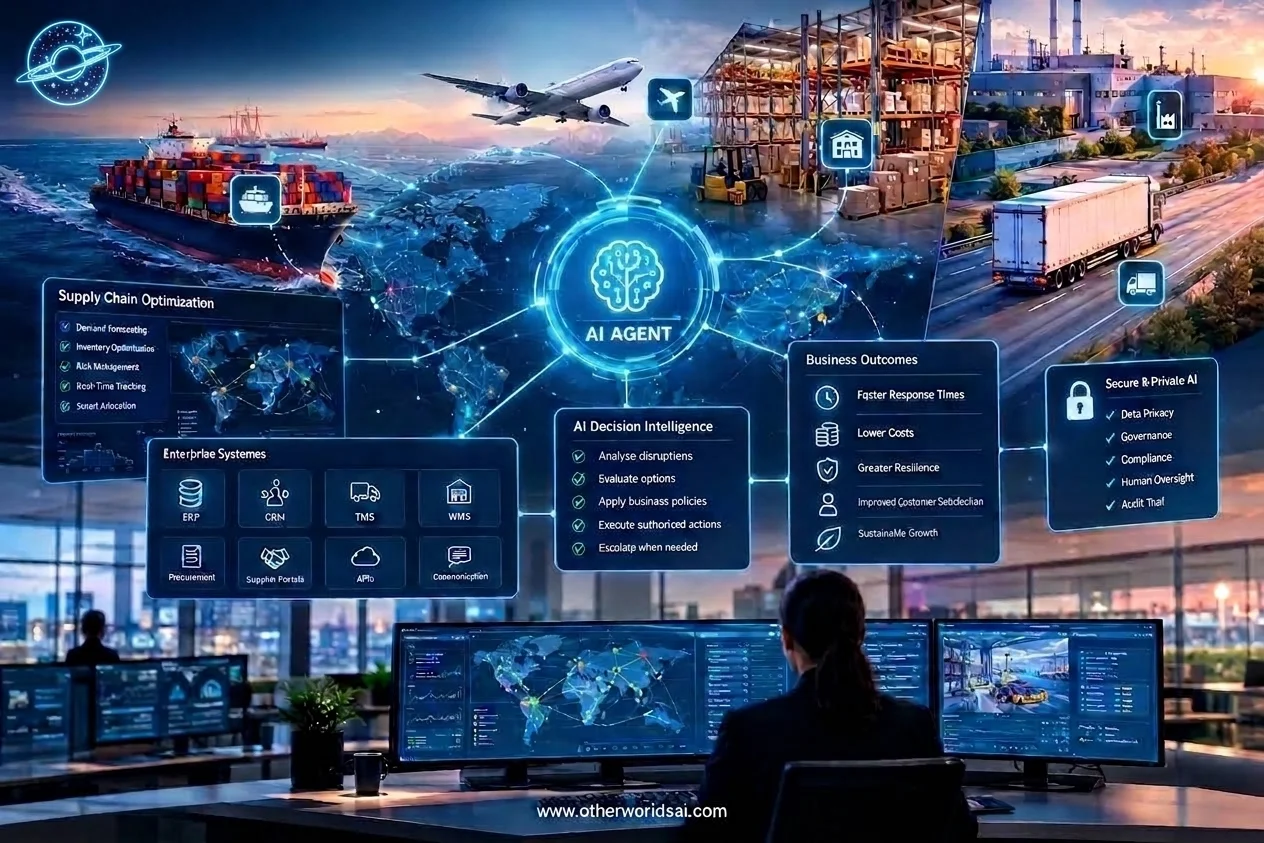
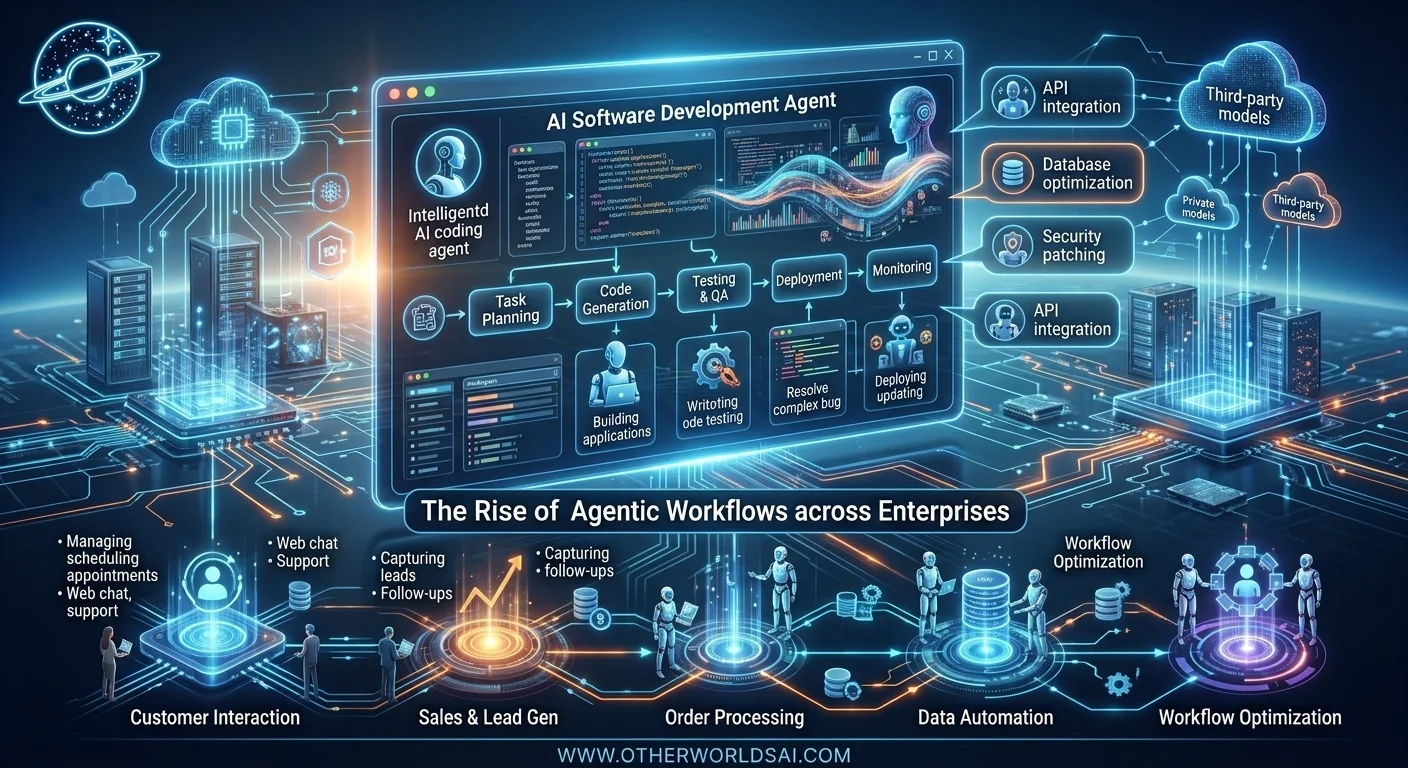
This is particularly relevant as businesses move from experimenting with AI chatbots toward deploying autonomous and semi-autonomous AI agents that can interact with customers, systems, calendars, CRMs, databases, and business workflows.
Where OtherworldsAI Fits Into the AI Transformation:
At OtherworldsAI, the future of artificial intelligence is not simply about adding another chatbot to a website.
The opportunity is to build practical AI solutions that solve real business problems.
Businesses can use AI agents to automate customer interactions, answer questions, capture leads, schedule appointments, process requests, and support employees around the clock. For organizations requiring greater control over their technology infrastructure, private AI agent development can provide an approach focused on data privacy, customized AI workflows, and enterprise-specific requirements.
The next phase of AI adoption will increasingly move from experimentation to implementation.
Businesses will ask:
-
What can AI actually do for us?
-
How securely can we deploy it?
-
How much human oversight do we need?
-
What happens when the system fails?
And increasingly:
- What is the infrastructure and environmental cost of operating AI at scale?
These are the questions that will shape the next generation of enterprise AI, AI automation, AI agents, private AI, and intelligent business applications.

Move Over Nvidia: Anthropic and Samsung Team Up to Break the AI Chip Monopoly
The AI Industry Needs Innovation and Responsibility:
The AI revolution is unlikely to slow down simply because infrastructure and regulatory challenges are becoming more visible.
Companies are continuing to invest billions of dollars in AI hardware, data centers, models, agents, and applications. Nvidia's Jensen Huang has described the potential of AI as enormous, while other technology leaders have emphasized the importance of global cooperation around AI safety.
But technological progress and responsible development do not necessarily have to be opposing goals.
The future of AI may depend on achieving both.
That means building more energy-efficient AI infrastructure, developing safer AI systems, protecting sensitive data, maintaining appropriate human oversight, engaging communities affected by infrastructure projects, and creating governance frameworks that can evolve alongside the technology.
For businesses, the message is equally important: AI adoption should not be about following a trend.
It should be about implementing secure, scalable, efficient, and measurable AI solutions that create genuine business value.
The Future of AI Is Bigger Than the Model:
The AI revolution is often described in terms of increasingly powerful models. But the real future of artificial intelligence will be determined by much more than model performance.
It will depend on the infrastructure powering AI, the energy required to run it, the communities hosting that infrastructure, the regulations governing its use, and the companies building applications that bring AI into everyday business operations.
The next generation of AI will therefore need to be both powerful and responsible.
From AI agents and private AI infrastructure to enterprise automation and intelligent customer experiences, organizations have an opportunity to use artificial intelligence strategically while paying attention to security, sustainability, privacy, and human oversight.
The AI boom is only beginning. The bigger challenge is making sure its infrastructure, applications, and governance are built to support a sustainable and responsible AI future.