
Revolutionizing Healthcare: How AI Can Now Detect Heart Disease, High Blood Pressure, and Diabetes from a 5-Second Face Scan.
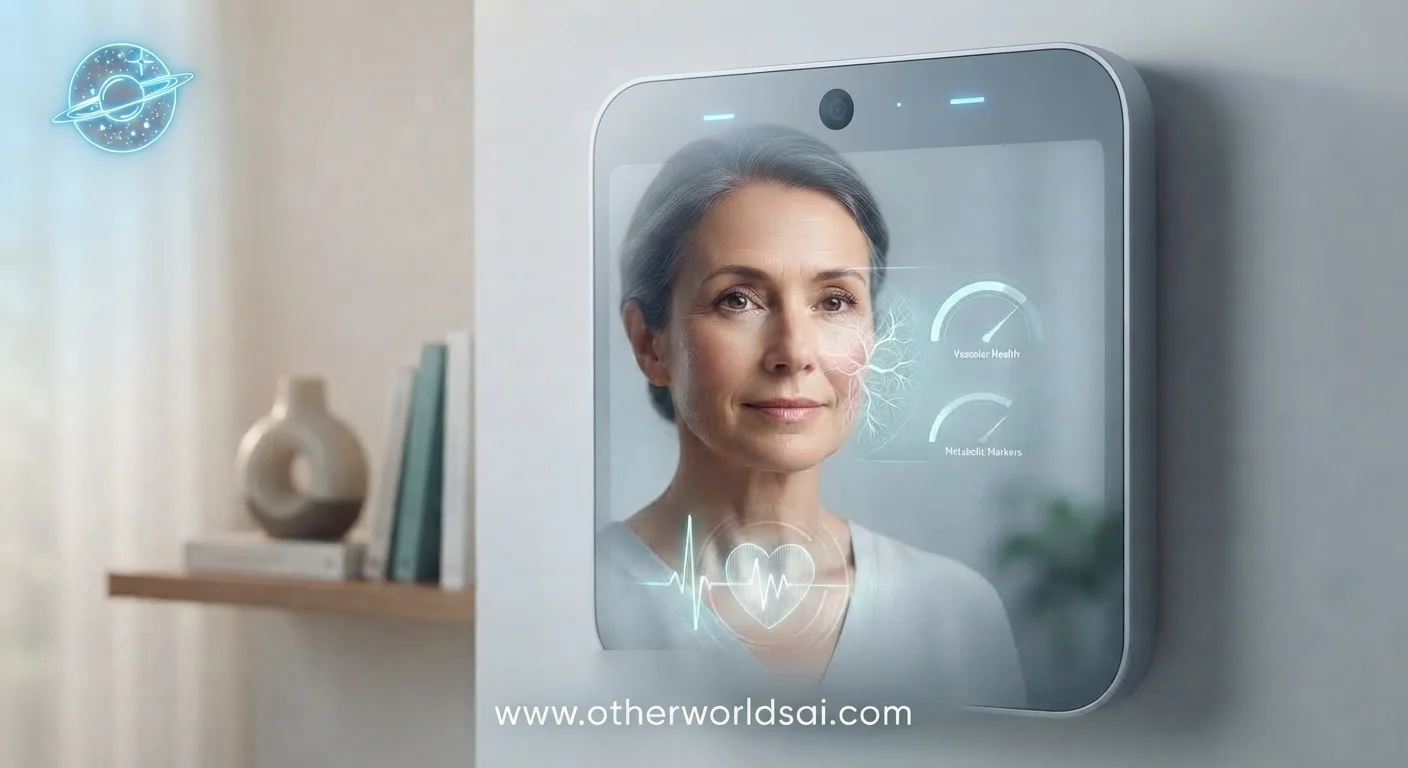
Imagine walking into a clinic, staring into a camera for just five seconds, and walking out with a preliminary screening for high blood pressure, diabetes, or cardiovascular risks—all without a single needle prick, cuff squeeze, or long waiting list.
Sound like science fiction? Thanks to groundbreaking medical research unveiled at major international cardiology forums, this future is arriving much faster than anticipated. Artificial intelligence (AI) is transforming modern diagnostics, offering the potential to spot deadly, silent killers in the blink of an eye.
The Breakthrough: What Do the Latest Studies Show?
Recent scientific findings presented at the European Society of Cardiology (ESC) Congress and highlighted by prominent medical reports in outlets like The Daily Mirror have showcased two major leaps forward in AI-driven healthcare:
-
The 5-Second Facial Scan for Hypertension and Diabetes: Researchers from the University of Tokyo and the Institute of Science Tokyo demonstrated that a machine-learning algorithm could analyze short video clips of a person's face to detect high blood pressure and diabetes with astonishing accuracy.
-
Superhuman ECG Analysis for Hidden Heart Diseases: In the UK, National Health Service (NHS) trials are underway examining an advanced AI tool capable of flagging heart failure and heart valve disease from standard electrocardiograms (ECGs)—conditions that human doctors have traditionally struggled to identify in routine tests.
Together, these developments signal a paradigm shift: moving medicine from reactive, hospital-bound treatments to proactive, contactless, and continuous community screening.
How Does a Face Scan Detect Internal Disease?
It sounds counterintuitive—how can a camera looking at your skin tell if your blood sugar is high or your arteries are stiff?
The secret lies in transdermal optical imaging and advanced signal processing. Human skin is translucent, and beneath the surface, millions of tiny blood vessels expand and contract with every heartbeat, altering blood-flow patterns and micro-colorations that are entirely invisible to the naked eye.
In the Japanese study, researchers used high-speed spectroscopic cameras to record short videos of participants' faces and palms. The AI algorithm analyzed:
-
Pulse-wave dynamics: Measuring how stiff or elastic the arteries are.
-
Blood-flow fluctuations: Tracking subtle changes in facial perfusion.
-
Spectral skin characteristics: Analyzing physiological markers tied to metabolic health.
The results were remarkable. For hypertension (high blood pressure), the system achieved over 90% accuracy using a recording as short as five seconds (and up to 95% accuracy on a 30-second clip). For diabetes, the algorithm successfully detected markers of the disease with over 80% accuracy from a 5-second video, rising past 88% with a 30-second clip.
By eliminating the need for inflatable arm cuffs or blood samples, this contactless approach opens up immense possibilities for screening populations in everyday environments—from pharmacies and workplaces to home smartphones.

Meta's Next Big Bet: This New App Lets You Build Games Simply by Typing a Prompt
Unlocking Hidden Dangers: The ECG Revolution.
While facial scanning tackles metabolic and vascular screening, parallel trials in the United Kingdom are tackling structural heart conditions.
Conditions like heart failure (where the heart fails to pump blood effectively) and heart valve disease are frequently missed during routine primary care visits until they reach advanced stages. However, a new AI algorithm trained on millions of historical ECG scans has demonstrated "superhuman" capability.
Currently being trialled across NHS hospitals in London and Bristol on hundreds of patients, the AI program reads standard ECG readouts in seconds. Backed by training data from over 10.6 million scans, the algorithm successfully identified 81% of patients with heart failure and 90% of those with heart valve disease—patterns that standard human visual reviews routinely miss.
Medical experts have called this technology "transformative." If fully validated through ongoing real-world trials, portable ECG devices paired with AI could soon be deployed in community settings, allowing doctors to fast-track vulnerable patients for life-saving treatments years before symptoms become critical.
Support our research
Independent analysis fueled by you.
Why This Matters: Tackling Global Health Crises:
Non-communicable diseases like cardiovascular illnesses, hypertension, and diabetes are leading causes of death and disability worldwide.
-
The Scale of the Problem: Globally, an estimated 1.4 billion adults live with hypertension, while hundreds of millions suffer from diabetes. A massive percentage of these cases remain completely undiagnosed because routine check-ups are sporadic.
-
Healthcare Strain: Health systems—such as the UK’s NHS or resource-stretched clinics globally—face crippling backlogs. Millions of patients wait months for cardiology assessments.
Deploying AI-driven, friction-free screening tools can fundamentally change this bottleneck. As Dr. Sonya Babu-Narayan of the British Heart Foundation notes: "Earlier diagnosis and treatment saves and improves lives." By catching conditions like high blood pressure or narrowing arteries early, patients can adjust their lifestyles, begin medical therapies, and prevent catastrophic events like heart attacks or strokes before they happen.
Looking Ahead: Challenges and the Road to Mass Adoption:
Despite the immense optimism, medical researchers emphasize that AI diagnostics still face hurdles before becoming standard clinical practice:
-
Validation and Diversity: Algorithms must be trained on vast, multi-ethnic datasets to ensure they perform equitably across diverse populations with different skin tones and genetic backgrounds.
-
Regulatory Approval: Passing strict medical device regulations requires rigorous, large-scale prospective trials to minimize false positives and reduce error margins.
-
Integration into Practice: Doctors will need training to seamlessly incorporate AI outputs into day-to-day consultations without losing the human element of care.
Nevertheless, the trajectory is clear. The convergence of artificial intelligence and routine digital optics means that the tools to monitor our most vital internal parameters are breaking free of traditional hospital walls.
In the near future, your next routine health check might literally take no longer than a glance in the mirror—ushering in an unprecedented era of preventive medicine.
Otherworlds AI's Agent+ Business AI Platform gives teams automated, Google Opal-powered workflows starting at $297/month — no robotics PhD required. For organizations with more specific needs, Otherworlds AI also builds custom enterprise AI solutions tailored to your operations.
Learn more at otherworldsai.com