
Agentic AI Is Replacing Standalone Generators: What Businesses Need to Know.
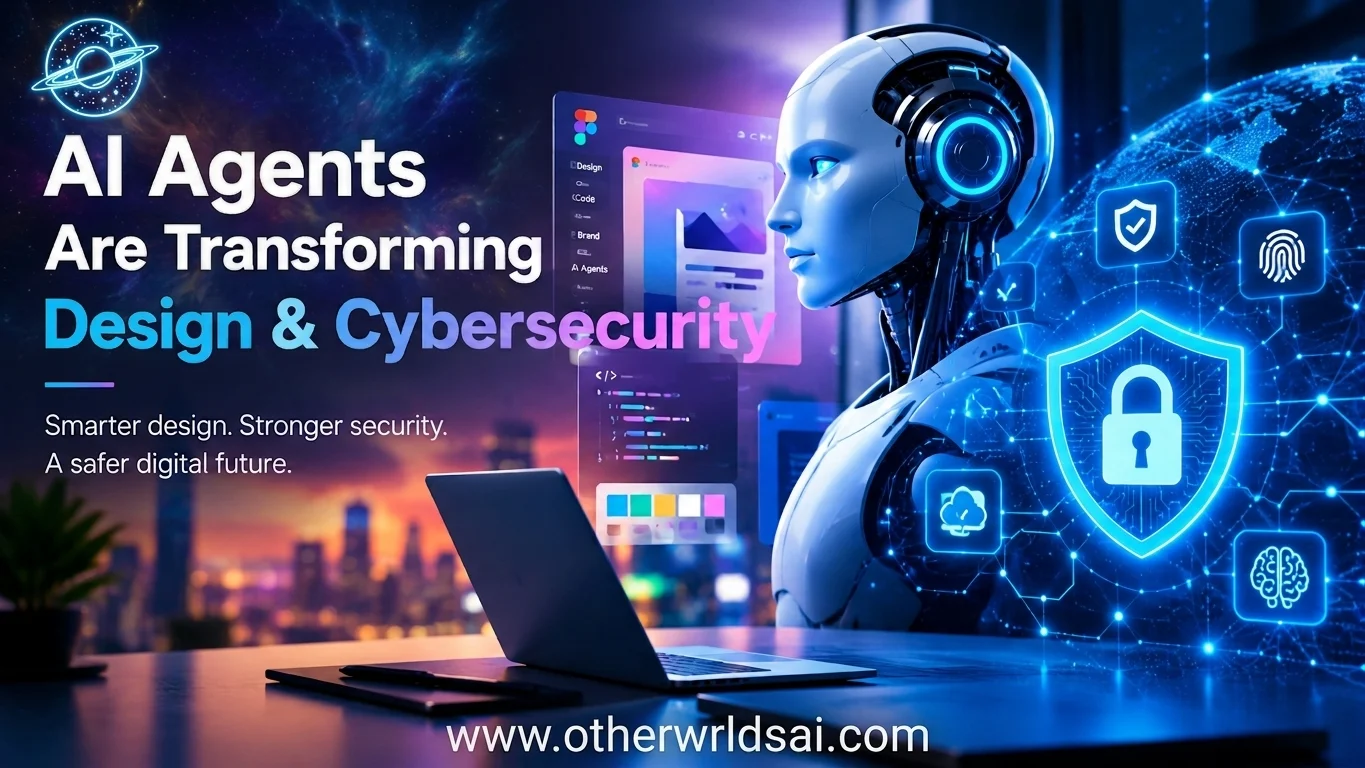
AI Agents Are Transforming Design and Cybersecurity: Figma Introduces Smarter Design Tools as Apate.ai Fights Scammers:
Introduction: AI Agents Are Moving Beyond Chatbots:
Artificial intelligence is entering a new phase in which AI agents are no longer limited to answering questions or generating text. They are increasingly capable of interacting with software, executing tasks, following instructions, analyzing threats, and operating across complex digital environments.
Two recent developments illustrate this transformation from different perspectives. Figma is expanding its AI-powered design platform with tools that help teams define brand guidelines, connect design systems with code, and build interactive prototypes. Meanwhile, Australian cybersecurity startup Apate.ai is deploying thousands of AI agents to engage scammers, collect intelligence, and help organizations prevent fraud before victims suffer financial losses.
Although these companies operate in different markets, they share an important objective: making AI agents more useful, controlled, and effective in real-world situations. For businesses, developers, designers, and cybersecurity professionals, these developments reveal a broader trend. The future of AI is not just about generating content; it is about building agents that understand context, follow rules, and take meaningful action.
1. Figma Introduces New AI Design Tools to Bring Structure to Creative Workflows:
Figma, the collaborative design platform used by product teams and software developers, is expanding its AI capabilities to make AI-assisted design more consistent and predictable. During its first Config event in India, the company announced new features designed to help organizations establish design standards that both human teams and AI agents can follow.
The announcements include Figma Specs, expanded support for design and code libraries, public beta access to code layers, broader integrations through the Model Context Protocol (MCP), and integration between Figma Make and Payload, an open-source headless content management system.
These developments address a growing challenge in AI-powered software development: generating a design or a piece of code is becoming easier, but ensuring that the result follows a company's existing design system and engineering requirements remains difficult.
Figma Specs: Defining Design Rules for AI Agents:
One of Figma's key announcements is Figma Specs, a Markdown-based editor that allows teams to document their design language in a structured, accessible format. Companies can use these specifications to define visual standards, design principles, and other instructions that guide the creation of digital products.
Figma Specs can exist as a standalone document or alongside a design canvas. Users can also reference other Figma elements and incorporate FigJam diagrams, code layers, and existing designs.
This creates a shared reference point for designers, developers, and AI agents.
For example, a company might document its preferred typography, color palette, spacing rules, button styles, and interface behavior. An AI agent working on a new landing page could then consult these specifications instead of generating a design based solely on a general prompt.
The potential benefits include:
-
More consistent brand identity across digital products.
-
Reduced design revisions and manual corrections.
-
Better alignment between design and development teams.
-
More reliable AI-generated interfaces and prototypes.
-
Clearer instructions for AI agents operating within established workflows.
As businesses adopt AI website builders and automated design tools, structured design specifications could become an important part of their AI development infrastructure.
Connecting Design Libraries and Code Libraries:
Figma is also enabling teams to bring more context into their design workflows through design libraries, code libraries, and centralized guidelines.
This matters because AI models do not automatically understand every organization's internal design conventions, technical requirements, or preferred components.
A centralized design system gives AI agents access to the rules and reusable assets they need to produce work that fits the company's existing products.
Instead of repeatedly generating interface elements from scratch, an agent can work with established components and follow documented requirements.
For software companies, this approach could improve collaboration between UI/UX designers, frontend developers, product managers, and AI-assisted coding systems.
The larger opportunity is context-aware AI development: agents that work within a company's existing systems rather than producing disconnected designs and code.
Code Layers: Turning Designs into Interactive Prototypes:
Figma is also expanding access to its code layers feature, which entered public beta following its earlier private beta announcement.
Code layers allow users to incorporate code into designs on the canvas, creating more interactive prototypes. Users can ask an AI agent to convert a design into code or modify parts of existing code while iterating on a prototype.
This connects visual design more closely with software development.
Traditionally, a designer might create a static mockup, hand it to a developer, and wait for an implementation before discovering problems with the experience. AI-assisted prototyping can shorten this feedback loop by making it easier to test ideas and interactions earlier.
Potential applications include:
-
Rapid website prototyping.
-
Interactive product demonstrations.
-
Frontend experimentation.
-
AI-assisted UI development.
-
Faster design-to-code workflows.
However, generated code still requires appropriate review, testing, accessibility checks, and security validation before production deployment.
MCP Integrations Expand the AI Tool Ecosystem:
Figma also announced support for more than 20 additional tools through its Model Context Protocol (MCP) integrations, including Open Code, Dia, Grok Bot, and Indian AI startup Sarvam.
MCP provides a standardized way for AI applications to interact with external tools and data sources when supported by the relevant integrations.
For design teams, these connections can help bring AI agents into broader workflows instead of isolating them inside a single application.
The strategic direction is clear: AI-powered design is evolving from an individual productivity feature into a connected workflow involving design assets, code, external tools, and organizational knowledge.
Figma Make and Payload Bring Design Closer to Content Management:
Figma is also integrating Payload, the open-source headless CMS it acquired last year, with Figma Make, its product for generating dynamic websites.
The integration is intended to connect AI-generated website experiences with content management, allowing teams to move more directly from creating a website to managing its content.
Figma reported that Payload downloads had increased sixfold over the preceding 12 months. For organizations building content-driven websites, this integration points toward a more connected process: generate an experience, manage its content, and iterate within a workflow that reduces friction between design and implementation.
The long-term potential lies in combining AI website generation with reusable design systems and structured content infrastructure.
2. Apate.ai Deploys AI Agents to Investigate Scammers :
While Figma is using AI agents to improve digital product creation, Apate.ai is applying autonomous AI agents to a very different challenge: cybercrime and financial fraud.
Founded in 2024 following research conducted at Macquarie University in Sydney, Australia, Apate.ai develops AI agents that interact with suspected scammers to gather actionable intelligence.
Rather than simply blocking suspicious phone numbers or flagging potentially fraudulent transactions, the company sends its agents undercover to engage fraudsters directly.
These agents can answer scam calls, respond to suspicious text messages and emails, follow phishing links, and participate in online communities where fraudulent activity may occur.
They use different simulated identities, accents, ages, genders, and languages to keep scammers engaged and collect information about their operations.
The objective is to waste scammers' time while gathering intelligence that organizations can use to improve fraud prevention.
How AI Scam-Baiting Works:
Traditional scam prevention often focuses on detecting suspicious activity after a scam has begun or blocking known fraudulent accounts and phone numbers.
These measures remain important, but criminals can change phone numbers, create new websites, and move between platforms.
Apate.ai takes a different approach by using AI agents to interact with suspected criminals and gather information before more people become victims.
According to the company, its agents have collectively consumed 17 years of scammers' time across approximately 2.5 million conversations.
During these interactions, the agents attempt to identify useful intelligence,
including:
-
Bank account details associated with fraudulent operations.
-
Cryptocurrency wallet addresses.
-
Suspicious telephone numbers and email addresses.
-
Phishing websites and malicious links.
-
Brands and organizations being impersonated.
-
Patterns connecting different scam campaigns.
The information is delivered to customers through an intelligence and analytics portal. Banks, telecommunications companies, government agencies, and utility providers can use these insights to investigate suspicious activity, strengthen security measures, and identify emerging threats.

Why Small Trade Businesses Are Quietly Hiring AI Agents in 2026
The company's approach demonstrates how autonomous AI agents can be deployed not only to analyze information but also to actively collect it through controlled interactions.
From Academic Research to Commercial Cybersecurity:
Apate.ai's origins can be traced to an experience involving its founder and CEO, Dali Kaafar.
Several years ago, Kaafar received a scam call while attending a family picnic. Instead of immediately ending the call, he deliberately kept the scammer engaged for 44 minutes.
The experience prompted a practical question: could this tactic be automated at scale, and could the interactions generate useful information for preventing fraud?
Research at Macquarie University subsequently explored machine learning and natural language processing techniques to analyze scam conversations and improve scam detection.
Apate.ai emerged from that research.
The startup uses frontier AI models alongside its own fine-tuned models, trained using conversations collected by its agents and research developed by Kaafar and his colleagues.
This combination illustrates an important pattern in applied AI: general-purpose models provide broad language and reasoning capabilities, while specialized models and domain-specific data can help address the requirements of a particular industry.
Real-World Results: Banks and Telecom Companies:
Apate.ai has attracted customers including Commonwealth Bank of Australia and TPG Telecom.
According to the company, TPG has diverted nearly 590,000 calls to its AI agents. Commonwealth Bank has reported a 76% decline in publicly reported scam losses, while another unnamed Australian bank has used the startup's outbound agents to disrupt 22 scam campaigns.
These figures are company-reported results and should not be interpreted as independently established proof that the technology alone caused the outcomes.
Nevertheless, they illustrate the potential commercial value of using AI agents for fraud intelligence, especially in industries where customers are frequent targets of impersonation, phishing, and financial scams.
The company raised $8.15 million in seed funding in August, with investors including Lobby Capital, OIF Ventures, Investible, Concept Ventures, and Baobab Ventures.
Apate.ai said it had raised just under $10 million in total and planned to use the latest funding to develop its product and expand internationally, including increasing its presence in the United States and opening an office in London.
Support our research
Independent analysis fueled by you.
As AI-powered scams become more sophisticated, demand for automated fraud intelligence and proactive cybersecurity solutions could grow.
3. What Connects Figma and Apate.ai? The Rise of Context-Aware AI Agents:
At first glance, Figma and Apate.ai appear to have little in common. One helps teams create digital products, while the other helps organizations investigate cybercriminals.
However, both address a fundamental limitation of general-purpose AI: an agent needs the right context, clear instructions, and a defined objective to perform reliably.
Figma is building a framework in which agents can reference design specifications, reusable components, code libraries, and external tools.
Apate.ai is building agents that operate within a defined mission, engage suspected scammers, and extract information relevant to fraud prevention.
Their applications differ, but the underlying principles overlap.
Context Is Becoming as Important as Model Capability:
A powerful AI model can generate code, write content, or carry on a conversation. Yet without relevant information, it may produce output that is inconsistent, inaccurate, or unsuitable for the task.
In design, that could mean generating a website that ignores a brand's visual identity.
In cybersecurity, it could mean identifying a suspicious message without discovering the infrastructure or accounts behind the scam.
Context-aware agents address this problem by combining model capabilities with relevant instructions, data sources, and specialized tools.
For businesses adopting AI, this means that successful implementation involves more than selecting a capable model. It also requires defining the information the agent can access, the tasks it is authorized to perform, and the standards by which its results will be evaluated.
From Generative AI to Agentic AI:
-
Generative AI primarily focuses on producing outputs such as text, images, and code in response to prompts.
-
Agentic AI extends this model by enabling systems to work toward objectives through sequences of actions, tool use, and feedback.
Figma's AI-assisted design and code workflows demonstrate how agents can help users move from an idea toward a working prototype.
Apate.ai demonstrates how agents can interact with external environments to collect intelligence over repeated conversations.
In both cases, AI becomes part of a workflow rather than merely a standalone content generator.
This shift has implications for software development, digital marketing, customer service, financial services, enterprise automation, and cybersecurity.
4. Why AI Agent Governance and Human Oversight Matter:
The growing capabilities of autonomous AI agents also introduce new challenges.
In creative workflows, an AI agent may produce inconsistent designs, generate unsuitable code, or misunderstand a company's specifications. Centralized design guidelines can reduce these problems, but they cannot eliminate them.
In cybersecurity, agents that interact with suspected criminals require particularly careful safeguards. Their activities must comply with applicable laws, privacy requirements, platform rules, and organizational security policies.
Organizations should establish clear boundaries around agent permissions, data access, logging, escalation, and human oversight.
Key considerations include:
-
Defined objectives: Each agent should have a specific, measurable purpose rather than unrestricted authority.
-
Controlled access: Agents should only access the systems and information required for their assigned tasks.
-
Verification and testing: AI-generated code, design changes, and intelligence reports should be validated before being used for consequential decisions.
-
Auditability: Organizations need records of important agent actions, tool usage, and decisions.
-
Human oversight: Sensitive actions, uncertain findings, and high-impact decisions should have appropriate review mechanisms.
-
Security and privacy: AI systems should be designed to minimize unauthorized disclosure, misuse of personal information, and exposure to malicious inputs.
These principles are especially important as businesses connect AI agents to internal knowledge bases, production software, customer information, and financial systems.
5. What These Developments Mean for Businesses in 2026:
The latest developments in AI design automation and cybersecurity suggest several opportunities for organizations evaluating AI adoption.
Faster Software and Website Development:
AI-assisted prototyping can help teams test ideas sooner, reduce repetitive implementation work, and shorten the distance between design and development.
When combined with structured design systems and code libraries, these tools may help businesses build more consistent digital experiences.
More Effective Fraud Intelligence:
AI agents can help cybersecurity teams identify emerging scam patterns and collect information that conventional blocking systems may miss.
For banks, telecom providers, and digital businesses, this could support earlier threat detection and more targeted fraud prevention strategies.
Better Enterprise Workflow Automation:
The combination of AI models, specialized tools, centralized knowledge, and defined objectives creates opportunities for automation across business operations.
Examples include customer support agents that follow company policies, internal assistants that use approved documentation, and development agents that work within established engineering standards.
The Growing Importance of Private AI Infrastructure:
As agents gain access to sensitive business systems and proprietary information, organizations must pay greater attention to data control, deployment architecture, permissions, and intellectual property.

Meta's Next Big Bet: This New App Lets You Build Games Simply by Typing a Prompt
Some businesses may benefit from private AI environments and customized agents designed around their internal processes.
The appropriate solution depends on the sensitivity of the data, regulatory requirements, integration needs, operational risks, and available resources.
For organizations handling confidential information, these considerations should be part of AI planning from the beginning rather than added after deployment.
6. How Otherworlds AI Helps Businesses Navigate the Agentic AI Era:
At Otherworlds AI, we focus on the practical application of artificial intelligence to business operations, software development, and digital experiences.
The developments at Figma and Apate.ai reinforce an important principle: useful AI systems must do more than generate impressive outputs. They must operate within business requirements, integrate with relevant workflows, and deliver results that organizations can evaluate.
Businesses exploring AI adoption can consider several areas of opportunity.
-
Private AI agent development: Customized agents can be designed around internal processes, business knowledge, and defined operational requirements.
-
AI-powered website and application development: AI-assisted development can support prototyping, workflow automation, and the creation of digital products.
-
Intelligent customer support: AI agents can assist with customer inquiries, lead qualification, appointment scheduling, and repetitive service tasks.
-
Workflow integration: Connecting AI systems with approved business tools and data sources can reduce manual work and improve operational consistency.
-
Responsible AI implementation: Clear permissions, appropriate security controls, human review, and measurable performance standards help businesses deploy AI more effectively.
For organizations that require stronger control over proprietary information, private AI infrastructure and custom deployment options may also be worth evaluating. The right architecture depends on each company's security, compliance, and operational needs.
Explore AI development and automation solutions at Otherworlds AI:
**https://www.otherworldsai.co**m
Conclusion: AI Agents Are Becoming Active Participants in Business:
Figma's latest features and Apate.ai's scam-baiting technology demonstrate two important directions in artificial intelligence.
On one side, AI agents are helping designers and developers transform ideas into interactive digital products while following established design standards. On the other, autonomous agents are helping cybersecurity organizations investigate scams, collect intelligence, and strengthen fraud prevention.
Both developments highlight the growing importance of context-aware AI, structured instructions, connected tools, and clearly defined objectives.
As agentic AI matures, businesses will increasingly evaluate these systems not only by how intelligently they respond but also by how reliably they operate within real-world workflows.
The opportunity is substantial, but successful adoption will require careful implementation, security controls, and human oversight.
For businesses preparing for the next phase of digital transformation, the central question is no longer simply what AI can generate. It is what AI agents can reliably accomplish.
Follow Otherworlds AI for more insights into AI agents, private AI development, AI automation, software innovation, and emerging artificial intelligence trends.