
Databricks Hits $188B Valuation, Extending Its Run as AI's Favorite Fundraiser:
How a 2013 big-data company rebuilt itself into one of AI's biggest fundraising stories — and what its cost-conscious playbook means for everyone else.
How Databricks Uses Agentic Harnesses to Run High-Quality AI for Less.
$188B: Latest Valuation
~$3B: Reported Raise Size
18 Months: From $62B to $188B
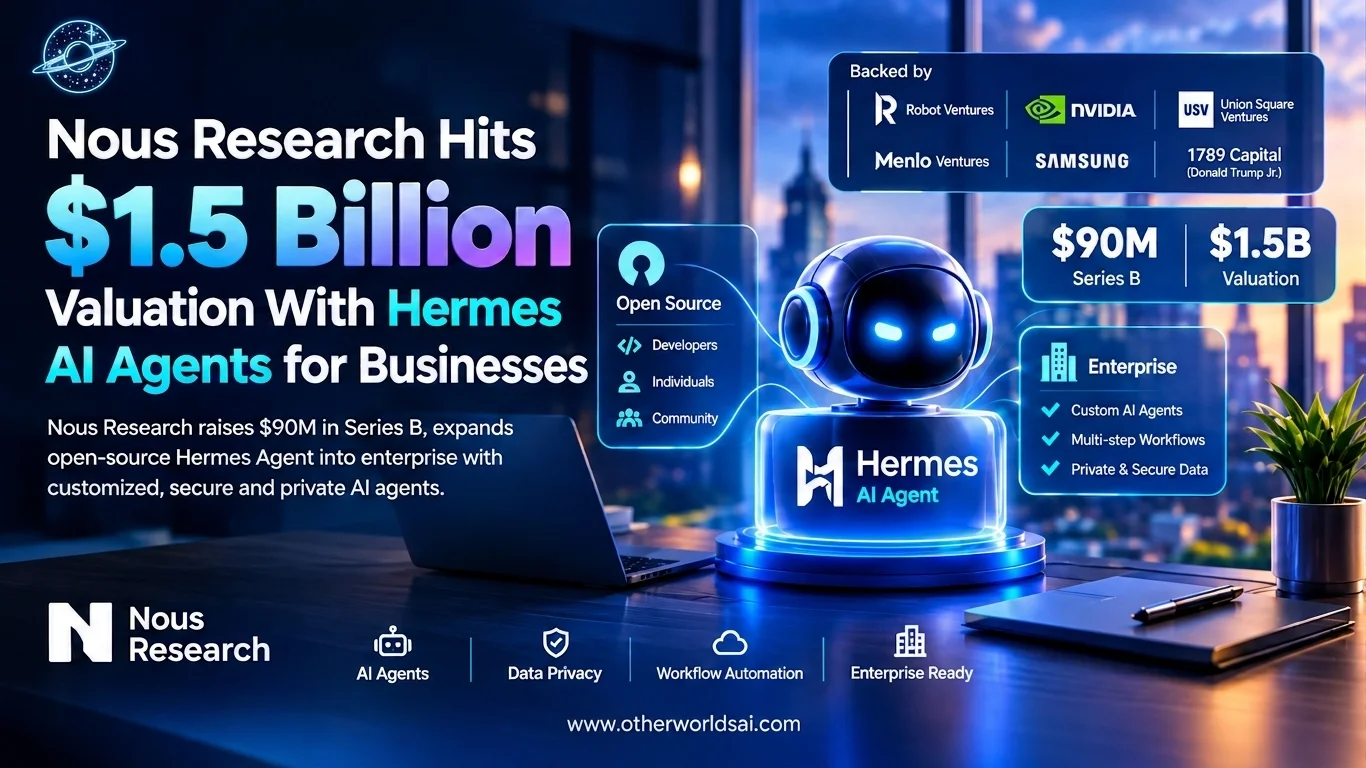
Databricks just became the latest proof point that investors will chase anything with an AI story attached to it. The company announced a new funding round on Thursday that pushes its valuation to $188 billion, led by Coatue, even though the cash itself hasn't landed yet and the round isn't expected to close until later this summer. Other reporting has pegged the raise at roughly $3 billion, though Databricks itself hasn't confirmed a number.
Announcing a valuation before the money is actually in the bank is an unusual move. But according to a venture capitalist who spoke with TechCrunch, the deal was oversubscribed enough — with firms lining up to get a piece of it — that Databricks had little reason to sit on the news.
1: An Eighteen-Month Fundraising Sprint:
This is not Databricks' first headline-grabbing round, and it likely won't be its last. The company closed a $5 billion Series L only five months ago, in February, at a $134 billion valuation. Five months before that, in September 2025, it raised $1 billion at a $100 billion valuation. And roughly nine months before that, in December 2024, it closed what was at the time a record $10 billion round at a $62 billion valuation.
The pace has been fast enough that it's become something of a running joke online, with commentators half-seriously wondering how many letters of the alphabet Databricks will burn through before it finally goes public. One social media post joked about setting up alerts for the day a “Series AA” shows up.
2: From Big Data Darling to AI Infrastructure Play:
Databricks was founded in 2013 and built its early reputation on helping enterprises store massive volumes of data in the cloud while still running fast analytics on top of it. That positioning turned out to be an unexpected advantage once the AI boom hit: because Databricks already held so much enterprise data, it was naturally positioned to offer the governance and security layer that companies now expect when they bring AI into that data.
Since then, Databricks has rolled out a steady stream of AI-specific products, including Lakebase, a database built for AI agents, Unity, an AI gateway, and Omnigent, a “meta-harness” designed to coordinate multiple AI agents at once. Taken together, this product buildout is a big part of why Databricks now reads as an AI company first and a data-infrastructure company second, even though AI wasn't the reason it was founded.
3: Betting on Open-Weight Models to Control Costs:
Databricks has also become one of the more visible enterprise adopters of lower-cost, open-weight models built in China — models whose underlying code is published for anyone to use or modify — as a way to manage AI spending. The company has been particularly vocal about Z.ai's GLM 5.2 as its preferred model for coding tasks.
Last week, Databricks CEO Ali Ghodsi shared results from internal benchmarking the company ran to manage AI costs across its roughly 3,000 software engineers. The tests compared different models on the actual engineering tasks Databricks teams handle day to day. The company found that open models, and GLM 5.2 specifically, could now handle even its hardest coding tasks, and at a lower total cost than proprietary models from Anthropic and OpenAI.
“Model choice is just one variable in the cost equation — the harness wrapped around it can matter just as much.”
— Paraphrased from Databricks' internal coding-agent benchmark findings
The more surprising finding, according to Databricks, was that the choice of “harness” — the agentic tool that wraps around a model and manages its context and instructions, similar to tools like Codex or Claude Code — mattered just as much as the model itself. Databricks found that an open-source harness called Pi was especially effective at managing context for each prompt, making it one of the lowest-cost options without giving up quality.
4: The AI Halo Effect Is Real:
Databricks' transformation from a data-infrastructure company into one of the AI industry's flagship fundraising stories illustrates just how strong the current AI halo effect is on valuations. That effect isn't limited to companies built around AI models: as previously reported, even a sandwich chain like Jersey Mike's referenced AI 22 times in its own IPO filing documents.
For Databricks, the AI narrative has translated directly into fundraising momentum, four major rounds and a valuation that has tripled in under two years. But the underlying lesson for enterprise leaders is less about the size of the checks being written and more about the strategy behind them: pairing governed, secure data infrastructure with cost-conscious AI tooling is what's actually driving results, not just headlines.
Enterprise AI Doesn't Have to Cost $188 Billion to Get Right:
Databricks' story proves the appetite for AI-powered data and automation platforms is real — but you don't need a mega-round to get the benefits.
Otherworlds AI's Agent+ platform brings that same governed, agent-driven automation to growing businesses for a flat $297/month, built on Google Opal workflows and backed by custom enterprise AI builds when you need something bespoke.

Meta's Next Big Bet: This New App Lets You Build Games Simply by Typing a Prompt
Explore Agent+ at otherworldsai.com
Support our research
Independent analysis fueled by you.