
When you hear "AI in healthcare," what's the first thing that pops into your head?
Robotic surgeons? Machines that predict diseases? Super-advanced diagnostics? Me too! It’s all very sci-fi, and don't get me wrong, those innovations are incredibly exciting and will undoubtedly change medicine. But what if I told you the AI that's really transforming hospitals right now isn't in the operating room making cuts, but rather making sure the operating room is ready for the next cut? It sounds a bit… mundane, doesn't it? But trust me, this "mundane" problem is costing hospitals millions and stressing out our healthcare heroes.
The OR's Dirty Little Secret: Lost Time:
Operating rooms are the absolute heart of a hospital, and they’re incredibly expensive to run. Every single minute counts. Yet, here's the kicker: hospitals lose two to four hours of operating room time every single day.
No, it's not because surgeons are taking coffee breaks or surgeries are running dramatically over schedule. The real culprit? The time between procedures. Think about it: cleaning and preparing the room, moving patients, coordinating nurses, anesthesiologists, and technicians, and making last-minute scheduling decisions. All of these "small" tasks add up, and often, they’re still being managed with outdated systems, fragmented communication, and a whole lot of guesswork.
Imagine a busy airport where no one knows exactly when a plane has landed, when it’s ready for the next passengers, or if a delay in one flight will mess up the entire day's schedule. That's essentially what’s happening in many operating rooms. This "operational chaos" leads to empty rooms sitting idle, overworked staff scrambling, patients experiencing frustrating delays, and hospitals losing millions.
The "Air Traffic Control" for Hospitals:
This is where companies like Akara come in. They’re tackling this often-overlooked problem by building what their co-founder and CEO, Conor McGinn, calls “air traffic control for hospitals.” Instead of fancy new surgical robots, Akara is focusing on something far more practical: visibility.
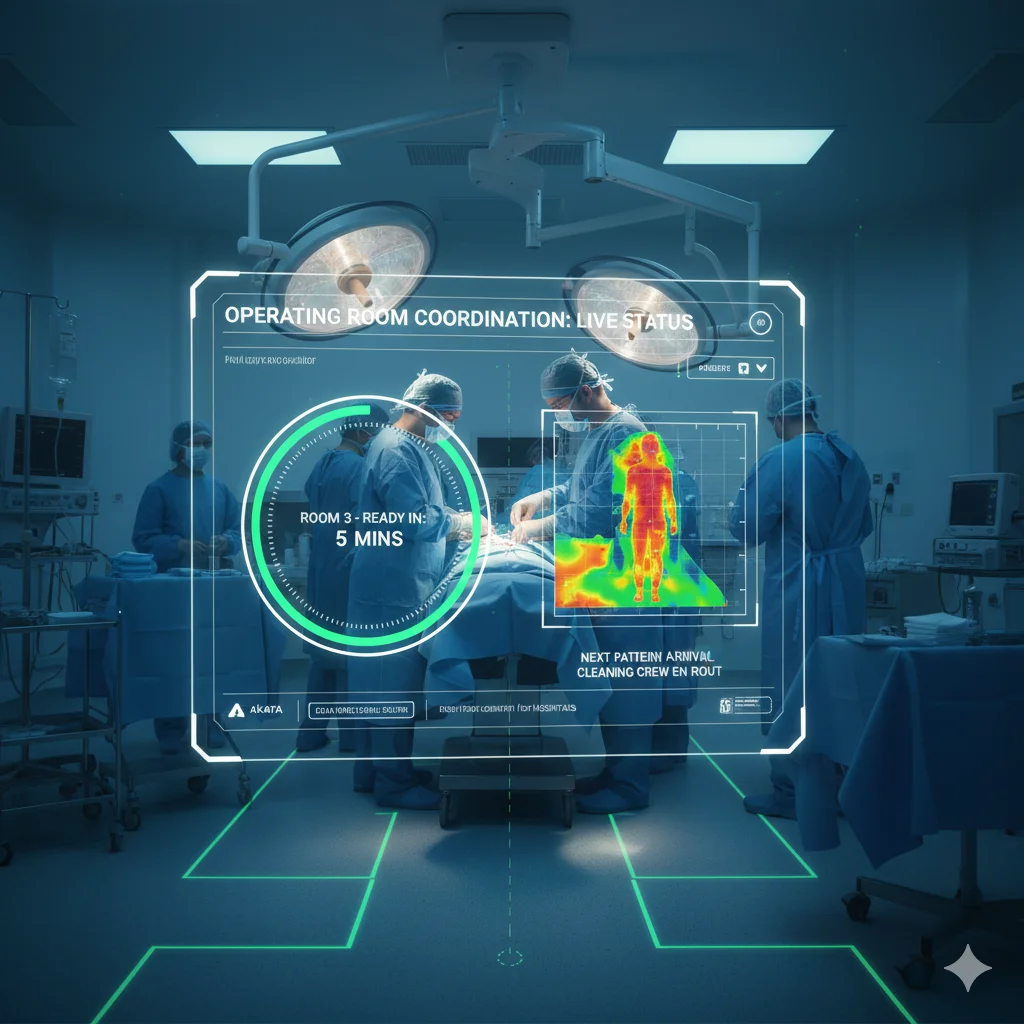
How do they do it? With clever use of thermal sensors and AI. These sensors monitor what’s actually happening inside operating rooms – without using invasive cameras or disrupting anyone's workflow. The system can detect when a room is occupied, when staff enter or exit, and how long each stage of a surgical process truly takes.
This real-time data is a game-changer. Instead of relying on someone manually updating a whiteboard or making a phone call, hospital staff get a live, accurate picture of operating room status. This allows teams to coordinate seamlessly, cut down on idle time, and make smarter scheduling decisions throughout the day. It’s like having a crystal ball that shows you exactly when a room will be free and when the next patient should be prepped.
Small Improvements, Massive Impact:
You might think, "So what if they save an hour or two?" But in the high-stakes world of healthcare, even small improvements have enormous consequences. Reclaiming just one or two hours of OR time daily can significantly increase a hospital’s capacity. That means more surgeries can be performed without hiring more staff or building new infrastructure.
The ripple effects are huge:
- Reduced Overtime Costs: When things run smoothly, staff aren't constantly working late to catch up.
- Minimized Patient Wait Times: Less chaos means patients get their procedures done on schedule, reducing anxiety and improving their experience.
- Eased Staff Burnout: Surgical teams are under immense pressure. Giving them a predictable, efficient environment can significantly reduce stress and improve morale – a critical concern in our already strained healthcare system.
Why This "Boring" AI Is So Exciting:
Akara's story is compelling because it shifts our perspective on what valuable healthcare AI looks like. The most impactful applications of artificial intelligence may not be the most glamorous. Instead of replacing doctors or making complex medical decisions, AI can deliver incredible value by simply fixing the operational bottlenecks that quietly drain resources every single day.
For hospital administrators facing tight budgets, staffing shortages, and rising patient demand, solutions like Akara’s offer a more practical, immediate future for healthcare technology. It’s about efficiency, coordination, and real-world impact that you can measure in dollars saved and patients served.
While the headlines might still be dominated by futuristic robots and groundbreaking diagnostics, the AI tools truly transforming healthcare might just be the ones working diligently behind the scenes, ensuring that operating rooms — the very heart of every hospital — run smoothly, predictably, and efficiently. In a sector where every minute translates directly into lives and dollars, solving operating room coordination isn't just an improvement; it might just be one of the most important healthcare innovations of this decade.
Support our research
Independent analysis fueled by you.