
Google Cloud Doubles Down on AI Deployment: What the Accenture Deal Means for Enterprise AI:
The race to dominate enterprise artificial intelligence is no longer just about building the smartest large language model (LLM) or hoarding the most GPUs. The market has officially shifted from model development to full-scale enterprise execution.
Google Cloud’s strategic partnership with consulting giant Accenture to form the Accenture Gemini Enterprise Business Group highlights a critical evolution in tech strategy: the rise of forward-deployed engineers (FDEs) to accelerate corporate AI integration.
As hyperscalers face mounting pressure to demonstrate tangible value from their multi-billion-dollar infrastructure investments, sending hands-on technical experts into client operations has become the new primary battleground for AI dominance.
The Enterprise ROI Bottleneck: Why Model Access Isn't Enough:
Hyperscalers like Google Cloud, Microsoft Azure, and Amazon Web Services (AWS) are pouring unprecedented capital into GPUs, data center construction, and power capacity. Yet, a central challenge persists across the corporate world: the AI execution gap.
While thousands of enterprises have experimented with proof-of-concepts, many struggle to deploy AI models into core production environments.
The primary hurdles include:
-
Legacy Systems Integration: Bridging modern API-driven models with decades-old enterprise software architectures.
-
Data Readiness and Governance: Preparing messy internal data while maintaining strict privacy, compliance, and security standards.
-
Lack of Specialized Talent: High market competition for engineers who possess both deep machine learning expertise and corporate business acumen.
Without dedicated technical resources to bridge these gaps, corporate AI spending risks stalling at the pilot phase.
Enter the Forward-Deployed Engineer (FDE) Model:
To break through these integration bottlenecks, tech giants are reviving and expanding the forward-deployed engineering approach—a model historically popularized by enterprise software firms like Palantir.
Rather than relying purely on software sales or standard API documentation, companies are sending embedded engineering teams directly into enterprise clients. These FDEs work side-by-side with internal IT and product leadership to build custom workflows, fine-tune models, and optimize business processes.
[Raw AI Infrastructure / Models] │ ▼ [Forward-Deployed Engineers] ◄── Combined Technical & Business Expertise │ ▼ [Bespoke Enterprise AI Solutions] ──► Measurable Business ROI

Anthropic’s Surprise Double Launch Directly Targets OpenAI and Google’s AI Dominance
Inside the Accenture & Google Cloud Expansion:
Under the new agreement, Google and Accenture are scaling up enterprise deployment capabilities through a structured, high-touch framework:
-
1,000 Trained Engineers: Google is training up to 1,000 Accenture specialists on the Gemini Enterprise platform, embedding them within client teams to build production-ready applications.
-
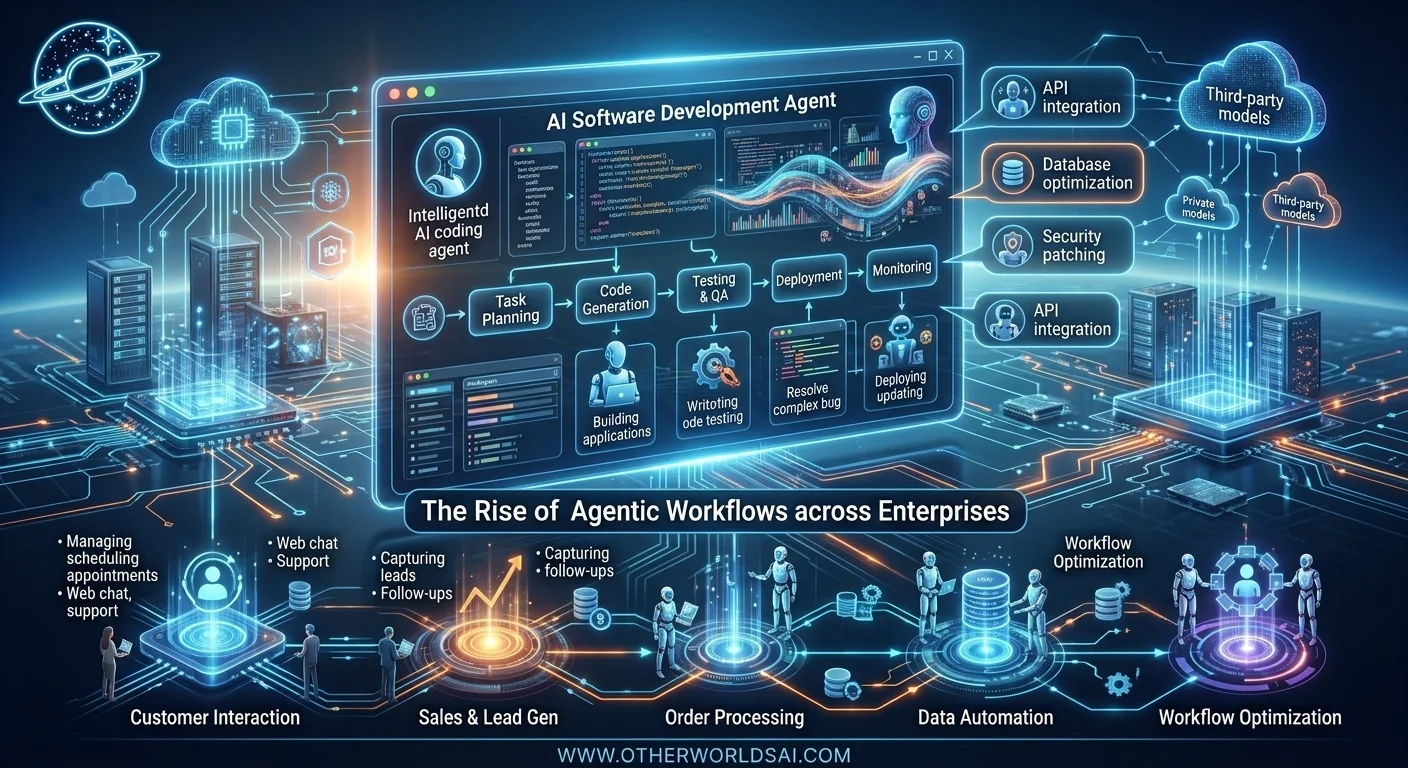
Custom Agentic Workflows: FDEs will focus on deploying autonomous AI agents capable of handling complex, multi-step operations across internal departments.
-
Ecosystem Investment: This deal expands on Google Cloud’s broader partner ecosystem commitments, which embed specialized technical teams across consulting partners like Capgemini, Cognizant, and Deloitte, as well as private equity portfolio companies.
The Competitive Landscape: Hyperscalers vs. AI Startups:
The battle for market share is expanding on two distinct fronts. On one side, newer specialized firms and direct deployment teams—such as OpenAI’s deployment groups and Anthropic’s integration partners—are moving rapidly to capture developer mindshare and mid-market spend.
On the other side, hyperscalers like Google Cloud are leveraging deep enterprise relationships, security infrastructure, and multi-faceted cloud agreements. While developer API usage metrics fluctuate across start-up ecosystems, major enterprise contracts rely heavily on custom integration, data privacy assurances, and hands-on operational support.
Strategy Focus: Cloud Hyperscalers (e.g., Google, Microsoft): Specialist AI Startups
Primary Strength: Built-in security, massive infrastructure, deep consulting ties: Fast innovation cycles, focused developer ecosystems.
Go-To-Market: Large strategic enterprise agreements & global consultancies: API-first adoption and direct tech integrations.
FDE Objective: Operationalize cloud ecosystems and drive consumption: Accelerate model usage and solve niche automation tasks
Key Takeaways for Business Leaders:
-
Prioritize Real-World ROI over Model Specs: Benchmark success by operational efficiencies, cost reductions, and revenue impact rather than raw model parameter size.
-
Prepare for Agentic AI Systems: Enterprise architectures are transitioning from passive search tools to autonomous AI agents that carry out multi-step business logic.
-
Invest in Integration Infrastructure: Standardizing internal data governance and API access is essential before bringing in external technical or deployment resources.
As the enterprise AI landscape matures, long-term market leadership will belong to the platforms that combine cutting-edge technology with seamless, real-world execution.
Support our research
Independent analysis fueled by you.