
Artificial Intelligence is evolving faster than any major technology in human history.
But the real question is no longer how powerful AI is becoming —it’s how effectively people are using it. The true promise of AI lies in self-empowerment: enabling individuals, businesses, and countries to unlock new levels of productivity, creativity, and economic opportunity.
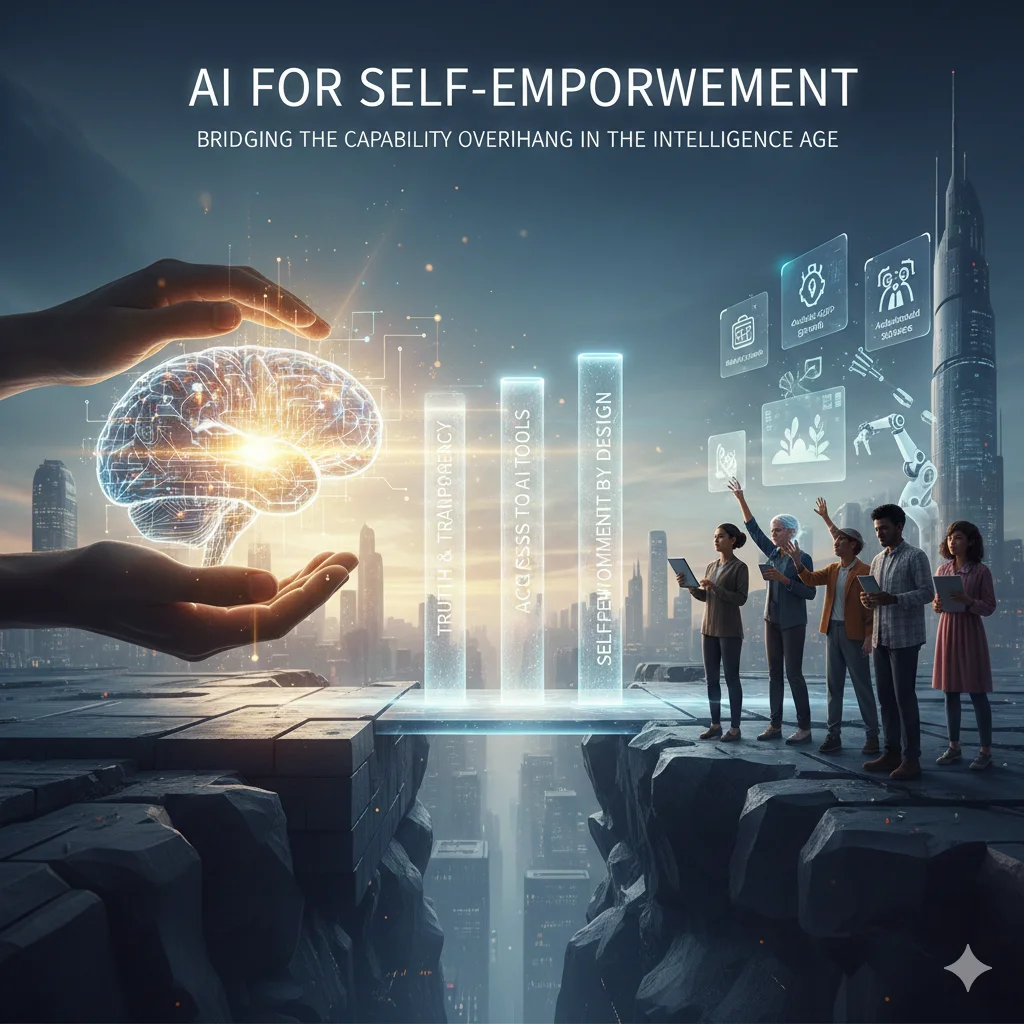
As AI capabilities expand rapidly, the world faces a growing challenge known as the capability overhang—the widening gap between what AI systems can already do and the value most people are actually capturing from them at scale. Closing this gap will define whether AI becomes a tool for shared prosperity or a missed opportunity.
Understanding the AI Capability Overhang:
AI is a deeply counterintuitive technology. Its progress rarely follows predictable paths, and its real-world impact often surprises even its creators. When ChatGPT was launched, it was initially capable of answering basic questions. What followed was an explosion of creative use cases—from writing software and research papers to managing businesses, learning new skills, and creating digital content.
Today’s frontier AI systems can reason, plan, and act across complex tasks, including software development, mathematical research, content creation, data analysis, and strategic decision-making. Yet despite this immense capability, most people and organizations still use AI in limited ways—often as a simple chatbot rather than a full cognitive partner.
As computer scientist Alan Kay famously said, “The best way to predict the future is to invent it.” The future of AI will not be defined by models alone, but by communities of users who actively explore, experiment, and build with these tools.
AI as a Personal and Economic Productivity Multiplier:
One of the strongest indicators of AI’s self-empowering potential is productivity. Usage data consistently shows that AI power users leverage up to seven times more cognitive output than average users. These users don’t just interact with AI more frequently—they apply it more comprehensively across diverse tasks.
High-impact AI use includes:
-
Strategic planning and decision-making.
-
Writing, editing, and research.
-
Coding, automation, and debugging.
-
Learning complex skills faster.
-
Business optimization and growth.
The result is not just increased output, but higher economic value per individual. Much like computers once revolutionized office work, AI is now redefining what a single person or small team can accomplish.
AI’s Broader Impact on Society and the Global Economy:
Beyond individual productivity, AI holds the potential to reshape entire economies. Experts predict AI-driven outcomes such as:
-
Double-digit GDP growth.
-
Affordable and personalized healthcare.
-
Accelerated scientific discovery.
-
Lower barriers to entrepreneurship.
-
Global access to education and knowledge.
When deployed responsibly, AI can raise the baseline quality of life for billions of people—while simultaneously expanding the ceiling for innovation and wealth creation. The key challenge is ensuring that access, understanding, and adoption keep pace with capability.
Principles for Managing AI’s Capability Overhang:
To ensure AI truly empowers humanity, three core principles are essential.
-
- Truth and Transparency. In periods of rapid technological change, accurate information creates agency. Individuals, businesses, and policymakers need credible data on how AI is actually being used, which jobs are evolving, and where productivity gains are emerging.
Transparent insights into AI performance—especially how AI compares with human capabilities across tasks—help people make informed decisions about careers, skills, and investments. Truth is the foundation of empowerment.
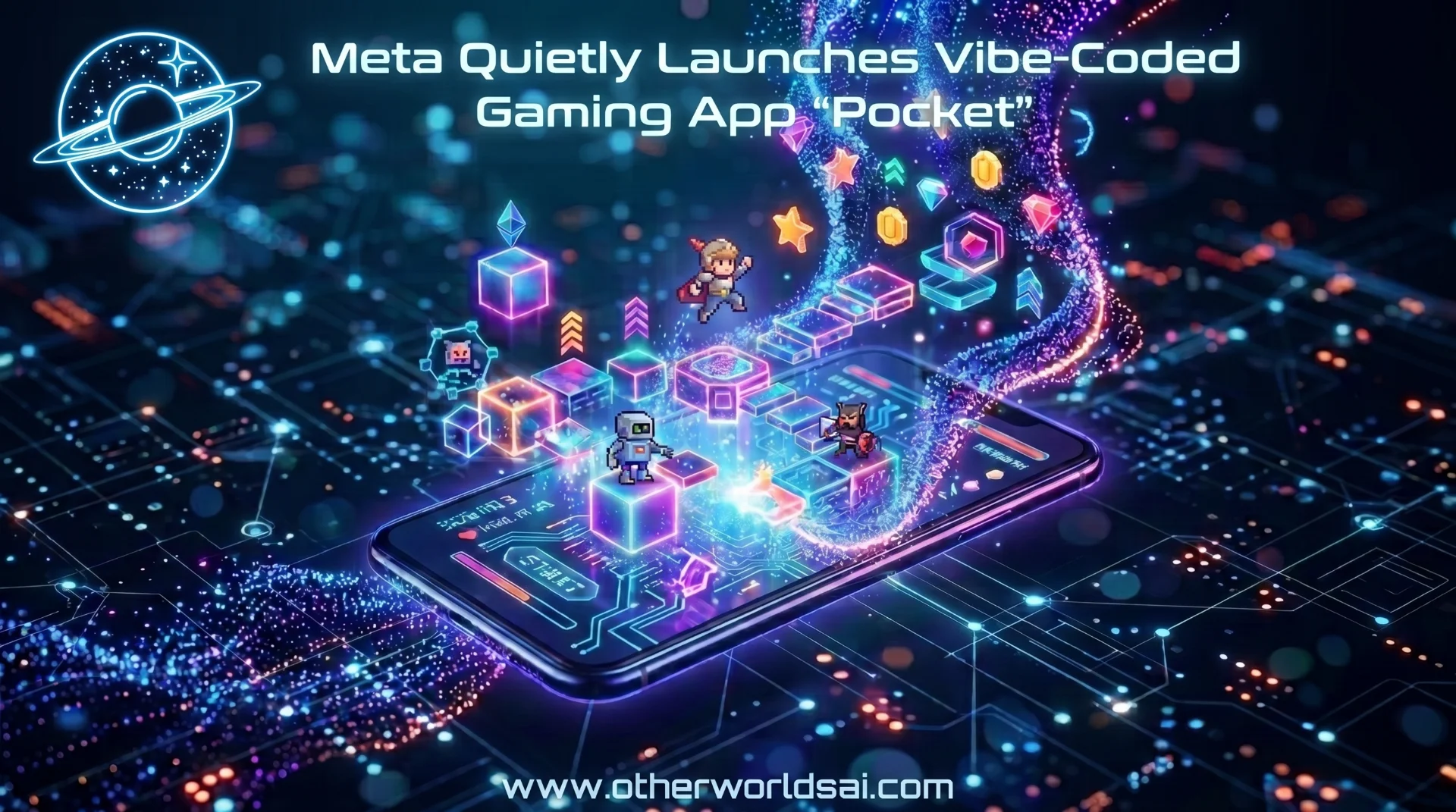
Meta's Next Big Bet: This New App Lets You Build Games Simply by Typing a Prompt
-
- Access to AI Tools and Compute. As AI increasingly shapes economic outcomes, access becomes a form of opportunity. AI’s usefulness scales directly with compute power, meaning individuals, startups, and nations all need reliable access to AI infrastructure.
Free and affordable AI platforms, developer APIs, and enterprise solutions allow people to build, experiment, and innovate regardless of location or background. Broad access ensures that AI’s benefits are not concentrated among a few, but distributed widely across society.
Support our research
Independent analysis fueled by you.
-
- Self-Empowerment by Design. True empowerment comes from flexible, customizable AI tools that users can adapt to their own goals. The most powerful AI systems are not rigid—they are designed to be shaped in ways their creators never anticipated.
For everyday users, AI enables:
-
Smarter budgeting and financial planning.
-
Faster and more effective job searching.
-
Learning new skills independently.
-
Turning ideas into actionable projects.
For builders, creators, and founders, AI unlocks:
-
New startups and digital products.
-
Entirely new markets and business models.
-
Faster innovation cycles.
High-agency individuals who fully embrace AI will lead the next wave of economic and technological growth.
The Intelligence Age and the Future of Opportunity:
We are entering what many describe as the Intelligence Age —a time when cognitive tools are as transformative as electricity or the internet. AI for self-empowerment is not about replacing humans, but amplifying human creativity, judgment, and ambition.
The better we manage the AI capability overhang, the more people will be able to participate in AI-driven progress. This is how AI becomes a force for shared opportunity rather than concentrated power.
The future of AI is not something that simply happens to us—it is something we actively build, together.