
The Industrial Shift: Why the New Wave of Autonomous AI and Massive Cloud Infrastructure Go Hand in Hand:
Inside the Massive $6,000,000,000 AWS Deal Shaking Up the AI Industry:
Something fundamental is shifting across the global technology ecosystem,** and it is happening far beyond the boundaries of our smartphone screens. Autonomous AI systems are rapidly leaving the safe confines of digital chat boxes to pilot heavy machinery in logistics networks, run around-the-clock automated retail stores, and restructure international financial workflows.
As these complex, data-heavy systems make their way into physical environments, the underlying infrastructure powering them must scale at an unprecedented rate. This twin revolution—the migration of artificial intelligence into the real world and the frantic race to build affordable, custom cloud hardware—is perfectly captured by two blockbuster stories shaking the tech industry: Singapore's pioneering governance initiatives for physical autonomous agents and Snowflake’s jaw-dropping $6 billion cloud infrastructure deal with Amazon Web Services.
For years, technology policy and developer debates were entirely dominated by what software said rather than what it did. Concerns surrounding bias in language models, digital misinformation, and creative rights have taken center stage. However, a new generation of embodied AI systems is completely rewriting the corporate risk landscape.
When an online content filter makes a mistake, the fallout is digital; when an autonomous warehouse drone, healthcare logistics network, or automated supply line malfunctions, the consequences involve physical infrastructure, corporate liability, and human safety. Speakers at recent technology summits have made this distinction clear: regulating these advanced systems looks less like software compliance and more like aviation safety frameworks, rigorous industrial standards, and critical infrastructure oversight protocols.
Recognizing this shift early, Singapore’s Infocomm Media Development Authority (IMDA) has taken one of the most proactive steps of the era by releasing its highly anticipated Model AI Governance Framework. This framework is specifically built to handle autonomous agents that plan, reason, and leverage external digital tools to execute complex, multi-step actions without constant human intervention.
Crucially, the blueprint shuns rigid checklists in favor of "an iterative process rather than a one-time assessment", acknowledging that intelligent agents interact dynamically with real environments where risks cannot always be anticipated before deployment. Instead of demanding a human approve every single automated micro-task, the framework champions structured human oversight at critical milestones, high-stakes checkpoints, and irreversible decision nodes.
The Architecture of Agents: How Next-Generation AI Software Transforms Enterprise Data:
At the enterprise level, this transition toward high-autonomy automation is forcing companies to fundamentally re-architect how their applications interact with internal databases. Businesses are no longer satisfied with simple internal search bars; they are actively adopting a no-code AI platform approach to build custom, agentic workflows.
By utilizing a modern, drag-and-drop AI app builder, non-technical teams can seamlessly connect advanced large language models directly to their proprietary corporate data silos. In this new paradigm, data storage is no longer a passive archive—it is the active nervous system of corporate intelligence.
This enterprise software shift is heavily driving massive demand for ultra-fast, highly efficient language models optimized for repetitive, high-volume automated processing. Tools utilizing efficient architectures like the Gemini 3 Flash model are becoming the standard choice for companies looking to process millions of document summaries, customer interactions, and automated back-office tasks without breaking the bank. These nimble, lightning-fast models allow automated business workflows to run constantly in the background, analyzing incoming data patterns, flagging anomalous transactions, and updating master databases in real time.
The practical reality of scaling these applications is on full display in the financial sector, where traditional operations are getting a massive upgrade. Major Wall Street institutions like JPMorgan, Goldman Sachs, and Citigroup are rapidly implementing advanced systems like Google Opal automated workflows to parse intricate legal documents, generate real-time compliance memos, and conduct comprehensive asset analysis.
In a striking revelation of where the labor market is heading, JPMorgan leadership openly stated the bank would soon be hiring more AI specialists and fewer traditional bankers. Furthermore, an elite group of financial institutions has been granted tightly controlled access to Anthropic's highly secure Mythos cybersecurity model under the secretive Project Glasswing initiative, aimed at proactively hunting down legacy vulnerabilities within global banking infrastructure.
The Cloud Economy: Inside Snowflake's Blockbuster Multi-Billion Dollar Silicon Bet:
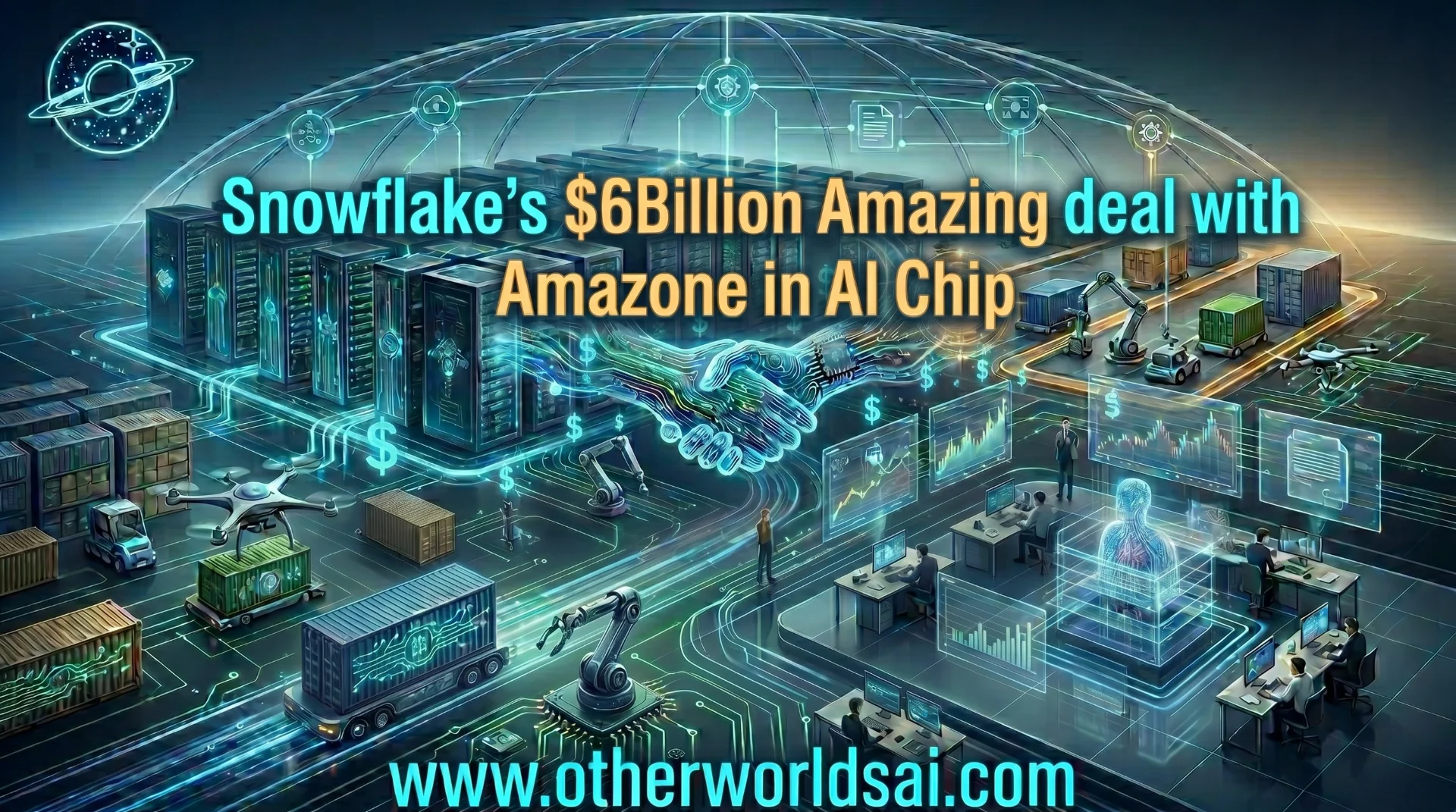
As these intelligence layers scale up globally,** the sheer volume of data being pulled, analyzed, and processed has created a massive gold rush for cloud computing infrastructure. This trend culminated in a stunning announcement: data storage giant Snowflake has locked in a monumental $6 billion, five-year cloud infrastructure agreement with AWS.
To truly comprehend the eye-watering scale of this contract, look at the historical data: Snowflake has generated a total of $7 billion in total sales via the AWS Marketplace since its inception in 2012. This single new agreement means Snowflake will spend nearly as much on Amazon's cloud over the next five years as it historically brought in across its entire operational history.
This explosive spending growth is a direct byproduct of enterprise customers doubling their localized cloud consumption to hit a massive $2 billion for this calendar year alone. Because Snowflake houses the primary data oceans for thousands of global corporations, it has become the natural launchpad for scaled corporate automation.
The company's native developer toolkit, known as ProducerAI, alongside its robust Cortex AI platform, allows enterprises to easily convert raw text queries into precise database commands, generate deep-dive analytics, and construct independent digital workers.
However, running thousands of these data-hungry agents simultaneously introduces a major roadblock: the massive, unsustainable cost of computational hardware.
Support our research
Independent analysis fueled by you.