
18 of Top 20 Pharma Giants Are Already Using This NVIDIA AI Tool:
NVIDIA BioNeMo Accelerates Anthropic's Claude Science Into a New Era of AI-Driven Research:
How natural-language AI agents are compressing weeks of computational science into minutes — and what it means for enterprise AI automation.
18/20: Top Global Pharma Companies Using BioNeMo
25 sec: 1.3M-Cell Workflow, Down From 52 Minutes
3,000x: Faster Cheminformatics With nvMolKit
1: Anthropic and NVIDIA Team Up to Accelerate Scientific Research:
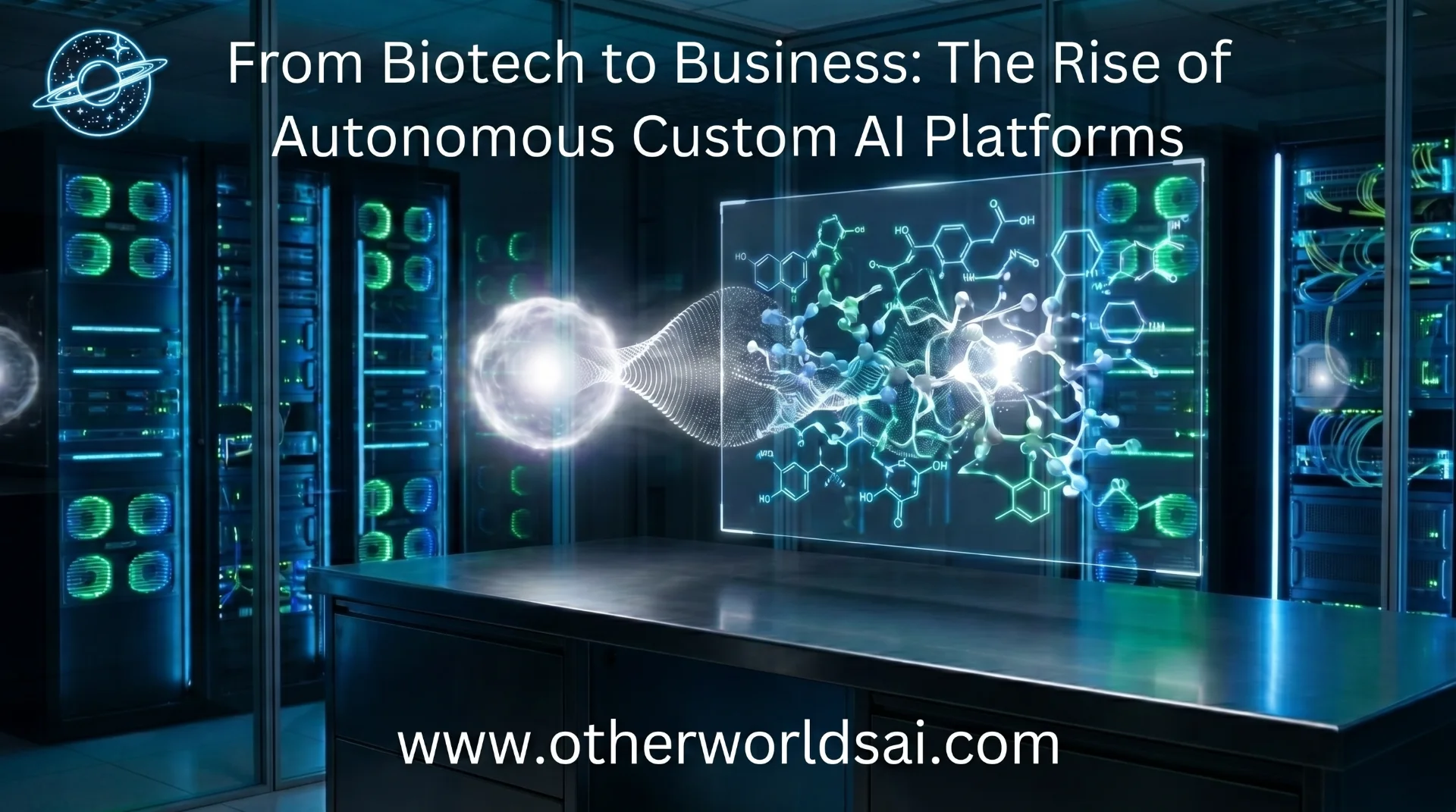
A new AI workbench is changing how research gets done. Anthropic has launched the public beta of Claude Science, a platform that lets scientists converse directly with digital agents in natural language to run end-to-end research workflows. The system connects natively to the NVIDIA BioNeMo Agent Toolkit, exposing high-performance computing resources as callable skills inside the Claude environment.
The underlying infrastructure is already deeply established. NVIDIA has built what is widely considered the most comprehensive GPU-accelerated computing stack in the industry, spanning physical hardware, software frameworks, operational libraries, scientific models, microservices, and domain-specific tools. That foundation already runs inside 18 of the top 20 global pharmaceutical companies, giving the integration instant credibility across the life sciences industry.
2: From Natural Language to Molecular Design: How Claude Science Works:
The platform removes the technical setup work entirely. Researchers no longer need to manually configure predictive models, set up network endpoints, or manage complex software environments. A scientist simply describes a task — analyzing a genomic sequence, predicting a protein structure, designing a molecular binder — and Claude Science interprets the request, then orchestrates execution through preconfigured, domain-specialized agents.
Those agents come pre-loaded with scientific expertise. They understand established laboratory and computational protocols across genomics, proteomics, single-cell analysis, cheminformatics, and clinical research. The NVIDIA toolkit packages accelerated functions as callable programmatic skills, giving each agent the exact context it needs to map a research step to the right NVIDIA capability, format valid inputs, run the computation, and return results for human review.
A cancer-inhibitor pipeline shows the system in action. A scientist identifies a known cancer-causing antigen mutation and asks Claude to design potential inhibitors targeting it. Claude Science then works with the BioNeMo Agent Toolkit and NVIDIA NIM microservices to run the full pipeline — high-throughput prediction, optimization, and validation — while the scientist focuses on interpreting results rather than managing infrastructure.
An agent is only as fast as the tools it can call — which is exactly the gap this integration closes.
— Claude Science + NVIDIA BioNeMo Agent Toolkit
3: The Performance Numbers Behind the Integration:
The speed gains are the real headline here. The toolkit gives scientists access to accelerated workflows and advanced open models, including Evo 2, Boltz-2, and OpenFold3, each purpose-built for a distinct phase of the research pipeline. Genomic analysis processed through NVIDIA Parabricks drops from hours to minutes, letting agents factor complex genomic context into decisions in near real-time.
Some of the improvements are dramatic. The RAPIDS-singlecell tool, developed by scverse, compresses a 1.3-million-cell preprocessing and clustering workflow from 52 minutes down to 25 seconds — fast enough to become an active part of an agent's reasoning loop rather than an offline batch job. The nvMolKit tool accelerates cheminformatics tasks like similarity search and conformer generation by up to 3,000 times, keeping pace as agents iterate across massive chemical spaces.
4: Standardizing Production Deployment With NIM Microservices:
Enterprise research teams need more than fast prototypes. NVIDIA packages its open biomolecular models as BioNeMo NIM microservices — fully containerized, enterprise-ready inference endpoints built for production environments. Autonomous agents interact with a single stable API to trigger these deployments, and because the toolkit is open and harness-agnostic, the same scientific skills work consistently across different agent frameworks and research platforms.
5: What This Means for AI-Driven R&D:
The bigger story here is about workflow design, not just biology. Claude Science demonstrates a pattern that extends well beyond life sciences: pairing a conversational AI layer with deeply specialized, accelerated tools turns multi-step technical workflows into something a person can simply ask for. Engineering teams can already download the BioNeMo Agent Toolkit through NVIDIA's developer resources and GitHub repositories, and Anthropic is actively collecting feedback from researchers during the public beta to guide future integrations.
Specialized AI Agents Aren't Just for Life Sciences
Claude Science proves the model: connect natural-language AI to domain-specific tools, and complex, multi-step workflows collapse into a conversation.
That same principle powers Agent+ from Otherworlds AI — turning business processes like reporting, scheduling, and customer operations into tasks your team can simply ask for, instead of manually managing.
Move Over Nvidia: Anthropic and Samsung Team Up to Break the AI Chip Monopoly
Explore the Agent+ Business AI Platform at otherworldsai.com
Support our research
Independent analysis fueled by you.