
Android 17 Is Here — And It's Google's Biggest AI-Powered Mobile Release Yet:
The Android 17 Multi-Tasking Overhaul: How the New 'Bubble Bar' Reinvents Mobile Workflows:
From Gemini Omni video editing to emergency detection on Pixel Watch, Android 17 and Wear OS 7 redefine what AI-integrated mobile experiences can do — and what businesses should expect next.
Section 1: Android 17 Launches — What You Need to Know:
Google has officially released Android 17, its most AI-forward mobile operating system to date. Alongside it comes Wear OS 7 for smartwatches, and a June 2026 Pixel Drop delivering a wave of new features arriving first on Google's own Pixel devices. The release underscores Google's broader enterprise AI strategy: use Android and Pixel hardware as a live showcase for its most advanced AI models and agentic workflows.
The Android 17 release arrives at a pivotal moment in the mobile AI race. While Apple is still ramping toward its public launch of upgraded Siri and iOS 27 this September, Google is already shipping generative AI features at scale — from multimodal video understanding to real-time speech translation, all embedded natively into the operating system.
"Android 17 isn't just an update — it's a statement. Google is embedding Gemini so deeply into the mobile experience that AI stops being a feature and starts being the operating layer."
Gemini Omni: Multimodal AI Model
Lyria 3: Music Generation AI
AudioLM: Speech Translation Engine
Wear OS 7: Smartwatch Platform
Section 2: Gemini AI Takes Center Stage in Android 17:
Gemini Omni, Google's most capable multimodal AI model, is now embedded in Android 17. Users can edit videos directly inside a Gemini conversation — describing changes in plain language and watching the AI execute them. This is a significant milestone for on-device AI productivity, blurring the line between a chat interface and a full-featured creative suite.
Music creation is also coming to Android via Lyria 3. The music-generation model lets users create original audio tracks using text prompts or images directly within the Gemini app — opening new creative territory for content creators, marketers, and enterprises building branded digital experiences. Meanwhile, Pixel 10a users gain access to AudioLM, a speech-to-speech translation engine that enables real-time voice translation across languages.
Communication tools are also expanding. A new feature lets users record personalized outgoing audio messages for callers when they can't answer — a small but meaningful step toward AI-assisted voice presence. The 'Take a Message' feature, previously limited in availability, is now rolling out to additional global markets.
Gemini Omni's ability to edit video within a conversation — not a separate app — signals a fundamental shift: AI is becoming the interface, not just a tool within it.
Section 3: Multitasking Reinvented — The Bubble Bar and Screen Reaction Mode:
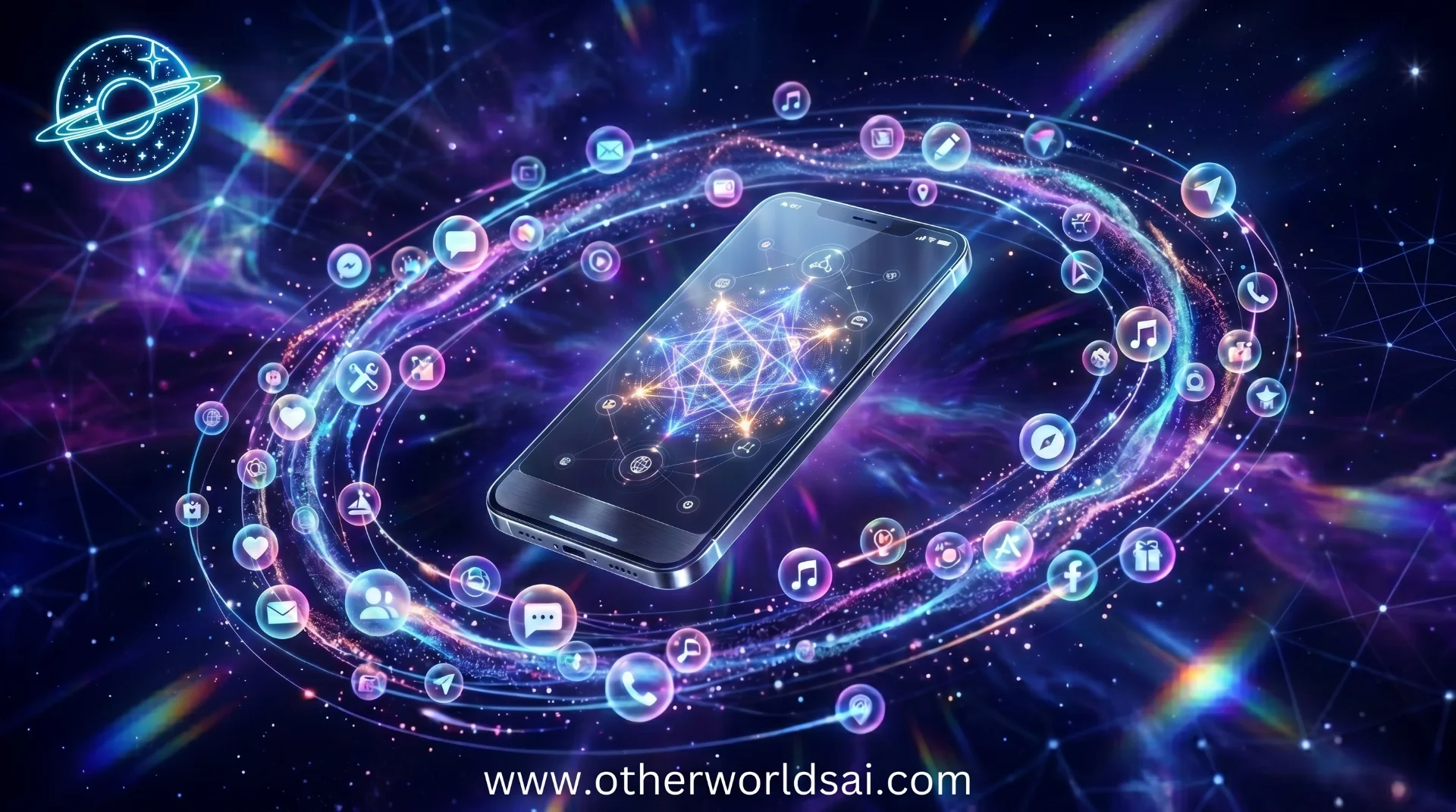
Android 17 introduces a new UI element called the Bubble Bar. This feature organizes recently used apps as interactive bubbles anchored at the bottom of the screen, allowing users to instantly switch between apps, layer workflows, and manage multi-app tasks without navigating away from what they're doing. It's a material improvement for professionals juggling multiple tools simultaneously on a single device.
For social media creators and content teams, Android 17 adds simultaneous selfie-and-screen recording. Users can now capture their screen and their facial reaction at the same time using the front-facing camera — enabling a new content format ready-made for TikTok, Instagram Reels, and YouTube Shorts. This feature alone could meaningfully accelerate content production workflows for brands managing social channels at scale.
Cross-platform file sharing also takes a step forward. Android Quick Share — Google's file transfer protocol — is becoming compatible with Apple's AirDrop on Pixel 8a and 9a devices, reducing friction in mixed-device environments that enterprise teams frequently operate in.
Section 4: Wear OS 7 and the Connected Device Ecosystem:
Wear OS 7 arrives as a meaningful platform upgrade for Google's smartwatch ecosystem. Emergency detection capabilities are coming to the Pixel Watch, which will now automatically contact emergency services and pre-selected contacts if it detects a car crash, a fall, or an absence of pulse. For enterprise deployments in field service, logistics, or healthcare environments, this represents a significant safety layer enabled entirely by AI-driven sensor analysis.
Live phone app mirroring is also now available on Pixel Watch. Watch faces and apps can receive real-time updates from linked phone applications, enabling a tighter integration loop between wearable and mobile experiences. Google is also expanding Wear OS compatibility with its upcoming AI glasses and other hardware peripherals including headphones — a signal that the Android ecosystem is evolving into a coordinated, multi-device AI platform.
Gemini Intelligence features for Wear OS are coming later this summer. These will include the ability to create personalized smartwatch widgets simply by describing them in natural language, and a 'Personal Intelligence' feature that connects users' Google apps and chat history with Gemini to surface timely, contextual insights. Battery life improvements of up to 10% and new multistep automation tools round out the Wear OS 7 upgrade.
A smartwatch that can call for help, brief you on your day, and auto-generate its own interface based on what you describe — Wear OS 7 is the first wearable OS that feels genuinely agentic.
10%: Battery Life Improvement (Wear OS 7)
AirDrop: Quick Share Compatible
Pixel 10a: AudioLM Translation Device
Bubble Bar: New Multitasking UI Element
Section 5: Security, Parental Controls, and Enterprise Protections:
Android 17 comes with a strengthened security layer for both consumer and enterprise deployments. The Find Hub app gains a 'Mark as Lost' feature, while Live Threat Detection continuously monitors for malicious behavior at the system level. Additional threat defense mechanisms have been integrated throughout the OS for more proactive protection.
Parental controls have received a significant upgrade as well. Parents can now set screen time limits and apply content-filtering rules using a PIN — no Google account required. This simplifies family configuration and addresses data privacy concerns for households managing children's device use. For enterprise IT administrators, the same PIN-gated control logic offers a low-friction path toward enforcing usage policies on managed devices.
For gamers and foldable device users, Android 17 introduces a new gaming mode. A 50/50 split-screen layout with a dynamic game pad overlay gives foldable phone owners a console-like interaction model — another example of Android 17 pushing the boundaries of what mobile form factors can deliver.
Section 6: What Android 17 Means for Enterprise AI Strategy:
Android 17 isn't just a consumer update — it's a roadmap signal for enterprise AI adoption. The features Google is shipping in this release — Gemini-native workflows, agentic automation, contextual personal intelligence, and real-time cross-device coordination — are the same capabilities that forward-thinking enterprises are trying to operationalize across their business systems right now.
At Otherworlds AI, our Agent+ Business AI platform is built for exactly this moment. While Android 17 brings Gemini-driven automation to the device layer, Agent+ brings the same level of agentic intelligence to your business operations — connecting your CRM, communications, scheduling, and customer workflows into a unified AI-powered system. Paired with Google Opal automated workflows, businesses can execute multi-step processes across tools and platforms without manual intervention, just like the multistep automation Google is now shipping natively in Wear OS.
The enterprises that move now — integrating AI at the workflow layer, not just the device layer — will set the operational baseline their competitors will be trying to catch up to. Android 17 is proof that the AI-native future is already here. The question is whether your business infrastructure is keeping pace. Agent+ ensures it does.
Android 17 proves AI is now the operating layer of mobile. Agent+ by Otherworlds AI brings that same operating intelligence to your enterprise workflows — today, not someday.