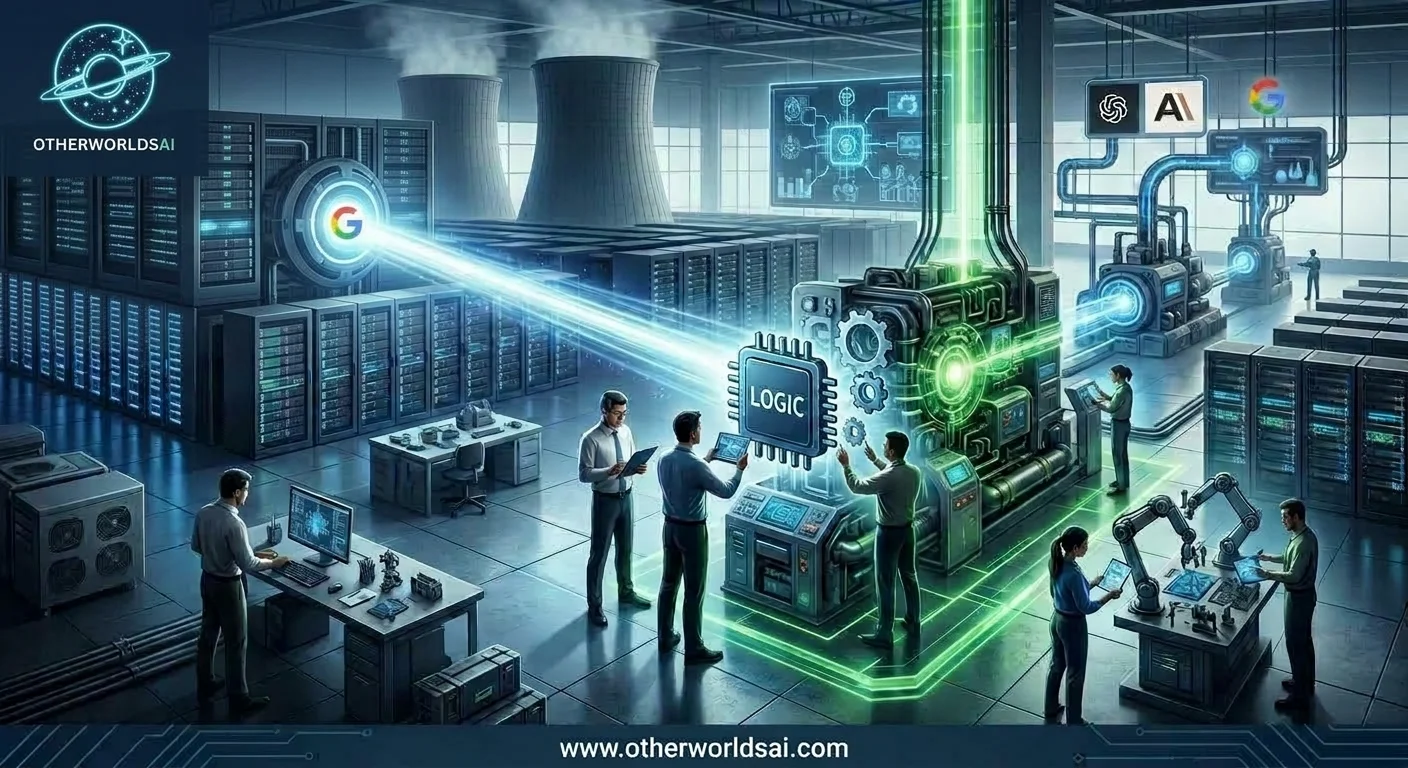

The race to build the future of software development is becoming one of the biggest battles in artificial intelligence.
Cognition, the company behind the AI coding assistant Devin, has just sent another strong signal to the market by raising $2 billion at a $48 billion valuation.
The massive funding round, led by major investors including Andreessen Horowitz, Accel, Founders Fund, General Catalyst, and Avenir, comes only a few months after Cognition’s previous funding round.
For the broader AI industry, the message is clear: investors do not believe AI coding will become a winner-take-all market.
Instead, there may be room for several powerful companies to build billion-dollar businesses around AI coding agents, autonomous software development, AI-powered programming, and intelligent developer tools.
Cognition’s Rapid Rise:
Cognition was founded in 2024 by Scott Wu and quickly became one of the most talked-about AI startups after launching Devin, an AI software engineer designed to perform coding and software development tasks with a high degree of autonomy.
Unlike traditional AI chatbots that primarily answer questions or generate snippets of code, an AI coding agent can potentially take a broader software-development task, plan the work, write code, test it, identify problems, and make changes.
That shift—from AI that assists developers to AI that can execute development workflows—is one of the most important trends in AI automation.
Cognition says its annualized run-rate revenue has increased dramatically, growing from approximately $492 million to $900 million since its previous fundraising announcement. That growth helps explain why investors are willing to place such a substantial valuation on the company.
The AI Coding Market Is Getting Crowded:
Cognition isn't operating alone.
Another major player in the AI coding market is Cursor, which has become extremely popular among professional developers and software teams.
Cursor was reportedly discussing a funding round at a valuation of approximately $50 billion before ultimately being acquired by SpaceX for $60 billion.
At the time, Cursor's annualized revenue had reportedly exceeded $2 billion.
The comparison is important.
Cognition's $48 billion valuation against approximately $900 million in annualized run-rate revenue represents a considerably higher revenue multiple than Cursor commanded during its earlier funding discussions.
That suggests investors are not simply valuing today's revenue. They are betting heavily on the future growth of AI software development and autonomous coding agents.
Why Investors Believe There Is Room for Multiple AI Winners:
For years, many technology markets eventually consolidated around one dominant platform. AI coding may be different.
Software development is an enormous global market, and developers have very different requirements depending on their company size, programming languages, infrastructure, security requirements, and development workflows.
Some organizations may want an AI pair programmer.
Others may want an autonomous coding agent capable of completing entire tasks. Enterprise companies may prioritize security, privacy, compliance, and private AI infrastructure.
Startups may prioritize speed and cost.
This creates opportunities for multiple companies to build specialized AI coding solutions.The same principle applies beyond software development.
AI agents are increasingly moving from simple conversational interfaces toward systems capable of performing real business tasks.
That is where platforms such as OtherworldsAI Agent+ become particularly relevant.
From AI Assistants to AI Agents:
The biggest development in artificial intelligence isn't simply that AI can write code. It is that AI systems are becoming capable of taking action.
-
An AI assistant might tell an employee how to respond to a customer.
-
An AI agent can potentially handle the customer interaction itself.
-
An AI assistant might explain how to schedule an appointment.
-
An AI agent can potentially communicate with the customer, collect information, schedule the appointment, and send a confirmation.
This distinction is driving the rapid growth of AI agents, autonomous AI, AI automation, and agentic AI.
Businesses increasingly want technology that does more than generate information. They want AI systems that can execute workflows.
The Cost of Running AI Is Still a Major Challenge:
Cognition's rapid growth comes with an important challenge: AI infrastructure is expensive.
Training and operating advanced AI models requires enormous amounts of computing power. Cognition reportedly leases an Nvidia server cluster that costs hundreds of millions of dollars annually. Its total cash burn could potentially reach approximately $800 million this year.
This highlights one of the biggest challenges facing AI startups.
Revenue growth is important, but companies also need to control the cost of inference, model training, GPUs, data centers, and AI infrastructure.
The economics of AI will ultimately determine which companies can scale sustainably. Building Proprietary AI Models Could Reduce Costs
Cognition is also following another important trend in the AI industry: developing its own models.
Rather than depending entirely on expensive third-party models from companies such as OpenAI and Anthropic, Cognition is training its own model using open-source alternatives.
If successful, this strategy could give the company greater control over its technology while potentially reducing its dependence on external AI providers.
For AI businesses, this can be a significant competitive advantage.
Owning more of the AI technology stack can mean greater control over performance, cost, privacy, customization, and product development.
Meta's Next Big Bet: This New App Lets You Build Games Simply by Typing a Prompt
This is particularly important for enterprises that want private AI, secure AI automation, and customized AI agents rather than sending sensitive business information to external AI platforms.
Enterprise AI Is Becoming the Real Battlefield:
Cognition already has major organizations among its customers, including Mercedes-Benz, NASA, Goldman Sachs, and Citi.
That customer base demonstrates where the AI market is heading.
The next stage of artificial intelligence will not be defined only by consumer chatbots. It will increasingly involve enterprise AI automation.
Companies want AI systems that can operate inside their existing business processes and help automate repetitive, time-consuming tasks.
This includes:
-
Customer service automation.
-
Lead generation.
-
Appointment scheduling.
-
Sales automation.
-
Order processing.
-
Customer communication.
-
Data processing.
-
Software development.
-
Business workflow automation.
-
Internal knowledge management.
The companies that successfully connect AI to these real-world workflows could capture enormous value.
Support our research
Independent analysis fueled by you.
What Cognition's $48 Billion Valuation Means for Businesses:
Cognition's valuation is more than another impressive startup funding headline.
It represents a broader change in how investors and businesses view artificial intelligence.
AI is moving from an experimental technology into a business infrastructure layer.
Organizations are no longer asking only, "Can AI do this?"
They are increasingly asking:
"How much of our business can AI actually operate?"
That is a much bigger question.
It also explains why AI agent platforms are attracting increasing attention.
Instead of implementing dozens of disconnected AI tools, businesses can use intelligent agents to automate complete workflows.
For example, an AI agent for an HVAC company could respond to customer calls, answer questions, capture leads, schedule appointments, send SMS reminders, and communicate with customers outside normal business hours.
The value is not simply the chatbot.
The value is the automation of the entire workflow.
Where OtherworldsAI Fits Into the AI Agent Revolution:
This is the broader opportunity behind OtherworldsAI Agent+.
While Cognition is focused heavily on AI-powered software development, the same fundamental technology shift is happening across other industries.
Businesses need AI agents that can work around the clock and interact directly with customers.
With Agent+, companies can explore AI-powered automation for activities such as phone calls, web chats, bookings, orders, cancellations, lead capture, customer communication, and business workflows.
The objective is straightforward: turn AI from a passive tool into an active digital workforce.
For businesses looking at AI automation, AI customer service, AI virtual agents, autonomous AI, and agentic workflows, this represents a significant change in how everyday operations can be managed.
The Future of AI May Not Have One Winner:
Cognition's $48 billion valuation provides an important lesson.
The AI industry doesn't necessarily need one company to dominate every category. There can be multiple winners.

Move Over Nvidia: Anthropic and Samsung Team Up to Break the AI Chip Monopoly
OpenAI can build foundation models. Other companies can specialize in AI coding. Others can focus on robotics, cybersecurity, healthcare, customer service, sales automation, or enterprise workflow automation.
The biggest opportunity may ultimately belong to companies that take powerful AI models and turn them into useful, specialized business agents.
For businesses, that means the question isn't simply which AI model is the most powerful.
The more important question is:
Which AI agent can actually solve my business problem and deliver measurable results?
Final Thoughts:
Cognition's jump to a $48 billion valuation demonstrates how aggressively investors are betting on the future of AI-powered software development.
With $900 million in annualized run-rate revenue and ambitious expectations for further growth, Cognition is positioning Devin as a major player in the emerging market for autonomous coding and AI software engineers.
But the bigger story extends beyond coding.
The rapid growth of Cognition, Cursor, and other AI companies demonstrates that AI agents are becoming a fundamental part of the next generation of business software.
The winners of the AI era may not simply be the companies building the smartest models. They may be the companies that successfully transform those models into reliable agents capable of completing real-world tasks.
And for businesses, that means the age of AI automation and autonomous digital workers is moving rapidly from experimentation to implementation.
OtherworldsAI is building toward that future with Agent+—helping businesses explore how intelligent AI agents can automate customer interactions, lead generation, scheduling, orders, and everyday workflows.
The future of AI isn't just about asking questions. It's about getting things done.