
Muse Code: Meta’s New AI Agent Runs 24-Hour Coding Sessions.
Meta Enters the AI Coding Wars With Muse Code:
Zuckerberg's new terminal agent brings persistent background agents, an aggressive price wedge, and a direct challenge to Claude Code and Codex.
80.0: Terminal-Bench 2.1 score posted by Muse Spark 1.1
24 Hrs: Longest single-session kernel-optimization test run
1 Line: Terminal command to install Muse Code on Mac or Linux
1: What Meta Actually Shipped:
Meta is no longer just watching the AI coding-agent race from the sidelines — it's now running in it.
On Wednesday, Meta CEO Mark Zuckerberg announced the beta release of Muse Code, a new terminal-based coding agent built to “take on complete software engineering tasks across large repos: planning changes, writing code, validating the results.” The tool is powered by Muse Spark 1.2, a coding-focused update to Meta's Muse Spark model family and, according to Zuckerberg, a step “toward frontier, with larger, more capable models on the way.”
Muse Code is available now in beta for macOS and Linux and installs with a single terminal command. Unlike Claude Code and OpenAI's Codex, it currently ships with no dedicated app interface — it's a pure command-line tool, at least for now. Meta has also structured pricing around a low-cost “contributor tier,” signaling that affordability, not just capability, is central to its pitch.
2: How It Works Under the Hood:
The headline feature isn't the model — it's the architecture running underneath it. Where many coding agents spin up a fresh sub-agent for each task, Muse Code keeps a set of persistent, asynchronous background agents alive for an entire session. Meta says this lets the system build context over time instead of re-gathering information from scratch on every step, cutting down on redundant work and the amount of manual steering a developer has to do.
For large jobs, Muse Code fans out work to sub-agents that run in parallel inside isolated Git worktrees, so the developer's actual working copy is never touched until the work is validated. A local, append-only event log — which Meta describes as replay-exact and restart-safe — records every model call, tool run, approval, and edit, meaning a crashed session can pick up exactly where it left off rather than starting over.
● Persistent background agents that retain context for the full session, not just a single task.
● Parallel sub-agents operating in isolated worktrees to avoid file collisions.
● A crash-safe, replay-exact local event log for session recovery.
● Muse Spark 1.2, co-trained with the harness itself, purpose-built for long-horizon engineering work.
Meta's Next Big Bet: This New App Lets You Build Games Simply by Typing a Prompt
“When a job is big enough, it fans out to separate sub-agents working in parallel in isolated worktrees. Your working copy is never touched. In testing we had it build six features for a game simultaneously with no collisions.”
— Mark Zuckerberg, Meta Founder & CEO
Meta backed up the long-horizon claim with a published case study: Muse Code running iterative GPU kernel optimization across more than 1,000 tool calls over a session lasting up to 24 hours, writing, compiling, profiling, and progressively improving kernels against a baseline on NVIDIA Hopper GPUs.
3: A Crowded, Fast-Moving Field:
Muse Code doesn't enter an open market — it enters a race that's already well underway. Terminal coding agents have quickly become one of the fastest-growing categories in enterprise AI, and until this week the field was largely a two-horse contest between Anthropic's Claude Code and OpenAI's Codex, with Google's Antigravity CLI and a wave of startups like Cursor close behind.
Meta's own model card compares Muse Spark against Grok 4.5, Claude Opus 5, GPT-5.6 Terra, Gemini 3.6 Flash, and Kimi K3, and the company notes its harness may not be fully tuned for models outside its own family. For reference, Meta lists the prior Muse Spark 1.1 model at a score of 80.0 on the Terminal-Bench 2.1 benchmark.
The timing is notable. OpenAI announced in June that it would expand Codex's capabilities by acquiring Ona, a provider of secure cloud execution and orchestration technology, letting Codex users hand off multi-hour or multi-day tasks without staying tied to a single device or session.
Meta's answer leans on a different lever entirely: cost. “We think that for a lot of workflows and a lot of use cases, this can be an incredibly good option, especially from a cost perspective,” Alexandr Wang, Meta's AI chief and head of Meta Superintelligence Labs, told the Wall Street Journal.
4: Why Meta Is Moving Now:
Muse Code isn't an isolated product launch — it's part of a broader push to prove Meta's AI spending can pay off.
Meta has been pouring money into its AI buildout, and reporting from late July indicated the company is narrowing its annual capital expenditure forecast even as that spending grows. The pressure to show a return has been building for months, and Muse Code gives Meta a visible, developer-facing product to point to alongside its models.
This is also Meta's second major step beyond its historical core of using AI to power advertising. In June, the company entered the enterprise AI market for the first time with an agent aimed at automating customer service and day-to-day business operations.
Muse Code, released from the newly formed Meta Superintelligence Labs, extends that enterprise push into software development — a signal that Meta intends to compete for developer and business workflows well beyond its social platforms.
Every AI Lab Is Racing to Automate Engineering. Is Your Business Racing to Automate Everything Else?
Meta, OpenAI, and Anthropic are pouring billions into agents that write and ship code.
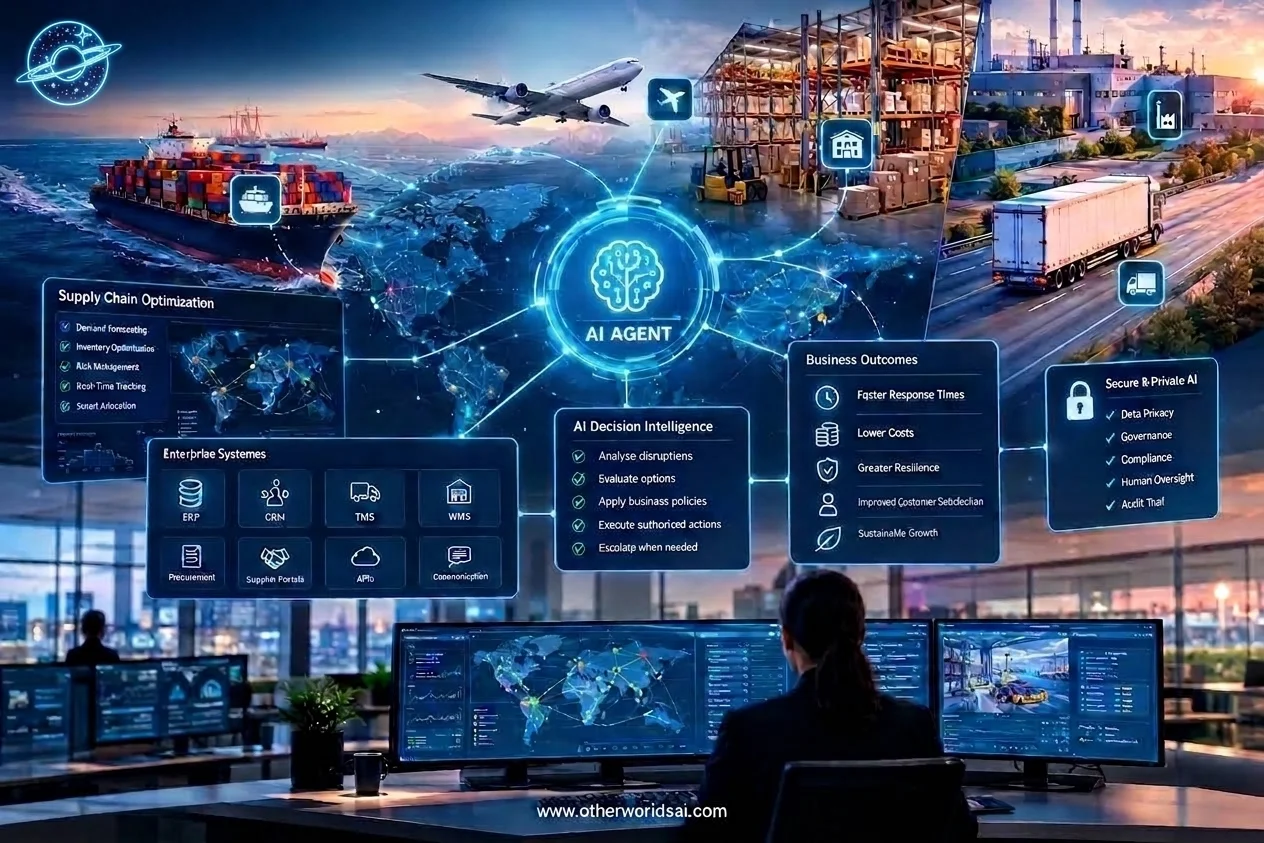
That same agentic architecture — planning, execution, validation, and parallel sub-agents working without stepping on each other —
Support our research
Independent analysis fueled by you.
is exactly what Otherworlds AI's Agent+ Business AI Platform brings to the rest of your operation: customer support, scheduling, data entry, and the daily workflows that quietly eat your team's time. You don't need a research lab or a Superintelligence division to get there. You need a partner who can build it around your business.
See what Agent+ can automate for you at otherworldsai.com