
Beyond the Chat Window: How Odyssey's $1.45B World Model Is Rewriting What AI Can Do:
From Video Games to Robotics: How 'World Models' Will Reshape Your Industry:
Backed by Amazon, AMD Ventures, GV, and a roster of legendary angels, Odyssey is building the physical world simulation layer that the next generation of AI — from robotics to video games — will run on.
Section 1: The AI Frontier Is Going Physical:
Text-based AI has dominated headlines for the past several years. But the next frontier of artificial intelligence isn't about language — it's about the physical world. World models, the emerging category of AI systems that gather data from real environments and simulate them with accurate physics, are increasingly seen as the bridge between AI that talks and AI that acts.
Into this emerging category steps Odyssey, a startup founded in 2023 by two self-driving vehicle veterans, with a $310 million Series B round that has just crowned it a unicorn at a $1.45 billion valuation. The round was led by Natural Capital, with participation from Amazon, AMD Ventures, GV, and a constellation of high-profile angel investors. With this raise, the company has now collected $337 million in total funding.
$310M: Series B Round
$1.45B: Valuation
$337M: Total Raised
2023: Founded
The timing is deliberate. As autonomous systems, robotics, and spatial computing converge, the demand for AI that can accurately model and simulate physical environments — not just generate text — is growing rapidly. Odyssey is betting that world models will become as foundational to the next era of AI as large language models have been to this one.
Section 2: The Founders: Self-Driving DNA Meets World Model Ambition:
Odyssey's pedigree is one of its most compelling assets. CEO Oliver Cameron co-founded and led autonomous vehicle startup Voyage, which was acquired by GM's Cruise — where Cameron later served as VP of Product. CTO Jeff Hawke comes from Wayve, the high-profile U.K. self-driving startup whose technology is now headed to Stellantis vehicles in the U.S. market.
Their shared background in autonomous driving is not incidental to Odyssey's mission — it defines it. Building self-driving systems requires an intimate understanding of how to capture, process, and simulate physical environments at scale. The same principles — real-world data collection, physics-accurate simulation, sensor calibration — that underpin autonomous vehicles are exactly what world models demand.
The founders who spent careers teaching cars to see the world are now building the AI that simulates it — for everyone.
The founding team has assembled an equally impressive group of angel investors, including Google's Jeff Dean, venture investor Elad Gil, Y Combinator's Garry Tan, Vercel CEO Guillermo Rauch, and Cruise co-founder Kyle Vogt. The list reads like a who's who of the people who built the last generation of transformative technology — now backing the next one.
Section 3: How Odyssey Captures the Physical World:
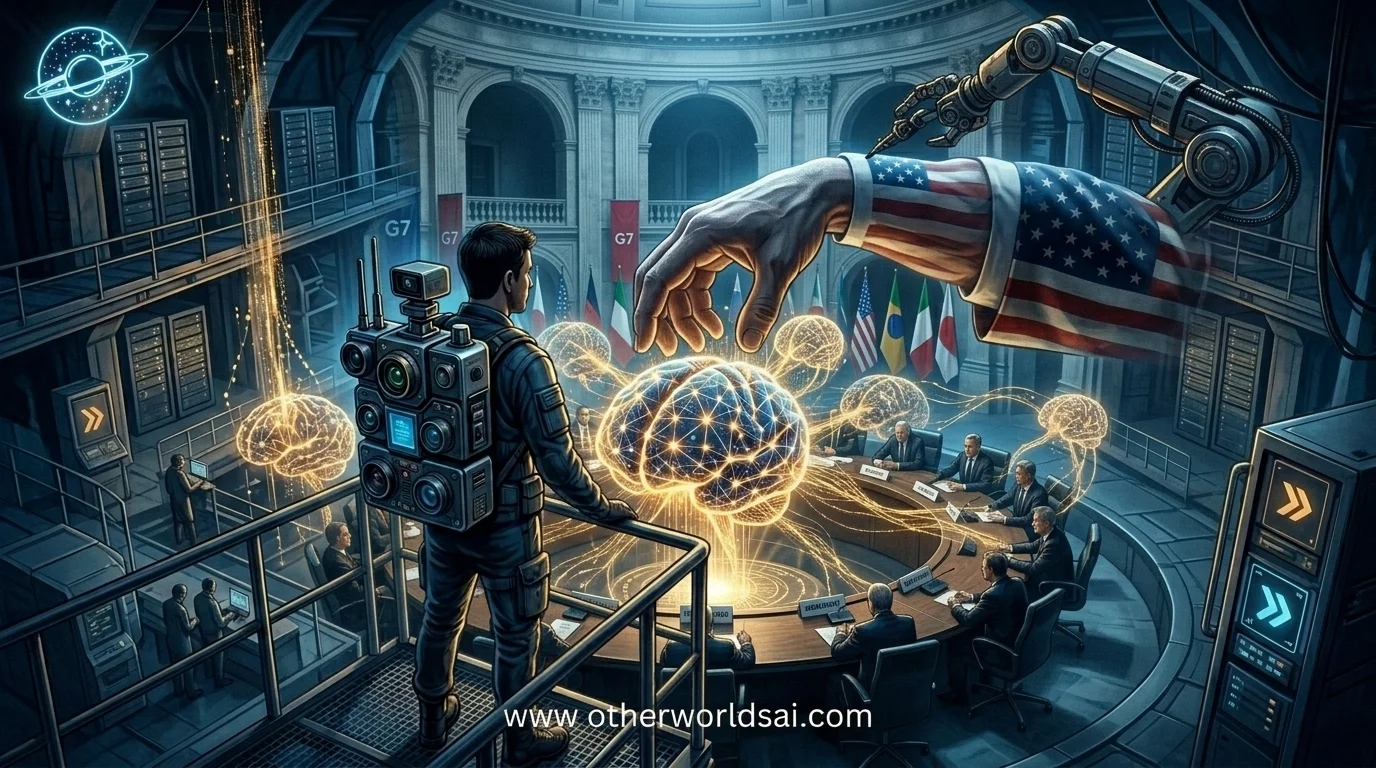
One of the most distinctive aspects of Odyssey's approach is how it gathers training data. Rather than relying on existing datasets or synthetic generation alone, the company has taken a page from Google Earth's playbook — but with a human-scale twist. Odyssey has sent people out into the world with cameras strapped to their backs, capturing ground-level physical environments with the richness and variability that cameras mounted on cars simply cannot.
The methodology makes perfect sense when viewed through the lens of the founders' backgrounds. Where Google drives camera-equipped vehicles around city streets, Odyssey's human-carried cameras access environments, angles, and interactions that vehicle-mounted systems can never reach. The result is training data that reflects the full dimensionality of real physical spaces — not just what you can see from the road.
Where Google drives cameras through streets, Odyssey straps them to human backs — capturing the physical world from the perspective that actually matters: the human one.
This data collection strategy is designed to produce world models that are grounded in physical reality, not just plausible-looking simulations. The difference matters enormously for downstream use cases where physical accuracy — how objects behave, how spaces connect, how light and physics interact — is the entire point.
Section 4: What World Models Can Do: From Video Games to Robotics:
Odyssey's world models serve a range of use cases that span both creative and industrial applications. The company offers several distinct models tailored to different verticals, with its most publicly recognized capability being the generation of rich, interactive video from text prompts — a step beyond what standard video generation models produce.
In the video game and entertainment space, Odyssey's technology enables developers to generate interactive 3D environments and simulations from descriptive inputs rather than building them by hand. The implications for game development studios, film production, and virtual world creation are significant: what once required teams of artists and months of production time can be prototyped in a fraction of the time.
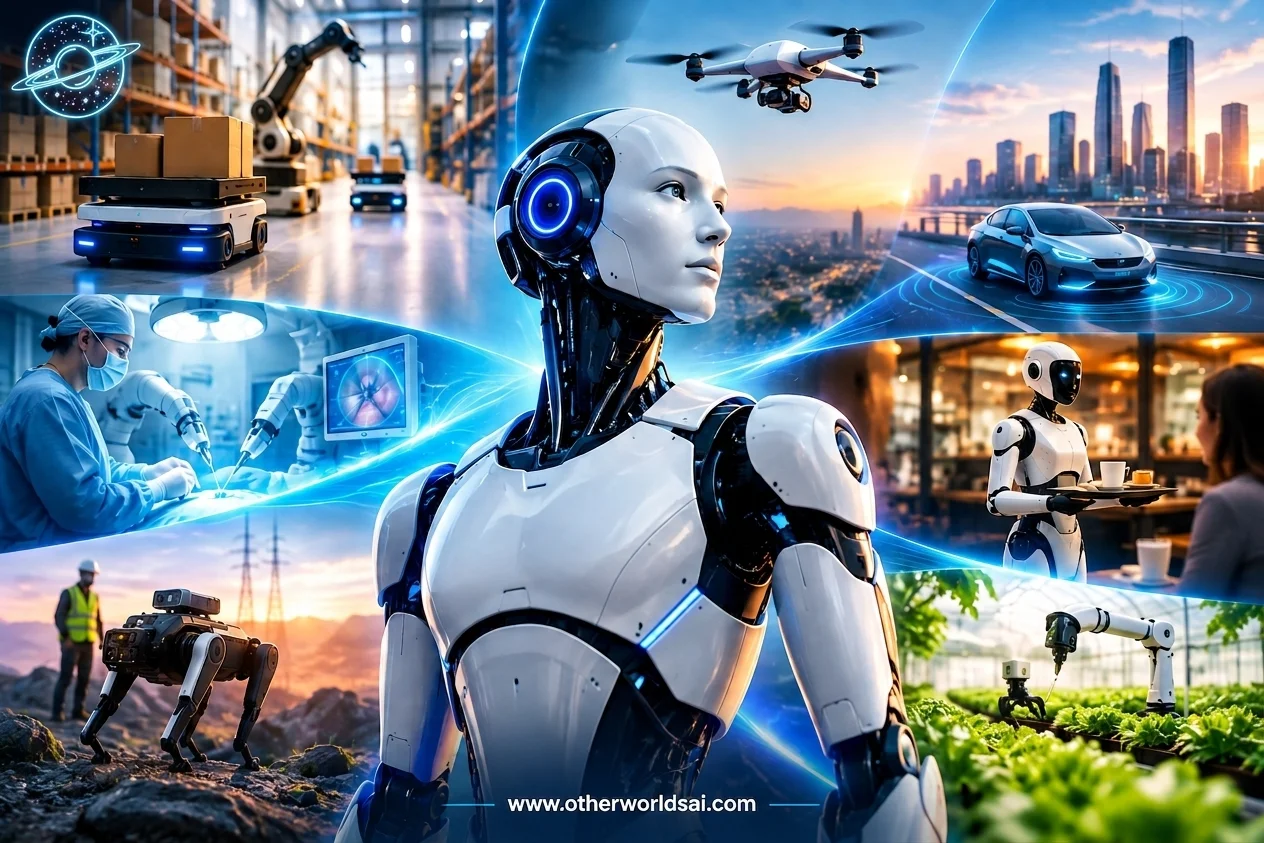
In robotics — one of the hottest areas of AI investment in 2025 and 2026 — world models serve a different but equally critical purpose. Robots trained in physics-accurate simulations can develop skills and spatial awareness before ever touching the real world, dramatically accelerating development cycles and reducing the cost and risk of physical testing. Odyssey's simulation capabilities position it as a direct enabler of the physical AI wave sweeping the industry.
From video game worlds to robot training grounds, Odyssey's technology is becoming the simulation layer that physical AI runs on.

Move Over Nvidia: Anthropic and Samsung Team Up to Break the AI Chip Monopoly
Section 5: The Amazon Partnership and the AWS Bet:
Among the investors in this round, Amazon's participation carries particular strategic weight. Alongside the investment, Odyssey has designated AWS as its preferred cloud provider and committed to optimizing its models to run on AWS Trainium chips — Amazon's purpose-built AI accelerator and a direct competitor to Nvidia's dominant GPU lineup.
The partnership is mutually beneficial in ways that go beyond a standard customer relationship. For Amazon, having a high-profile world model company optimize specifically for Trainium provides a meaningful proof point in its effort to challenge Nvidia's grip on AI compute. For Odyssey, the arrangement likely comes with cloud infrastructure credits, co-marketing opportunities, and deep technical integration support that accelerates model performance at scale.
The broader investor roster — Natural Capital leading, alongside AMD Ventures and GV — reflects how seriously the hardware and venture ecosystems are taking the world model category. AMD's participation in particular signals that the competition to become the preferred compute substrate for physical AI is already underway.
Section 6: Why World Models Matter for Your Business — And How Agent+ Keeps You Ahead:
Odyssey's unicorn moment is a signal that the AI stack is expanding rapidly beyond language and chat. World models — AI that can simulate physical environments, generate interactive video, and power robotic systems — represent the next layer of capability that forward-thinking businesses will need to understand and integrate.
Whether your business operates in manufacturing, logistics, retail, real estate, entertainment, or any sector that involves physical operations, the rise of world models and physical AI will reshape how you design products, train teams, simulate processes, and serve customers. The companies that start building AI fluency and automation infrastructure now will have a decisive head start.
At Otherworlds AI, we build the business AI layer that helps your organization capture that advantage. Our Agent+ Business AI Platform automates the workflows and decision-making pipelines that let your team focus on strategy while AI handles execution. With Google Opal Automated Workflows, we connect your systems into an intelligent, responsive operation — ready to integrate the next wave of AI capabilities as they arrive.
The world model era is coming. Visit otherworldsai.com to explore how Agent+ plans starting at $297/month can position your business to move with it — or speak with our Enterprise team about a custom AI build tailored to your operations.