
OpenAI's Report Reveals the #1 Rule for Deploying AI Agents in Your Business.
OpenAI's Field Report Shows Coding Agents Are Rebuilding Science Software:
Eight research projects, runtime cuts up to 60x, and a clear lesson: AI agents write the code, but people still own the outcome.
8 Projects: Scientific computing tools rebuilt or optimized with coding agents
Up to 60x: Runtime improvement reported on RustQC's consolidated pipeline
3 Task Types: Packaging cleanup, performance tuning, and full language ports
1: The Report: Coding Agents Turned Loose on Real Research Code:
OpenAI has published a field report tracking eight scientific computing projects where coding agents were used to cut runtimes and clear out years of technical debt.
Five of the projects relied on Codex alone, while three combined Codex with Anthropic's Claude Code. It's worth noting upfront that this is a vendor-published survey of its own product, assembled from case studies written by the contributors who used it — not an independent audit. Still, the underlying pattern is worth examining on its own terms.
Research software has a well-known maintenance problem. Tools built to support a single academic paper, often coded by small teams with no dedicated engineering support, tend to accumulate technical debt that nobody has the budget or mandate to address. OpenAI's report argues coding agents can start to close that gap, drawing on eight projects spanning genomics, immunology, statistics, and RNA sequencing.
2: From Packaging Cleanup to Full Language Ports:
The work fell into three broad buckets: packaging and build-system cleanup, performance optimization on existing code, and full language or backend ports.
● cyvcf2, a genomic variant-reading library, had its legacy build system replaced with a modern, unified process.
● HI.SIM, a DNA-sequencing read simulator, saw runtime cut by 31 percent through two largely autonomous optimization passes, with no change to output.
● Hifiasm, a genome assembly tool, gained a 25 percent runtime cut on its optimization target and about 15 percent on separate sequencing data.
● MHCflurry had its TensorFlow/Keras backend migrated to PyTorch while preserving compatibility with previously released model weights.
● bayesm-rs, a Rust port of R's bayesm statistical models, ran 2.3 to 2.7 times faster on a single thread and up to 9.5 times faster across eight threads, matching original estimates within tolerance.

Anthropic’s Surprise Double Launch Directly Targets OpenAI and Google’s AI Dominance
Three further projects pushed the approach further still. rustar-aligner rebuilt STAR, a widely used but unmaintained RNA-sequence aligner, from the ground up — a 20,000-line rewrite that contributor James M. Ferguson said wouldn't have been a reasonable use of time by hand, but became achievable as weeks of steered agent work.
RustQC consolidated 15 separate quality-control tools into a single program, cutting runtime by up to 60 times and disk input/output by 25 times, according to contributor Phil Ewels. Companion rebuilds ran seven and three times faster respectively, while preserving the original tools' behavior. HelixForge, a GPU-native rebuild of a mutation-simulation tool, reportedly cut runtime by around 60 times while also resolving bugs that had produced artifacts in the original version.
3: The Real Bottleneck Isn't Code Generation — It's Verification:
Across every write-up, the same theme surfaces: agents handled well-scoped implementation work capably, but couldn't judge whether their own output was scientifically correct.
Contributors described agents expressing confidence in results that contained clear errors, which shifted the real burden onto humans to design acceptance tests — exact output matching, parity checks against existing tools, or answers established beforehand with simulated data.
Projects tended to move in stages, with agents producing fast first drafts while the bulk of remaining time went into edge cases and small numerical discrepancies that no automated benchmark would catch on its own.
"The technology is the easy part. Stewardship is the open question," contributor Phil Ewels said.
Lower engineering costs cut both ways. They let a two-person team take on a rebuild that once would have required a grant-funded engineering hire — but they also make it easier for three different labs to end up with three incompatible versions of the same tool. Some projects, like MHCflurry and cyvcf2, folded their changes back into the original upstream code; others, like rustar-aligner, moved to new community stewardship because the tool they replaced had already been abandoned.
4: What This Means Beyond the Research Lab:
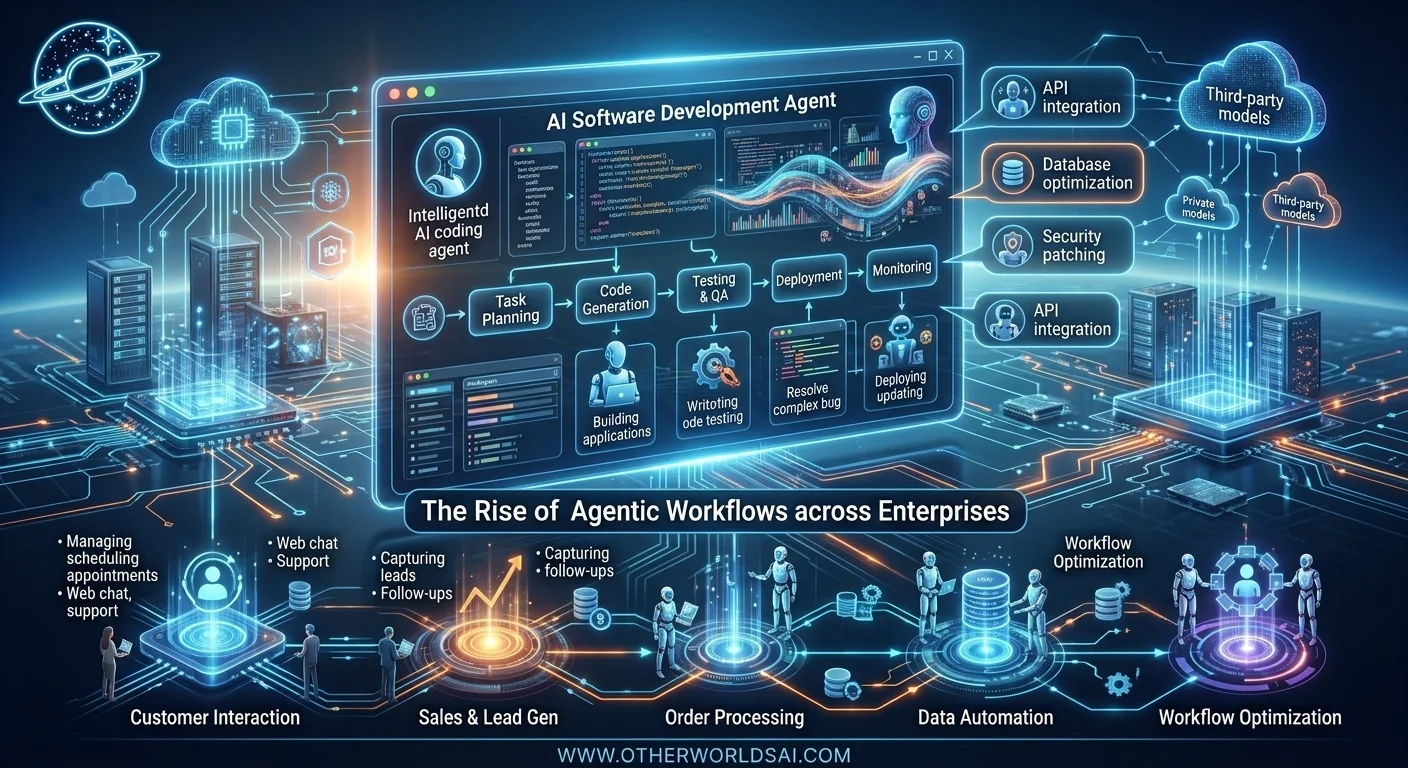
The pattern in OpenAI's report isn't unique to science — it's the same lesson any organization adopting AI agents eventually learns.
Coding agents are genuinely capable of fast, well-scoped implementation work. What they can't do on their own is decide whether that work is correct, who's accountable for maintaining it, or how it fits into an existing system of record.
That verification and ownership layer is exactly where human oversight, clear acceptance criteria, and a managed process still matter — whether the deliverable is a genome assembler or a customer support workflow.
For businesses evaluating AI agents of their own, the report's real takeaway is a practical one: decide who owns the result, and how it will be verified, before the agent's first output ships.
Speed Without Oversight Is Just Faster Risk:
OpenAI's report makes one thing clear: coding agents deliver real speed, but only when someone is steering them, checking their work, and owning the result. That's exactly the gap between a raw AI model and a managed AI agent — and it's true in research labs and in growing businesses alike.
Otherworlds AI's Agent+ platform gives your business a governed, working AI agent — built on Google Opal automated workflows, monitored, and accountable — for a flat $297/month.
Need a deeper integration with your own systems and processes? Otherworlds AI also designs custom enterprise AI builds tailored to how your business actually runs.
Support our research
Independent analysis fueled by you.
Get started today at otherworldsai.com or call +1 (720) 240-9188.