
AMD Challenges Nvidia's AI Empire — On Earth and on the Moon:
Inside Helios, the $1.4 trillion AI accelerator race, and why enterprise AI strategy can't wait for the chip war to settle.
$1.4T: Projected AI accelerator market by 2030
2 GW: Anthropic–AMD Helios GPU deployment
2028: NASA's target for sustained lunar presence
What the $1.4 Trillion AI Accelerator War Means for Enterprise Strategy….
1: AMD's Helios Takes Direct Aim at Nvidia's AI Dominance:
AMD just planted its flag in the most contested territory in tech: the rack-scale AI systems that power the world's largest AI labs.
At AMD's sold-out Advancing AI conference in San Francisco, Chair and CEO Dr. Lisa Su unveiled Helios, a rack-scale AI system the company is calling the industry's highest-performance AI rack. Rack systems bundle many processors into a single high-powered unit built for data centers, where they train and run AI models and other compute-intensive workloads.
AMD says Helios is built to train and run the most demanding frontier models in the world at massive scale, and the system will begin shipping later this year.
Nvidia has long dominated the rack-scale market with its Vera Rubin and Grace Blackwell systems, but Helios' performance metrics reportedly beat Vera Rubin across a number of benchmarks. The system already has a marquee customer list: OpenAI, Meta, Oracle, Anthropic, and Microsoft have all committed to deploying it.
2: Anthropic, Microsoft, and the Race for Gigawatt-Scale Compute:
The Helios rollout isn't just a product launch — it's a signal of how fast compute demand is scaling across the AI industry.
Microsoft CEO Satya Nadella confirmed the company will expand its Azure infrastructure with Helios, while Anthropic and AMD announced a strategic partnership to deploy up to two gigawatts of GPUs through the new rack system. AMD also introduced its Venice-X CPU, a data center chip designed for high-computing workloads, expected to launch in 2027.
When you ask the agent to do something, it actually has dozens of steps, and it has to reason, and it has to call tools, and it has to access data, and it has to keep doing it over and over until it solves the problem, and so you need lots of GPUs to do all that. — Dr. Lisa Su, AMD Chair and CEO.
Su projects the AI accelerator market will reach roughly $1.4 trillion by 2030 — approaching the size of today's entire semiconductor market — driven largely by the rise of agentic AI. She expects GPUs to remain the dominant architecture because AI algorithms and workloads are still evolving quickly, favoring programmable silicon over fixed-function chips.
Anthropic is also making moves on the software side: the company rolled out an updated Claude voice mode, letting users choose between Opus, Sonnet, and Haiku models and connect the assistant to Gmail, Google Calendar, Slack, Canva, and Notion to complete real tasks — a notable contrast to OpenAI's voice mode, which remains limited to conversation without tool access.
3: Nvidia's GPUs Head to the Moon:
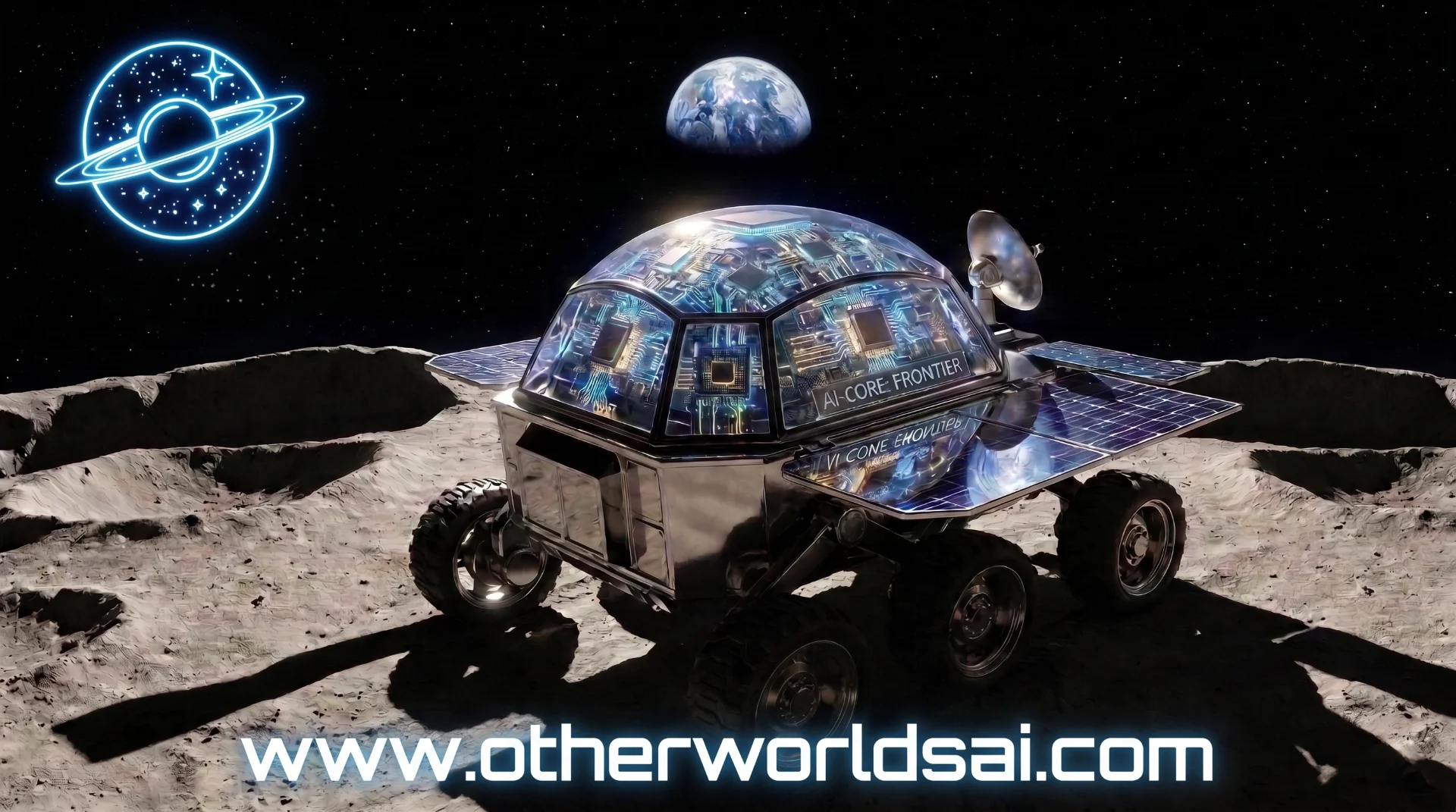
While AMD chases Nvidia on Earth, Nvidia is extending its reach off-planet. Lunar Outpost, a startup building robotics for space infrastructure, announced its next moon rover will use Nvidia Jetson chips to control its lidar system — likely making it the first GPU to operate on the lunar surface. The mission is part of a broader NASA campaign paying private companies to explore the moon ahead of plans to return human astronauts, potentially as soon as 2028.
Nvidia has also partnered with Firefly Aerospace, the first private company to safely land a robot on the moon, to run its Jetson platform aboard a lunar-orbiting satellite that processes imagery for scientists mapping the moon's surface. Lunar Outpost's rover will launch aboard a lander built by Intuitive Machines, with a follow-up mission targeting Reiner Gamma, a site known for a mysterious magnetic anomaly.
● Jetson is Nvidia's compact, power-efficient platform for physical AI and robotics, distinct from data-center chips like Blackwell and Vera Rubin.

Move Over Nvidia: Anthropic and Samsung Team Up to Break the AI Chip Monopoly
● Lunar GPUs must survive extreme radiation and temperature swings, including lunar night, on very low power.
Support our research
Independent analysis fueled by you.
● Lunar Outpost's larger rover, Pegasus, is designed to carry astronauts but is waiting on a Blue Origin rocket that suffered a launch anomaly this summer.
According to Lunar Outpost CEO Justin Cyrus, the goal is combining deterministic autonomy with physical AI to eventually sustain a human presence on the moon. Every mission in the near term is expected to fly on a Falcon 9 rocket before the end of the year.
4: What the Chip War Means for Enterprise AI Strategy:
From gigawatt-scale data centers to lunar rovers, the throughline is the same: compute is the bottleneck, and agentic AI is what's driving demand for it.
Su's framing is telling— agentic AI workloads need GPUs precisely because agents reason, call tools, and act repeatedly until a task is done. That's the same capability enterprises need for their own operations, whether it's automating customer support, streamlining internal workflows, or connecting business systems so AI can take action, not just answer questions. Most businesses will never build a Helios rack or ship a chip to the moon — but they don't need to. They need agentic AI they can deploy now.
You Don't Need a Data Center to Compete on AI.
AMD and Nvidia are racing to build gigawatt-scale infrastructure for the world's largest AI labs — but that race is about training frontier models, not running your business.
Otherworlds AI's Agent+ Business AI Platform gives enterprises the same agentic, tool-calling AI capabilities Lisa Su described — reasoning, calling tools, accessing data, executing multi-step workflows — without the capital expense of rack-scale hardware.
Whether you need a ready-to-deploy Agent+ subscription or a custom enterprise AI build, Otherworlds AI turns the compute war headlines into a practical roadmap for your business.
Meta's Next Big Bet: This New App Lets You Build Games Simply by Typing a Prompt
Explore Agent+ at otherworldsai.com