Niteshift Raises $7M to Bet Against Big AI Lock-In — And the Datadog Playbook Is the Blueprint:
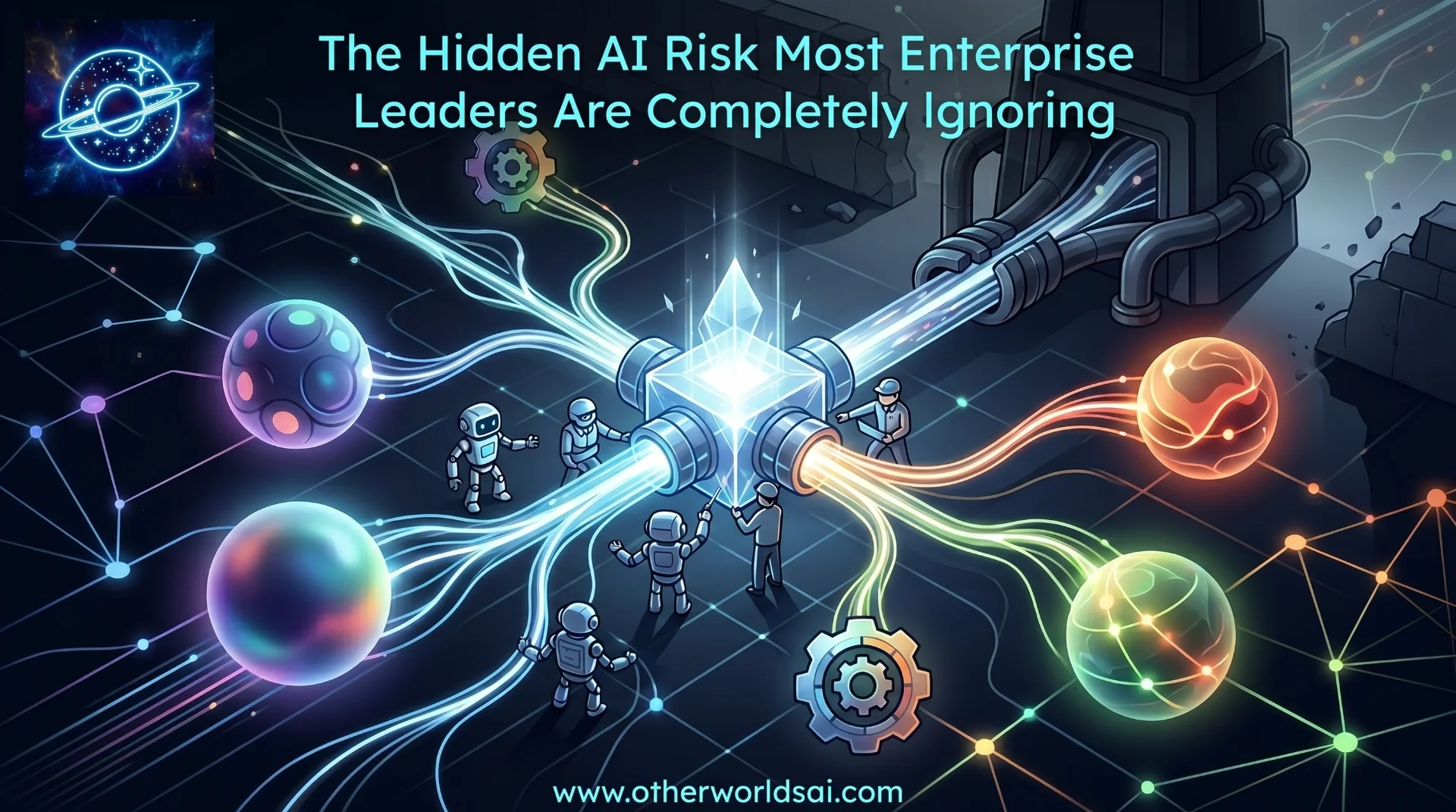
The Hidden AI Risk Most Enterprise Leaders Are Completely Ignoring:
Two engineers who scaled Datadog to billions are back — this time building AI coding infrastructure for companies that don't want to hand their most sensitive assets to the same giants competing to replace them.
$7M: :Seed round led by Greylock's Jerry Chen.
Greylock + Reid Hoffman: :Lead investor and marquee angel backing.
Datadog Roots: :Founders scaled Datadog from startup to multi-billion valuation.
The Founding Bet:
Why Would Any Company Hand Its Codebase to the Same Giants Competing to Replace It? Niteshift launched this week with $7 million in seed funding and a sharp thesis. The AI coding space is crowded — Cursor, Cognition, Amazon Bedrock, and a long line of model-native tools are all competing for developer attention. What makes Niteshift different isn't another coding agent. It's an argument about trust, conflict of interest, and infrastructure independence — and the founding team has lived this story before.
Sajid Mehmood and Conor Branagan, the startup's co-founders, were among the early engineers at Datadog, helping grow the monitoring platform from its earliest days to a multi-billion dollar public company. The analogy that shapes their thinking about Niteshift is one they watched play out in real time: e-commerce businesses that refused to build on Amazon Web Services because Amazon was simultaneously dismantling their markets. The retail apocalypse wasn't a metaphor to those teams — it was an existential threat. And many of them made a calculated decision to keep their infrastructure off the platform of the company eating their industry.
Mehmood sees an identical dynamic accelerating in AI right now. Anthropic, OpenAI, and the other frontier labs are not standing still. They are moving aggressively into vertical software markets — legal, healthcare, finance, and beyond — in what some observers are calling the SaaSpocalypse. A company that routes its codebase through Claude Code or Codex today is building a deep dependency on a vendor that may be its direct competitor tomorrow.
"We are absolutely going to see the same dynamic as Anthropic goes to compete in legal and healthcare and finance and whatever else." — Sajid Mehmood, CEO, Niteshift
What Niteshift Actually Builds:
An AI Coding Cloud That Routes Between Models — Without Locking You Into Any of Them Niteshift isn't replacing Claude Code or Codex — it's explicit about that. The platform sits above those tools, routing between them — along with open-source models and other options — based on the specific requirements of each project. The value proposition is infrastructure that gives engineering organizations flexibility: the ability to move between GPT and Claude models, bring in open-source alternatives, and avoid the lock-in that comes from betting the entire development pipeline on a single model vendor.
The pricing model reflects this infrastructure framing. Rather than selling tokens — the consumption unit that model providers use — Niteshift charges like a cloud provider, on a per-minute usage basis. The distinction matters. Token pricing ties customers to the economics of a specific model. Infrastructure pricing decouples cost from model choice, giving organizations the flexibility to optimize for performance, cost, or vendor independence as their needs evolve.
Mehmood frames this as a fundamental reorientation of what the company is selling. Every other player in the AI coding space is in the business of selling intelligence — labor replacement, automated output, AI-generated code as a product. Niteshift is selling software that runs agents, not for humans, but charged like software infrastructure. It's a different business model built on a different bet about where enterprise value will accrue.
"Everybody else is selling labor replacement intelligence. We're selling software to agents — but we're still out here selling software." — Sajid Mehmood, CEO, Niteshift
Why Greylock Backed It:
The Unbundling Thesis — And the Window Opening as Frontier Labs Move Up the Stack Jerry Chen at Greylock led the round, and his framing of the investment is direct. As frontier labs move up the stack — building more products, entering more markets, competing more directly with the enterprise software they once only powered — there is a structural opportunity for companies that offer a different path. Unbundling the coding agent from the infrastructure it runs on is that path for AI development tooling.
Chen's view is that this window is opening now, and that the enterprises that move first to establish vendor-independent AI coding infrastructure will be in a materially stronger position as the competitive dynamics between labs and enterprise software intensify. A company that has already built its development pipeline on neutral infrastructure is not subject to the leverage that a model provider with a competing product can apply.
The angel roster reinforces that the thesis has resonance beyond the VC community. Reid Hoffman, Datadog co-founders Olivier Pomel and Alexis Lê-Quôc, Ankur Goyal of Braintrust, and Misha Laskin of Reflection AI all participated. The Datadog founders' involvement is particularly pointed — they built the company whose growth story Mehmood is drawing on as the template, and they are backing his bet that the same dynamic is about to replay in AI infrastructure.
Reid Hoffman: LinkedIn co-founder and angel investor.
Meta's Next Big Bet: This New App Lets You Build Games Simply by Typing a Prompt
Olivier Pomel & Alexis Lê-Quôc: :Datadog co-founders backing the Datadog alumni.
Per-Minute Pricing: :Infrastructure model vs. token-based consumption pricing.
The Competitive Reality:
A Crowded Market, a Big Head Start, and What Niteshift's Answer Is:
The AI coding tools market is not waiting for Niteshift to arrive. Cursor is the dominant consumer-facing coding agent, with acquisition conversations reportedly reaching into the tens of billions. Cognition recently closed a $1 billion round at a $26 billion valuation. Amazon Bedrock brings hyperscaler distribution to the problem.
And OpenRouter, which offers model-routing capabilities that overlap with part of Niteshift's value proposition, just raised $113 million at a $1.3 billion valuation. Model independence is not a novel idea — it's a feature several of these platforms already offer in some form.
Support our research
Independent analysis fueled by you.
Mehmood's answer to the competitive landscape is the founding team's depth, not a feature advantage. He and Branagan didn't study the problems that large engineering organizations face with AI-generated code — they lived them, scaling Datadog through the exact growing pains that enterprises are navigating now. The argument is that building AI coding infrastructure at the scale and reliability standard that large organizations actually require is a hard operational problem, and that operational credibility is not something a product roadmap can shortcut.
The specific capability Mehmood points to is the ability to run, test, and verify AI-generated software autonomously in real production environments — not in sandboxed demos or controlled benchmarks, but in the live systems where code actually matters. That requires infrastructure built by people who have done it before, at scale, under real production conditions. That is the experience Niteshift's founders are selling alongside the product.
"Being able to switch between GPT and Claude models is important. Everybody's worried about getting stepped on by these giants." — Sajid Mehmood, CEO, Niteshift
The Bigger Picture:
AI Lock-In Is the Infrastructure Risk That Enterprise Leaders Aren't Talking About Enough:
Niteshift's launch is a signal that the AI infrastructure market is beginning to mature in a specific and important way. The first wave of enterprise AI adoption was largely about access — getting to capable models, integrating AI into workflows, finding use cases that justified the investment. The second wave is about something more strategic: understanding what dependencies are being created in the process, and whether those dependencies create unacceptable risk.
The SaaSpocalypse narrative — frontier labs using their model distribution to vertically integrate into software markets — is accelerating. Every enterprise that has built a core workflow on a model-native tool owned by a lab with competing ambitions is running an unpriced risk. The labs that power your legal AI today may be your legal AI competitor next year. The model that runs your financial analysis workflow today is owned by a company actively raising capital to build competing financial software.
Infrastructure independence is not just a vendor preference — it is increasingly a strategic risk management question. The enterprises that are asking it now, and building accordingly, will have more options than those that don't when the competitive dynamics Mehmood is describing fully arrive.
Cognition: $26B Valuation after $1B raise — scale of AI coding competition.
OpenRouter: $1.3BModel-routing competitor valuation after $113M raise.
SaaSpocalypse: The trend of frontier labs entering vertical software markets.
What This Means for Enterprise AI Strategy:
The Agent+ Approach to AI Independence at the Enterprise Level:
The Niteshift thesis — that vendor independence in AI infrastructure is a strategic necessity, not a procurement preference — is one that shapes how Otherworlds AI has built Agent+ Business AI from the ground up. Enterprise organizations in every vertical are navigating the same tension: the most capable AI tools are often owned by companies with competing commercial interests, and the deeper an organization embeds those tools into its operations, the more leverage the vendor holds.
Agent+ is designed to give enterprise clients the capability of frontier AI without the lock-in. The platform is built to work across model providers, adapt to an organization's existing infrastructure, and remain vendor-flexible as the AI landscape evolves. As the frontier labs move further up the stack into legal, healthcare, finance, and other enterprise verticals, the organizations that have already built on neutral ground will be the ones with the most options.
The retail apocalypse happened fast. The businesses that saw it coming and built their infrastructure accordingly survived. The SaaSpocalypse is already underway — and the window to build on neutral ground is open right now.
Move Over Nvidia: Anthropic and Samsung Team Up to Break the AI Chip Monopoly
The businesses that saw the retail apocalypse coming and built their infrastructure accordingly survived. The SaaSpocalypse is already underway — and the window to build on neutral ground is open right now.