
From Kuala Lumpur to Nasdaq: How Respond.io's AI Agent Platform Is Rewriting the Rules of Customer Conversations:
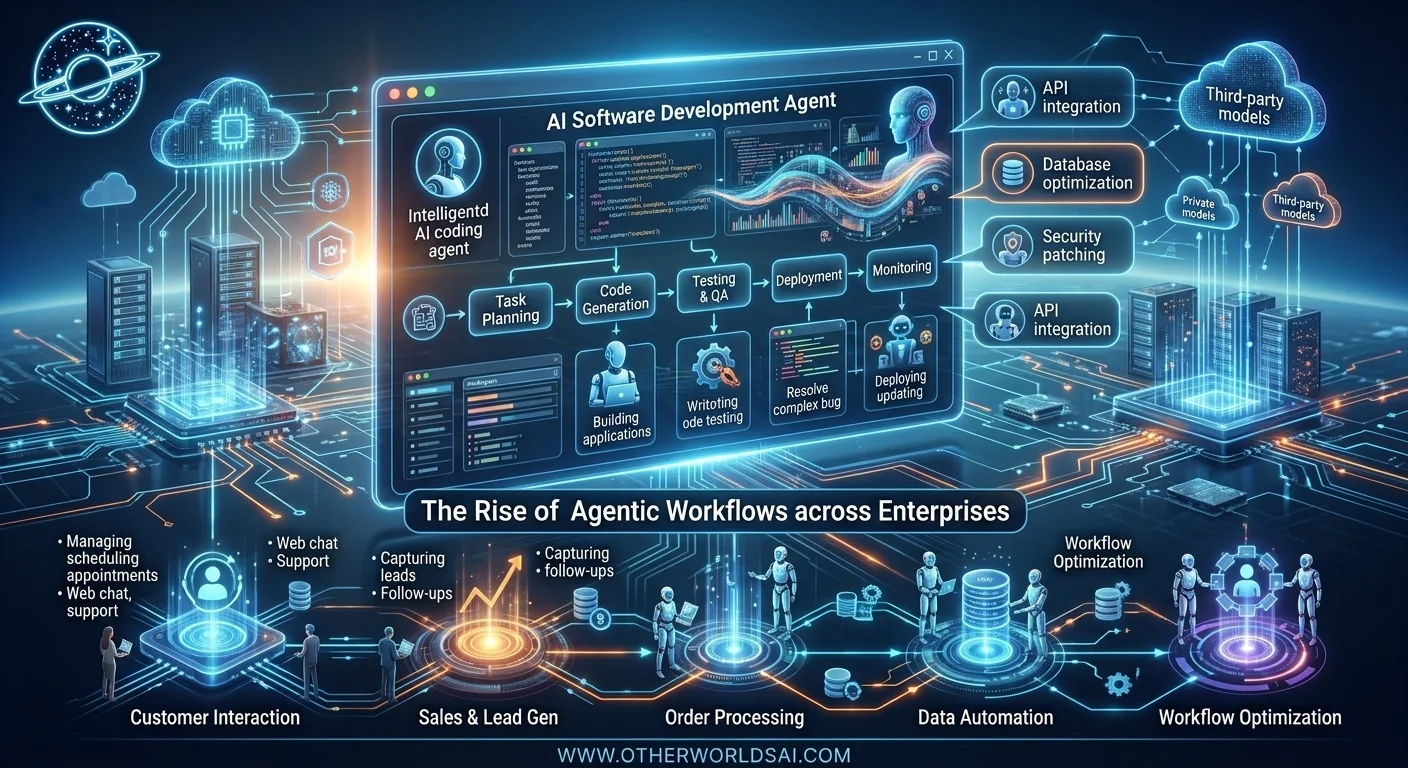
Automotive, Healthcare, and Retail: Why These 3 Industries Need Agentic Workflows:
A $62.5M Series B, 169% YoY growth, and 2 billion messages per quarter — the Malaysia-based startup is proving that messaging-native AI beats bolted-on legacy software every time.
Section 1: The Problem No One Else Was Solving:
Messaging was never an afterthought for Respond.io — it was the entire mission. When CEO Gerardo Salandra co-founded the company in Hong Kong in 2017, alongside Hassan Ahmed (CTO) and Iaroslav Kudritskiy (COO), the problem was deceptively simple: customers had migrated en masse to messaging apps, and businesses simply couldn't keep up. The customer support stack of the era — built around email ticketing and phone queues — had no meaningful answer for WhatsApp, Telegram, or WeChat.
Salandra had seen the enterprise technology world from multiple vantage points — IBM, Google, and then Runtastic, a fitness app he helped scale before its acquisition by Adidas in 2015. That background shaped his read of the market: incumbents weren't ignoring messaging out of laziness, they were structurally incapable of pivoting. Their entire product architecture assumed email and phone as primary channels. Messaging was, as Salandra put it, "an afterthought."
Two years after founding, the team relocated the business to Kuala Lumpur, Malaysia — a move that would give them proximity to some of the world's most messaging-native markets while keeping operational costs manageable during the growth phase. Today, Respond.io is one of Malaysia's most prominent tech success stories.
Section 2: What Respond.io Actually Does:
At its core, Respond.io is a customer conversation management platform — but that description undersells the scope. The platform aggregates inbound and outbound conversations across WhatsApp, Instagram, TikTok, Facebook Messenger, Line, Telegram, WeChat, voice calls, and web chat into a single unified interface. For businesses managing thousands of daily customer touchpoints, the operational value is significant.
The AI layer is where Respond.io's differentiation sharpens considerably. AI agents deployed on the platform handle high-volume inquiries autonomously — qualifying leads, answering product questions, and in some cases closing sales without a human ever touching the conversation. This is not a chatbot in the 2018 sense; it's a full agentic workflow that routes, escalates, and resolves at scale.
The platform's sweet spot:
→ Company size: 200 to 10,000 employees.
→ Industry focus: Healthcare, automotive, retail, education, travel.
→ Customer profile: High-consideration B2C buyers who ask questions before purchasing Salandra describes these as businesses where "you don't go to a website, put your credit card, and buy a car; you chat with someone, you ask a lot of questions." The decision cycle involves conversation — and Respond.io is purpose-built for that reality.
$62.5M Series B Raise.
$35M ARR Annual Recurring Revenue.
169% Year-over-Year Growth.
2B+ Messages / Quarter.
Section 3: The $62.5M Raise and What It Signals:
Respond.io has closed a $62.5 million Series B round led by Camber Partners, with participation from Endeavor Catalyst and existing investors. The raise is a significant step up from its $7 million Series A in 2022 — a reflection of both the company's commercial performance and the broader investor conviction in AI-native enterprise software.
The business is already profitable: operating at a 30% profit margin while growing ARR to $35 million, up 169% year-over-year. For a company still in scale-up mode, that combination of growth and profitability is notable. It also signals that Salandra isn't building toward an exit at any cost.
"We don't want to be a growth at all costs company. Even with this money, we're going to be very disciplined."
— Gerardo Salandra, CEO, Respond.io

Meta's Next Big Bet: This New App Lets You Build Games Simply by Typing a Prompt
Capital deployment plans fall into three buckets: hiring, organic growth, and acquisitions. On the M&A side, Salandra is eyeing two distinct target types — bolt-on technology that extends the platform's capabilities, and established teams in strategic markets that bring existing customer bases. "Imagine how many months I can save if I find the right company that maybe already has the clients and the team," he said. "I can save myself six months to a year through an acquisition." The company is already in active talks with potential targets.
Section 4: The Geographic Opportunity:
Respond.io's current revenue distribution tells an interesting story about where enterprise messaging adoption is in its lifecycle. Roughly 30% of revenue comes from APAC, 30% from Latin America, and 20% from the Middle East and Africa. That leaves North America and Western Europe accounting for just 20% combined — historically, the world's largest enterprise software markets.
But Salandra identifies those two regions as the company's fastest-growing segments today. "They took longer to make the change, but now they're moving very rapidly into messaging channels," he told TechCrunch. His expectation: North America and Western Europe become Respond.io's largest segment within two to three years. If that trajectory holds, the company's addressable market expands dramatically — and its acquisition strategy in those regions starts to look less like opportunism and more like infrastructure-building.
Section 5: The Data Flywheel Moat:
The most interesting competitive question for any messaging-AI platform is whether general-purpose AI tools — ChatGPT and its successors — eventually commoditize what they've built. Salandra's answer is grounded in data rather than features. The company is processing 2 billion messages per quarter, and that volume creates a compounding advantage he calls the "data flywheel": more messages improve AI performance; better AI attracts more customers; more customers generate more messages.
The pricing model reinforces this advantage structurally. Unlike traditional enterprise software that charges per seat, Respond.io bills based on conversation volume — meaning it doesn't matter whether a human or an AI agent handles the interaction. As AI handles more of the load, customers don't defect; they scale up. "When fewer humans use your product, they make less money," Salandra observed, referring to seat-based competitors. "But we don't charge like that."
"Every day that AI becomes more prominent, we grow faster. We are not seeing what the public SaaS markets are seeing."
— Gerardo Salandra, CEO, Respond.io
Support our research
Independent analysis fueled by you.
The head start matters, too. Years of operating at the intersection of enterprise messaging and AI gives Respond.io a training data and product intuition advantage that newcomers to the space can't shortcut. The foundation, as Salandra puts it, is the moat.
Section 6: What Respond.io's Rise Means for Enterprise AI Strategy:
The Respond.io story is a case study in a pattern that's increasingly shaping enterprise AI: purpose-built, vertically optimized platforms are outperforming horizontal tools when the use case involves high-volume, relationship-driven customer interactions. The companies winning in this space didn't add AI to a legacy platform — they built the AI layer into the product architecture from the start.
For business leaders evaluating their own AI roadmap, the lesson is strategic: generic AI tools may handle simple queries, but the real enterprise value — lead qualification, sales conversion, personalized customer journeys at scale — requires a platform that understands the specific workflows, channels, and data structures of your industry.
This is precisely what Otherworlds AI's Agent+ platform delivers. Agent+ is built for exactly the kind of high-consideration, high-volume business environment that Respond.io serves — healthcare, automotive, real estate, financial services — where customer conversations are revenue events, not support tickets.
Instead of bolting AI onto your existing CRM or ticketing system, Agent+ deploys purpose-built AI agents that integrate across your communication channels, qualify and route leads intelligently, and automate the repetitive conversation workflows that drain your team's bandwidth.
Paired with Google Opal automated workflows Agent+ enables end-to-end process automation that spans the full customer journey: from first contact through qualification, follow-up, and conversion. No manual handoffs. No missed leads. No lag between customer intent and business response.
The trajectory of companies like Respond.io shows where the market is heading. Businesses that invest now in AI-native conversation infrastructure will compound that advantage over time, just as Respond.io has. The question for your business isn't whether to implement agentic AI — it's whether to build that capability on a platform purpose-designed for your vertical, or bolt it onto tools that were never meant to carry the load.
Otherworlds AI is ready to show you what Agent+ looks like for your specific industry and workflow. Visit otherworldsai.com to schedule a consultation.