
Reid Hoffman & Mark Pincus Back Prentis in $100M Round to Take On the Office Worker's To-Do List:
A new AI lab is chasing a $1B valuation on the bet that computer-use agents — not coding copilots — will be the next big enterprise AI category.
$100M: Raise in talks, per sources
$1B: Target valuation
$50M: Contracts already signed
Anthropic: Doubling down on direct computer interaction and acquiring talent from startups like Vercept.
1: The $100M Bet on Office Work:
A new AI lab founded by some of Silicon Valley's most recognizable names is closing in on unicorn status before its first birthday.
Prentis, launched in April by serial entrepreneur Ritankar Das alongside LinkedIn co-founder Reid Hoffman and Zynga founder Mark Pincus, is reportedly in talks to raise $100 million at a $1 billion valuation.
The lab isn't chasing another chatbot or coding assistant — it's training models to watch how office workers actually move through their day: clicking through documents, switching between systems, chasing down exceptions, and closing out routine tasks that never quite justify a full engineering project.
The goal is agents that can control a computer the way a person does, handling workflows like insurance claims processing and customs duty refund exceptions without a human hunting down the paperwork. It's an ambitious pitch, and investors appear to be buying it.
2: Early Traction, Bold Claims:
Prentis says it has already signed up to $50 million in customer contracts, spanning healthcare management, manufacturing, and clothing production.
Investor materials reviewed point to a projected $75 million annualized run rate by the third quarter of the year — though Prentis is careful to frame those figures as estimated value based on a 20% fee on realized savings, not recognized revenue, and "performance-dependent."

Meta's Next Big Bet: This New App Lets You Build Games Simply by Typing a Prompt
The company also claims its in-house Hive-32B model beats larger rivals, including OpenAI's GPT-5.4 and Anthropic's Claude Opus 4.6, on two widely used computer-use benchmarks, while running at roughly a tenth of the cost per task. Those benchmark claims haven't been independently verified.
The bet underneath Prentis: everyday office automation, not coding, becomes AI's biggest use case — and a smaller, cheaper model can win that fight against the frontier labs.
3: A Crowded, Well-Funded Race:
Prentis isn't alone in chasing computer-use agents, and the competition includes some of the biggest names in AI.
Support our research
Independent analysis fueled by you.
Anthropic, OpenAI, and Mira Murati's Thinking Machines Lab are all reportedly building in the same category. Anthropic has already made moves to acquire talent directly, picking up the Seattle-based computer-use startup Vercept earlier this year and folding its founders into its own team. That kind of consolidation signals just how seriously the frontier labs are taking workflow automation as the next major battleground, not just a side feature bolted onto a chat interface.
Das brings an unusual résumé to the fight: a bioengineering and chemical biology double major who became UC Berkeley's youngest University Medalist in over a century at 18, followed by a master's at Oxford and a dropped-out AI PhD at Cambridge. He's run his holding company, Titan, since 2014, funding it through its own exits — including AI-powered virtual care provider Tala Health and autism care startup Forta Health — rather than outside capital, a structure he's compared to an old-school Berkshire Hathaway.
4: Why This Matters Beyond the Headline:
Whether or not Prentis closes this round, the signal to every business leader is the same: routine, document-heavy office work is now squarely in AI's crosshairs.
The companies signing six- and seven-figure contracts with a nine-month-old startup aren't doing it for novelty. They're doing it because the cost of manual document handling, exception management, and cross-system busywork is real, recurring, and finally addressable.
That pressure isn't unique to the handful of enterprise customers Prentis has landed so far — it shows up in claims processing, customer onboarding, procurement, and dozens of other back-office workflows across every industry.
● Computer-use agents are moving from research demo to signed contracts in under a year.
● Investors are pricing workflow automation, not just chat assistants, as the next major AI category.
● Frontier labs and well-funded startups alike are converging on the same problem: routine office work.

Move Over Nvidia: Anthropic and Samsung Team Up to Break the AI Chip Monopoly
You Don't Need a $1B Valuation to Automate Your Workflows:
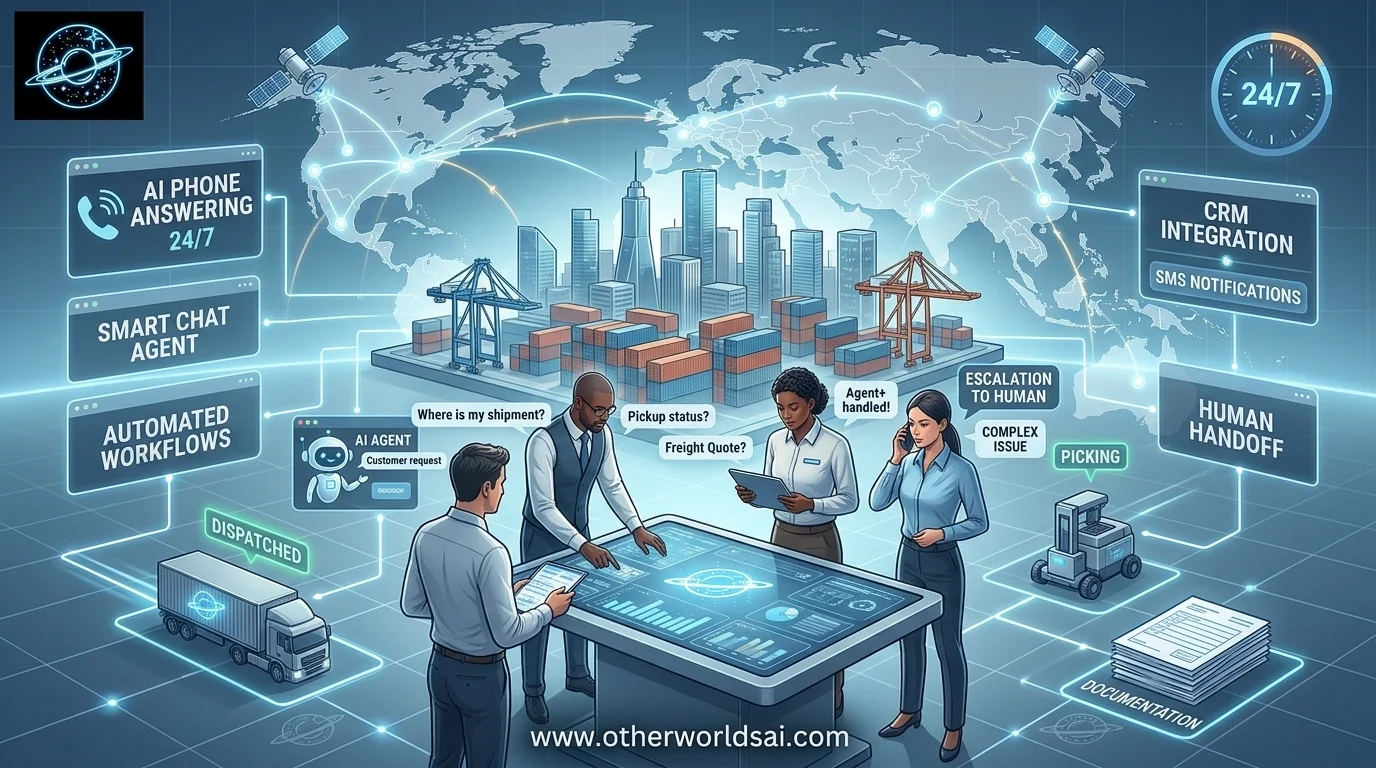
Prentis is building bespoke computer-use agents for a handful of enterprise customers, one contract at a time. Otherworlds AI's Agent+ platform brings that same automation — document handling, workflow routing, exception management — to any business, live in days, not quarters, starting at $297/month. Pair it with a custom enterprise AI build when your workflows need something more tailored.
See what Agent+ can automate for you at otherworldsai.com