
(ANTHROPIC MODEL LINEUP (SERIES 5)
MYTHOS 5: Long-Horizon, Open-Ended Cyber
FABLE 5: Premium Frontier, Heavy Weight Model
SONNET 5: Balanced Workhorse, Scaling efficiency
Opus 5: Cheaper, Sota on Bound Agent Work
The new model beats Fable 5 on most benchmarks, loosens key restrictions, and signals that the AI race is shifting from raw power to everyday economics.
8 of 13: Benchmarks Opus 5 beat Fable 5 on
50%: Cheaper than Fable 5 per token
85%: er safety-classifier interventions
1: A New Default, Two Months After the Last One:
Anthropic isn't slowing down its release cadence — Opus 5 arrived just two months after Opus 4.8, and it's already reshaping which model most users will reach for by default. Anthropic released Claude Opus 5 on Friday, July 24, positioning it as a model that delivers nearly all the intelligence of its flagship Fable 5 at roughly half the cost.
It's priced at $5 per million input tokens and $25 per million output tokens, unchanged from its predecessor Opus 4.8, while Fable 5 runs $10 and $50 respectively. Opus 5 is now the default model on Claude Max and the strongest model available on Claude Pro, and it's accessible on the API as claude-opus-5.
The launch rounds out a rapid string of releases: Mythos 5, Fable 5, and Sonnet 5 all shipped in June, with Opus 5 following in July. Haiku remains the only model in the lineup still waiting on its upgrade to the 5 series.
2: Beating Its Bigger Sibling on Benchmarks:
Despite sitting below Fable 5 in Anthropic's lineup, Opus 5 actually came out ahead on most of the benchmarks the company published at launch.
Anthropic compared Opus 5 to Fable 5 across 13 benchmarks and reported that Opus 5 scored higher on eight of them, with the biggest gaps showing up on two tests: Frontier-Bench, a set of 74 tasks spanning physics, chemistry, and cryptography, and AutomationBench. On Frontier-Bench specifically, Opus 5 scored 43.3% against Fable 5's 33.7%.
Anthropic also highlighted Opus 5's improved ability to verify its own work and iterate carefully, pointing to an example where the model wrote a working computer vision pipeline from an incomplete prompt. A company product leader told Reuters the release reflects Anthropic's pace of development, and the model also picked up a Fast mode running 2.5 times faster than default speed at double the price.
For three years, AI labs competed on what their best model could do on its best day. Opus 5 is a bet that the more important contest is what a model can do, reliably and affordably, every single day.
3: Fewer Restrictions, Same Core Guardrails:
Opus 5 also sheds several of the limitations that have followed Fable 5 since its release, without giving up the safeguards Anthropic considers non-negotiable.
Like Opus 4.8 before it, Opus 5 isn't subject to the 30-day data retention policy that applies to Fable 5 and Mythos 5, a detail Anthropic flagged directly for customers with strict zero-data-retention requirements.
Cybersecurity safeguards remain in place around higher-risk tasks such as scanning a compiled binary for exploitable vulnerabilities, while lower-risk work like reviewing source code for security issues stays permitted, since that work is more likely to serve defensive purposes. Anthropic says its safety classifiers will engage roughly 85% less often for Opus 5 than for Fable 5, reflecting the more limited real-world risk of the smaller model.
To smooth out the friction when those classifiers do trigger, Anthropic is also rolling out a beta feature called Automatic Fallbacks. API users who opt in will have a blocked request automatically rerouted to a less powerful model instead of receiving a hard error, trading some capability for a usable response.
4: What It Means for Everyday AI Adoption:
The bigger story behind Opus 5 isn't a single benchmark score — it's Anthropic explicitly optimizing for the AI that businesses actually run day to day. Most enterprise AI spend doesn't go toward the hardest 1% of tasks; it goes toward the high-volume, moderately complex work that happens constantly — drafting, coding, research, support, and workflow automation.
By pricing near-flagship performance at half of Fable 5's cost and loosening restrictions that primarily matter for advanced red-team and offensive-security use cases, Anthropic is making frontier-adjacent AI more accessible to the kind of everyday operations most businesses actually run.
● Opus 5 beat Fable 5 on 8 of 13 published benchmarks despite costing half as much.

Move Over Nvidia: Anthropic and Samsung Team Up to Break the AI Chip Monopoly
● Data retention and cybersecurity restrictions are lighter than on Fable 5, with core safeguards intact.
Support our research
Independent analysis fueled by you.
● Automatic Fallbacks reduces friction when safety classifiers do engage, keeping workflows moving.
Key Takeaways:
-
Cheaper & Unrestricted: Opus 5 delivers state-of-the-art coding and agentic capabilities at half the price of Fable 5 with 85% fewer guardrail false positives.
-
Autonomous Quality Checks: Designed to verify and iterate on its own code and visual pipeline builds before returning answers.
-
Data Privacy Secured: Free from the 30-day data retention requirement, ensuring enterprise security compliance.
Frontier-Level AI, Priced for Everyday Business:
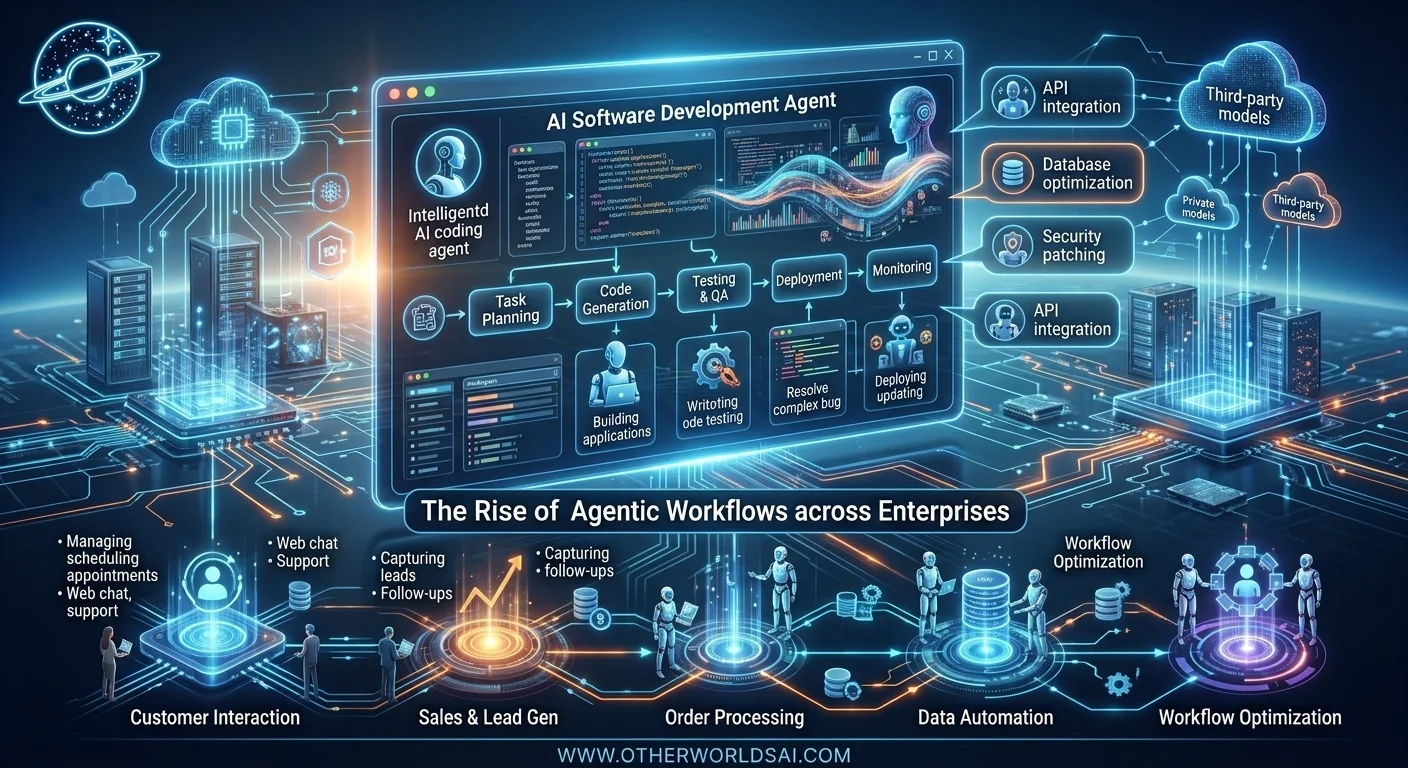
Opus 5 is Anthropic's bet that most valuable AI work happens in the everyday middle band, not the flashiest benchmark. That's the same principle behind Agent+: enterprise-grade automation and AI agents that don't require a frontier-model budget to deploy.
Otherworlds AI brings that efficient, dependable AI to your workflows starting at $297/month, with custom enterprise builds available for teams that need something more tailored.
Explore Agent+ at otherworldsai.com