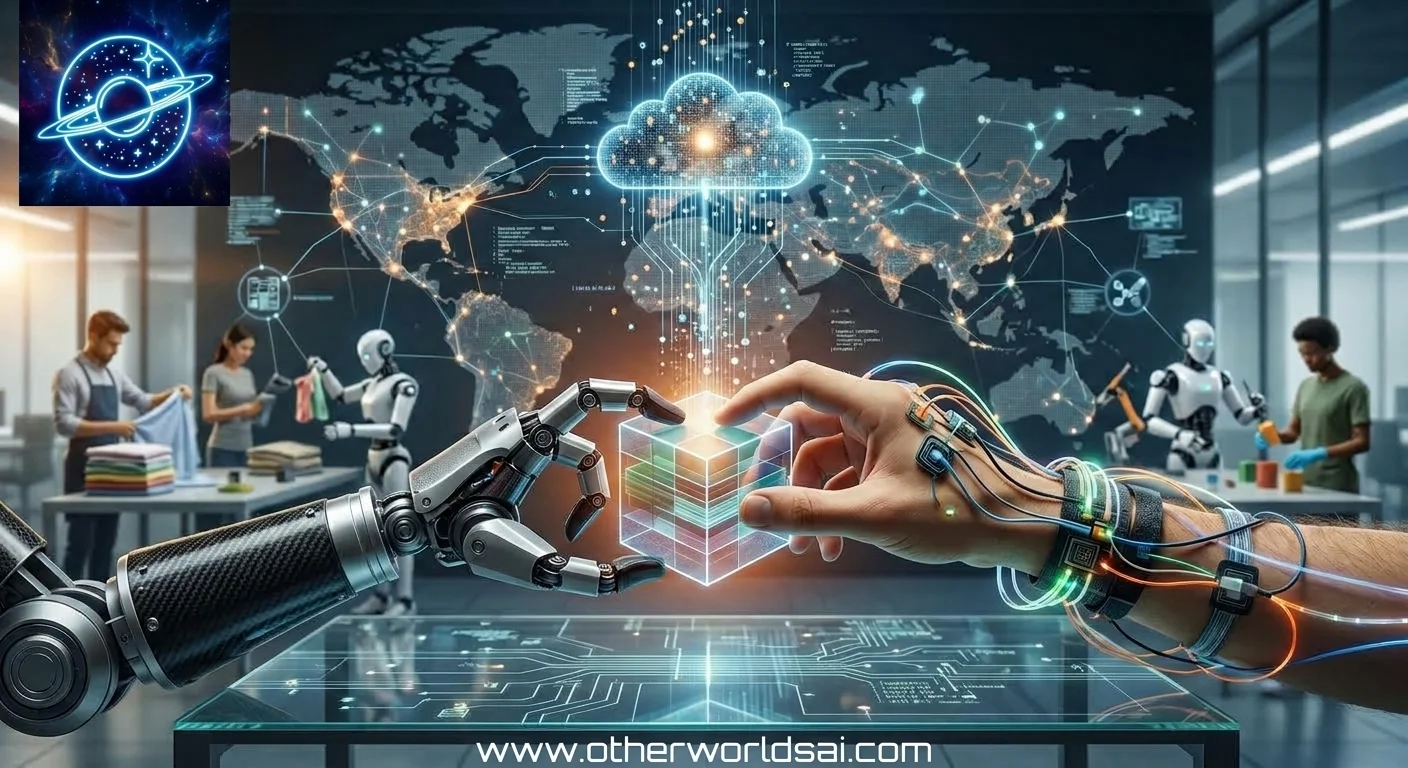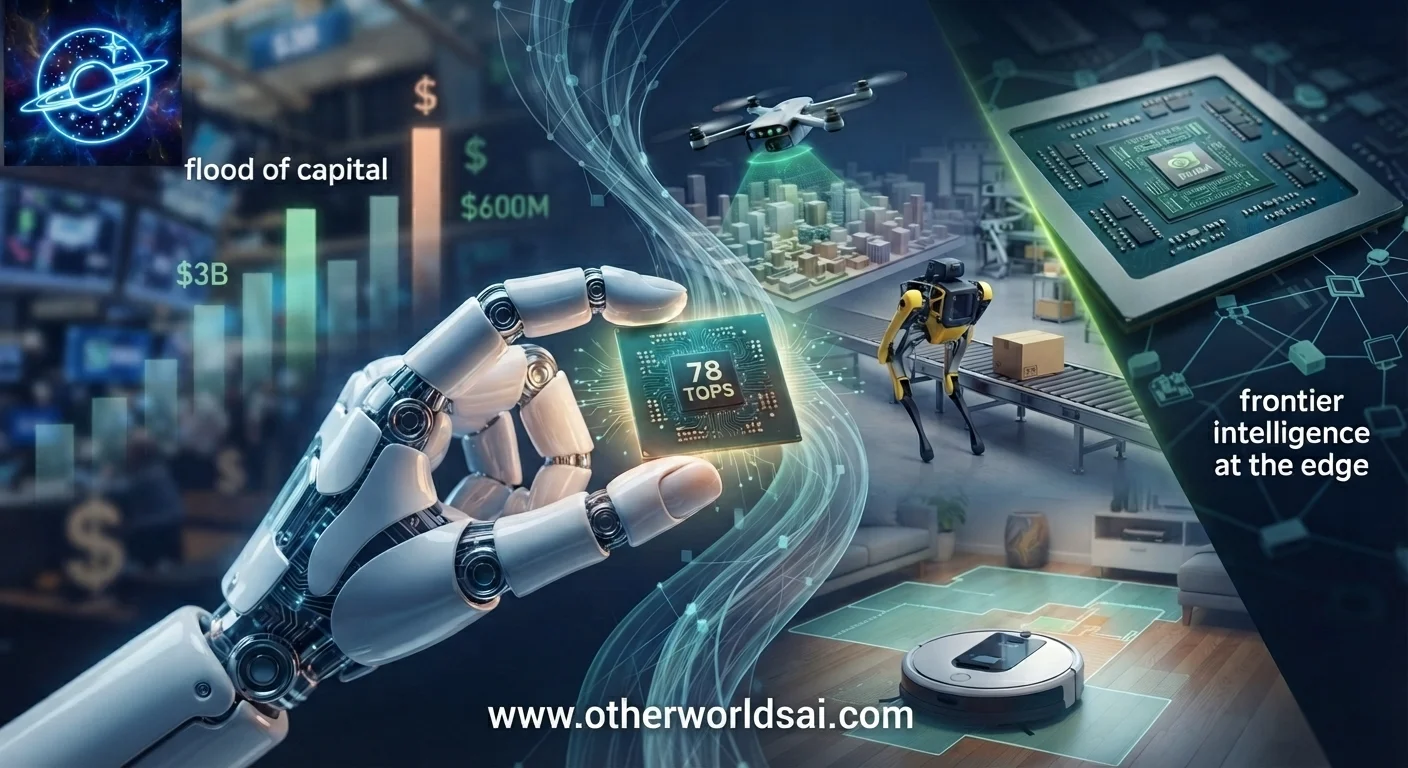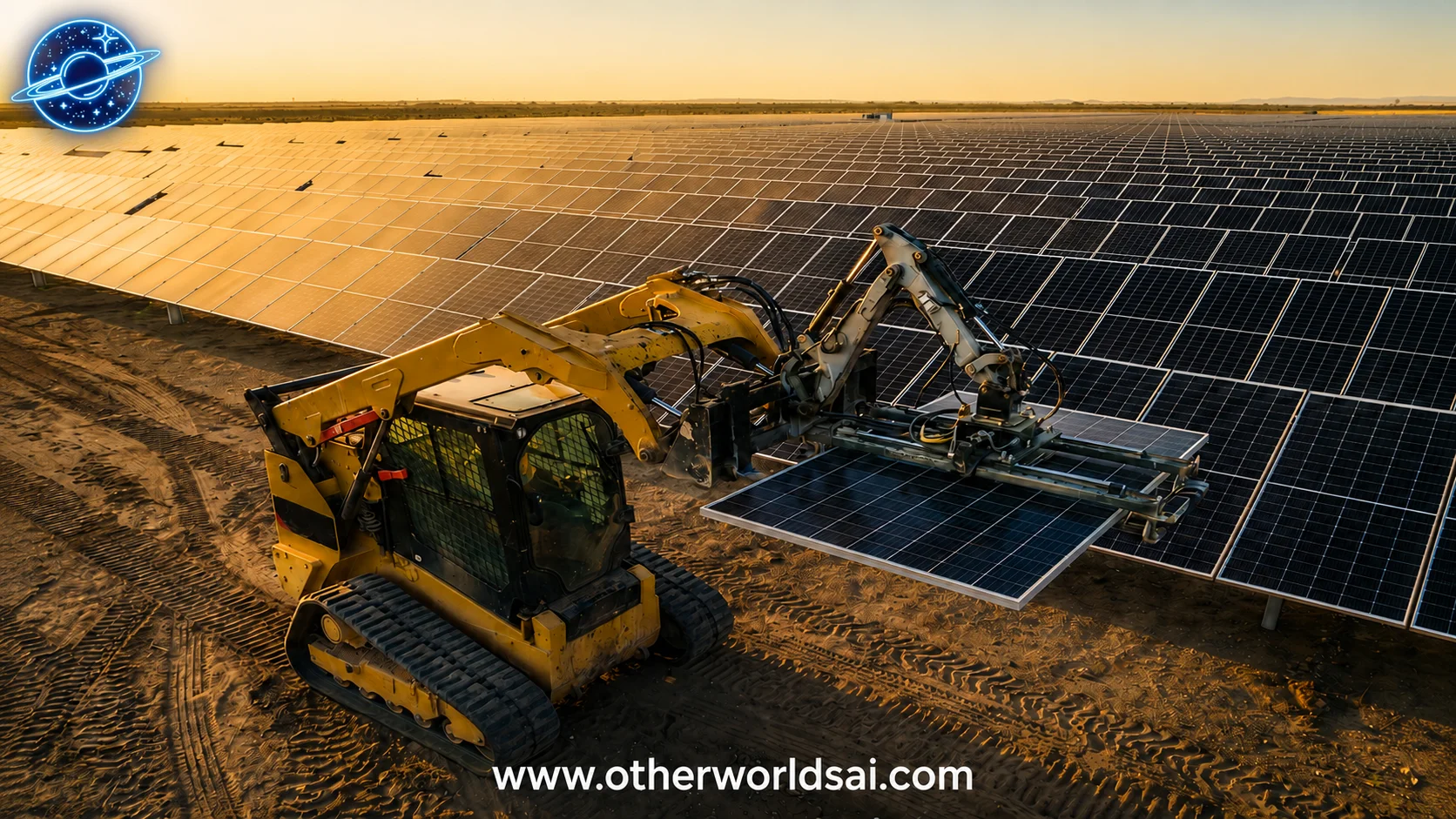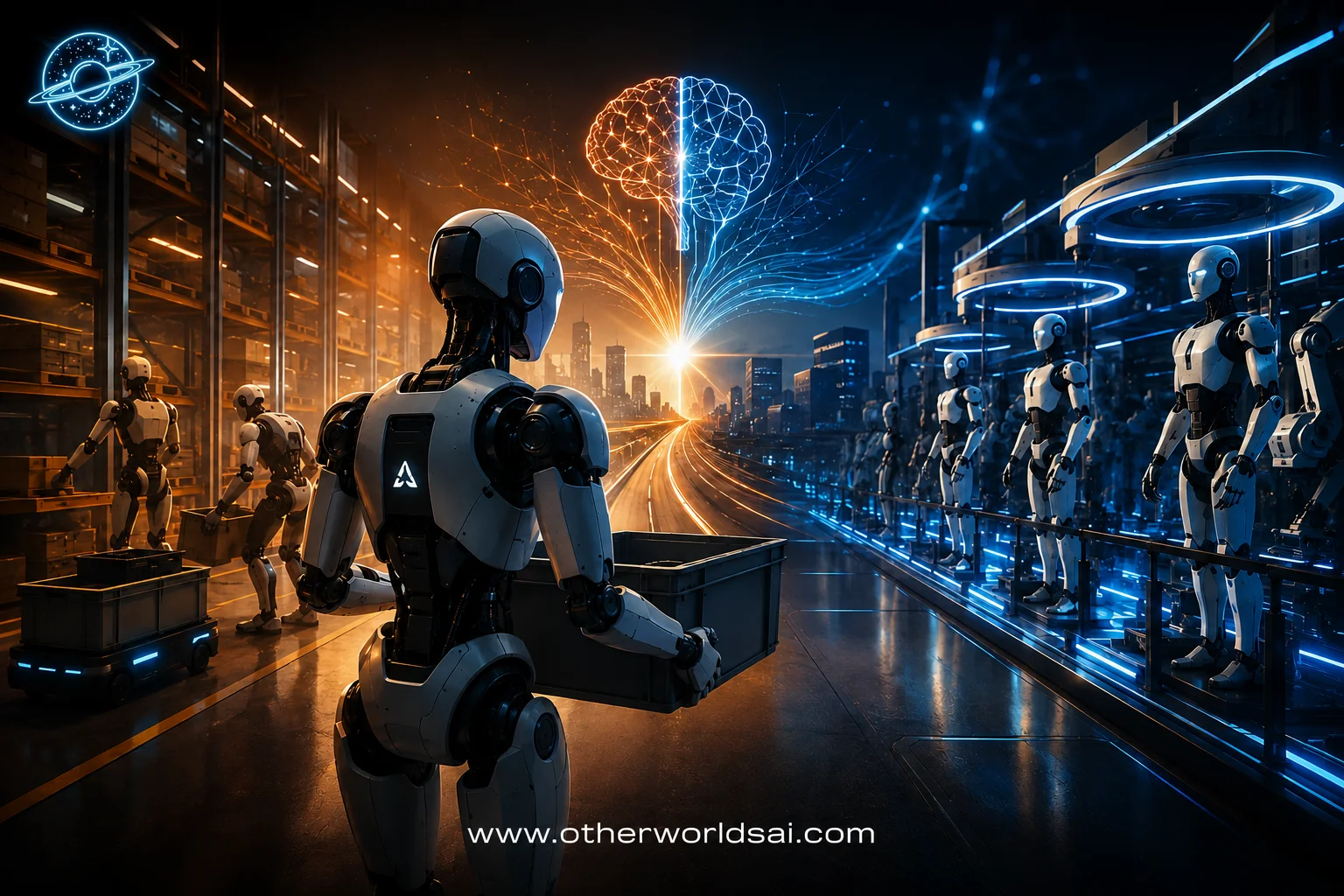

The history of robotics is a story of imagination turning into reality.
What began as speculative science fiction has evolved into a world where robots, artificial intelligence, and autonomous machines are transforming industries, transportation, healthcare, and daily life. From Isaac Asimov’s ethical frameworks to modern self-driving cars and humanoid robots, robotics has advanced through a series of defining milestones.
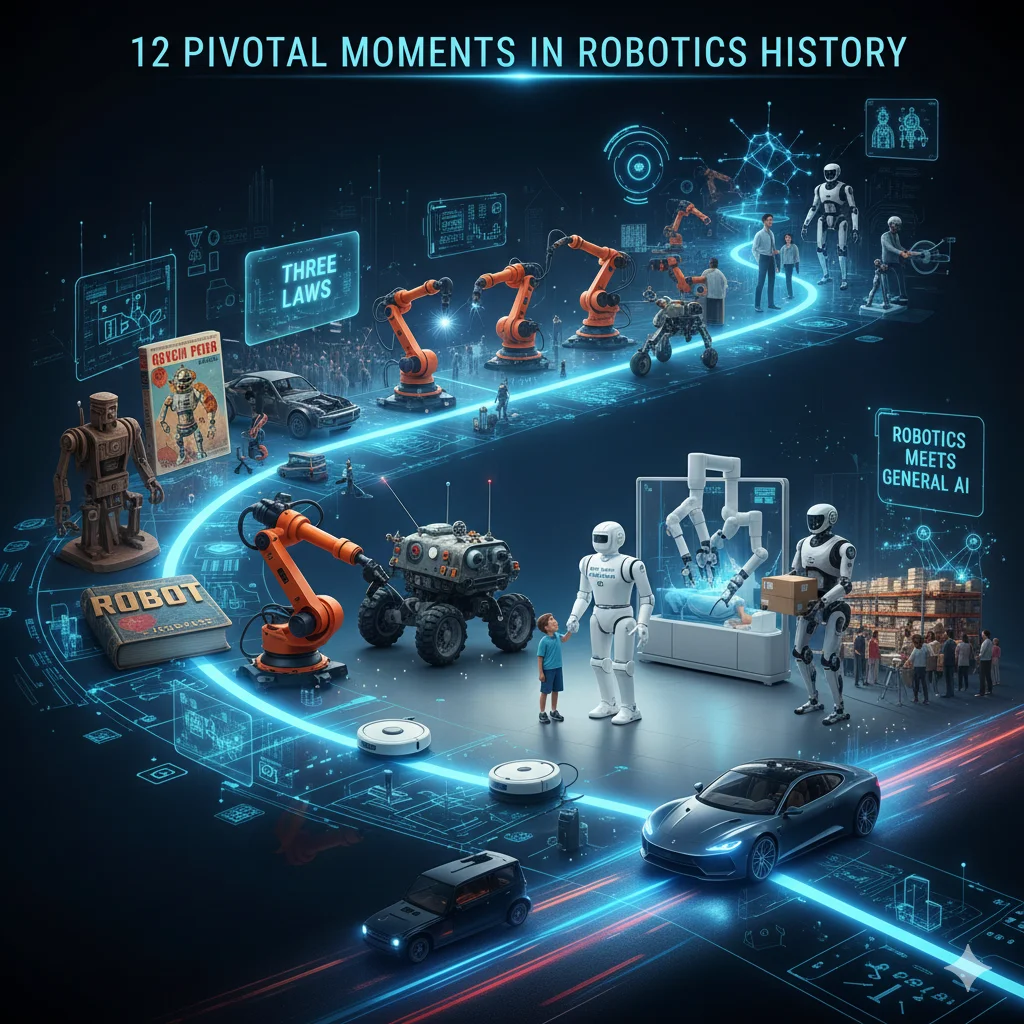
Here are 12 pivotal moments in robotics history that shaped how robots are designed, controlled, and integrated into society.
1. The Birth of the Word “Robot” (1921)
The term “robot” was first introduced by Czech writer Karel Čapek in his play R.U.R. (Rossum’s Universal Robots). Derived from the Slavic word robota, meaning forced labor, the concept framed robots as artificial workers—a theme that continues to influence robotics and AI discussions today.
2. Isaac Asimov’s Three Laws of Robotics (1942)
Few contributions have shaped robotics ethics more than Isaac Asimov’s Three Laws of Robotics. Introduced in his short stories, the laws established rules to ensure robots do not harm humans. Though fictional, they laid the foundation for modern debates on AI safety, ethical AI, and human-robot interaction.
3. The First Industrial Robot (1961)
The deployment of Unimate, the first industrial robot, in a General Motors factory marked robotics’ entry into real-world manufacturing. This milestone launched the era of industrial automation, improving efficiency, precision, and worker safety across global production lines.
4. The Rise of Programmable Robots (1970s)
Advances in computing enabled robots to become programmable rather than single-purpose machines. This era saw the spread of robotic arms in automotive and electronics manufacturing, cementing robotics as a core industrial technology.
5. Mobile Robots and Early AI Integration (1980s)
Robots began to move beyond fixed factory floors. Mobile robots, guided by early artificial intelligence algorithms, were developed for exploration, research, and defense. This period marked the early convergence of robotics and AI.
6. Humanoid Robotics Takes Shape (1990s)
Honda’s development of ASIMO, one of the most recognizable humanoid robots, demonstrated that machines could walk, balance, and interact with humans. Humanoid robots became symbols of advanced robotics and human-centric design.
7. Robotics Enters Healthcare (2000s)
The introduction of robotic-assisted surgery systems revolutionized medicine. Surgical robots improved precision, reduced recovery times, and expanded the capabilities of surgeons—showing how robotics could directly enhance human health.
8. Consumer Robots Go Mainstream (2000s)
Robots entered homes through consumer products such as robotic vacuum cleaners. These devices popularized the idea that robots could be everyday tools, not just industrial or scientific machines.

Meta's Next Big Bet: This New App Lets You Build Games Simply by Typing a Prompt
9. The Deep Learning Revolution (2010s)
Breakthroughs in machine learning and neural networks dramatically improved robot perception and decision-making. Robots gained advanced vision, speech recognition, and adaptive learning, accelerating progress in autonomous systems.
10. Self-Driving Cars Become Reality (2010s–2020s)
Few developments capture public attention like self-driving cars. Autonomous vehicles combine robotics, AI, sensors, and real-time data processing to navigate complex environments. While still evolving, they represent one of the most significant milestones in robotics history.
Support our research
Independent analysis fueled by you.
11. Commercial Humanoid Robots (2020s)
For the first time, bipedal humanoid robots are being sold commercially. Designed for logistics, warehouses, and service roles, these robots demonstrate how far balance, mobility, and AI control systems have advanced.
12. Robotics Meets General AI (Present Day)
Today’s robotics research focuses on combining general AI models, robotics hardware, and real-world learning. Robots are becoming more adaptable, capable of performing multiple tasks with minimal reprogramming. This marks a shift toward truly intelligent machines that can operate in dynamic human environments.
Why These Robotics Milestones Matter:
Each milestone in the evolution of robotics reflects a broader technological shift—from mechanical automation to intelligent, autonomous systems. Modern robots are no longer confined to factories; they drive cars, assist doctors, explore space, and collaborate with humans.
The future of robotics will be shaped by:
-Artificial intelligence and machine learning.
- Ethical AI and safety frameworks.
- Human-robot collaboration.
- Automation across industries.
As robotics continues to evolve, understanding its history helps policymakers, engineers, and society prepare for what comes next.
The Future of Robotics:
From Isaac Asimov’s imagined laws to real-world AI-powered robots and autonomous vehicles, robotics has reached a pivotal moment.
The next chapter will likely focus on trust, safety, and integration—ensuring robots enhance human life rather than replace it.
The history of robotics is not just about machines. It is about how humanity chooses to design, control, and coexist with intelligent technology.