
🏢 For Business & Tech Insiders (E-E-A-T Focused)
Amazon Halts Blue Jay Robotics Project: What It Means for the Future of Warehouse Automation:
Amazon is no stranger to bold bets in warehouse automation — with over a million robots already deployed across its global fulfillment network. But not every robotic initiative makes it past the prototype phase. In a rare public admission, the e-commerce and cloud giant has quietly pulled the plug on its Blue Jay warehouse robotics project, less than six months after the technology was unveiled with considerable fanfare.
The move offers a candid reminder that even the world's most aggressive adopter of warehouse robotics doesn't always get it right on the first try — and raises broader questions about where Amazon's robotics ambitions are headed next.
What Was Amazon's Blue Jay Robot?
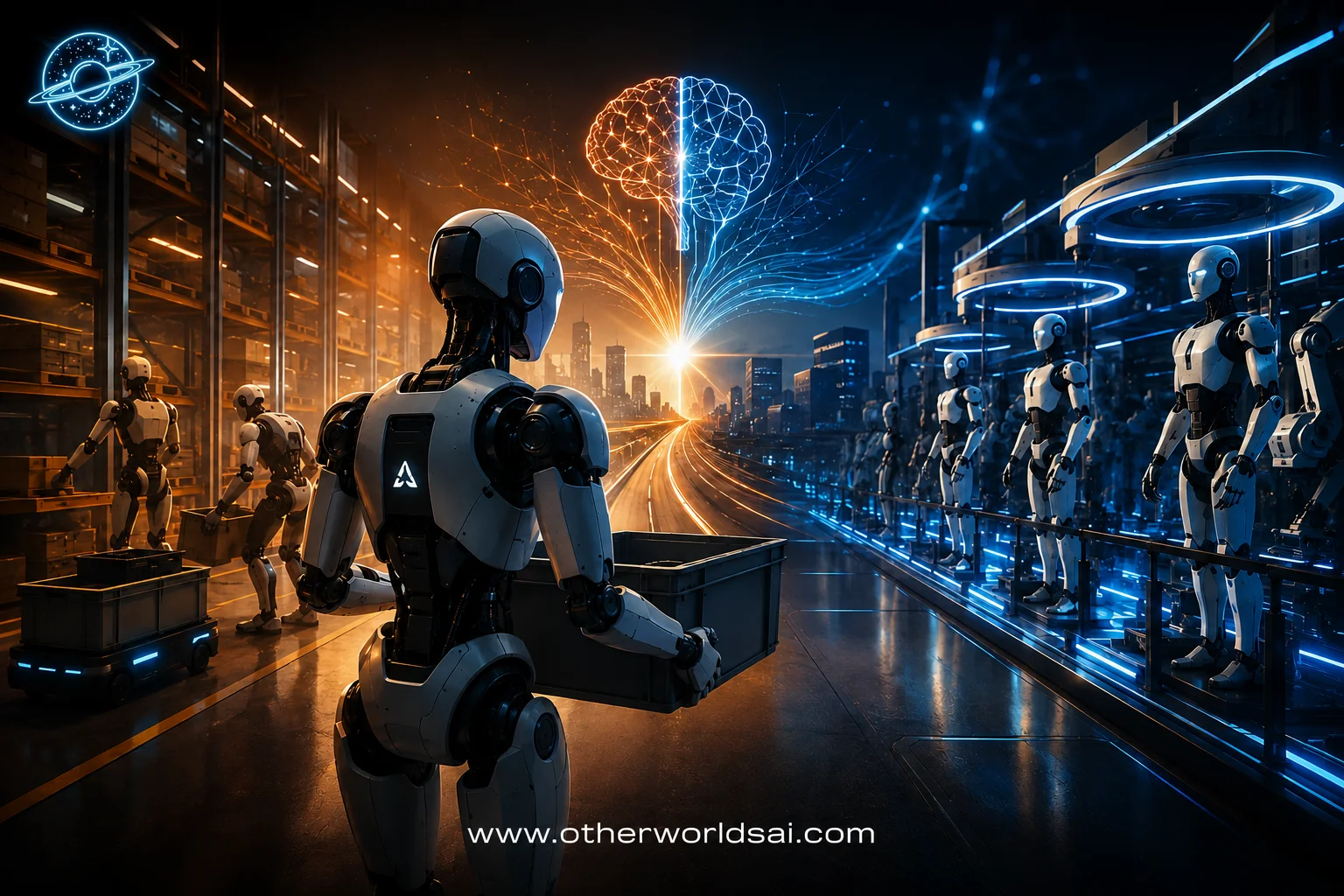
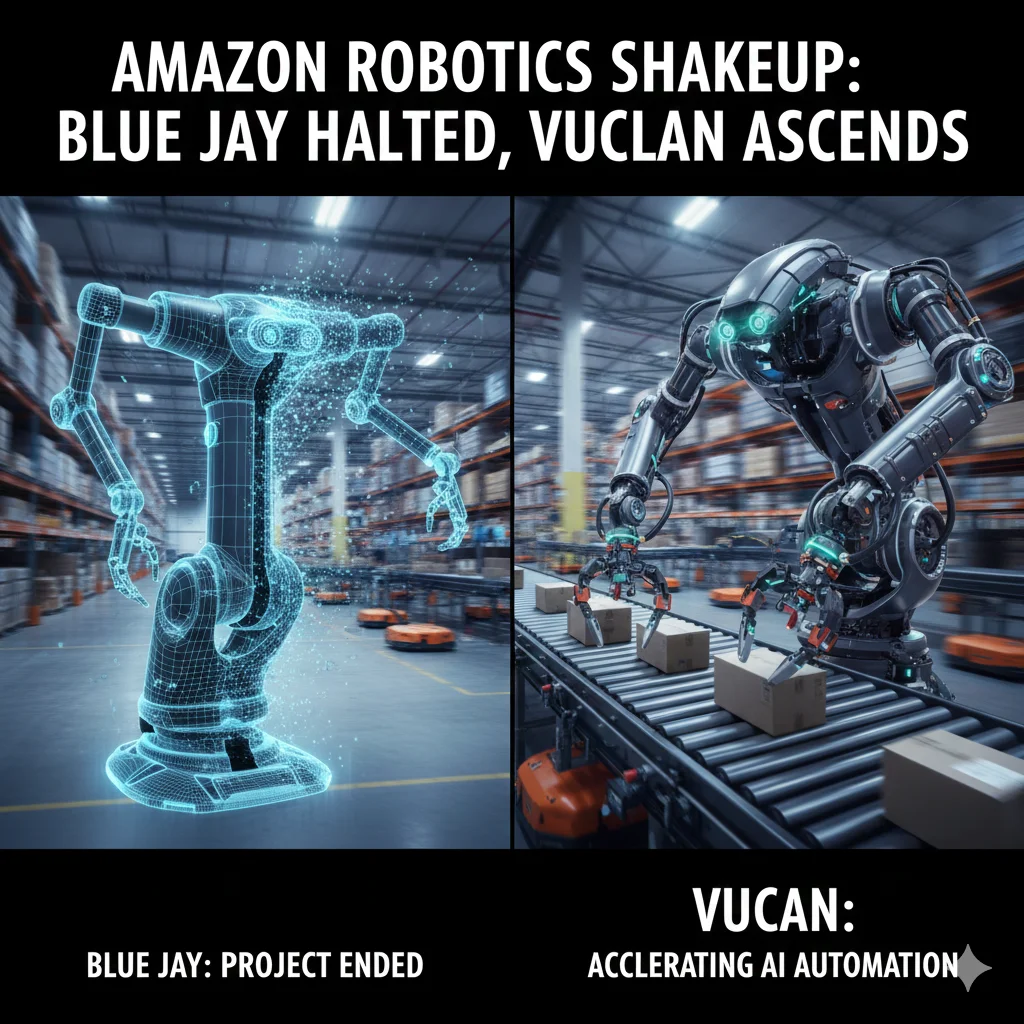
Blue Jay was a multi-armed robot designed to sort and move packages inside Amazon's same-day delivery facilities. Amazon first revealed the robot in October 2024, positioning it as a significant step forward in its efforts to speed up last-mile logistics and improve warehouse efficiency.
What made Blue Jay particularly noteworthy at launch was the speed of its development. According to Amazon, the robot took only about one year to develop — significantly faster than the company's other warehouse robots — a timeline Amazon attributed directly to advances in artificial intelligence. The implication was clear: AI was not just powering the robot; it was accelerating the entire robotics development pipeline.
Amazon was testing Blue Jay at a fulfillment facility in South Carolina and suggested the technology could be rolled out more broadly to support its growing same-day delivery infrastructure.
Why Did Amazon Cancel Blue Jay?
Amazon spokesperson Terrence Clark confirmed the cancellation to TechCrunch, revealing a detail that was notably absent from the original October announcement: Blue Jay was always a prototype, not a production-ready system.
"We're always experimenting with new ways to improve the customer experience and make work safer, more efficient, and more engaging for our employees," Clark said. "In this case, we're actually accelerating the use of the underlying technology developed for Blue Jay, and nearly all of the technologies are being carried over and will continue to support employees across our network."
In other words, while the Blue Jay robot as a standalone product is dead, the core technology behind it is very much alive. Amazon says it plans to integrate Blue Jay's foundational systems into other robotics "manipulation programs," and employees who worked on the project are being reassigned to other initiatives within the company's sprawling robotics division.
The framing is a familiar one in big tech: a project that doesn't reach commercial deployment is repositioned as a learning exercise whose outputs feed future development. Whether that fully explains the decision — or whether operational, cost, or mechanical challenges played a role — has not been disclosed.
Blue Jay vs. Vulcan: Amazon's Two-Track Approach to Robotics:
The Blue Jay cancellation arrives alongside continued investment in Amazon's Vulcan robot, a separate system that is actively being deployed in the storage compartments of Amazon's warehouses — and which represents a more mature stage of the company's robotics roadmap.
Vulcan is a two-armed robot with a distinctly different design philosophy from Blue Jay. One arm is built to rearrange and move items within a storage compartment, while the second arm — equipped with a camera and suction cups — retrieves specific goods for picking and packing. Crucially, Vulcan is designed to **"feel" the objects it interacts with, using tactile sensing trained on data gathered from millions of real-world warehouse interactions.
That combination of computer vision, physical manipulation, and tactile feedback makes Vulcan one of the more sophisticated warehouse robots Amazon has deployed to date — and its continued rollout suggests the company remains deeply committed to AI-powered robotic automation even as individual projects like Blue Jay are retire
Amazon's Robotics Journey: From Kiva to 1 Million Robots:
To understand the context of the Blue Jay cancellation, it helps to appreciate just how central robotics is to Amazon's operational identity.
Amazon's internal robotics program traces its roots to 2012, when the company acquired Kiva Systems — a warehouse automation company whose robotic shelving and transport systems became the backbone of Amazon's fulfillment operations.
That acquisition was, in retrospect, one of the most consequential bets in e-commerce history, transforming Amazon from a company that relied heavily on human labor for warehouse tasks into one that now operates the world's largest private fleet of warehouse robots.
By July 2024, Amazon had surpassed 1 million robots across its warehouse network — a milestone that underscores the sheer scale of its automation ambitions. Blue Jay, for all its promise, was just one of many experiments running in parallel within that ecosystem.
That scale also helps explain why a single cancelled project, while notable, doesn't fundamentally alter Amazon's trajectory. The company has the resources and institutional knowledge to absorb prototype failures, extract learnings, and redirect talent toward more promising applications — which is precisely what it says it's doing with Blue Jay's underlying technology.
What the Blue Jay Cancellation Tells Us About AI-Driven Robotics:
Perhaps the most interesting subplot of the Blue Jay story is what it reveals about the relationship between artificial intelligence and hardware development cycles.
Amazon initially touted Blue Jay's rapid development — just one year — as proof that AI was fundamentally compressing the timeline for building new robots. And that may well be true as a general principle. But the Blue Jay case also demonstrates that faster development doesn't guarantee successful deployment. Prototype-to-production remains a significant leap, particularly for robotic systems operating in the dynamic, high-throughput environment of a same-day delivery warehouse.
As AI continues to evolve, Amazon and its competitors — including Agility Robotics, Boston Dynamics, Berkshire Grey, and others — will face the same fundamental challenge: translating impressive lab and pilot performance into robots that work reliably, safely, and economically at warehouse scale.
For now, Amazon's message is one of cautious optimism: Blue Jay the robot may be gone, but the artificial intelligence and manipulation technologies it helped develop will live on — and likely show up in the next generation of Amazon warehouse systems.
What's Next for Amazon Warehouse Automation?
Amazon has given no specific timeline for when Blue Jay's core technologies will surface in other products, but the company's broader direction is clear. With Vulcan actively deployed, its AI-powered manipulation capabilities continuing to mature, and a development culture that treats prototypes as stepping stones rather than endpoints, Amazon's warehouse robotics program shows no signs of slowing down.
For workers, industry observers, and competitors alike, the key question is not whether Amazon will automate more of its warehouse operations — that trajectory is firmly established — but how quickly, and
what role human workers will continue to play alongside an ever-growing fleet of intelligent machines.
Support our research
Independent analysis fueled by you.