
GOOGLE MAKES PERSONALIZED AI IMAGE GENERATION FREE — AND YOUR BUSINESS DATA STRATEGY SHOULD TAKE NOTE:
Gemini's Nano Banana-powered Personal Intelligence feature just opened to all U.S. users at no cost — and it reveals exactly where AI personalization is heading for consumers and businesses alike.
Google Gemini Can Now Draw 'Your Favorite Things' Without Detailed Prompts:
1: What Google Just Announced — And Why It's Bigger Than Free Images:
Google didn't just make a feature free. It moved AI-powered personalization from a premium perk into a baseline expectation for every consumer AI product — and the downstream effects will be felt across the entire AI landscape.
On Monday, Google announced that Gemini's Nano Banana-powered image generation — part of its Personal Intelligence feature set — is now available for free to all eligible U.S. users. Previously limited to Plus, Pro, and Ultra subscribers, the capability now reaches any user who opts in, regardless of their subscription tier.
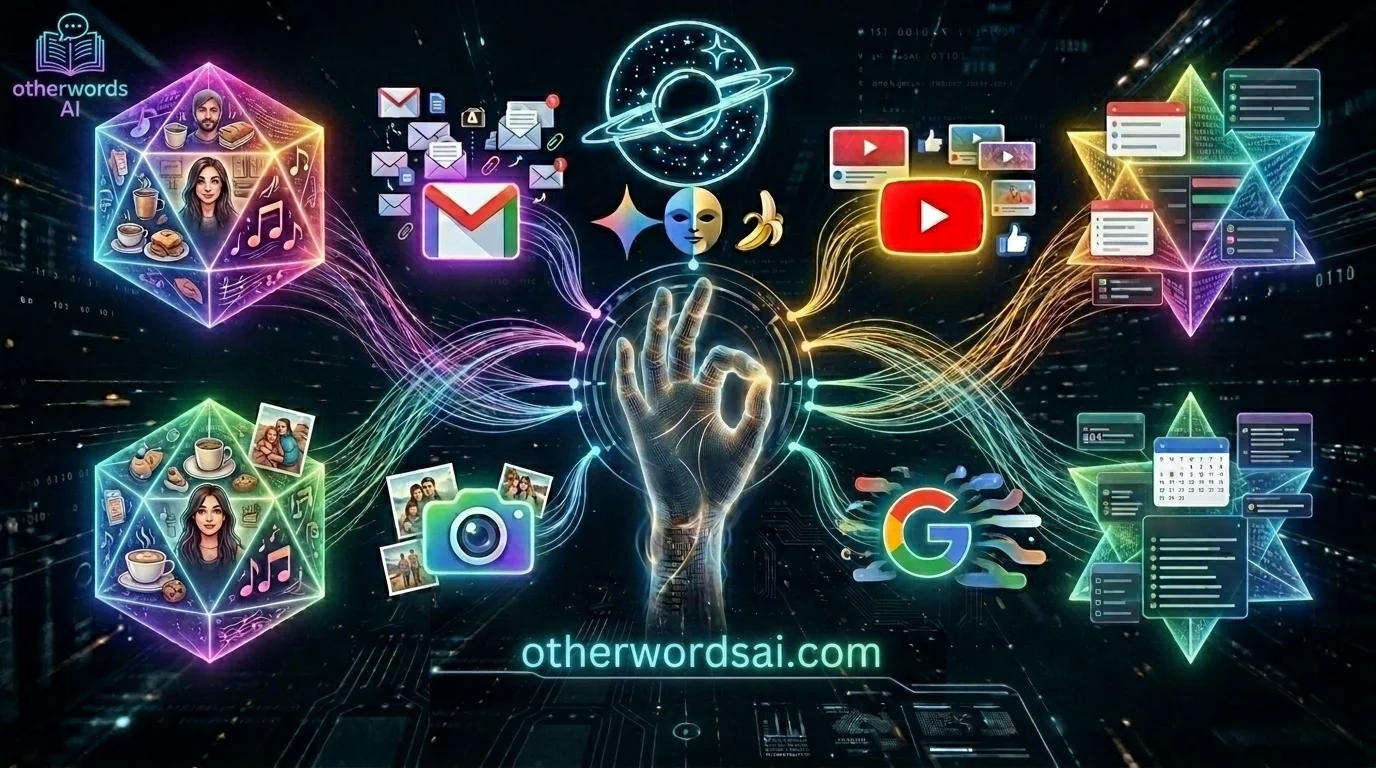
The feature leverages data from a user's connected Google accounts — Gmail, Google Photos, YouTube, Search history — to generate images that reflect their personal tastes and interests without requiring detailed prompts. Instead of specifying "create an illustration of me enjoying coffee and baking," a user can simply ask for "an illustration of me and my favorite things." Gemini fills in the rest.
Gemini can also pull actual images of the user from Google Photos directly, removing the need to upload reference photos manually. This is seamless, context-aware, zero-friction personalization — and it's now free.
750M+: Monthly Active Gemini Users
Free: Personal Intelligence tier in U.S. (was paid-only)
4 Sources: Gmail, Photos, YouTube, Search — feeding personalization
Section 2: Personal Intelligence — How Gemini Knows What You Want Before You Ask:
The real innovation here isn't image generation — it's implicit intent modeling at consumer scale. Gemini doesn't ask you to describe yourself. It already knows. Personal Intelligence is an opt-in feature, meaning users decide which Google apps Gemini can access. Once enabled, it becomes the default context layer for every Gemini prompt.
Users can toggle it off per-session via a new control in the Tools menu — giving Google a privacy-conscious rollout mechanism while still nudging users toward keeping it on.
The data sources Gemini draws from are significant:
• Gmail — communication patterns, interests, subscriptions, purchases.
• Google Photos — actual images of you, your family, places you've been, things you love.
• YouTube — content preferences, topics you engage with, creators you follow.
• Search history — intent signals, research habits, real-time interests
Together, these signals create a behavioral profile that informs not just image generation but every interaction with Gemini. This is the direction all major AI assistants are moving — and Google, with its unmatched data ecosystem, is best positioned to execute on it at scale.
Instead of prompting 'create an illustration of me enjoying coffee and baking,' users simply ask for 'an illustration of me and my favorite things.' Gemini knows the rest.
3: From Paid Feature to Free Default — The AI Commoditization Playbook:
When Google moves something from paid to free, it's not generosity — it's strategy. Making Personal Intelligence free is a deliberate move to establish Gemini as the default AI layer across the entire Google ecosystem.
The rollout timeline tells the story clearly. Google announced Nano Banana-powered image generation in April for paying subscribers. By March of this year, Personal Intelligence itself had already expanded to all U.S. users. In April, it reached India and Japan. Now image generation — the most visually compelling, viral-shareable expression of the feature — goes free in the U.S.
This is the classic AI commoditization pattern: launch as premium to validate demand and collect feedback, then open up to maximize adoption and entrench the platform. With 750 million monthly active users already on Gemini, Google is converting that base into a personalization data flywheel — the more users engage with Personal Intelligence, the smarter Gemini's context modeling becomes.
Date: Milestone Availability
March 2026: Personal Intelligence feature launched All U.S. users
April 2026: Nano Banana image generation announced Plus / Pro / Ultra only
April 2026: Personal Intelligence expanded India & Japan
June 2026: Nano Banana image generation goes free All eligible U.S. users
Section 4: The Broader Gemini Roadmap — This Is Just the Beginning:
Personal Intelligence image generation is one piece of a much larger Gemini product push. Google has several major updates in the pipeline that signal where consumer AI is heading in the second half of 2026.
Meta's Next Big Bet: This New App Lets You Build Games Simply by Typing a Prompt
Announced at Google I/O 2026 last month, upcoming Gemini features include:
• Daily Brief — a personalized, proactive AI-generated summary of what matters to you each day, delivered before you even ask.
Support our research
Independent analysis fueled by you.
• Revamped interface — a redesigned Gemini app experience built for deeper, more natural interaction flows.
• Gemini Omni — access to Google's AI video generation model directly within the Gemini app.
• Gemini Spark — a personal AI agent designed for ongoing, memory-aware task assistance
Taken together, these features describe a Gemini that is evolving from a chatbot into a persistent, proactive AI layer that knows you, remembers context, generates media, and acts on your behalf. This is the consumer AI trajectory — and it's accelerating.
With 750 million monthly active Gemini users, Google is converting the world's largest AI audience into a personalization flywheel that compounds with every interaction.
5: Privacy, Opt-In Design, and the Trust Layer of Personalized AI:
Personalized AI is only as powerful as the trust users place in it. Google's opt-in approach to Personal Intelligence is deliberate — and businesses deploying AI for their own customers should take note.
Rather than enabling cross-app data access by default, Google requires users to actively opt in and choose which services Gemini can access. The feature is then toggleable per-session, giving users granular control without requiring them to disable personalization entirely each time.
This is the right design pattern for any AI system that handles personal data. Transparency about data sources, user control at the session level, and a clear value exchange — better outputs in return for access — are the foundational principles that determine whether users engage with AI personalization or reject it.
Design Principle: Google's Implementation Business Takeaway
Explicit opt-in: :User chooses which apps Gemini accesses: Never assume data consent
Granular control: :Per-session toggle in Tools menu: Give users override at every step
Clear value exchange: :Better outputs = reason to share data: Make the benefit obvious
Contextual default: :On by default once opted in::Reduce friction after consent is granted
6: What Gemini's Personalization Push Means for Business AI — And How Agent+ Closes the Gap:
Google just demonstrated something important: AI without personalization is a tool. AI with personalization is an advantage. For businesses, that distinction is the difference between automating tasks and truly transforming how your operation runs.
What Gemini is doing for individual consumers — building a context-aware AI that understands preferences, history, and intent without being manually briefed each time — is exactly what enterprise AI needs to do for business workflows.
The parallel is direct: just as Gemini draws on Gmail and Photos to generate a more relevant image, a business AI platform should draw on your CRM, your communication history, your operational data, and your customer interactions to deliver responses and automations that are actually calibrated to your business — not a generic AI answer.
This is what Otherworlds AI's Agent+ Business AI Platform delivers. Rather than deploying a one-size-fits-all AI assistant, Agent+ builds intelligent workflows that are trained on your business context:
• Context-aware automation — workflows that understand your business processes, not just generic prompts.
• Multi-source intelligence — Agent+ draws from your operational data, just as Gemini draws from your Google account.
Move Over Nvidia: Anthropic and Samsung Team Up to Break the AI Chip Monopoly
• Google Opal-powered workflows — automated trigger-based processes that connect your tools and act on real business events.
• No manual re-briefing — your team stops explaining context to AI every session, and starts getting outputs that already understand the business.
Gemini knows your favorite things without being told. Agent+ knows your business processes without being re-trained every session. That's the power of contextual AI — and it's available for your business today.
Google's move to make personalized AI free sets a new expectation: AI should know the context without being told. For businesses still running generic AI tools with manual re-prompting and no memory of prior interactions, the competitive gap is widening — and it's widening fast.
See how Agent+ brings contextual business AI to your operation. Visit otherworldsai.com to explore the platform and start building AI workflows that already understand your business.