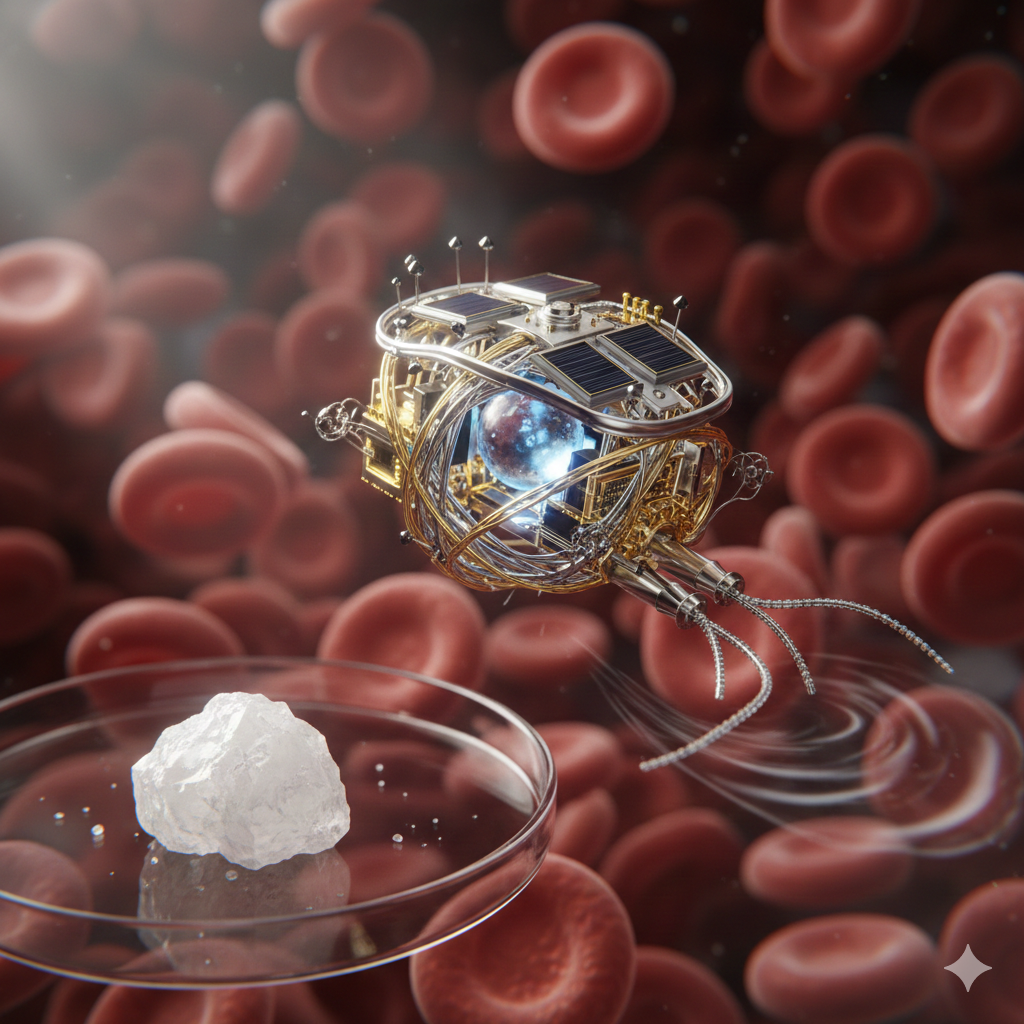

Remember all those sci-fi movies where microscopic robots zipped through the human body, fixing things from the inside out? Well, get ready, because that future just got a whole lot closer! In a mind-blowing breakthrough, scientists have created a fully functional robot so small, it makes a grain of salt look beefy.
That's right, we're talking about a robot less than one millimeter in size that can think, sense, and move—all on its own!
Why is This Such a Big Deal?
For over forty years, engineers have been scratching their heads, trying to figure out how to cram computation, sensing, and movement into such a tiny package. Previous attempts often relied on bulky external systems to control them. But now, researchers from the University of Pennsylvania and the University of Michigan have cracked the code. This isn't just a tiny gadget; it's a complete, autonomous robot. It has:
- An onboard computer to make basic decisions.
- Sensors to understand its environment.
- A motor to get around.
- And get this: it's powered by miniature solar cells, harvesting energy from light! No tangled wires or external batteries needed.Imagine a future where these minuscule marvels could be injected into your bloodstream. Sounds like something straight out of "Fantastic Voyage," right?
The "Fantastic Voyage" is Becoming Reality:
The implications for medicine are nothing short of revolutionary. These micro-robots could one day:
- Deliver medication directly to diseased cells, minimizing side effects elsewhere.
- Examine individual cells up close, providing unprecedented diagnostic detail.
- Assist in super-minimally invasive surgeries, reaching areas traditional tools can't.
Think about how this could transform the diagnosis and treatment of conditions that are currently hard to reach or understand.
Small Size, Giant Impact:
This achievement isn't just a win for robotics; it's a huge leap for nanotechnology and biomedical engineering too. It proves that you don't need a huge, clunky machine to have powerful intelligence and capability. Sometimes, the smallest innovations make the biggest splash. We're on the cusp of a new era where intelligent machines could work at the cellular level, changing healthcare and industry as we know it. The future, quite literally, looks incredibly small and incredibly bright!
Support our research
Independent analysis fueled by you.