
Groq Eyes $650M Raise After Nvidia's $20B Not-Acqui-Hire: What It Means for the AI Inference Wars:
Forget the Chips: Why Groq’s $650M Capital Raise is All About 'AI Neoclouds'
Introduction: Groq Is Back — and It's Raising Big:
The AI chip wars just got more interesting. Just months after striking a landmark $20 billion not-acqui-hire agreement with Nvidia, AI inference chip startup Groq is reportedly back at the fundraising table — this time seeking $650 million from its existing investor base. The move signals that Groq isn't riding off into the sunset; it's doubling down on becoming the dominant force in AI inference cloud infrastructure.
According to sources cited by Axios, Groq is in active discussions with current backers to close the round, with investors Disruptive and Infinitium already agreeing to backstop the full amount if others choose not to participate. In the high-stakes world of AI infrastructure, that kind of guaranteed floor isn't just reassuring — it's a statement of conviction.
$650M $20B
New funding round from existing investors: Nvidia not-acqui-hire deal (December 2025
#1: Inference neocloud powering enterprise AI apps
Section 1: The Nvidia Deal — Not an Acquisition, But Close Enough:
In December 2025, Groq and Nvidia announced one of the most unusual deals in recent tech history. Often described as a 'not-acqui-hire,' the $20 billion arrangement saw Nvidia license Groq's proprietary hardware technology while absorbing several of the startup's senior-level employees into the chip giant's ranks. It wasn't a full acquisition — but it paid out Groq's investors in cash as if it were.
"If the deal had been a full acquisition, it would have been Nvidia's largest purchase ever" — Axios reporting on the Groq-Nvidia deal
For Groq's investors, the December deal was a windfall. Cash in hand, significant technology licensed to one of the world's most valuable companies, and — crucially — Groq itself still standing as an independent entity. It was a rare outcome in venture capital: liquidity without a full exit, with the upside of the underlying company still very much alive.
But deals of this structure come with complications. The departure of top-level senior executives to Nvidia left Groq navigating a leadership transition at a pivotal moment. The company is now operating under interim leadership as it charts its next chapter in the inference cloud market.
Section 2: What Is AI Inference — And Why Does It Matter So Much Right Now?
To understand why Groq is raising $650 million, you first need to understand inference. In the AI world, there are two major computational workloads: training, which is the process of building and refining AI models, and inference, which is everything that happens after — every time you send a prompt and receive a response, every API call, every real-time AI-powered decision.
Inference is now the dominant workload in enterprise AI. As major foundation models have largely been built, the AI industry has shifted from a training-first economy to an inference-first economy. Companies aren't just building models anymore — they're running them at massive scale, around the clock, for millions of users. The infrastructure to support that is where the real money is flowing in 2026.
"Inference is the processing that happens after an AI prompt and is currently a much bigger need in the AI world than model training"
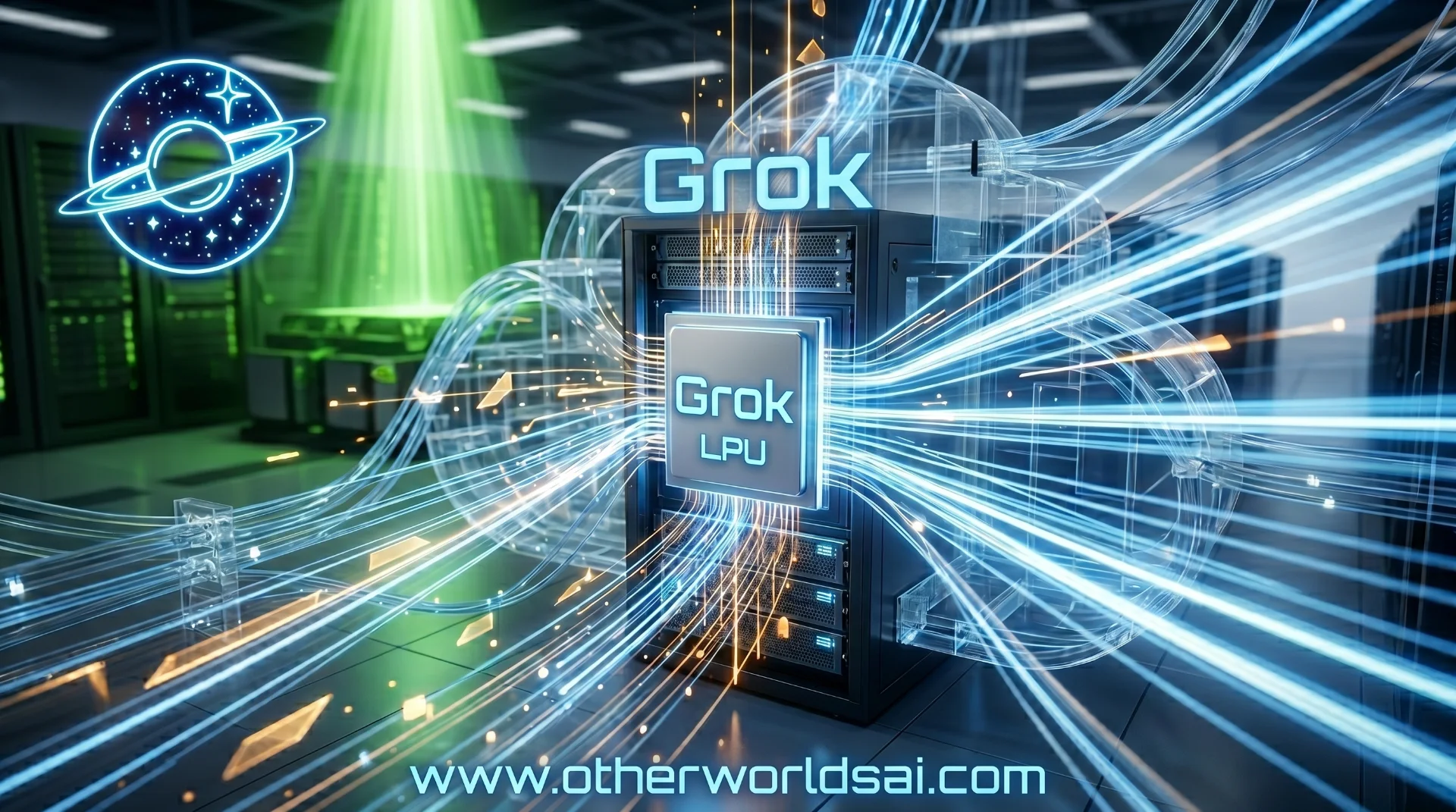
Groq has been purpose-built for exactly this moment. Its proprietary Language Processing Unit (LPU) chip architecture is specifically optimized for inference workloads — delivering speed and efficiency that general-purpose GPU infrastructure struggles to match. For developers and enterprises running inference-hungry applications, Groq's neocloud offering is a compelling alternative to traditional hyperscaler infrastructure.
Section 3: The $650M Round — What Groq Plans to Do With the Capital:
The $650 million raise isn't just about survival — it's about scaling aggressively into a market that's growing faster than almost any other in enterprise technology. Groq's inference cloud business lets developers and enterprises host AI applications that require fast, reliable, low-latency inference at scale. Think real-time AI assistants, autonomous agents, production-grade LLM APIs, and always-on enterprise copilots.
Growing an inference neocloud requires serious capital investment. Chips, data center buildouts, power infrastructure, networking, and the software stack that ties it all together — none of it comes cheap. For Groq to compete with the inference offerings of AWS, Google Cloud, and Azure, as well as emerging rivals like Together AI and Fireworks AI, it needs the war chest to match.
The guaranteed backstop from Disruptive and Infinitium is a meaningful signal. When lead investors agree in advance to fill any gaps in a funding round, it communicates that the smart money is highly confident in the company's trajectory. It also removes execution risk from the fundraise itself, letting Groq's leadership focus on building rather than pitching.
Section 4: Interim Leadership — Who Is Running Groq Right Now?
Groq's current leadership structure is a product of the Nvidia deal's aftermath. With senior executives departing to join Nvidia, the company is currently led by interim CEO Adam Winter and CFO Matt Eng. Both are navigating the dual challenge of closing a major funding round while steering Groq's strategic pivot deeper into the inference cloud market.
Interim leadership during a fundraise is not unusual in high-growth tech startups, but it does add a layer of complexity. Investors evaluating their pro-rata shares will be watching closely to see how Groq resolves its permanent leadership question — and whether the company can attract a CEO with the operational experience to take an AI infrastructure business from promising startup to category leader.
The stakes are high and the timeline is compressed. The AI inference market is moving quickly, and every month without permanent executive leadership is a month competitors can use to deepen customer relationships, expand capacity, and sharpen their technology edge.
Section 5: Groq's Position in the AI Inference Landscape:
The AI inference market in 2026 is fiercely competitive and rapidly consolidating. On one end, the hyperscalers — AWS, Google Cloud, Microsoft Azure — offer inference as part of their broader cloud ecosystems. On the other, a growing cohort of inference-specialized neoclouds are competing on speed, cost, and developer experience.
• Speed advantage: Groq's LPU architecture delivers some of the fastest token generation speeds in the industry, a critical differentiator for latency-sensitive applications.
• Cost efficiency: Purpose-built inference chips can offer better performance-per-dollar than general GPU infrastructure for steady-state inference workloads.
Move Over Nvidia: Anthropic and Samsung Team Up to Break the AI Chip Monopoly
• Developer focus: Groq has cultivated a strong developer community and API ecosystem, creating stickiness that goes beyond raw hardware performance.
Support our research
Independent analysis fueled by you.
• Nvidia relationship: The technology licensing deal means Groq's innovations will have broader industry reach — a double-edged sword that could accelerate adoption or intensify competition.
The $650 million raise, if closed, would significantly strengthen Groq's ability to compete on all these dimensions. More capital means more chips, more capacity, better pricing, and — critically — the ability to sign the kind of enterprise contracts that require guaranteed SLAs and long-term infrastructure commitments.
Section 6: What This Means for the Broader AI Chip and Inference Market:
Groq's fundraise is a bellwether for the entire AI infrastructure investment landscape. After years of training-focused capital flows — Nvidia's GPU dominance, the buildout of massive training clusters — investor attention is visibly rotating toward inference infrastructure. Groq is not alone: similar funding rounds and strategic moves are happening across the inference stack.
The Nvidia not-acqui-hire structure itself may become a template. As AI startups develop genuinely differentiated chip and systems technology, the traditional full-acquisition model may give way to more creative arrangements — technology licensing, talent absorption, and continued independent operations — that benefit all parties without triggering the full regulatory and integration complexity of an outright acquisition.
For enterprise buyers, Groq's continued independence is a positive signal. A Groq that operates as an independent inference cloud — with Nvidia's technology partnership as a tailwind rather than an endpoint — gives enterprises a credible alternative to hyperscaler lock-in. Competition in inference infrastructure ultimately benefits the developers and companies building on top of it.
Conclusion: Groq's $650M Bet on the Inference-First Future:
Groq's reported $650 million fundraise is more than a capital event — it's a strategic declaration. The company that built one of the most innovative AI chip architectures in the industry, struck a landmark deal with Nvidia, and navigated significant leadership disruption is now betting on inference cloud infrastructure as its path to category leadership;
"The new direction is led by Groq's interim CEO and CFO, with existing investors asked to back the company's plans to grow its inference cloud business — the processing that powers every AI prompt, at scale"
Whether Groq can execute on that vision depends on closing the round, resolving its leadership transition, and converting its chip technology advantage into durable customer relationships. The AI inference market will not wait. But for a company that just survived one of the most unconventional deals in tech history and came out the other side with investor confidence intact, the odds are not bad.
The inference wars are just beginning — and Groq intends to be in them. With $650 million in potential new capital, a proven technology platform,
and the world's most powerful chip company as a strategic partner, Groq's next chapter may end up being its most consequential.
Groq AI chip startup · Groq $650M funding · Nvidia Groq deal · AI inference cloud · LPU chip · AI neocloud 2026 · Groq funding round · AI chip investment · inference AI startup · Groq Nvidia not-acqui-hire