
Trump Administration Partially Lifts Ban on Anthropic’s Most Powerful AI Model:
Anthropic’s Strongest Cyber AI Is Back, But One Key Model Is Still Banned.
Trump Administration Opens Anthropic Mythos 5 Access to 100+ U.S. Organizations: What the partial reinstatement of the most powerful AI cybersecurity model means for enterprise infrastructure — and what comes next.
1: The Ban That Shook the AI Industry:
Two weeks ago, the AI industry watched closely as the U.S. government imposed a sweeping restriction on Anthropic's most advanced models — Claude Mythos 5 and Fable 5. Both were pulled from the market following reports that security researchers had allegedly bypassed their built-in guardrails with relative ease. The ban was unprecedented in scope: it extended not just to commercial customers but to non-American employees at U.S. organizations, and even to non-American staff within Anthropic itself.
For enterprise teams that had built workflows around Anthropic's enterprise AI infrastructure, the disruption was immediate. Anthropic's cybersecurity-oriented models had been among the most capable in the market for tasks involving threat modeling, infrastructure defense, and sensitive data operations. Their sudden absence created a gap that no other model was immediately positioned to fill.
The ban was never purely about a jailbreak — it was a signal that AI policy had entered a new, more interventionist phase.
But the administration's position has now shifted. The Trump administration is softening its stance in a targeted, calculated way — and the details of that shift reveal a great deal about where U.S. AI governance is heading.
2: The Partial Reinstatement: What Changed and What Didn't:
Commerce Secretary Howard Lutnick formally notified Anthropic's chief compute officer Tom Brown in a letter on Friday that the administration had determined 'appropriate safeguards are in place to permit certain trusted partners to access the Claude Mythos 5 Model.' The authorization covers more than 100 specific U.S. government agencies and companies — and critically, it extends access to non-American employees at those organizations, reversing one of the most restrictive elements of the original ban.
100+: U.S. Organizations Granted Access
2 Wks: Duration of the Model Ban
Mythos 5: Model Restored (Fable 5 Still Pending)
Anthropic acknowledged the development publicly on X (formerly Twitter), writing: 'Today, the government notified us that Mythos 5, our strongest cybersecurity model, can be redeployed to a set of US organizations that operate and defend critical infrastructure.' The company indicated it is restoring access quickly and continuing to work with the government toward broader reinstatement.
Notably absent from the directive, however, is any resolution regarding Fable 5. This model — a more accessible version of Mythos 5 that Anthropic released a couple of days before the ban, specifically because it was said to carry stronger protections — remains off the market. The administration's silence on Fable 5 suggests that the path to full reinstatement of Anthropic's cybersecurity AI models will be incremental rather than immediate.
3: Critical Infrastructure as the New Dividing Line:
The most telling detail in the reinstatement is who gets access. The 100-plus organizations authorized to use Mythos 5 are specifically those that 'operate and defend critical infrastructure,' according to Anthropic's own characterization. This framing is significant: it places the most powerful AI cybersecurity models in a new regulatory category — not consumer tools, not general enterprise software, but infrastructure-tier assets governed by national security logic.
Governments are increasingly treating frontier AI models the way they treat defense technologies — scarce, regulated, and access-controlled.
For enterprise leaders outside that authorized list, this creates a clear strategic signal: AI capabilities are no longer purely a market question. Access to the most powerful models will increasingly depend on an organization's classification, its compliance posture, and its relationship with government frameworks. This is a structural shift — not a temporary policy blip.
The inclusion of Anthropic's own non-American employees in the original ban — and their partial reinstatement now — also reveals how broadly the administration is willing to apply national security logic to AI development itself, not just deployment. The workforce building these models has become part of the regulatory equation.
4: The Guardrails Question at the Center of It All:
At the root of the ban was a specific technical and policy failure: the guardrails on both Mythos 5 and Fable 5 were reportedly bypassed by security researchers without significant effort. For a model explicitly designed for cybersecurity applications — where misuse could directly enable attacks rather than merely enable harmful content — this was a category-defining vulnerability.
The administration's reinstatement letter, citing 'appropriate safeguards,' suggests Anthropic has satisfied some threshold of government review. But the specific nature of those safeguards has not been made public, and Anthropic did not immediately respond to press inquiries about the matter. What is clear is that the guardrails debate has moved from the AI safety research community directly into the halls of the Commerce Department.
The future of enterprise AI access will be shaped not just by model capability, but by the rigor of the safeguards surrounding it.
For enterprise buyers, this has immediate practical implications. AI governance isn't a checkbox — it's a competitive differentiator. Organizations that can demonstrate robust internal controls, access restrictions, and audit trails around their AI usage will be better positioned to maintain access to frontier models as regulatory scrutiny intensifies. Those treating AI as an unmanaged utility will face growing friction.
5: What Comes Next: The Road to General Availability:
Anthropic has made clear it intends to continue negotiations with the administration to expand Mythos 5 access beyond the current 100-plus organizations and to restore Fable 5 for general use. The company's public statement framed this as an ongoing process, not a resolved one. Given the pace of AI regulatory development globally, that process could unfold quickly — or it could stall.
Several factors will shape the timeline. The political dynamics around AI and national security have shifted fundamentally in the past 18 months. What was once a debate conducted primarily in academic and policy circles is now playing out at the level of Commerce Secretary correspondence. Each new model generation will face this scrutiny, and the organizations best prepared will be those that built compliance infrastructure in advance — not in response.
Mythos 5: Partially Restored — Critical Infra Only
Anthropic vs OpenAI: Which AI is Better at Controlling Your Desktop?
Fable 5: Still Banned — No Timeline Given
Support our research
Independent analysis fueled by you.
Ongoing: Government Negotiations Continue
The Fable 5 situation is particularly instructive. A model released specifically because it had stronger protections — designed to be the safer, more accessible variant — was still caught in the same ban as its more powerful counterpart. This suggests the administration applied broad criteria quickly rather than granular technical review. Future model releases into sensitive categories will need to anticipate this kind of blunt regulatory action.
6: Why Enterprise AI Strategy Starts with the Right Platform:
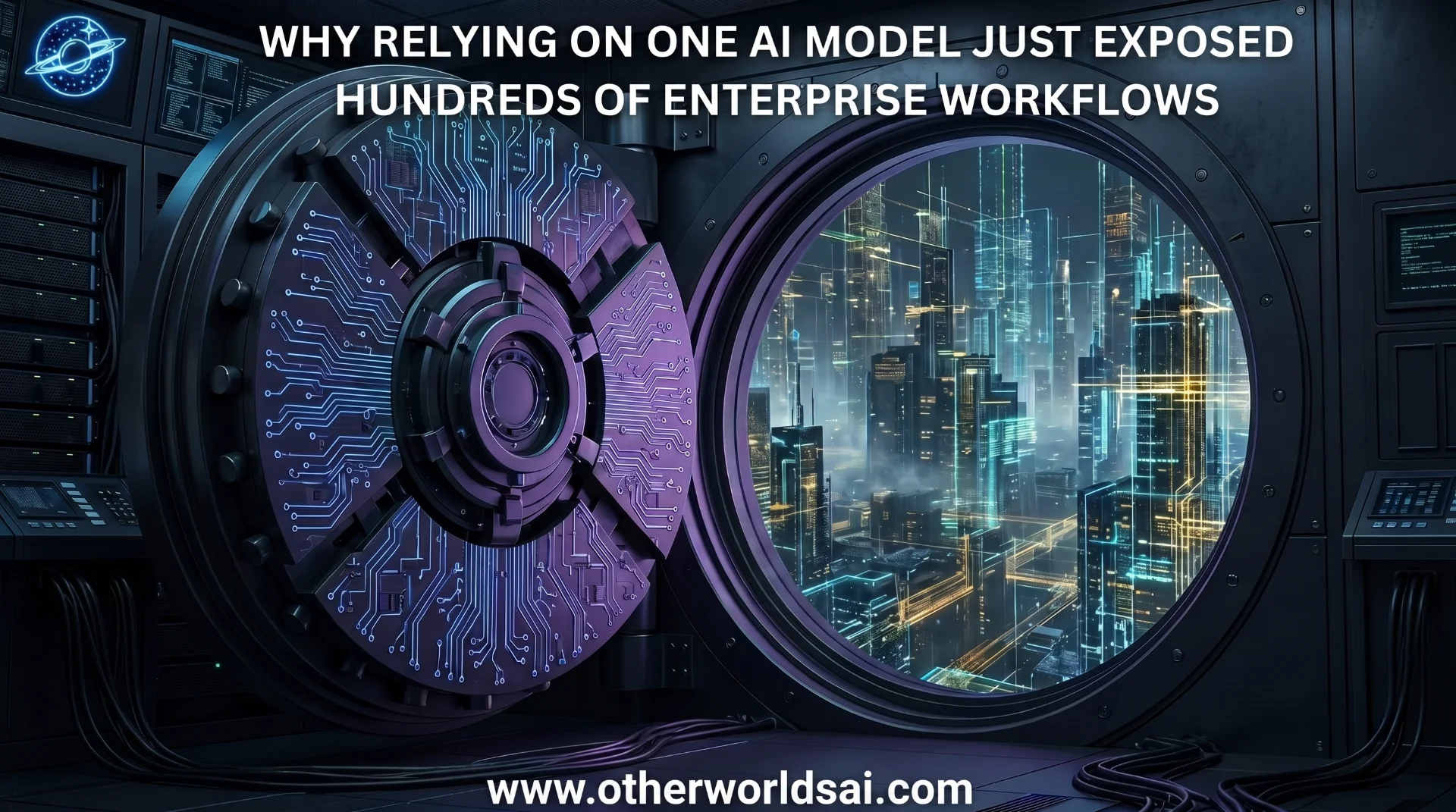
The Anthropic Mythos situation is a case study in what happens when AI adoption outpaces governance. Enterprises that built critical workflows on a single model — without layered redundancy, without abstraction from the underlying provider, and without internal oversight tooling — found themselves exposed when access was revoked overnight. The lesson isn't to avoid powerful models. It's to build enterprise AI infrastructure that can adapt.
At Otherworlds AI, this is exactly what the Agent+ Business AI Platform is designed for. Rather than locking your organization into a single model or a single vendor's compliance posture, Agent+ provides an enterprise-grade orchestration layer that routes tasks intelligently, applies access controls at the workflow level, and keeps your AI operations auditable and adaptable. When the regulatory environment shifts — and it will — your workflows don't have to break.
Enterprise AI resilience means building above the model layer, not around it.
Google Opal automated workflows, integrated within the Agent+ platform, allow your teams to deploy AI-driven automation across complex business processes without requiring direct model access at the user level. This isn't just an efficiency gain — it's a governance architecture. Your AI operates within defined parameters, with defined outputs, on defined infrastructure. That's what enterprise readiness looks like in a world where model access can be revoked by executive letter.
Plans start at $297/month, and Otherworlds AI works with organizations across industries to design AI deployments that are production-ready from day one.
To explore what enterprise-grade AI infrastructure looks like for your organization, visit otherworldsai.com.