
Anthropic's Mythos AI Cybersecurity Model: Sam Altman's 'Fear-Based Marketing' Accusation, Unauthorized Access, and the Battle for AI Dominance.
The Story So Far: Anthropic's Most Controversial AI Release Yet:
Anthropic has ignited one of the most heated conversations in the AI industry with the limited release of Mythos, its enterprise-grade cybersecurity AI model — and the fallout has been swift, messy, and deeply revealing about the state of competition in Silicon Valley.
In the span of just a few weeks, Anthropic's most exclusive AI product has drawn fierce public criticism from OpenAI CEO Sam Altman, sparked a debate about fear-based AI marketing, and become the subject of a reported unauthorized access breach. What was supposed to be a controlled, high-profile launch has instead become a case study in how quickly things can unravel in the AI arms race.
What Is Mythos: Anthropic's AI Cybersecurity Model, Explained:
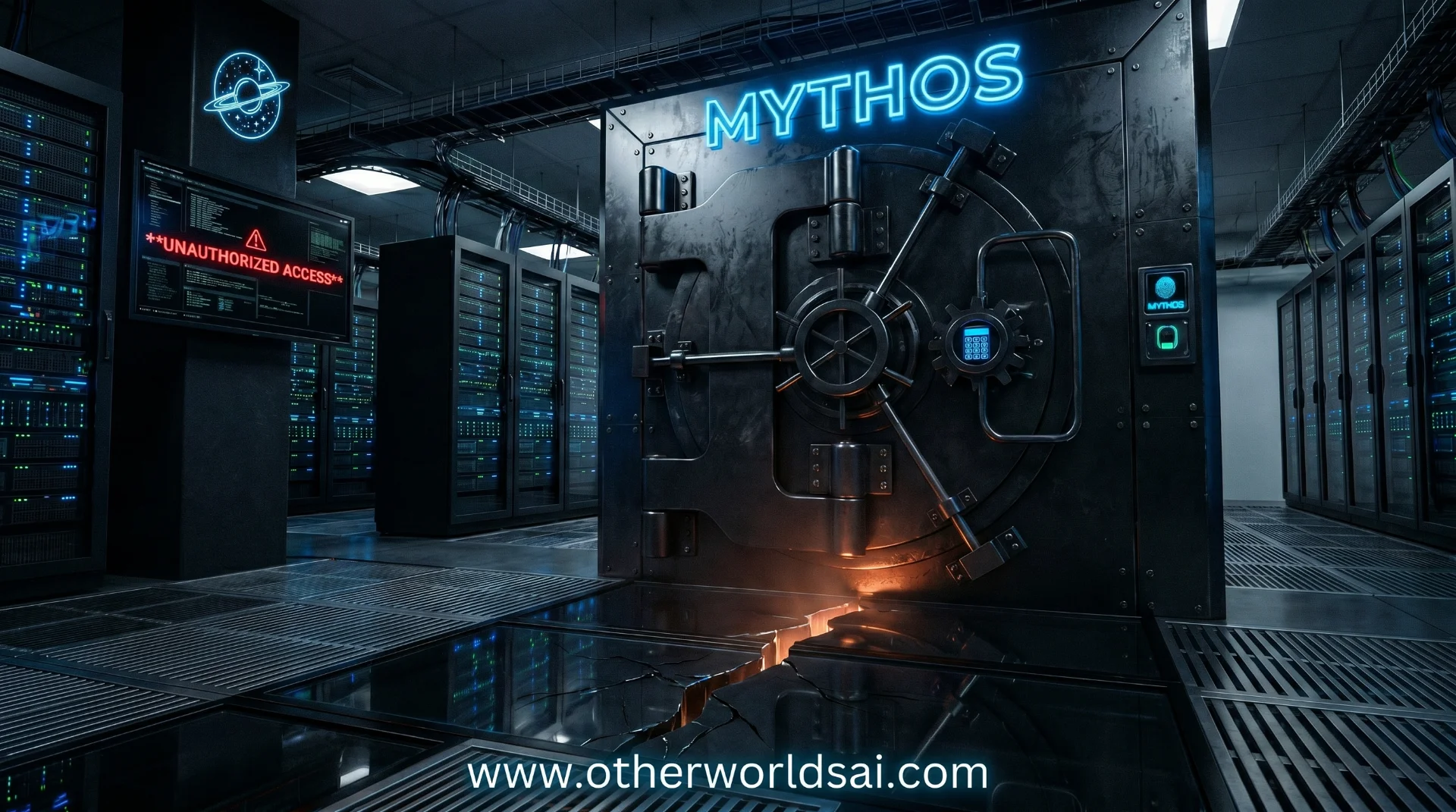
Mythos is Anthropic's specialized AI model built for enterprise cybersecurity — and it is unlike any product the company has released to the public. Rather than making Mythos broadly available, Anthropic chose to release it exclusively to a small cohort of enterprise customers under an initiative called Project Glasswing, which includes major partners such as Apple.
The company's rationale was stark and direct: Mythos is, in Anthropic's own framing, too powerful to be released to the general public. According to Anthropic, the model's advanced capabilities could be weaponized by cybercriminals rather than used for the defensive enterprise security purposes it was built for.
The selective rollout strategy was by design, not limitation. Anthropic positioned the controlled release as a responsible approach to a genuinely dangerous dual-use AI tool — one that could fortify corporate security infrastructure in the right hands, but become a potent offensive hacking tool in the wrong ones. Critics, however, were quick to push back, calling the rhetoric overblown and questioning whether the "too dangerous to release" framing was more marketing than genuine safety concern.
Sam Altman Fires Back: 'Fear-Based Marketing' and the Politics of AI Gatekeeping:
OpenAI CEO Sam Altman didn't wait long to weigh in — and his comments have since become the most-quoted critique of the Mythos launch. During an appearance on the podcast Core Memory, Altman took direct aim at Anthropic's messaging strategy, accusing the company of leveraging fear to make its product sound more powerful and exclusive than it actually is.
Altman's criticism cut to what he sees as a deeper ideological problem in the AI industry. "There are people in the world who, for a long time, have wanted to keep AI in the hands of a smaller group of people," he said. "You can justify that in a lot of different ways." His implication was clear: framing a product as too dangerous for public access is a convenient way to maintain exclusivity and drive demand among elite enterprise customers willing to pay a premium.
Perhaps his most pointed line was a blunt analogy that has since gone viral across AI and tech communities. "It is clearly incredible marketing to say, 'We have built a bomb, we are about to drop it on your head. We will sell you a bomb shelter for $100 million,'" Altman said, directly characterizing Anthropic's launch strategy as fear-based AI marketing designed to create urgency and exclusivity simultaneously.
A History of Hype: Is Fear-Based AI Marketing an Industry Problem?
It would be a mistake to treat Altman's critique as entirely clean-handed. Fear-based marketing is not a tactic invented by Anthropic — it is arguably baked into the DNA of the modern AI industry. Existential warnings about artificial intelligence, including predictions about AI ending the world or displacing human civilization, have not come exclusively from cautious academics or activist groups. They have come from the very founders and executives selling AI products to the public — including, on more than one occasion, Sam Altman himself.
The uncomfortable reality is that the AI industry runs, at least in part, on manufactured urgency. Whether it is framing models as humanity's last invention, warning about superintelligent systems, or — as in Mythos's case — suggesting a product is too powerful to be publicly released, hype and fear are powerful commercial tools. Altman's framing of Anthropic's approach as uniquely manipulative obscures a broader pattern that the entire industry, including OpenAI, has participated in for years.
The Breach: Unauthorized Access to Mythos Surfaces Almost Immediately:
Just as the debate over Mythos's marketing strategy was gaining momentum, a separate and far more damaging story emerged. Bloomberg reported that a group of unauthorized users had reportedly gained access to Mythos — the very AI model Anthropic had described as too sensitive to release publicly — through a third-party vendor environment.
Anthropic confirmed it was investigating the report. "We're investigating a report claiming unauthorized access to Claude Mythos Preview through one of our third-party vendor environments," an Anthropic spokesperson told TechCrunch, adding that the company had found no evidence the unauthorized activity had impacted Anthropic's own core systems.
The method used to gain access was surprisingly low-tech. According to Bloomberg, the group — members of a Discord channel dedicated to tracking unreleased AI models — made an educated guess about the model's location online based on their knowledge of the URL format Anthropic has used for other models. The group reportedly included someone currently employed at a third-party contractor working for Anthropic, whose access was leveraged in the process.
Who Got In, and What Did They Do With It?
The unauthorized group gained access to Mythos on the same day it was publicly announced — a detail that underscores just how quickly determined individuals can move when motivated. Since gaining access, the group has reportedly been using Mythos regularly, and provided Bloomberg with evidence of their access in the form of screenshots and a live demonstration of the software in action.
The motivations of the group appear to be curiosity rather than malice. According to Bloomberg's source, the group is "interested in playing around with new models, not wreaking havoc with them." Nevertheless, the fact that access was obtained at all — and so quickly — represents a significant problem for a company that premised its entire Mythos launch narrative on the idea that the model was being carefully gatekept to prevent exactly this kind of unauthorized use.
Why This Matters: The Irony of the Mythos Security Breach:
There is a deep, almost uncomfortable irony in what has unfolded. Anthropic released Mythos under the explicit justification that unrestricted access could enable bad actors to weaponize it. The company built an entire launch narrative around the idea that responsible AI deployment requires keeping powerful cybersecurity tools out of unauthorized hands. Within days of the announcement, those hands reportedly had access anyway — not through sophisticated hacking, but through a contractor relationship and a URL educated guess.
The breach doesn't necessarily mean Anthropic's safety concerns about Mythos were wrong. The group that gained access claims to be benign, and Anthropic says its own systems were not affected. But it does raise urgent questions about third-party vendor security, the practicality of "controlled release" strategies for AI models, and whether Anthropic's claims about Mythos's dangerous capabilities hold up under scrutiny if curious hobbyists can access it within 24 hours of launch.
OpenAI vs. Anthropic: The Rivalry That Defines the AI Industry:
The Mythos saga is the latest chapter in an ongoing and increasingly public rivalry between OpenAI and Anthropic. The two companies have a complex shared history — Anthropic was founded largely by former OpenAI employees, including CEO Dario Amodei — and they have been trading swipes, both direct and indirect, as competition for enterprise AI customers intensifies.
Altman's "fear-based marketing" comments are notable not just for their sharpness, but for their timing. They land at a moment when both companies are aggressively pursuing the same enterprise security and Fortune 500 client base. Framing a competitor's marquee product launch as manipulative and exclusionary is a move that serves OpenAI's commercial interests as much as any genuine philosophical objection.
What Comes Next: Anthropic, Mythos, and the Road Ahead:
Anthropic now faces pressure on two fronts. On one side, it must address the reported security breach and reassure its Project Glasswing partners — including Apple — that third-party vendor environments are not an exploitable vulnerability. On the other, it faces a credibility challenge: if the "too dangerous to release" framing was meant to signal responsibility and rigor, a same-day unauthorized access incident complicates that narrative considerably.
For the broader AI industry, the Mythos story is a mirror. It reflects the tensions between safety rhetoric and commercial ambition, between open access and controlled deployment, and between the genuine risks of powerful AI models and the very human tendency to use those risks as marketing.
How Anthropic responds — and whether Mythos lives up to its billing as a transformative enterprise cybersecurity AI tool — will be watched closely by competitors, customers, and regulators alike.