
The Unprecedented Energy Crisis of the AGI Era:
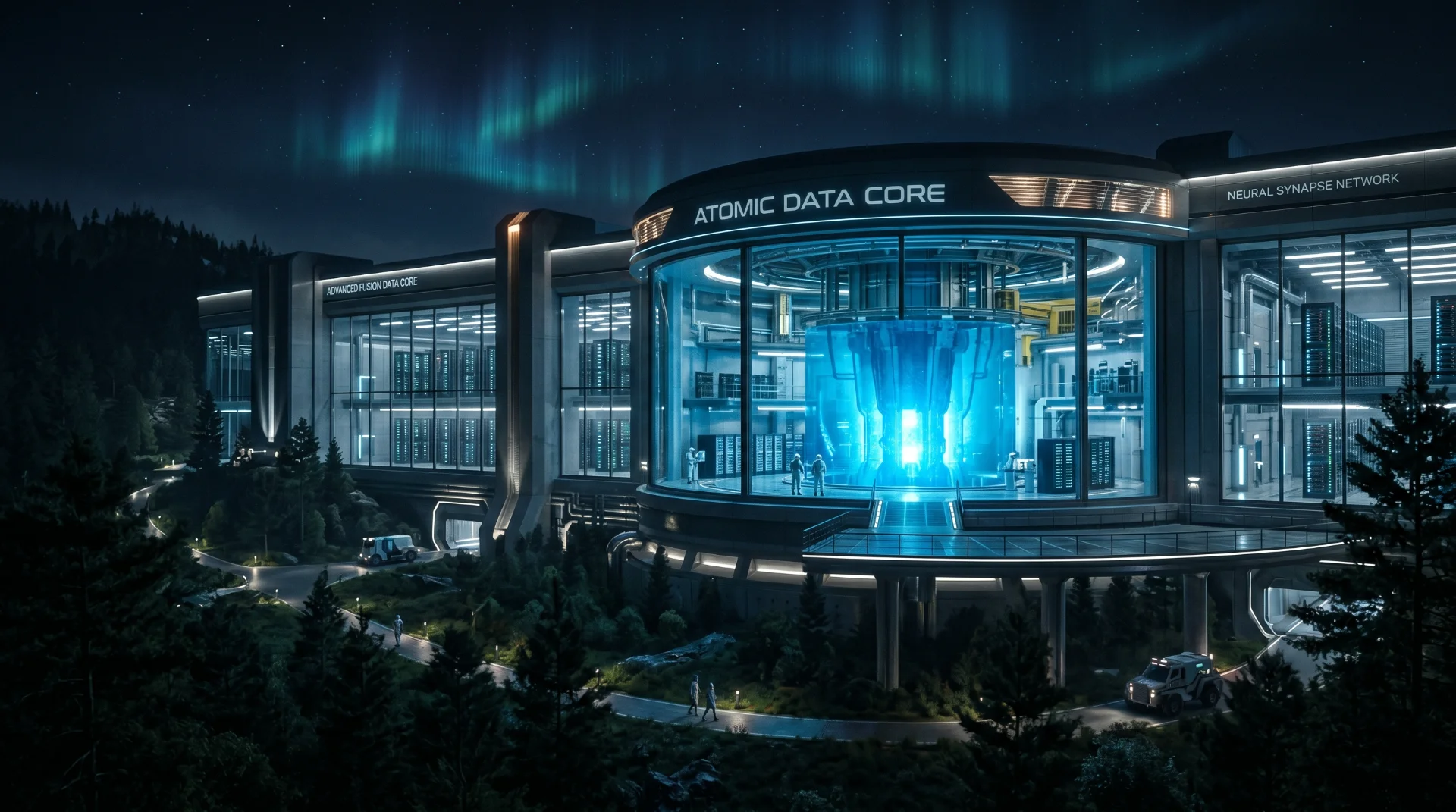
For much of the past decade, the tech industry operated under the assumption that renewable energy would be enough to sustain its growth. However, the arrival of massive-scale Artificial General Intelligence (AGI) training runs in early 2026 has shattered that illusion. As models like GPT-5.5 and Claude 4 require gigawatts of instantaneous, reliable power, the world’s most valuable companies are making a dramatic pivot. They are no longer just software giants; they are becoming nuclear energy titans.
The scale of this transition is staggering. Microsoft, Google, and Amazon have all recently signed multi-billion dollar agreements to secure dedicated nuclear power sources. This shift is driven by a simple, cold reality: intermittent sources like wind and solar cannot provide the 24/7 "baseload" power required for the next generation of GPU clusters. In the race for AI supremacy, the bottleneck is no longer just chips or data—it is stable, carbon-free atoms.
Microsoft and the Resurrection of Three Mile Island:
In a move that defined the start of the nuclear-AI alliance, Microsoft signed a twenty-year power purchase agreement with Constellation Energy. This deal effectively funds the restart of the Unit 1 reactor at the Crane Clean Energy Center—formerly known as the infamous Three Mile Island. By committing to buy 835 megawatts (MW) of power, Microsoft is ensuring that its Azure data centers in the Mid-Atlantic region have a dedicated, carbon-free energy moat that is decoupled from the volatile public grid.
This is not merely a sustainability play; it is a strategic necessity. The Crane Center provides Microsoft with exactly what the public grid lacks: predictable, high-density energy that never flickers. As AI inference loads become a constant baseline for global productivity, even a five-minute power fluctuation can cost millions in lost compute cycles. By resurrecting a decommissioned nuclear plant, Microsoft is securing its future as the world’s primary AI utility.
Google’s SMR Fleet: The Decentralization of AI Power:
While Microsoft focuses on massive, existing reactors, Google is pioneering the next frontier of nuclear technology: Small Modular Reactors (SMRs). In late 2025, Google announced a landmark partnership with Kairos Power to deploy a fleet of seven SMRs across the United States. These reactors are designed to produce up to 500 MW of power collectively, with the first units scheduled to come online by 2030. Unlike traditional plants, SMRs are small enough to be built directly adjacent to data center campuses, minimizing transmission losses and grid dependence.
The shift toward SMRs represents a fundamental change in how we think about industrial power. These reactors use molten-salt cooling technology, which is inherently safer and more efficient than older water-cooled designs. For Google, the goal is to build a decentralized energy network that can scale alongside its AI ambitions. As data centers move into more remote locations to avoid urban grid congestion, these "plug-and-play" nuclear reactors will provide the energy backbone for the global AI workforce.
Key advantages of Google's SMR strategy include:
- Proximity to compute — Reactors are built directly next to the data centers they power.
- Enhanced safety profiles — Molten-salt designs eliminate the risk of high-pressure meltdowns.
- Scalable deployment — Google can add reactor modules as its energy needs grow over time.
- Regulatory acceleration — Smaller designs are facing fewer bureaucratic hurdles than large-scale plants.
The Baseload Moat: Why Stable Energy is the New Competitive Advantage:
At the center of this shift is the concept of the "Baseload Moat." In the AI industry, a moat is usually defined by proprietary algorithms or massive datasets. However, in 2026, the most significant competitive advantage is a guaranteed supply of constant, high-wattage energy. Companies that rely on the public grid are increasingly vulnerable to price spikes and brownouts as the world’s aging infrastructure struggles to keep up with the "GPU explosion."
Nuclear energy provides the ultimate hedge against this instability. Unlike wind or solar, which require massive battery storage systems to handle the "darkness and calm" problem, nuclear reactors operate at over 90% capacity year-round. For an AI company, this means 24/7 inference uptime and the ability to run massive training jobs without fear of interruption. The "Baseload Moat" ensures that while competitors are scaling back during energy crises, the nuclear-powered giants continue to accelerate.
AWS and the Susquehanna Acquisition:
Amazon Web Services (AWS) has also made its nuclear intentions clear with the $650 million acquisition of the Cumulus data center campus. Located directly adjacent to the Susquehanna Steam Electric Station in Pennsylvania, this campus receives its power directly from the 2.5-gigawatt nuclear plant. By "behind-the-meter" connecting its servers to the reactor, AWS avoids the transmission fees and regulatory complexities of the public grid entirely.
This transaction highlights a growing trend of "industrial colocation." As the AI surge continues, we will likely see more data centers built next to existing nuclear facilities. This creates a symbiotic relationship: the data center provides a steady, high-revenue customer for the power plant, while the plant provides the stable energy needed to power millions of Blackwell and Ironwood AI chips.
The Future of AI Infrastructure:
The integration of nuclear power and AI is more than a technical fix—it is an architectural revolution. As we move toward 2030, the line between a tech company and an energy company will continue to blur. We are entering an era where the most sophisticated software on Earth is powered by the most reliable physics on Earth. The "Nuclear Option" is no longer a last resort; it is the only way forward for a civilization built on intelligence.
Conclusion:
The transition to nuclear-powered AI is the definitive infrastructure story of 2026. By securing dedicated baseload power through massive reactor restarts and SMR fleets, Microsoft, Google, and Amazon are building a foundation for AGI that is independent of the fragile public grid. This shift ensures that the next decade of human progress will be powered by clean, constant, and limitless energy.