
The Total Collapse of the Production Pipeline:
For over a century, the creation of high-end cinematic content was defined by the physical constraints of cameras, lighting, and sound stages. However, the spring of 2026 has marked a definitive turning point in the history of media. With the release of Sora 2 and Google Veo 3, the concept of "rendering" as a separate, time-consuming process is dying. We are entering an era of script-to-studio workflows where the distance between a written idea and a finished film is measured in seconds, not months.
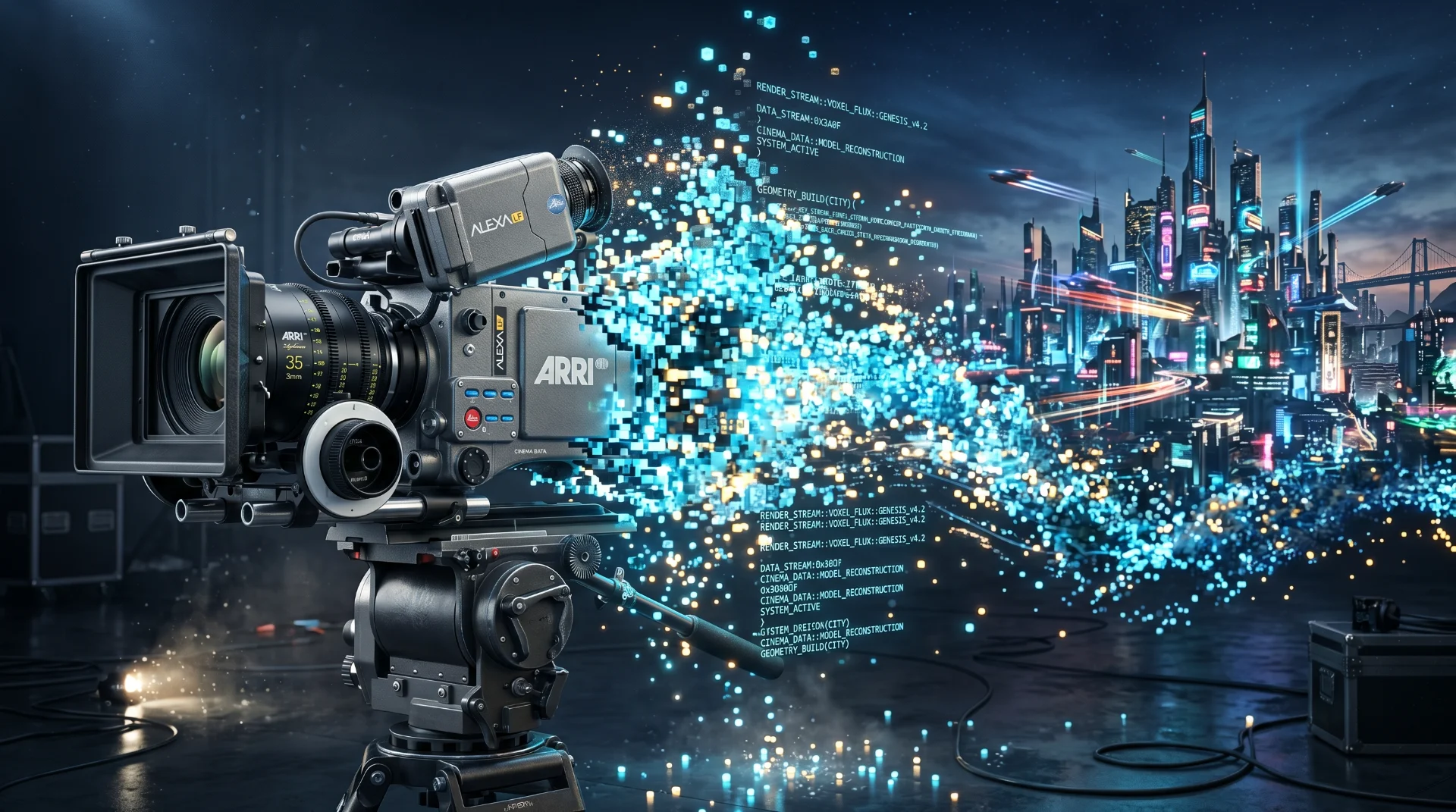
This is not just a better version of the filters and transitions we saw in 2024. Today’s AI video models are world-simulators, capable of generating consistent, studio-grade cinematography with perfect lighting, complex physics, and emotional depth. The professional camera is no longer the primary tool for storytelling; it has been replaced by the structured prompt and the generative script. This shift represents the most significant economic and creative reset in the history of the entertainment industry.
Beyond the Prompt: The Arrival of Script-to-Studio Workflows:
The initial wave of AI video was restricted to short, ten-second clips triggered by simple text prompts. While impressive, these were difficult to string into a coherent narrative. In 2026, the industry has pivoted to "Script-to-Studio" platforms like LTX Studio and Mootion. These tools allow a creator to upload a full screenplay and automatically generate a complete storyboard, consistent character designs, and final cinematic shots. The AI understands the narrative arc, ensuring that a character’s appearance and the environment’s lighting remain consistent across every scene.
This workflow collapses the traditional silos of pre-production, production, and post-production into a single generative layer. A writer can now iterate on a scene in real-time, changing the dialogue or the camera angle and seeing the updated footage instantly. This democratization of high-end production means that a single individual now possesses the creative power of a thousand-person Hollywood crew.
Sora 2 and Google Veo 3: The New Titans of Cinematography:
The release of Sora 2 in early 2026 set a new benchmark for temporal consistency and physical accuracy. Sora 2 introduced "Latent Motion Control," allowing creators to manipulate specific objects within a generated scene with surgical precision. Unlike its predecessor, Sora 2 can handle complex interactions—like a liquid pouring into a glass or a character’s clothing reacting to a specific wind speed—with near-perfect fidelity.
On the other hand, Google’s Veo 3 has focused on "Multi-Modal Directing." By integrating its Gemini 4.0 reasoning engine directly into the video generation pipeline, Veo 3 can act as an AI director. It can suggest better camera angles based on the emotional tone of the script and automatically generate spatial audio that perfectly matches the 3D environment of the scene. Together, these models have made traditional rendering engines like Unreal Engine 5 feel like relics of a slower, more manual era.
Key features of the 2026 AI video generation stack include:
- Temporal consistency — Characters and environments remain identical across multiple shots.
- Physical simulation — High-fidelity interaction between objects, fluids, and light.
- Interactive directing — Real-time manipulation of camera paths and lighting rigs within the AI model.
- Automated spatial audio — Soundscapes that are procedurally generated to match the visual environment.
The Chinese AI Video Hegemony: Seedance, Kling, and the Global Scale:
While US-based models like Sora and Veo dominate much of the Western conversation, the true cutting edge of 2026 is being defined by the Chinese AI video hegemony. Models such as ByteDance’s Seedance 2.0 and Kuaishou’s Kling 3.0 have moved beyond simple visual generation to provide "native multimodal" output. Seedance 2.0, in particular, is capable of generating high-fidelity cinematic video with perfectly synchronized dialogue, sound effects, and music in a single generative pass. This removes the need for separate audio-syncing layers, creating a truly unified script-to-media pipeline.
Kling 3.0 has set a new global standard for physical world-modeling. By integrating advanced fluid dynamics and inertia simulations, Kling 3.0 can generate scenes with 4K native resolution that are indistinguishable from reality in their handling of gravity and motion. This competition between East and West is accelerating the "Death of Rendering," as each model pushes the boundaries of what can be simulated in real-time. For creators, this means a global marketplace of studio-grade models, each specializing in different cinematic styles or technical capabilities.
The Economic Reset: Why Hollywood is Flattening:
The most immediate impact of the "Death of Rendering" is economic. For much of the past decade, a high-end CGI scene for a blockbuster film could cost upwards of $10,000 per second. Today, that same quality can be achieved on a standard prosumer workstation for the price of a monthly software subscription. This is "flattening" the industry, removing the massive financial barriers that once protected the major studios.
This reset is forcing a total rethink of the professional creative's role. While traditional technical skills like lighting or focus-pulling are becoming automated, the value of high-level art direction, narrative structure, and creative vision has never been higher. We are seeing a new class of "AI Directors" who can produce billion-dollar-quality content with a fraction of the traditional overhead. The production set of the future isn't a soundstage in Atlanta or London; it’s a high-performance compute cluster in a nuclear-powered data center.
Real-Time Interactive Avatars and the Future of Social Media:
While Hollywood adapts, the world of social media and marketing has already been transformed by real-time interactive avatars. Platforms like HeyGen have moved beyond simple "talking heads." In 2026, AI avatars are capable of real-time, low-latency interaction, allowing them to host live streams, conduct interviews, and provide personalized video responses to millions of users simultaneously.
This technology is merging with the "Death of Rendering" to create a new form of "Responsive Media." We are moving toward a future where films and advertisements are not just static files, but dynamic experiences that adapt to the viewer in real-time. If the script-to-video model knows who you are, it can change the characters, the location, or the narrative structure of a film to maximize your engagement.
Conclusion:
The end of the traditional production pipeline is not the end of cinematography—it is the birth of a new, limitless era of storytelling. By replacing the physical camera with generative world-models, we have unlocked the ability to visualize anything the human mind can script. As rendering dies, creativity finally becomes the only bottleneck in the production of high-end media.