
The End of the Elastic Grid Assumptions:
For years, the cloud computing industry relied on the assumption that the public utility grid would always be elastic enough to handle new loads. However, the exponential growth of generative AI inference has proven this assumption false. As the "GPU explosion" of 2025 and 2026 hits the global grid, companies are finding that they cannot simply buy more power at any price. There is a physical limit to the transmission and generation capacity of the current infrastructure.
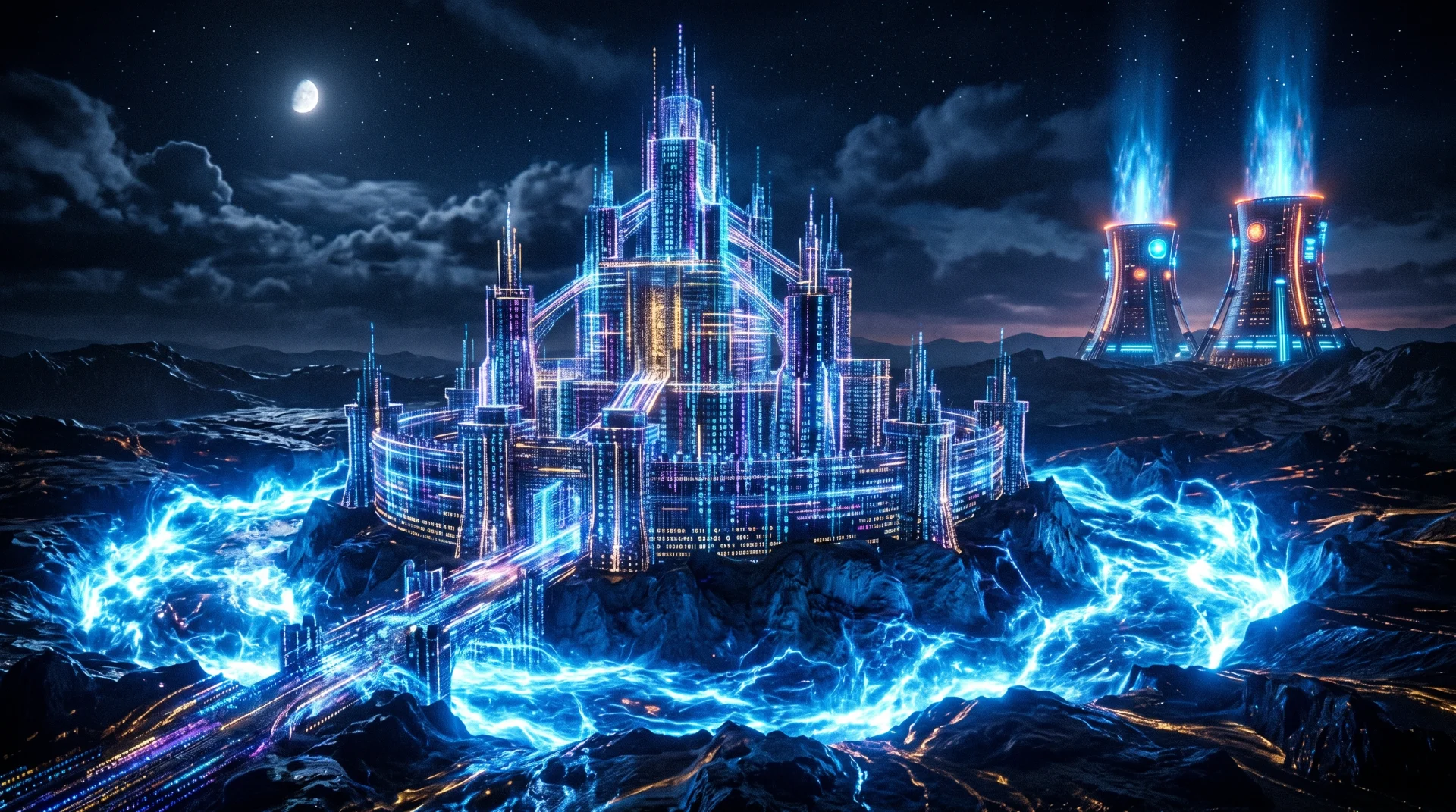
This scarcity has given birth to the "Baseload Moat." A baseload moat is a dedicated, high-capacity energy source that is physically or contractually decoupled from the public grid. By securing 835 MW of dedicated power from the restarted Three Mile Island reactor, Microsoft is building a moat that its competitors cannot easily replicate. It is a strategic move that ensures its AI models remain online and performant even during regional energy crises.
Why Nuclear is the Only Viable Baseload for AI:
While solar and wind are critical for overall sustainability, they are "intermittent" by nature. AI data centers, however, operate at a near-constant load (often called a "flat" demand profile). If a data center relies on solar, it must invest in massive, expensive battery systems to handle the night-time load. Nuclear power is the only carbon-free energy source that provides a 100% steady output, 24 hours a day, 365 days a year.
The Crane Clean Energy Center (Three Mile Island) provides Microsoft with exactly this stability. By purchasing the entire output of the Unit 1 reactor, Microsoft avoids the "duck curve" and the price volatility of the energy markets. This predictability allows Microsoft to offer more stable pricing for its Azure AI services, creating a secondary economic moat that protects its market share.
Strategic components of a Baseload Moat include:
- Dedicated Generation — Owning or exclusively contracting a power source.
- Behind-the-Meter Connection — Physically connecting the data center to the plant to avoid grid fees.
- Carbon-Free Compliance — Meeting sustainability targets without relying on unreliable offsets.
- Long-Term Price Lock — Securing energy costs for 20+ years to avoid market inflation.
Conclusion:
The race for AI dominance is now a race for atoms. The "Baseload Moat" represents the ultimate strategic advantage in an era of energy scarcity. As Microsoft, Amazon, and Google lock up the world’s remaining nuclear capacity, the barrier to entry for new AI competitors will move from software innovation to physical infrastructure.