
SoftBank's Roze AI: The $100 Billion Robotics Bet Redefining Data Center Construction:
Meet Roze AI: The Autonomous Robot Fleet Built to Construct the AI Revolution.
The future of infrastructure is being built by robots. In a move that signals a seismic shift in how data centers are conceived and constructed, Japanese technology conglomerate SoftBank is quietly assembling one of the most ambitious ventures in its storied history.
The company is reportedly creating a new business called Roze AI — a robotics-driven enterprise designed to automate the construction of data centers across the United States. And in characteristic SoftBank fashion, the plan doesn't stop at launch: executives are already eyeing a $100 billion IPO as early as the second half of 2026.
What Is Roze AI: Inside SoftBank's Bold New Robotics Venture:
Roze AI is SoftBank's answer to a growing global bottleneck. As the artificial intelligence boom continues to accelerate demand for computing power, the world is running short on one critical resource: efficiently built data centers. Roze AI aims to fix that — and then some.
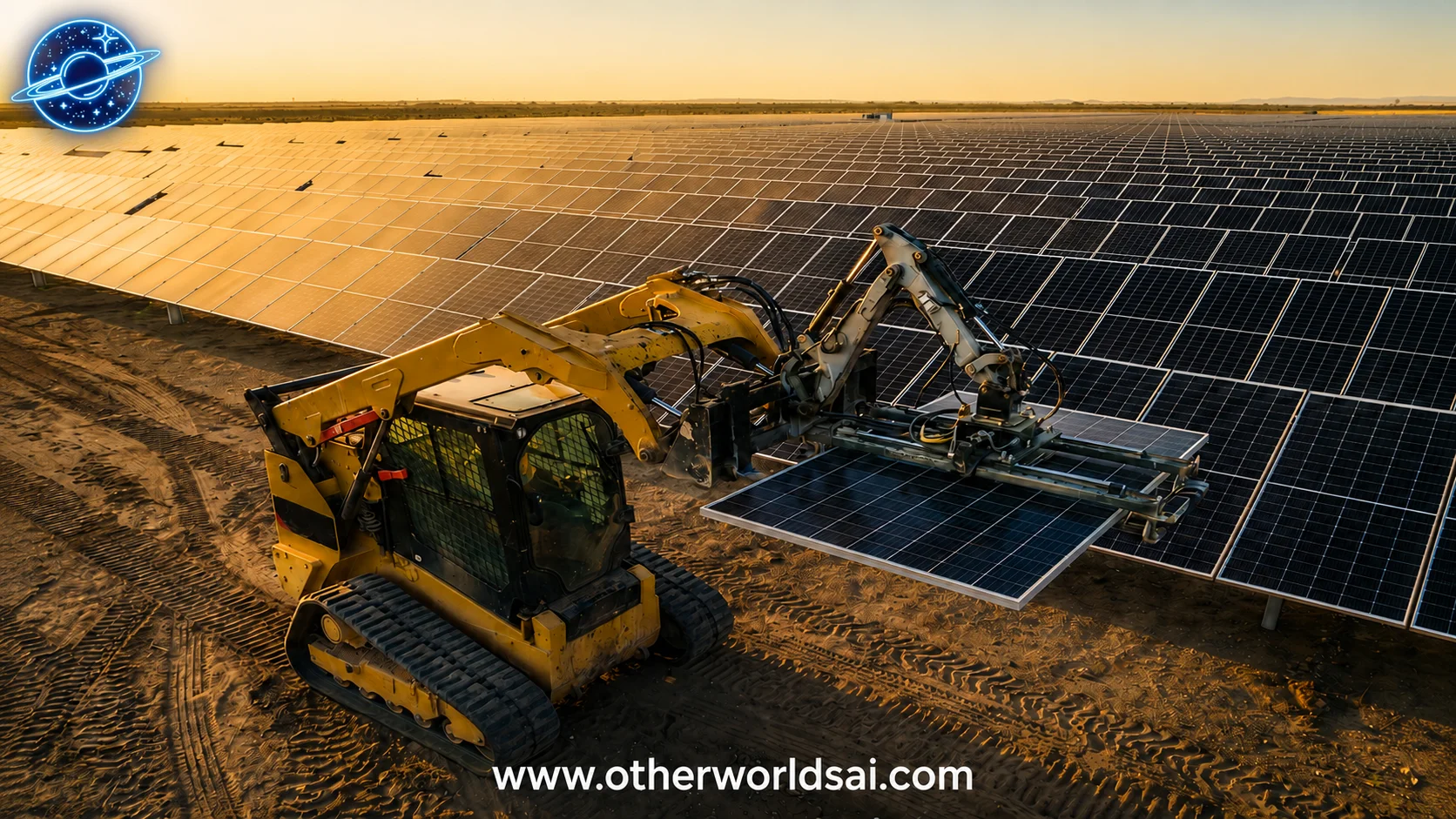
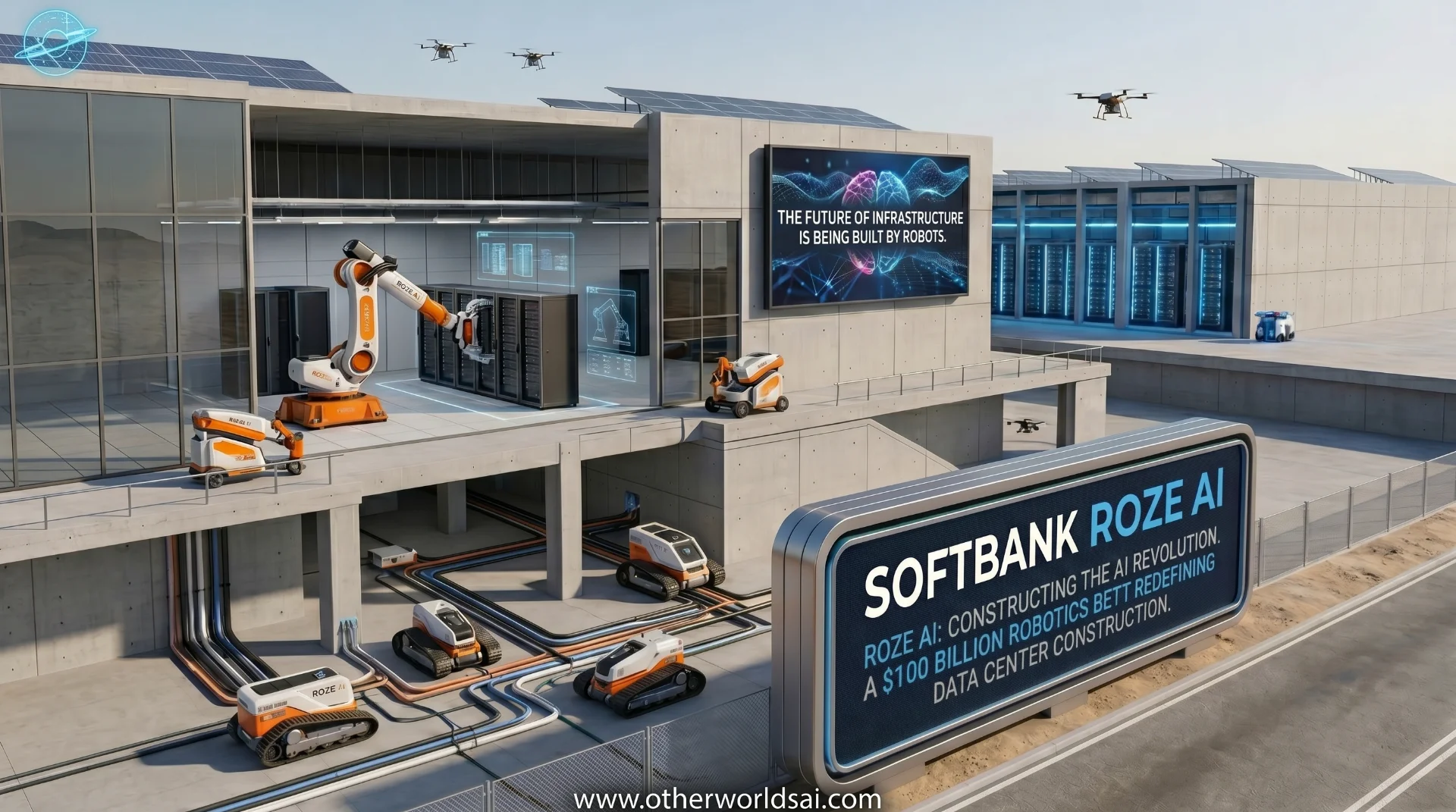
According to reporting by the Financial Times and the Wall Street Journal, Roze will deploy autonomous robots to streamline and automate the physical construction of server farms, fundamentally changing the economics and speed of data center development.
The scope of the ambition here is staggering. Rather than just improving an existing process, SoftBank appears to be building an entirely new category of company — one that sits at the intersection of AI robotics, construction technology, and cloud infrastructure. Roze AI would, in theory, be capable of building the very facilities that power the AI revolution, using AI-driven machines to do it.
The $100 Billion IPO: SoftBank's Sky-High Valuation Target:
Even by SoftBank's standards, the proposed valuation is jaw-dropping. According to the Financial Times, some executives within the company want Roze AI to go public at a valuation of $100 billion — and want to make it happen by the second half of 2026. That timeline is extraordinarily compressed for a company that doesn't yet appear to exist in its full form. Not everyone inside SoftBank is convinced.
The FT notes that certain insiders have expressed skepticism "about the valuation and the proposed timeline for an IPO." Those concerns are understandable — building a robotics company capable of automating data center construction at scale is a deeply complex engineering and operational challenge, one that would typically take years to prove out before institutional investors commit at nine or ten-figure valuations.
Yet the market context makes SoftBank's urgency easier to understand. With AI infrastructure spending measured in the hundreds of billions annually, and companies like Microsoft, Google, Meta, and Amazon racing to expand capacity, a business that can meaningfully accelerate data center construction timelines could command enormous enterprise value very quickly.
The Bigger Picture: Why Industrial AI Is the Next Frontier:
SoftBank's Roze AI doesn't exist in a vacuum — it's part of a sweeping trend. Across Silicon Valley and beyond, some of the world's most powerful tech figures are turning their attention to industrial automation and AI-powered infrastructure. The reason is simple: the bottleneck holding back the AI revolution is no longer compute design — it's the physical infrastructure needed to run it.
Amazon founder Jeff Bezos is making parallel moves. Bezos has co-founded a startup called Project Prometheus, which reportedly aims to raise up to $100 billion to acquire companies in major industrial sectors and modernize them with artificial intelligence. Like Roze AI, Project Prometheus is predicated on a single powerful insight: that legacy industries — construction, manufacturing, logistics — are ripe for AI-driven reinvention, and that whoever builds the infrastructure layer for the AI economy wins.
The convergence of these two ventures signals a new era. We are entering a period where AI is not just a product — it is the means of production itself. Robots and autonomous systems are being deployed not just in factories or warehouses, but in the construction of the very data centers that will train and run the next generation of AI models.
SoftBank's Track Record: Visionary Bets and High-Profile Stumbles:
SoftBank's history with bold bets is, charitably speaking, mixed. The Japanese conglomerate — led by founder Masayoshi Son — has made transformative investments in companies like Alibaba, ARM, and DoorDash. But it has also backed ventures that collapsed spectacularly. Perhaps most notably, SoftBank poured hundreds of millions of dollars into Zume, an AI-driven pizza delivery startup that went insolvent in 2023, burning through capital without ever achieving profitability or scale.
The Zume comparison matters because it illustrates the risks inherent in SoftBank's approach. The company has a pattern of investing — and sometimes founding — businesses built on ambitious technology narratives that outpace operational reality. Roze AI and its proposed $100 billion valuation could represent the next great SoftBank success story. Or it could become a cautionary tale about how even the most compelling macro thesis can be undermined by execution challenges, market timing, or simply an idea that's ahead of its time.
What This Means for the AI Infrastructure Market:
If Roze AI succeeds, the implications for the broader AI ecosystem are profound. Data center construction is currently one of the most expensive, time-consuming, and labor-intensive undertakings in the technology sector.
A company that can automate significant portions of that process — using autonomous robots, AI planning systems, and modular construction techniques — could dramatically compress build times and reduce costs, giving cloud providers and hyperscalers the ability to deploy new capacity far faster than they can today.
This matters because demand is not slowing down. Every new AI model, every large-scale training run, and every inference deployment requires massive amounts of computing infrastructure. The faster that infrastructure can be built, the faster the AI economy can grow. In that sense, Roze AI is not just a construction company — it is potentially a key accelerant for the entire artificial intelligence industry.
For investors, the question will be whether SoftBank can execute on the vision before the window closes. The AI infrastructure buildout is happening right now, and the competitive landscape for robotics-driven construction could get crowded fast. Timing, as always with SoftBank, will be everything.
Final Thoughts: A $100B Gamble on the Robot-Built Future:
SoftBank has never been a company that thinks small. With Roze AI, it is betting that the next great frontier of value creation isn't just in AI software or AI chips — it's in the automated physical infrastructure that makes AI possible at scale. Whether a $100 billion IPO in 2026 is realistic or not, the underlying thesis is hard to argue with: the world needs more data centers, it needs them faster, and robots just might be the answer.
What happens next will be worth watching closely. SoftBank has confirmed nothing publicly, and TechCrunch reports the company did not respond to a request for comment. But in an era where Jeff Bezos, Masayoshi Son, and the world's largest tech companies are all racing to automate the infrastructure layer of the AI economy,
one thing is clear: the future is being built — quite literally — by machines.