
The Evolution from Prompting to Directing:
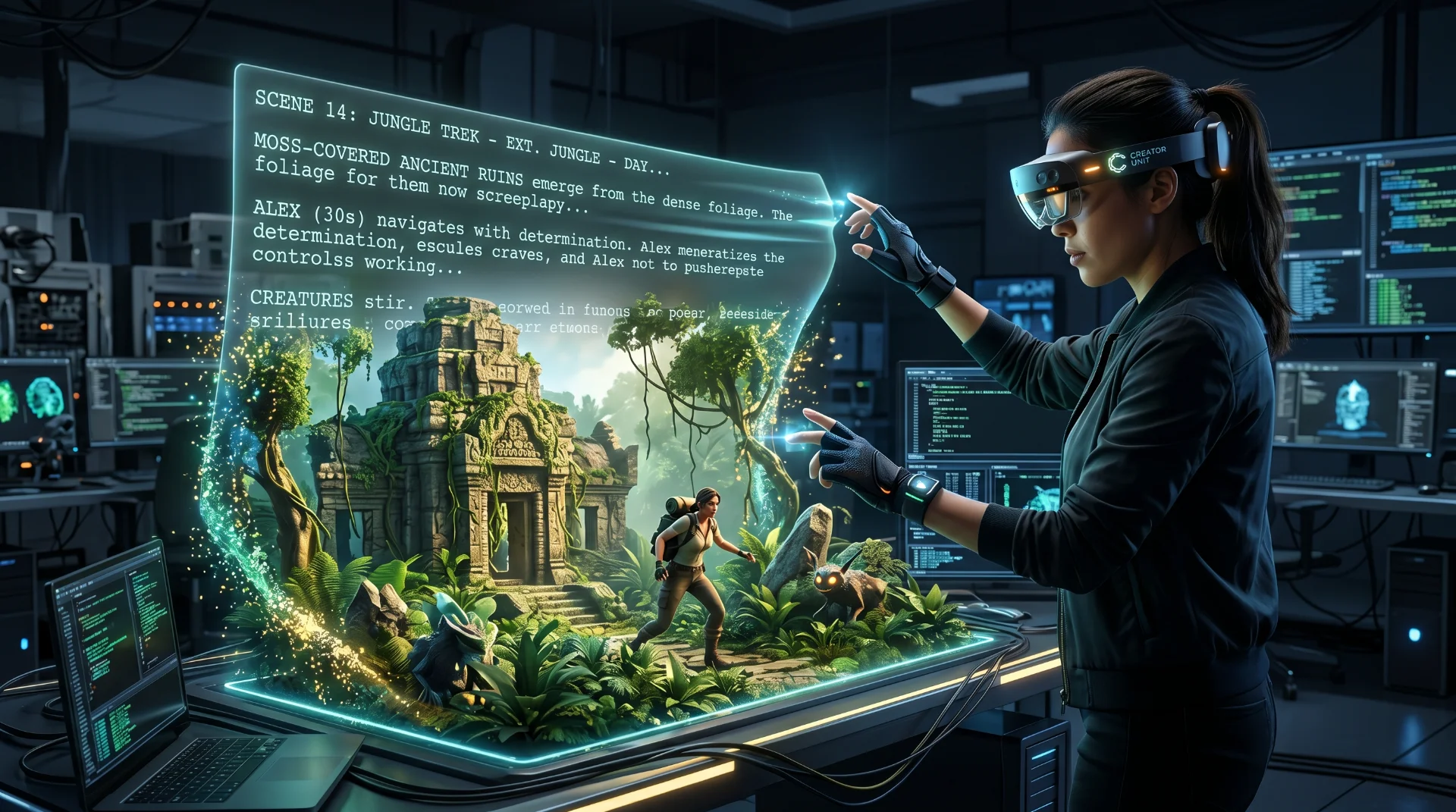
The early days of AI video were defined by "prompt-and-pray"—a chaotic process where creators would enter text and hope for a usable ten-second clip. In 2026, the industry has matured into the "Script-to-Studio" era. Platforms like LTX Studio and Mootion have replaced the single-prompt interface with comprehensive production suites. These tools allow a creator to manage an entire film from a master script, maintaining control over character consistency, camera blocking, and environmental continuity.
The "Script-to-Studio" shift is fundamental because it moves AI from a curiosity to a professional utility. A professional director doesn't just want a "cool image"; they need a specific shot that matches the previous one in lighting, depth of field, and performance. By anchoring the generation to a structured screenplay, these new platforms provide the "connective tissue" that was missing from the first generation of AI video models.
Character and Environmental Consistency: The Final Frontier:
The greatest challenge in AI video has always been consistency. In 2024, if you generated three shots of the same character, they often looked like three different people. LTX Studio solved this by introducing "Latent Character Locking." By creating a 3D semantic profile of a character within the AI model, the system can now regenerate that character in any environment, from any angle, while maintaining identical facial features and clothing.
Environmental consistency has seen similar breakthroughs. Mootion’s "Scene Persistence" engine allows a director to build a digital set once and then "film" within it repeatedly. If you place a cup on a table in Scene 1, it will still be there in Scene 20, even if the camera has moved across the room. This ability to "persist" a world across generations is what makes AI video finally viable for long-form narrative storytelling.
Core features of the Script-to-Studio workflow include:
- Character Locking — Ensuring the same actor appears across every shot.
- Camera Blocking — Precise control over pans, tilts, and dolly shots via the AI interface.
- Narrative Storyboarding — Automatically generating a visual outline from a text script.
- Real-Time Iteration — Changing dialogue or lighting and seeing the updated footage in seconds.
Conclusion:
We are witnessing the birth of the "Software-Defined Studio." The Script-to-Studio model removes the massive overhead of physical production, allowing the quality of the content to be determined solely by the quality of the writing. As these platforms continue to evolve, the distinction between a "writer" and a "director" will continue to blur, creating a new generation of multi-hyphenate digital auteurs.