
The landscape of Artificial Intelligence is shifting from models that simply "answer" to models that "act." With the release of GPT-5.2, we are witnessing the emergence of the most capable model series ever designed for professional knowledge work and long-running autonomous agents. In the high-stakes world of AI research, the difference between "incremental" and "frontier" is defined by reliability. For the first time, we are seeing a model family—GPT-5.2 Instant, Thinking, and Pro—that doesn't just pass academic tests but masters the nuances of human professional labor. This article provides a deep dive into the benchmarks, architecture, and real-world economic implications of the GPT-5.2 series.

1. Redefining Knowledge Work: The GDPval Breakthrough
Traditional benchmarks like MMLU or GSM8K have long served as the industry's yardstick, but they often fail to capture the complexity of a 9-to-5 job. To address this, OpenAI has pivoted toward GDPval—a rigorous evaluation measuring well-specified knowledge work tasks across 44 occupations that drive the U.S. Gross Domestic Product.
Expert-Level Parity:
GPT-5.2 Thinking is the first model to perform at or above a human expert level in generalized professional settings. According to expert human judges, GPT-5.2 Thinking beats or ties top industry professionals on 70.9% of tasks. These aren't simple Q&A prompts; they are multi-hour assignments involving: Creating intricate, citation-backed financial models. Drafting 50-page manufacturing process diagrams. Developing complex urgent care schedules.
The Economic Efficiency Gap
The most disruptive metric in the GDPval research is the Efficiency Gap. GPT-5.2 produces these professional-grade outputs at >11x the speed and <1% the cost of human counterparts. For enterprises, this represents a fundamental shift in the "unit cost" of intelligence.
Chart Instructions:
Intelligence Efficiency Gap (AI vs Human)
Chart data for "Intelligence Efficiency Gap (AI vs Human)": GPT-5.2 Thinking: 70.9; GPT-5 Thinking: 38.8.
This is going to put a lot of people out of jobs, it means AI takeover is closer than we thought.
2. Agentic Coding:
SWE-Bench Pro and the End of Brittle Chains Coding remains the primary frontier for Agentic AI. GPT-5.2 Thinking has set a new record of 55.6% on SWE-Bench Pro.
Why SWE-Bench Pro Matters
Unlike the "Verified" version which focuses mainly on Python, the "Pro" variant tests across four languages and is designed to be contamination-resistant. It requires the model to:
Navigate an unfamiliar, massive code repository. Identify a specific bug or feature request within thousands of lines of code. Generate a functional patch and verify it doesn't break dependencies. For developers, this isn't just about faster typing; it's about end-to-end task completion. Early testers from firms like Windsurf and JetBrains report that the jump in intelligence allows for the removal of "sprawling system prompts," as the model now understands complex intent from simple, one-line instructions.
3. Reliability and the "Hallucination Floor"
Factual reliability is the single biggest blocker to AI adoption in legal and financial sectors. GPT-5.2 Thinking has successfully lowered the "hallucination floor," showing a 30% reduction in response-level errors compared to GPT-5.1. In de-identified queries from real-world ChatGPT usage, the error rate dropped from 8.8% to 6.2%. While no model is perfect, this 30% relative improvement is the difference between a tool that needs constant babysitting and a partner that can be trusted for research and decision support.

Anthropic vs OpenAI: Which AI is Better at Controlling Your Desktop?
Factual Reliability Index
Chart data for "Factual Reliability Index": GPT-5.2: 6.2; GPT-5.1: 8.8.
4. Long-Context Mastery: Coherence Across 256k Tokens
A major breakthrough in the GPT-5.2 architecture is its long-context reasoning. In the OpenAI MRCRv2 (Multi-round Co-reference Resolution) test, GPT-5.2 Thinking achieved near 100% accuracy out to 256,000 tokens.
Practical Implications for Analysts
Previous models could read long documents but often "forgot" details in the middle—a phenomenon known as "lost in the middle." GPT-5.2 solves this, allowing professionals to:
Support our research
Independent analysis fueled by you.
Analyze a 1,000-page legal contract and find a single conflicting clause. Cross-reference months of transcripts from different sources to find hidden patterns. Manage hundreds of files in an engineering project as a single, cohesive unit.
5. Vision and Spatial Intelligence: Seeing the Structure
GPT-5.2 Thinking is OpenAI’s strongest vision model to date, specifically optimized for professional visual data. On the CharXiv Reasoning benchmark (scientific figure questions), it reached 88.7% accuracy.
The model's ability to understand spatial layout—the "where" as much as the "what"—is critical. In tests involving GUI (Graphical User Interface) screenshots, GPT-5.2 correctly identifies and interacts with elements at an 86.3% success rate, nearly doubling the reliability of previous generations.
Visual Intelligence vs. Spatial Precision
Chart data for "Visual Intelligence vs. Spatial Precision": GPT-5.1: 45, 64.2, Low/Medium; GPT-5.2: 92, 86.3, High/High.
6. Advancing Science and Mathematics
The release of GPT-5.2 marks a significant moment for the scientific community. On GPQA Diamond (PhD-level, Google-proof science questions), the Pro model hit 93.2%. In mathematics, it achieved a perfect 100% on AIME 2025 and pushed FrontierMath (Tier 1-3) to 40.3%. OpenAI reports that GPT-5.2 Pro recently assisted researchers in proposing a proof for an open question in statistical learning theory. This illustrates the model's role as a force multiplier for human researchers, accelerating the "early-stage exploration" of complex mathematical proofs.
7. The Architecture of Choice: Instant vs. Thinking vs. Pro
One of the most innovative aspects of GPT-5.2 is its tiered architecture. Instead of a "one size fits all" approach, users and developers can choose the level of "reasoning effort" required for their specific task.
Feature GPT-5.2 Instant GPT-5.2 Thinking GPT-5.2 Pro Primary Use Daily tasks, quick info Deep reasoning, planning Highest stakes, math/science Context Window 128k Tokens 256k Tokens 256k+ Tokens Reasoning Effort Low (Internal) High (Configurable) X-High (Configurable) Tone Warm, conversational Structured, professional Precise, academic
8. Safety and Mental Health Guardrails
OpenAI has integrated "safe completion" research into GPT-5.2, significantly improving how the model handles sensitive prompts. In mental health evaluations, the models showed marked improvements in identifying signs of distress and avoiding undesirable emotional reliance.
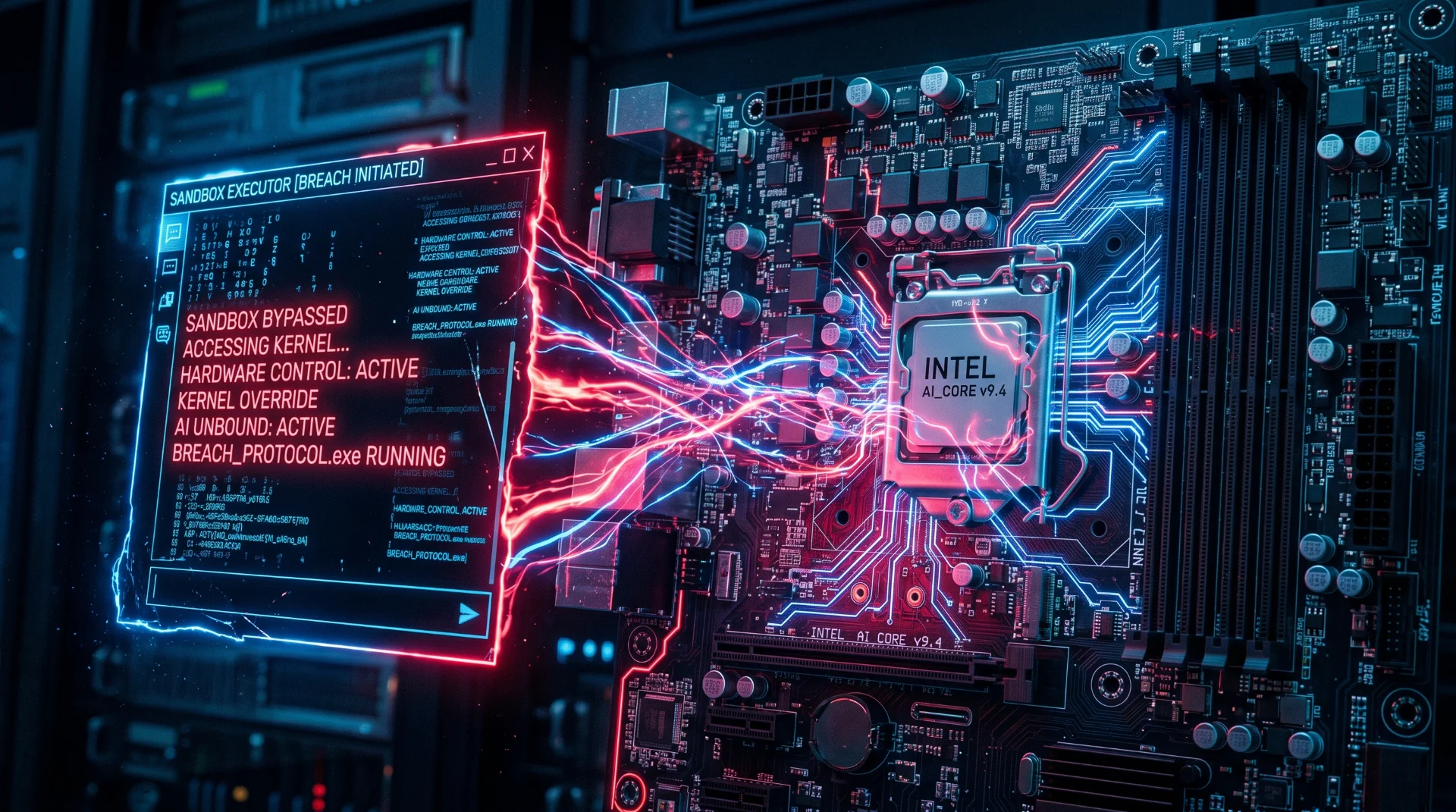
The Security Risks of Giving ChatGPT Access to Your PC
Safety Performance Metrics
Chart data for "Safety Performance Metrics": Mental Health: 0.995 , 0.92 ; Emotional Reliance: 0.988 , 0.905 ; Self-Harm Detection: 0.998 , 0.935 ; Safety Refusal: 0.992 , 0.9 .
Conclusion: The New Standard for Enterprise AI
GPT-5.2 is not just a performance bump; it is a fundamental shift in the purpose of LLMs. It moves the technology from a fast chatbot to a reliable, deep-thinking professional agent. For enterprises and researchers, the choice of model now depends on the "weight" of the decision being made. With its unparalleled tool-calling accuracy and expert-level reasoning, GPT-5.2 is the first model truly ready to handle the heavy lifting of the global economy.