
Move Over Chatbots: Google is Taking Gemini to the Factory Floor with Intrinsic:
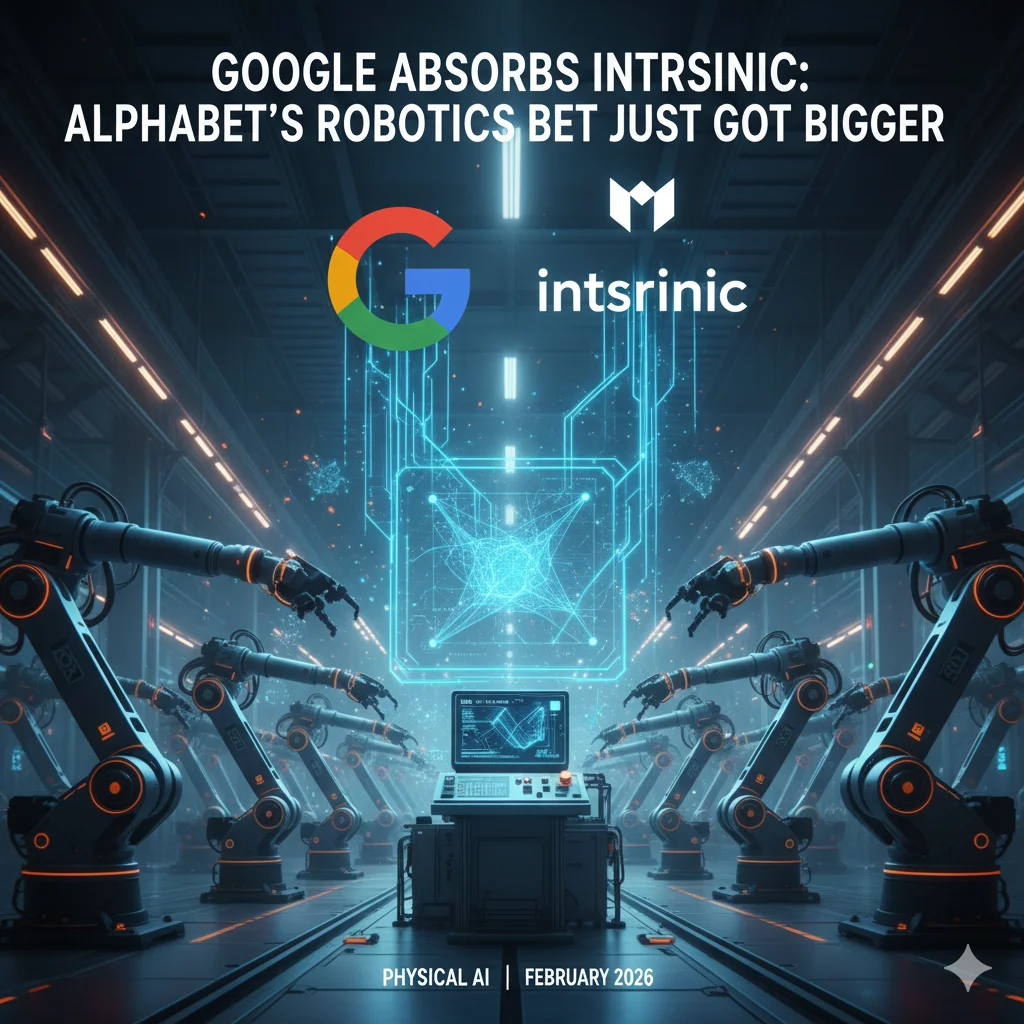
Google Absorbs Intrinsic: Why Alphabet's Robotics Bet Just Got Bigger
Introduction: A New Chapter in Physical AI:
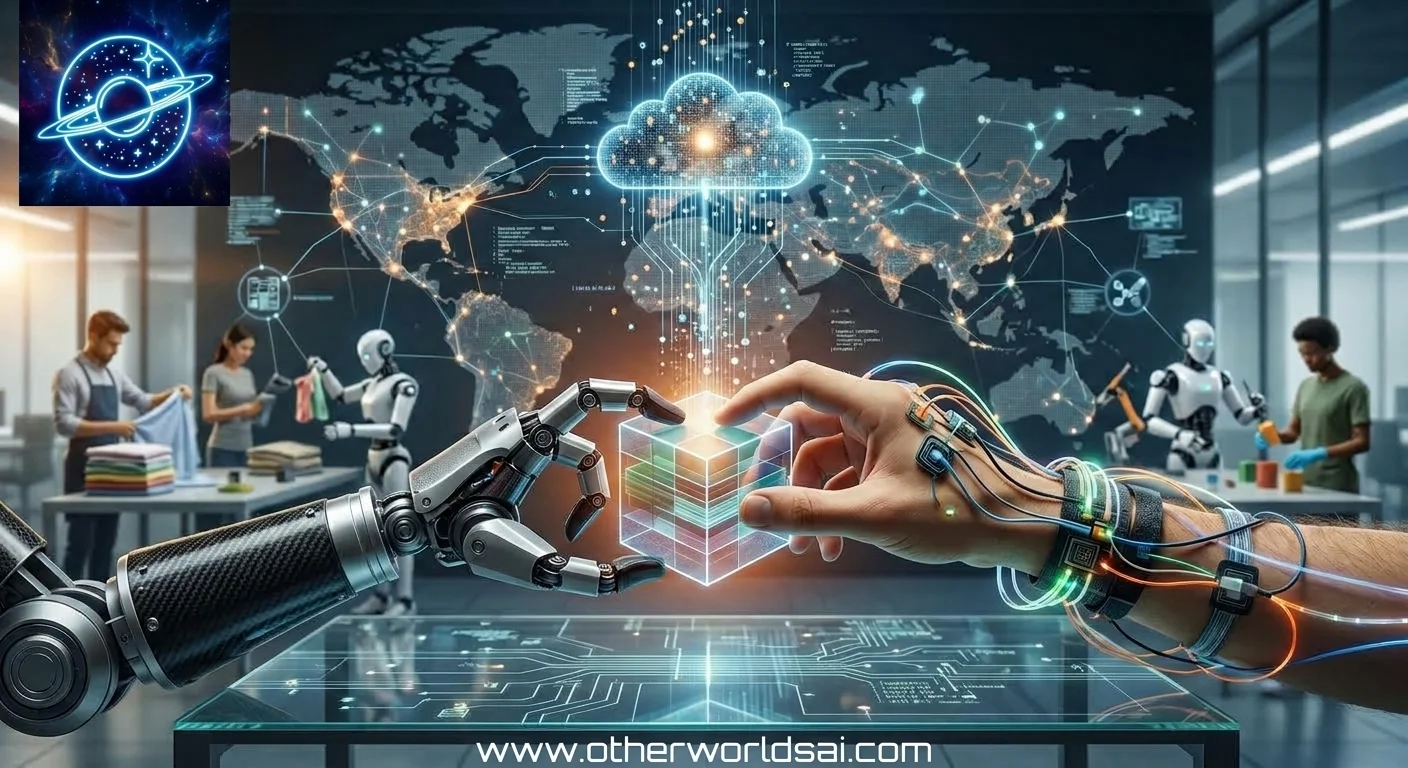
The race for physical AI dominance just shifted into a higher gear. In a move that signals the next major frontier for artificial intelligence, Alphabet's robotics software company Intrinsic is formally joining Google — bringing its powerful suite of industrial robotics tools, AI models, and automation software directly into one of the world's most advanced AI ecosystems.
This isn't just a restructuring; it's a bold declaration that the future of AI isn't only in the cloud or on your screen — it's on the factory floor.
The announcement, made on Wednesday, marks one of the most significant moves in the emerging world of physical AI. Intrinsic will remain a distinct entity within Google but will work hand-in-hand with Google DeepMind, tapping into the power of Gemini AI models and Google's world-class cloud infrastructure. For manufacturers, developers, and robotics enthusiasts alike, this signals a seismic shift in what's possible when cutting-edge software meets industrial-scale hardware.
Background: From Moonshot to Mainstream:
Intrinsic didn't arrive overnight. The company spent five years incubating inside Alphabet's X — the famous moonshot research division responsible for some of the most audacious ideas in tech — before graduating into an independent Alphabet-owned company in 2021. It joined a prestigious class of X alumni that includes Waymo, the self-driving car company, and Wing, the drone delivery service.
Under the leadership of CEO Wendy Tan White, Intrinsic hit the ground running from day one. Within months of its spinout, the company made its first major acquisition in April 2022, purchasing Vicarious — a fellow robotics software company that had raised approximately $250 million from prominent venture capitalists and tech figures including Jeff Bezos. The acquisition was a clear statement of intent: Intrinsic wasn't just building software, it was building the future of intelligent robotics.
The company's expansion didn't stop there. Intrinsic followed up by acquiring several for-profit divisions of Open Robotics, a nonprofit organization known for building foundational hardware and software platforms for the robotics industry. These strategic moves gave Intrinsic a deep well of talent, technology, and intellectual property to draw from.
Growing Pains: Navigating the Road to Scale:
No ambitious startup story is without its challenges. Despite its rapid expansion and strong backing, Intrinsic faced a difficult moment in January 2023 when it laid off 20% of its workforce. The cuts reflected broader pressures in the tech industry at the time, but they also signaled a pivot — a refocusing of the company's resources around its core mission and most promising technology.
What emerged from that difficult period was sharper and more focused. Just months after the layoffs, Intrinsic announced its flagship product: Flowstate — a software platform designed for developing robotics workflows that doesn't require deep robotics expertise. True to the company's founding mission of democratizing industrial robotics, Flowstate opened the doors for a new generation of developers to build, program, and deploy robot-driven workflows without needing a PhD in robotics engineering.
Product Evolution: From Flowstate to Vision AI:
Intrinsic's product roadmap has evolved impressively since Flowstate's debut. The company has continuously refined its technology, expanded its simulation capabilities, and in late 2025, released the Intrinsic Vision AI model — a significant step forward in giving robots the ability to perceive, understand, and interact with the physical world with far greater intelligence and precision.
The company's vision extended beyond software alone. In October 2025, Intrinsic announced a landmark joint venture with Foxconn, the global electronics manufacturing giant. The partnership is focused on developing general-purpose intelligent robots designed to transform electronics manufacturing — with nothing less than full factory automation as the end goal. This joint venture underscored the scale of Intrinsic's ambitions and its readiness to deliver real-world impact at an industrial scale.
The Google Move: Why This Combination Makes Sense:
Now, with Intrinsic officially joining Google, the pieces of a much larger puzzle are coming together. The integration gives Intrinsic direct access to Google's vast AI capabilities — including Gemini's multimodal intelligence, DeepMind's cutting-edge research, and Google Cloud's global infrastructure. For Intrinsic's mission of making industrial robotics more accessible and intelligent, this is a quantum leap forward.
CEO Wendy Tan White captured the significance of the moment: "Combined with Google's incredible AI and infrastructure, we're going to unlock the promise of physical AI for a much broader set of manufacturing businesses and developers. This will fundamentally shift production, from its economics to operations, and enable truly advanced manufacturing." It's a bold vision — and with Google's resources behind it, an increasingly credible one.
Alphabet declined to disclose any financial terms related to the arrangement. But the strategic value is unmistakable. Google gains a mature, commercially-tested robotics software platform with proven enterprise partnerships. Intrinsic gains the AI firepower and infrastructure scale to accelerate its roadmap in ways that would have taken years independently.
The Physical AI Moment: Why Big Tech Is Going Hands-On:
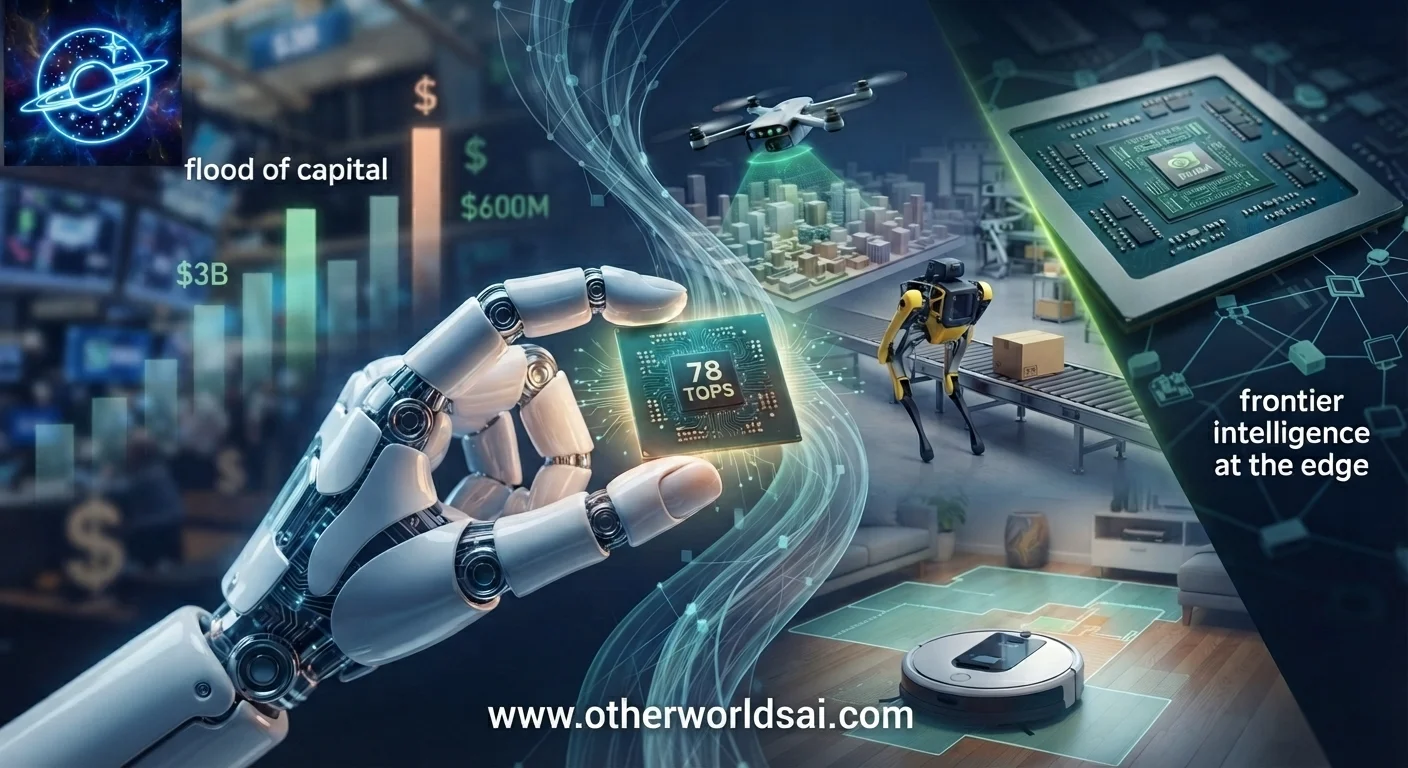
Intrinsic joining Google isn't happening in isolation — it's part of a sweeping industry movement. The world's leading tech companies are now betting heavily on physical AI: the deployment of intelligent, AI-powered systems in the real, physical world. This represents the next major monetization frontier for AI, moving beyond language models and digital tools into tangible, operational environments.
Industry leaders are publicly championing the physical AI wave. Nvidia's Jensen Huang and Qualcomm's Cristiano Amon have both spoken extensively about physical AI as the natural next step in the evolution of AI technology and business. For Huang, it's about robots and autonomous systems running on AI-accelerated chips. For Amon, it's about embedding intelligence into every device and machine at the edge. Both visions point in the same direction: AI that acts in the world, not just analyzes it.
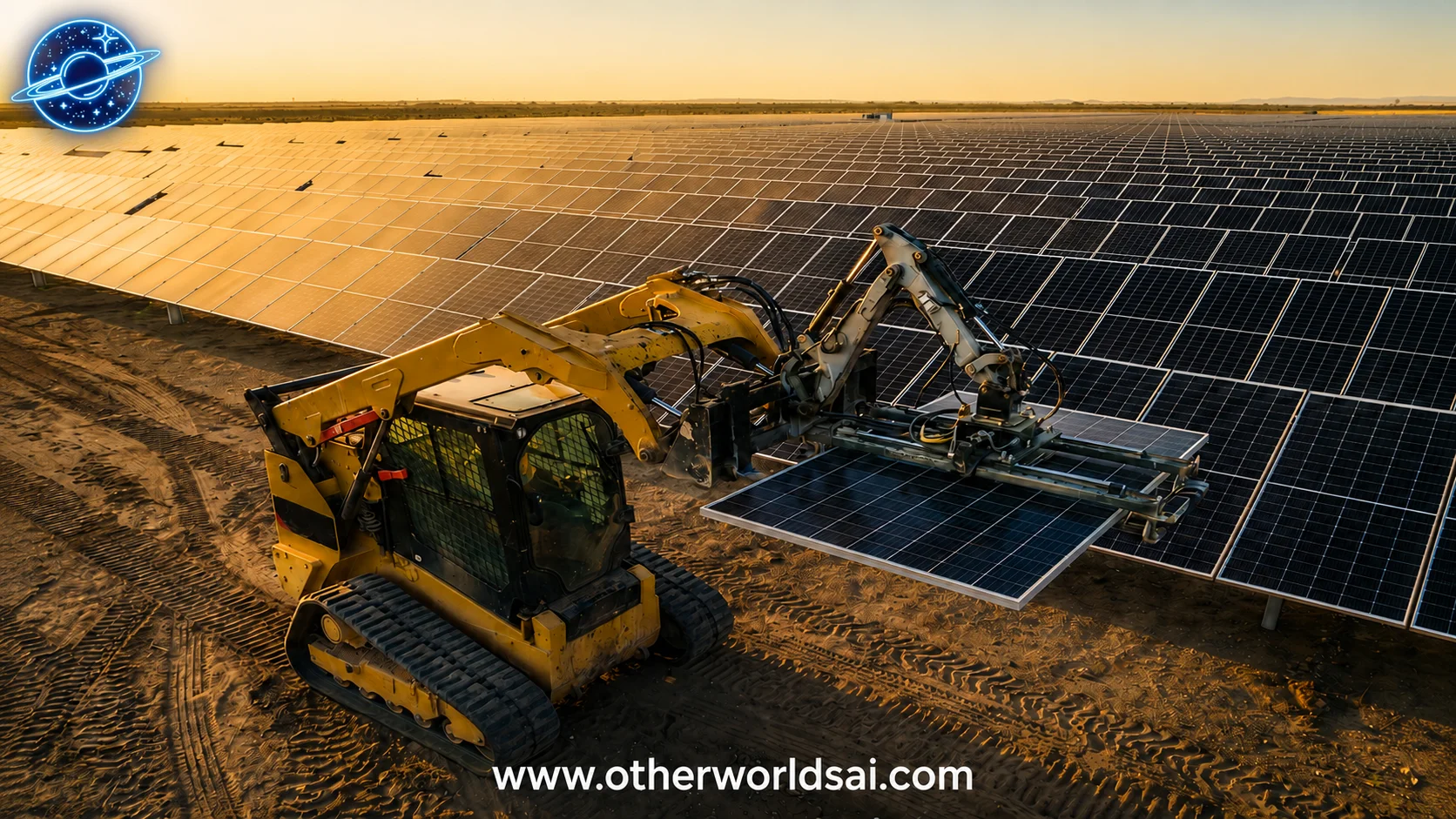
The stakes are enormous. Global manufacturing is a multi-trillion-dollar industry. If companies like Google and Intrinsic can successfully deliver accessible, intelligent, AI-powered robotics at scale, the impact on labor economics, production efficiency, and global supply chains would be profound. The shift from traditional automation to truly intelligent, adaptive manufacturing systems is not a distant possibility — it's happening now.
What This Means for Developers and Manufacturers:
For the developers and manufacturing businesses that Intrinsic was built to serve, this move opens up significant new possibilities. Access to Gemini AI models means robotics workflows can leverage state-of-the-art language understanding, multimodal perception, and intelligent reasoning — all through the Intrinsic platform they're already familiar with. Google Cloud's infrastructure means enterprise-scale deployment with the reliability and security that large manufacturers demand.
The Foxconn joint venture also becomes more powerful in this context. With Google's AI capabilities now directly integrated into Intrinsic's development path, the dream of full factory automation through general-purpose intelligent robots becomes not just a goal but an accelerating reality. Developers who've been waiting for a truly accessible, AI-native robotics platform now have the most formidable combination in the industry at their fingertips.
Conclusion: The Physical AI Era Begins:
The merger of Intrinsic's robotics software expertise with Google's AI and infrastructure muscle is more than a business transaction — it's a signal. A signal that physical AI is graduating from concept to commercial reality. That the tools to automate, optimize, and intelligently run manufacturing operations are no longer the exclusive domain of Fortune 500 companies with massive R&D budgets.
As Google deepens its commitment to physical AI, and as Intrinsic's platform matures under this new collaborative umbrella, the coming years promise a dramatic acceleration in intelligent robotics adoption. Whether you're a developer building your first robotics workflow, a manufacturer exploring factory automation, or simply a tech watcher tracking the next big wave in AI — the Intrinsic-Google story is one to follow closely.
The robots aren't just coming. With Google's AI behind them, they're getting smarter — fast.
Support our research
Independent analysis fueled by you.