
The Architecture of the Next-Generation Data Center:
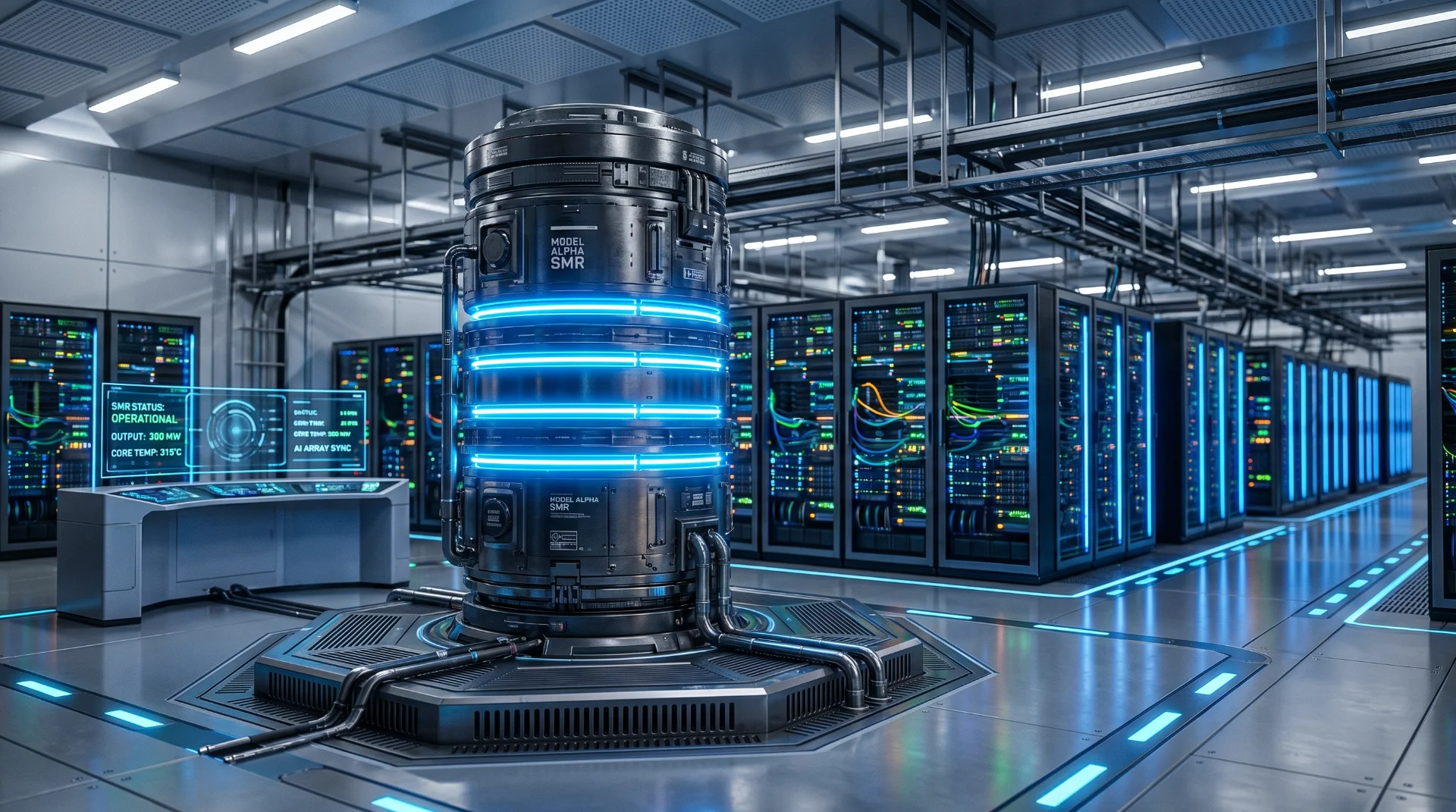
As the energy density of AI hardware continues to rise, the traditional model of pulling power from a centralized public grid is becoming obsolete. Google’s latest strategic pivot involves the deployment of Small Modular Reactors (SMRs) developed by Kairos Power. These reactors represent a shift toward decentralized energy production, where the power source is physically colocated with the compute cluster. By 2030, Google plans to have a fleet of these reactors providing constant, carbon-free energy to its most critical AI training facilities.
The decision to focus on SMRs rather than traditional large-scale reactors is driven by scalability and safety. Traditional nuclear plants are massive infrastructure projects that take decades to build and require billions in upfront capital. In contrast, SMRs are manufactured in factories and transported to the site, allowing for much faster deployment. For Google, this means the ability to add power capacity in 50 MW to 100 MW increments as its AI models evolve.
Why Kairos Power and Molten Salt Technology Matter:
At the heart of Google’s nuclear fleet is the fluoride salt-cooled high-temperature reactor (KP-FHR) technology developed by Kairos Power. Unlike conventional light-water reactors, which operate at high pressure, the Kairos design uses molten fluoride salt as a coolant. This allows the reactor to operate at ambient pressure, significantly reducing the complexity of the containment structures and virtually eliminating the risk of a high-pressure explosion.
The molten salt technology also provides a massive efficiency advantage. The high-temperature output of the reactor can be used for more than just electricity; it can provide thermal energy for advanced cooling systems or industrial processes. This versatility makes it the ideal companion for the "Hot Aisles" of a modern AI data center, where managing thermal loads is just as important as supplying electrical loads.
Key technical specifications of the Kairos SMR include:
- Coolant type — Low-pressure molten fluoride salt.
- Fuel type — TRISO (Tri-structural ISOtropic) fuel pebbles, which are inherently stable.
- Power output — Modular units ranging from 50 MW to 140 MW.
- Operational life — Designed for continuous operation with minimal downtime for refueling.
Conclusion:
The Google-Kairos partnership is a blueprint for the future of industrial energy. By integrating Small Modular Reactors directly into the AI infrastructure, Google is ensuring that its path to AGI is both sustainable and reliable. As more tech giants follow this path, the "Nuclear AI" era will redefine the global energy landscape.