
In one of the most dramatic tech industry legal battles in recent memory,
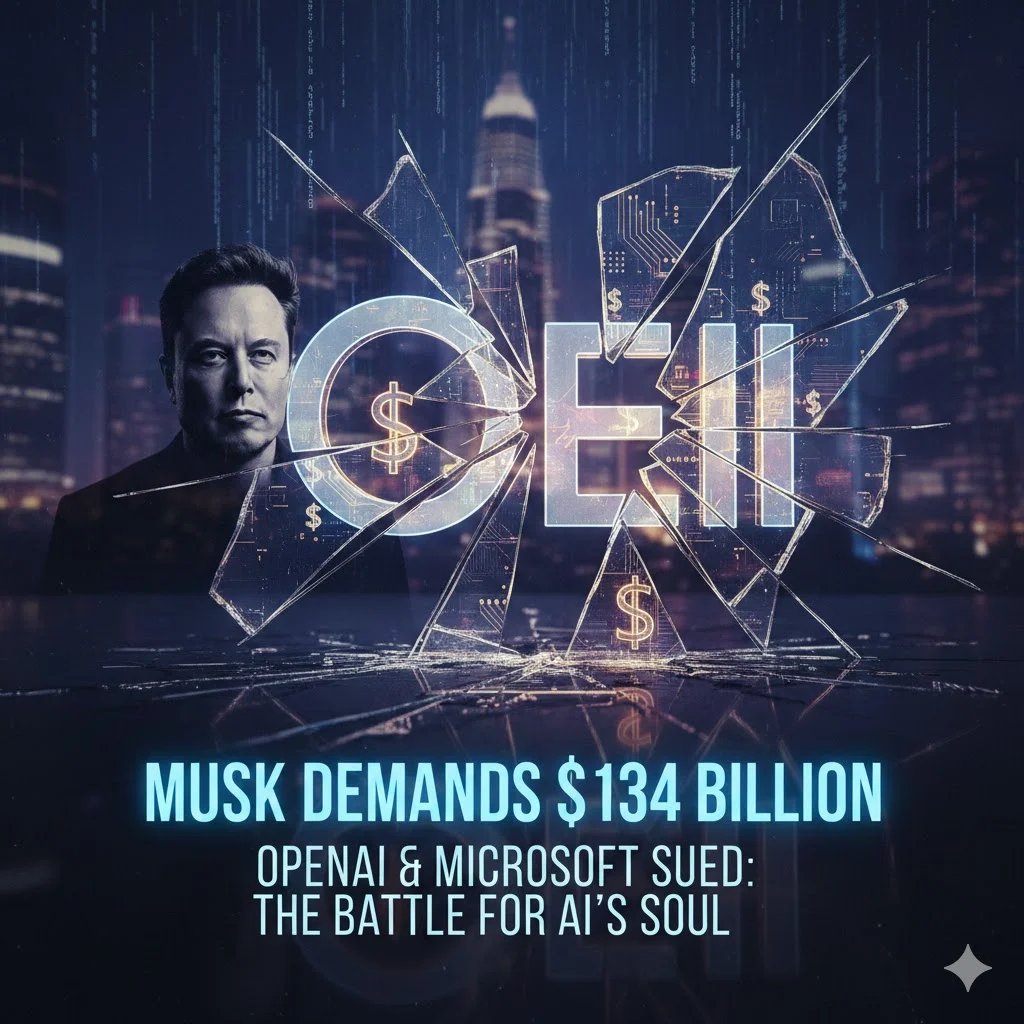
Elon Musk is seeking an eye-watering $79 billion to $134 billion in damages from OpenAI and Microsoft, alleging that the companies defrauded him by abandoning OpenAI’s original nonprofit mission and cashing in on its astronomical AI success. This lawsuit — set to go before a jury trial in Oakland, California, in April 2026 — has captivated Silicon Valley, AI investors, and legal analysts alike because of the sheer size of the damages and the broader questions it raises about startup promises, nonprofit commitments, and the commercialization of artificial intelligence.
The Core of Musk’s Claim: “Wrongful Gains” from Seed Funding:
At the heart of Musk’s legal filing is the argument that he helped build OpenAI from the ground up — both financially and strategically — and that OpenAI unlawfully profited from that foundation when it pivoted away from its nonprofit roots and became a multibillion-dollar commercial force with Microsoft’s backing.
Here’s how Musk’s team breaks it down:
-
Musk provided $38 million in seed funding to OpenAI in 2015, roughly 60% of its early capital.
-
Financial economist C. Paul Wazzan, Musk’s expert witness, calculated “wrongful gains” based on that early contribution plus Musk’s technical and business support to the fledgling team.
-
According to those analyses, OpenAI may have realized between $65.5 billion and $109.4 billion in gains and Microsoft between $13.3 billion and $25.1 billion by virtue of the company’s commercial trajectory.
The total claimed damages — $79 billion at the low end and up to $134 billion at the high end — reflect those combined figures.
To put this in perspective: Musk’s original $38 million contribution would represent a 3,500-fold return on investment if those damages were awarded.
Why the Lawsuit Matters — Beyond Dollars and Cents:
This case isn’t simply about a massive payout. Rather, it underscores deep tensions over the future of AI, the role of mission commitments in startups, and what obligations founders have when a nonprofit turns profitable:
-
- Nonprofit Mission vs. Commercial Ambitions:
OpenAI was founded in part to ensure AI benefits humanity broadly, not just shareholders. Musk claims that turning OpenAI into a for-profit public benefit corporation — especially in partnership with Microsoft — violated that spirit.

Anthropic’s Surprise Double Launch Directly Targets OpenAI and Google’s AI Dominance
Microsoft now owns a significant stake in OpenAI and has helped fuel its growth through investment and cloud infrastructure, but Musk argues that this alliance strayed from the nonprofit commitments he and other founders signed up for.
-
- Defendants Reject the Claims:
OpenAI has strongly dismissed Musk’s demands. The company characterized the lawsuit as “unserious” and part of what it views as a broader pattern of harassment rather than credible litigation.
Support our research
Independent analysis fueled by you.
Microsoft has also challenged the methodology behind the damage calculations, calling Musk’s expert analysis “implausible” and warning the court against allowing it to influence a jury.
-
- A Jury Trial That Could Set Precedent:
A federal judge has already ruled that there’s enough evidence to send the case to a jury trial — something that’s relatively rare in startup governance and nonprofit accountability disputes.
The April 2026 trial will ask jurors to grapple with legal concepts around fiduciary duties, nonprofit vs. profit conversion, and valuation principles, all while weighing arguments from one of the world’s richest and most influential tech figures.
What This Means for the AI Industry:
This lawsuit could have a ripple effect well beyond Musk, OpenAI, and Microsoft: Startup Governance – If founders can successfully claim damages for mission drift, it may make future nonprofit-to-profit transitions more legally fraught.
-
Investor Expectations – Early donors of mission-aligned startups might demand stronger safeguards or compensation clauses if companies later boomerang toward commercialization.
-
AI Commercialization Ethics – The case brings into focus the ethical obligations behind AI development — not just toward profits, but toward stated public good commitments.
Conclusion: A Lawsuit With Global Tech Implications:
Elon Musk’s demand for up to $134 billion in damages is one of the most headline-grabbing legal actions in the tech industry in decades. But beyond the staggering figures lies a substantive debate: What obligations do founders have when the mission of a company evolves? And how should the courts balance early investments against later financial success?
As this case heads toward trial in April 2026 in Oakland, California, it will be watched not just for its potential financial impact, but for its implications on how artificial intelligence ventures —especially those rooted in nonprofit ideals — are structured, governed, and held accountable.