
Google's AI Creative Suite Expands: Opal Gets Automated Workflows While ProducerAI Joins Google Labs:
Google's Double AI Announcement: Automated App Building Meets AI Music Generation.
The AI creativity landscape is shifting fast — and Google is placing a bold bet on what comes next. The company has officially announced two major updates: Opal now includes automated workflow agents that let anyone build complex mini-apps using text prompts, while ProducerAI joins Google Labs with advanced music generation capabilities. If you've been following the rise of no-code AI platforms, AI music generation tools, and creative AI automation, these launches represent some of the most significant developments of 2026 — and they're worth understanding exactly what they mean.
On Tuesday, Google announced significant updates to its vibe-coding app Opal, introducing automated workflow agents that let users build complex mini-apps using nothing but text prompts. Simultaneously, the company revealed that ProducerAI — a generative AI music platform backed by The Chainsmokers — is joining Google Labs, bringing advanced music generation capabilities powered by Google DeepMind's Lyria 3 model directly to everyday creators.
These announcements signal Google's aggressive push into the no-code and low-code application development space, as well as the increasingly controversial world of AI-generated music. With competitors like Lovable, Replit, and Suno gaining traction, and ongoing legal battles over AI training data threatening the entire generative AI industry, Google's moves represent both immense opportunity and significant risk.
What Is Google Opal's New Automated Workflow Feature:
At its core, Google Opal's automated workflow agent is a cloud-based AI system designed to independently build and execute complex, multi-step application workflows without constant user input. Unlike traditional no-code tools that require manual configuration of every step, Opal's new feature operates more like a fully autonomous app developer — planning tasks, selecting tools, and delivering polished, functional mini-apps entirely on its own.
Google Opal, the company's vibe-coding platform that lets anyone create mini web apps without writing code, just got significantly more powerful with the introduction of automated workflow agents. The new feature uses the Gemini 3 Flash model — Google's fast, efficient large language model optimized for real-time tasks — to automatically plan, execute, and manage complex multi-step workflows based on simple text prompts.
Key Features of Google Opal's Automated Workflows:
- Gemini 3 Flash model integration is the heartbeat of this platform.
The system uses Google's fast, efficient large language model to automatically plan and execute multi-step workflows, giving users access to the best available AI for app building — a significant leap beyond manual no-code tools.
- Natural language app development sets Opal apart from traditional builders.
Users can simply describe what they want in natural language, and Opal's AI agent will automatically select the appropriate tools, create the necessary data structures, and execute tasks autonomously — all without writing a single line of code.
- Native interactivity brings a genuinely new dimension to no-code development.
The agents can dynamically request additional information from users when needed or present choices to help determine next steps, creating a conversational approach to app development.
- Google ecosystem integration is where Opal starts to feel truly powerful.
The platform seamlessly integrates with Google Sheets for persistent data storage, Google Cloud services, and the entire Gemini AI model family — something no standalone startup can match.
- Complex workflow automation rounds out the feature set.
From e-commerce shopping lists to inventory tracking and order processing, Opal can handle sophisticated multi-step workflows entirely on its own — making it a powerful engine for AI-powered application development.
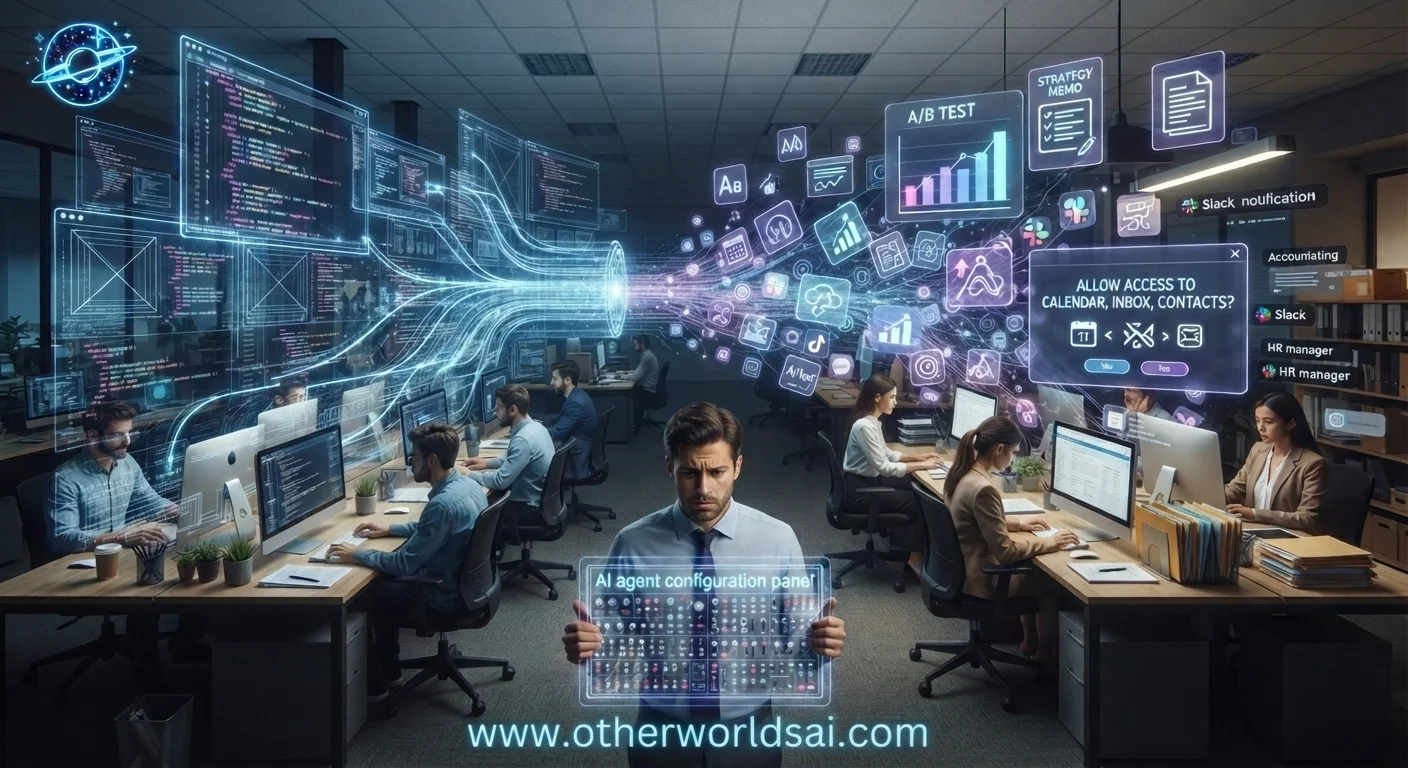
Here's how it works in practice: instead of manually configuring every step of an application workflow, users can now simply describe what they want in natural language, and Opal's AI agent will automatically select the appropriate tools, create the necessary data structures, and execute tasks autonomously. For example, if you're building a simple e-commerce app, the AI agent can automatically use Google Sheets to maintain a persistent shopping list across user sessions, handle inventory tracking, or manage order processing — all without the user writing a single line of code.
"With this addition, users without technical knowledge could build complex workflows within their apps," Google claims in its announcement. If the promise holds true, Opal could democratize app development in ways that previous generations of low-code tools never quite achieved — by making the AI agent itself the developer, with the user acting as product manager and creative director.
The Rapid Global Expansion of Google Opal:
Google Opal's journey from launch to global platform has been remarkably fast, reflecting both the company's confidence in the product and the intense competitive pressure in the no-code AI app builder space.
Opal was first introduced to U.S. users in July 2025, positioning the tool as a way for anyone to create mini web apps or remix existing applications using natural language descriptions and visual editing. The initial reception was strong enough that Google quickly accelerated its international rollout.
In October 2025, just three months after launch, the company expanded Opal to users in 15 additional countries, including major tech markets like Canada, India, Japan, South Korea, Vietnam, Indonesia, Brazil, and Singapore. A month later, in November 2025, Google made Opal available in over 160 countries worldwide — an aggressive global expansion that demonstrates the company's ambition to establish Opal as the dominant platform for AI-powered app creation before competitors can establish market position.
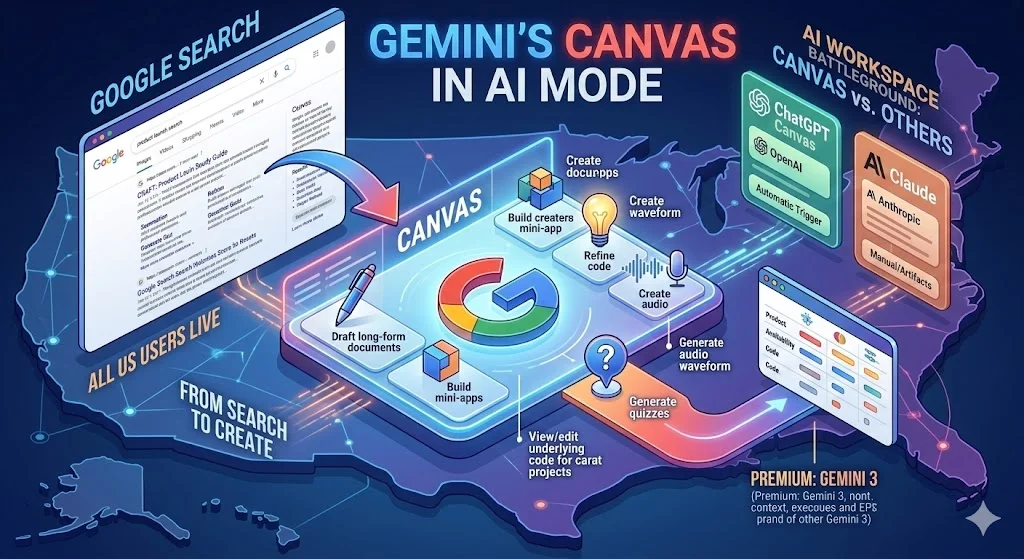
In December 2025, Google integrated Opal directly into the Gemini web app, allowing users to create custom applications through a visual editor without leaving the Gemini interface. This integration makes Opal accessible to the millions of users already interacting with Gemini for other AI-powered tasks, creating a seamless experience from ideation to app development to deployment.
The Bigger Picture — Google's Strategic Evolution in AI Creativity:
Google's story with creative AI tools is one of calculated expansion. The company first made its name in AI with search and chatbots, but has since evolved into building specialized tools for creators — from Opal for app building to ProducerAI for music generation.
Competitors, including startups like Lovable, Replit, and Suno, have been gaining traction in these spaces — a compliment and a competitive threat rolled into one.
Since those early days of simple AI chatbots, the company has made a series of calculated pivots.
It launched Opal in July 2025, expanding it to 160+ countries by November. It integrated Opal directly into the Gemini web app in December 2025, creating seamless access for millions of users. And it is now bringing ProducerAI into Google Labs, signaling a serious push to dominate AI-powered creativity tools across multiple domains.
Taken together, these moves paint a picture of a company betting heavily on creative AI tools and deep workflow integration — a fundamentally different approach from the pure search-and-chat focus that defined Google's early AI strategy.
ProducerAI Joins Google Labs: What It Means for AI Music Generation:
At its core, ProducerAI is a generative AI music platform designed to feel like a "collaboration partner" rather than just a generation tool. Users can create original music using natural language requests as simple as "make a lofi beat" or "create an upbeat synthwave track for a workout," powered by Google DeepMind's advanced Lyria 3 music generation model.
In a separate but equally significant announcement, Google revealed that ProducerAI — a generative AI music platform backed by electronic music duo The Chainsmokers — is joining Google Labs and will leverage Google DeepMind's advanced Lyria 3 music generation model.
What ProducerAI Can Actually Do:
According to Google's announcement, the tool excels in:
-
Natural language music generation: Creating original music using simple text prompts like "make a lofi beat."
-
Multi-modal input processing: Converting both text descriptions and image inputs into high-quality audio outputs.
-
Iterative creative refinement: Allowing users to experiment with genre blends and maintain creative control throughout the music creation process.
-
High-profile artist adoption: Three-time Grammy winner Wyclef Jean used Lyria 3 on his recent song "Back From Abu Dhabi."
In practice, ProducerAI is built for the kinds of creative tasks that typically require a full music production studio. The platform uses Lyria 3, Google DeepMind's latest music generation model, which can convert text descriptions and even image inputs into high-quality audio outputs complete with melody, harmony, rhythm, and production.
What makes ProducerAI different from other AI music tools, according to Google Labs' senior director of Product Management Elias Roman, is that it's designed to feel like a "collaboration partner" rather than just a generation tool. Users can iteratively refine outputs, experiment with genre blends, and maintain creative control throughout the music creation process.
"ProducerAI has allowed me to create in new ways," Roman wrote in the announcement blog post. "I've experimented with new genre blends, expressed how I feel with personalized birthday songs for my loved ones, and made custom workout soundtracks for myself and friends."
Google's Lyria 3 Model: The Technology Behind AI Music Generation:
Google announced last week that Lyria 3 capabilities would be integrated directly into the flagship Gemini app, but ProducerAI represents a more specialized interface optimized specifically for music creation workflows. The Lyria 3 model represents years of research by Google DeepMind into audio generation, music theory, and the creative processes that human musicians use when composing.
The model can handle remarkably nuanced requests, understanding genre conventions, emotional tones, instrumentation preferences, tempo specifications, and even stylistic references to existing artists or musical eras. It can generate complete arrangements with multiple instruments, vocal melodies, backing vocals, and production effects — essentially functioning as a full virtual music production studio.
Three-time Grammy-winning rapper Wyclef Jean has already used the Lyria 3 model and Google's Music AI Sandbox on his recent song "Back From Abu Dhabi," providing a high-profile validation of the technology's creative potential.
"This is not just a machine where you're clicking a button a hundred times, and then you're done," said Jeff Chang, director of Product Management at Google DeepMind, in a promotional video. "It's a careful kind of curation where you're going through and saying, 'Oh, I think that's something we can use.'"
Jean describes using the tool to experiment with adding different instruments to tracks he had already recorded. "What I want everybody to understand […] is you're in the era where the human has to be the most creative," Jean said. "There's one thing that you have over the AI: a soul. And there's one thing that AI has over you: the infinite information."
The AI Music Controversy: Copyright, Consent, and Creative Integrity:
The introduction of ProducerAI and the expansion of Google's AI music capabilities arrives amid intense controversy and legal battles over the use of copyrighted music in training AI models. The music industry has been one of the most vocal opponents of generative AI, with hundreds of prominent musicians signing open letters and pursuing legal action against AI companies.
In 2024, hundreds of musicians including Billie Eilish, Katy Perry, and Jon Bon Jovi signed an open letter calling on tech companies not to undermine human creativity with AI music generation tools. The letter argued that these tools were trained on copyrighted music without artist consent, effectively allowing AI companies to profit from stolen creative work.
The legal landscape is becoming increasingly hostile to AI companies. A cohort of music publishers recently sued the AI company Anthropic for $3 billion, claiming the company illegally downloaded more than 20,000 copyrighted songs, including sheet music, song lyrics, and musical compositions. Anthropic has already been ordered by courts to offer a $1.5 billion settlement to authors whose books were pirated for AI training.
The fundamental legal question remains unresolved: is training AI models on copyrighted works without permission legal fair use, or is it copyright infringement? One federal judge, William Alsup, ruled last year that training on copyrighted data is legal, but pirating it is not — a distinction that may prove difficult to maintain in practice.
Two Sides of the AI Music Debate: Opposition vs. Embrace:
Not all musicians oppose AI music tools. A growing number of artists are embracing the technology, particularly for technical improvements rather than creative generation.
Paul McCartney famously used AI-powered noise reduction systems — the same technology that allows Zoom and FaceTime to filter out background noise on video calls — to clean up a decades-old, low-quality John Lennon demo recording. The resulting "new" Beatles track, "Now and Then," won a Grammy in 2025, demonstrating that AI can serve as a powerful restoration and enhancement tool rather than just a replacement for human creativity.
Meanwhile, AI-generated music is already topping charts. Telisha Jones, a 31-year-old from Mississippi, used the AI music platform Suno to turn her poetry into the viral R&B song "How Was I Supposed to Know," which gained massive traction on streaming platforms. Jones subsequently signed a record deal with Hallwood Media reportedly worth $3 million — proof that AI-generated music can achieve commercial success even amid the controversy.
These success stories complicate the narrative around AI music generation. If AI tools can help unknown artists break into an industry notoriously difficult to penetrate, or allow legendary musicians to complete unfinished work, are they fundamentally harmful? Or are they simply tools that can be used responsibly or irresponsibly, depending on implementation and ethical guidelines?
Challenges and Controversies:
Not everything is smooth sailing for Google's AI creativity tools. The AI music generation space faces intense legal scrutiny, with hundreds of musicians signing open letters against AI music tools and multiple lawsuits alleging copyright infringement in AI training data.
User concerns have been mounting in the creative community. Hundreds of musicians, including Billie Eilish, Katy Perry, and Jon Bon Jovi, signed an open letter in 2024 calling on tech companies not to undermine human creativity with AI music generation tools. Music publishers recently sued Anthropic for $3 billion over alleged copyright violations in AI training.
The legal framework for AI-generated content also remains an open question. One federal judge ruled that training on copyrighted data is legal, but pirating it is not — a distinction that may prove difficult to maintain in practice. Whether AI music tools like ProducerAI can operate without facing similar legal challenges is something the market will watch closely.
Is Google's AI Creative Suite the Future of Creative Tools:
The idea behind Google's dual announcements — unified AI platforms that make app building and music creation accessible to non-technical users — is arguably where all serious creative productivity tools are headed. The question isn't whether this is the right direction; it's whether Google can execute reliably enough while navigating legal and ethical minefields.
If it can deliver on that promise, Google could carve out a defensible and highly profitable position in the creative AI tools market. If it stumbles, well-funded rivals like Microsoft, Adobe, and specialized startups are ready to fill the void with their own creative AI offerings.
For now, Google's Opal and ProducerAI announcements stand as some of the most ambitious attempts yet to transform generative AI from specialized tools into accessible creative platforms for everyday users.
Whether they change how people create apps and music — or become expensive experiments — will be one of the defining AI stories of 2026.