
HarmonyOS 7 Steps Into the AI Gap Apple Left Open in China — And It Was Built for Exactly This Moment:
Meet Xiaoyi: The AI Agent Controlling 2,100+ System Capabilities in HarmonyOS 7:
Four days after Apple confirmed Siri AI would not launch in China, Huawei declared HarmonyOS 7 the beginning of the agent era. What looks like opportunity was decades in the making — and the gap Apple left open may not be temporary.
19%: HarmonyOS China Market Share (Q1 2026)
505B: openPangu 2.0 Pro Parameters
2,100+: System-Level Capabilities Controlled by Xiaoyi
90%+: Task Execution Rate Claimed by Huawei
1: The Moment: Apple Steps Back, Huawei Steps Forward:
Timing in technology often tells you more than the technology itself. Four days after Apple publicly confirmed that its Siri AI feature would not be launching in China, Huawei took the stage at its Huawei Developer Conference 2026 in Dongguan and announced HarmonyOS 7 — framing it not as an incremental software update but as the beginning of a new computing era. The message was unmistakable: the gap Apple cannot fill, Huawei has designed an entire operating system to occupy.
This is not coincidence — it is the result of years of forced architectural divergence. When US sanctions cut Huawei off from Google's Android ecosystem in 2019, the company had no choice but to build its own operating system from scratch. What began as a crisis response has matured, through seven major releases, into a platform that is now more deeply integrated with China's AI infrastructure than any foreign OS could realistically become. HarmonyOS 7 is the moment that forced independence becomes structural advantage.
"In 2019, HarmonyOS was born. In 2023, native HarmonyOS apps began. In 2026, HarmonyOS enters the Agent era." — Richard Yu, Chairman, Huawei Consumer Business Group
2: What HarmonyOS 7 Actually Introduces: The Intelligent Agent Framework:
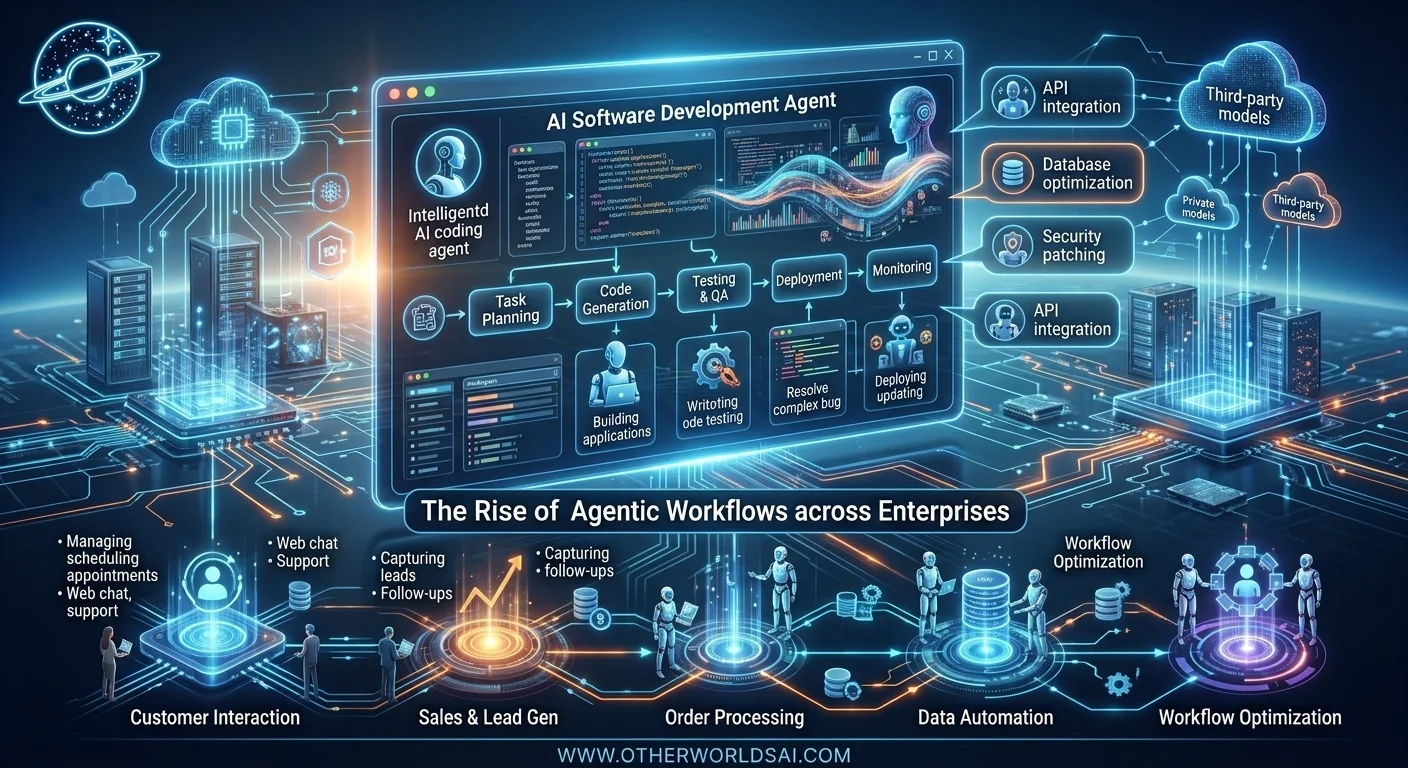
The centerpiece of HarmonyOS 7 is the HarmonyOS Intelligent Agent Framework 2.0, a fundamental restructuring of how the operating system processes user intent. Rather than routing users through individual applications — each with its own interface, login, and navigation logic — the new framework operates on what Huawei calls an "intent-as-service" model. A single natural-language command can now compress what previously required multiple app navigation steps into one seamless action.
At the center of this framework is Xiaoyi, Huawei's AI assistant, which has been rebuilt from the ground up. Xiaoyi was previously a conventional voice-activated tool; in HarmonyOS 7, it operates as a system-level intelligence agent with direct access to over 2,100 system capabilities. It also coordinates with more than 2,000 third-party AI agents developed within Huawei's developer ecosystem — transforming the assistant from a command interpreter into an orchestration layer that spans the entire device and its connected services.
2,000+: Third-Party AI Agents in Huawei Ecosystem
400K+: Apps & Services on HarmonyOS Platform
512K: Context Window (openPangu 2.0)
15%+: Performance Improvement Over HarmonyOS 6.1
The underlying model infrastructure has been upgraded to match these ambitions. openPangu 2.0, Huawei's updated foundation model, ships in two configurations: a Pro version with 505 billion parameters and a Flash variant with 92 billion, both supporting 512K context windows. On-device versions running at 30 billion parameters are scheduled for Kirin chips by autumn 2026, which will allow a significant portion of AI inference to happen locally — reducing latency, improving privacy, and removing dependence on cloud connectivity for everyday tasks.
Huawei reports a task execution rate above 90% for the new agent framework, though that figure comes from the company's own benchmarks and has not been independently verified. Even with that caveat, the architectural ambition is clear: HarmonyOS 7 is not layering AI features on top of a conventional OS. It is rebuilding the OS around AI as the primary interaction model.
3: Market Position: HarmonyOS Has Already Passed iOS in China:
The competitive context for HarmonyOS 7's launch is not hypothetical — it reflects a shift that has already taken place in the market. According to Counterpoint Research, HarmonyOS first overtook iOS in China's smartphone OS market in Q2 2025. By Q1 2026, the gap had widened: HarmonyOS held 19% of China's smartphone OS market against Apple iOS at 16%, with Android accounting for the remaining 65%.
What makes that trajectory significant is not the raw share numbers but the conditions driving them. China is simultaneously the world's largest smartphone market and the one where Apple's headline AI differentiation — the feature that defines its premium positioning globally — is currently absent. Apple Intelligence, which powers Siri's advanced capabilities on iOS, is not available to Chinese users due to regulatory constraints. HarmonyOS 7 is launching its most AI-ambitious release precisely into that vacuum.
"HarmonyOS first overtook iOS in China in Q2 2025. By Q1 2026, it held 19% of the smartphone OS market against iOS at 16%."
The agent network that Xiaoyi coordinates makes this advantage more durable than a simple feature gap. Huawei has built partnerships with Ctrip for AI-powered travel planning and Ant Medical for health data analysis — two services deeply embedded in the daily life of Chinese consumers. These integrations are not add-ons; they are part of the intent-as-service architecture, meaning they respond to natural-language commands within Xiaoyi rather than requiring users to navigate to separate applications. Apple's global architecture is not built to replicate this kind of local ecosystem depth.
4: The Limits: What HarmonyOS 7 Has Not Yet Solved:
A complete picture of HarmonyOS 7's position requires acknowledging what remains unresolved. As of the HDC 2026 announcement, HarmonyOS 7 is in developer beta, with the stable consumer release targeted for autumn 2026. The 2,000-plus AI agents that define Xiaoyi's coordination capabilities are anchored almost entirely in China's domestic app ecosystem — their utility does not transfer to users or markets outside that environment.
Platform scale remains a meaningful gap. HarmonyOS counts more than 400,000 applications and services — a number that reflects genuine developer adoption but still represents a fraction of the inventory available on Apple's App Store, which houses several million apps. For categories where depth of app choice matters — productivity tools, niche utilities, internationally distributed software — the difference is material.
Huawei's international ambitions for HarmonyOS are real but have not yet translated into significant market presence outside China. The platform's strengths are deeply tied to the regulatory environment, developer ecosystem, and consumer infrastructure of the Chinese market. Replicating that integration in other geographies would require building new ecosystem partnerships from scratch — a multi-year undertaking with no guaranteed outcome.
"Sanctions built the platform. Regulatory friction cleared its path."
There is also a notable design convergence that complicates any clean narrative of divergence. HarmonyOS 7 has adopted the Liquid Glass aesthetic that Apple introduced with iOS 26 and Samsung brought to One UI 9. The visual language of the three major mobile platforms is converging even as their underlying architectures, AI infrastructures, and regulatory contexts pull in opposite directions. The surfaces look similar; the foundations are becoming structurally incompatible.
5: The Longer Arc: How Sanctions Created a Structural Advantage:
To understand why HarmonyOS 7 is positioned where it is today, you have to go back to 2019. That year, the US government placed Huawei on its Entity List, cutting the company off from Google Mobile Services and access to the Android ecosystem. For a company whose smartphone business depended on the world's dominant mobile OS, it was an existential threat. Huawei's response was to build HarmonyOS — not as an ideological project but as a survival mechanism.
Seven years later, the forced independence that began as a crisis has become a competitive moat. By January 2026, over 90% of Huawei devices were running the fully homegrown version of HarmonyOS — a version with no architectural dependency on Google, Android, or any Western technology provider. That clean break means Huawei can build AI integration directly into the OS layer without navigating the compatibility constraints or geopolitical sensitivities that shape how foreign platforms operate in China.
Apple's position is almost the mirror image. Its global architecture — built for privacy, cross-platform consistency, and regulatory compliance across dozens of jurisdictions — is precisely what makes deep China-specific AI integration difficult. The same design choices that make Apple Intelligence powerful in the US, Europe, and Southeast Asia are what prevent it from operating under China's data and AI governance framework. HarmonyOS 7 has no such tension because it was built inside that framework from the start.
6: What This Means for Enterprise AI Strategy — and How Otherworlds AI Fits In:
The HarmonyOS 7 story is, at its core, a story about what happens when AI strategy is inseparable from the infrastructure it runs on. Huawei did not simply add AI features to an existing OS — it rebuilt the operating system around an AI interaction model, integrated it with a domestic ecosystem of agents and services, and brought it to market at precisely the moment its primary competitor was regulatory constrained. That is not luck. It is the result of building AI capability as a foundational layer, not as a product feature added on top.
The lesson for enterprise AI leaders is the same one Huawei learned the hard way: the organizations that will hold structural AI advantages in the years ahead are those that treat AI as infrastructure — embedded in their core workflows, connected to their most critical data and services, and designed to act autonomously on their behalf rather than waiting to be prompted. Feature-level AI adoption is reversible. Infrastructure-level AI integration is compounding.
Otherworlds AI's Agent+ Business AI Platform is built on exactly that philosophy. Agent+ embeds intelligent automation directly into your business workflows — connecting your tools, your data, and your team's daily operations in the same way Xiaoyi connects HarmonyOS to China's consumer services stack. The result is not an AI assistant your employees use occasionally; it is an operational layer that works continuously on your behalf, resolving tasks, surfacing insights, and executing decisions at a speed no manual process can match.
Google Opal automated workflows extend that foundation further, enabling AI-powered process automation that adapts as your business scales — without requiring an engineering team to maintain or a platform rebuild to upgrade. The AI infrastructure you build today should still be working for you when the next HarmonyOS 7 moment arrives in your industry.
The agent era is not coming — it has been declared. The question is whether your organization is building toward it or waiting to react. Explore what Agent+ can do for your business at otherworldsai.com.