
WhatsApp Opens the Door to Rival AI Chatbots in Brazil — What It Means for Competition, Pricing, and the Future of Messaging Platforms:
Meta Opens WhatsApp to Rival AI Chatbots in Brazil — A Day After Europe:
Meta is now allowing rival AI companies to offer their chatbots on WhatsApp to Brazilian users for a fee, marking a significant shift forced by regulatory pressure. The move comes just one day after the company confirmed a similar decision for users in Europe, signaling that Meta is being pushed — region by region — to open its dominant messaging platform to AI competition it had previously sought to block.
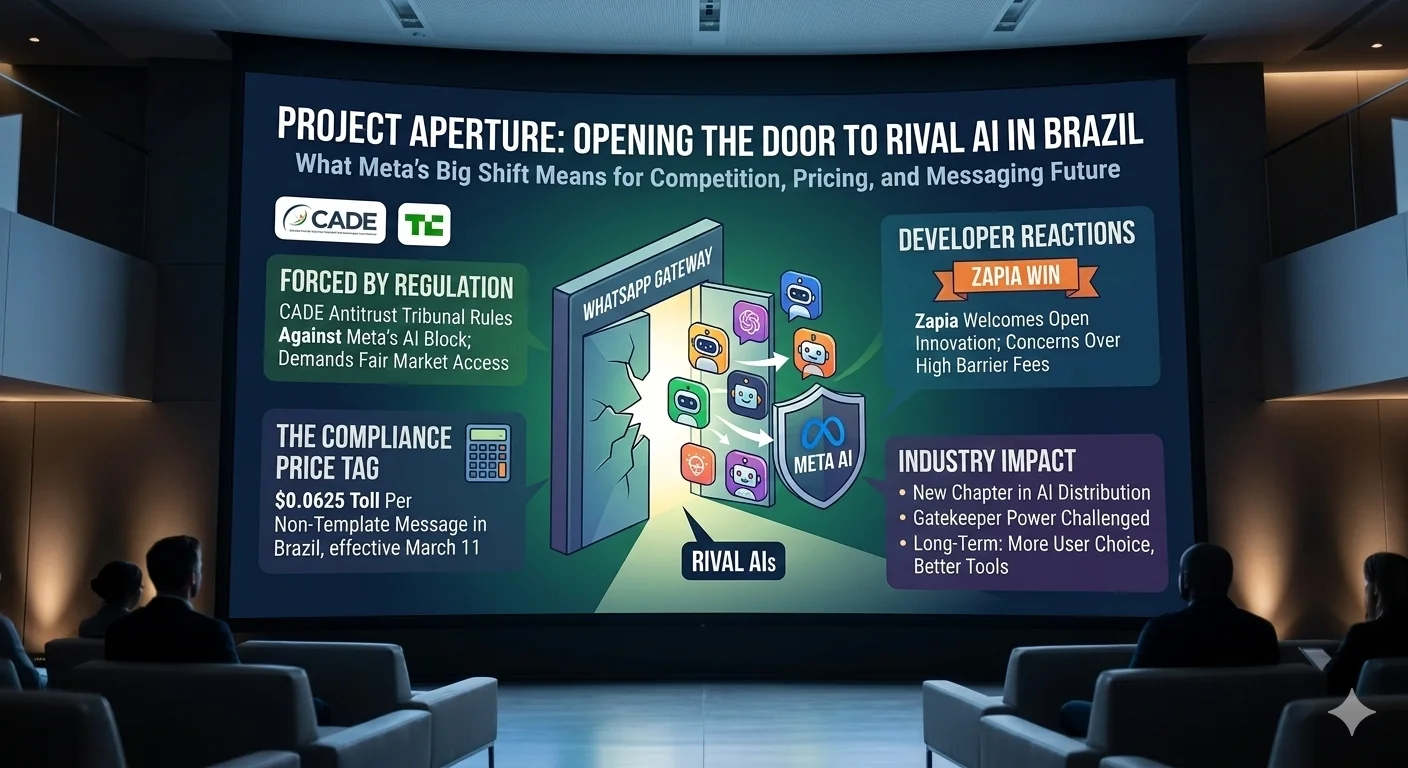
The trigger in Brazil was a decisive ruling from CADE, the country's antitrust regulator. Earlier this week, CADE rejected Meta's appeal to overturn an earlier order requiring the company to suspend its policy that sought to bar third-party AI chatbots from WhatsApp. The regulator reviewed the case and determined that the conditions required to maintain its preventive measure were firmly in place.
What CADE's Ruling Actually Said:
Brazil's antitrust tribunal didn't mince words in its decision against Meta. According to case rapporteur Councilor Carlos Jacques, there is clear evidence of legal plausibility given WhatsApp's dominant position in Brazil's instant messaging market — a market where the app is not just popular but effectively essential for millions of users and businesses.
The regulator went further, stating that banning third-party AI chatbots on WhatsApp "would not be proportionate" and could result in direct competitive harm. In a market this concentrated, blocking rivals from accessing the platform doesn't just inconvenience developers — it shapes which AI tools millions of people ever get to use, and who benefits from their adoption.
Meta's Response — Compliance With a Price Tag Attached:
Meta agreed to comply, but made clear it would not do so for free. The company announced it would allow third-party AI chatbot providers to use its WhatsApp Business API to offer their services on the app, wherever legally required — but it would charge for the privilege. Starting March 11, Meta will charge $0.0625 per "non-template message" in Brazil.
In a statement, a Meta spokesperson framed the move as a platform pricing decision rather than a concession. "Where we are legally required to provide AI chatbots through the WhatsApp Business API, we are introducing pricing for the companies that choose to use our platform to provide those services," the company said. The message was clear: Meta will open the door, but it intends to collect a toll at every step.
Meta has also maintained throughout this dispute that its WhatsApp Business API was never designed to support AI chatbots at scale. The company has argued that third-party AI services place a disproportionate strain on its systems — a position critics see as a convenient justification for limiting competition to its own Meta AI product, which is offered inside WhatsApp without the same restrictions.
How This Started — and Why It Matters:
The roots of this dispute go back to October last year, when Meta announced a policy change that would effectively shut rival AI chatbots out of WhatsApp. That announcement set off antitrust investigations across multiple jurisdictions, and for good reason: Meta simultaneously operates its own AI chatbot, Meta AI, directly inside WhatsApp — giving it a built-in distribution advantage that no third-party provider can match.
The competitive concern at the heart of every investigation is straightforward. WhatsApp is not just another messaging app in markets like Brazil — it is the primary communication channel for individuals, businesses, and entire industries. When the owner of that platform also sells a competing AI product and blocks rivals from access, the potential for abuse of dominance is significant and measurable.

The Hidden AI War
Nobody Is Telling You About
Our latest documentary deep-dive into the geopolitical struggle for machine intelligence dominance. Explore the two paths of AI development: open source vs. closed architecture.
Developers Are Cautious — The Pricing Is a Problem:
Despite the regulatory win, developers who were previously shut out of WhatsApp are not rushing back in. Multiple developers told TechCrunch that Meta's newly announced pricing is high enough to make re-entry economically difficult, raising concerns that the company has found a way to technically comply with regulators while still creating barriers that protect its own AI product from meaningful competition.
At $0.0625 per non-template message, costs can compound quickly at scale. For AI chatbot providers handling thousands or millions of conversations daily, the fee structure could make WhatsApp-based services significantly more expensive to operate than alternative channels — effectively limiting the competitive threat to Meta AI even as the platform technically opens up.
Zapia Welcomes the Decision — and Promises More Fights Ahead:
Zapia, one of the companies that originally filed the complaint with CADE in Brazil, welcomed the ruling as a win for open competition. The company framed the decision as a broader statement about who gets to shape how innovation reaches everyday users — and signaled it has no intention of stopping at Brazil's borders.
In a statement, Zapia said: "Competition and preventing powerful companies from limiting how innovation reaches users. At Zapia, we believe people should be free to choose the AI tools they use, and innovation only thrives when the platforms people rely on every day remain open. We will continue challenging these restrictions across the rest of Latin America, and we now look forward to seeing how Meta adapts its policies in Brazil to comply with the decision."
What This Means for AI Competition on Messaging Platforms:
The Brazil and Europe decisions together mark the beginning of a new regulatory chapter for AI distribution on dominant platforms. Messaging apps like WhatsApp are not neutral pipes — they are gatekeepers with enormous power over which AI tools reach consumers, and regulators in multiple jurisdictions are increasingly treating them that way.
For developers and AI companies, the message is mixed but important. Regulatory pressure can force open platforms that would otherwise remain closed — but compliance without meaningful pricing reform may not deliver the competitive access that antitrust law is meant to protect. The fight over who controls AI distribution on WhatsApp is not over. It has simply moved from the regulator's office to the spreadsheet.
For users in Brazil, Europe, and eventually across Latin America, the long-term outcome could be more choice, more competition, and better AI tools built specifically for the platforms they already use every day.
But only if regulators keep watching — and only if the pricing allows real competition to actually take root.
Follow our blog for the latest coverage on AI regulation, platform competition, antitrust developments, and the companies fighting to shape the future of AI distribution.