
Why Does AI Feel So Human? It's All About the Hidden Statistics of Language!
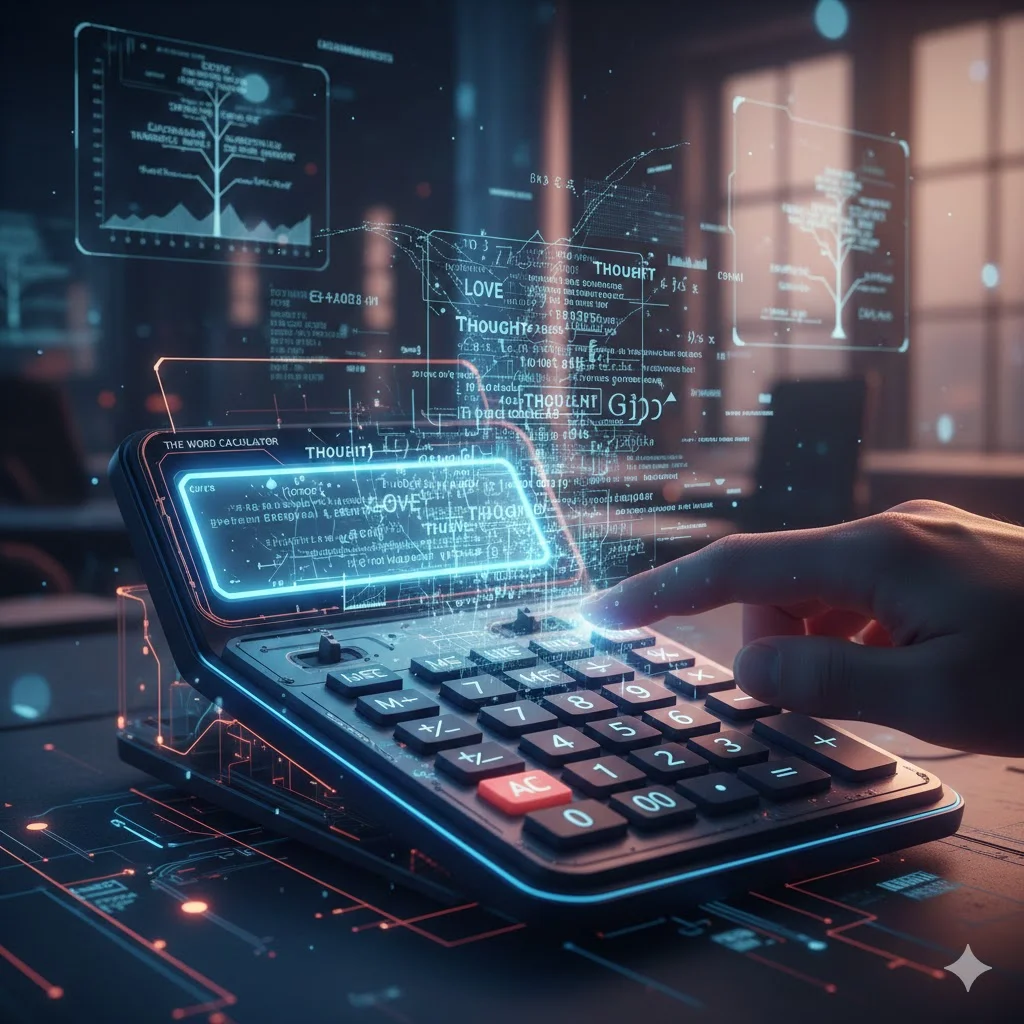
Have you ever chatted with an AI and been struck by how... human it feels? It's a common experience, and one that sparks a lot of debate and a flurry of metaphors trying to explain this complex technology. From "black boxes" to "parrots," we've heard it all, but one analogy often championed by figures like OpenAI's Sam Altman is that generative AI is essentially a "calculator for words."
Now, you might be thinking, "A calculator? But AI has biases, makes mistakes, and even poses ethical dilemmas – that's not very calculator-like!" And you'd be right to a degree. However, as this fascinating article points out, dismissing the calculator metaphor entirely would be a mistake.
The Secret Life of Words: Hidden Statistics:
The truth is, much of our everyday language is built on statistical patterns we're barely aware of. Think about it: why does "salt and pepper" sound normal, but "pepper and salt" feels awkward? Why do we say "strong tea" instead of "powerful tea"? These aren't just random preferences; they're collocations, predictable word combinations shaped by repeated social use. The more we hear them together, the more "right" they sound.
In essence, our brains are constantly "calculating" language, relying on probabilities to determine what "feels right." We're natural language statisticians!
How Chatbots Capture the "Feel Right" Factor:
This is where large language models (LLMs) like GPT-5 and Gemini truly shine. They've managed to capture and formalize this very "feel right" factor. By crunching immense amounts of linguistic data, they identify statistical dependencies between words (or "tokens"). This allows them to generate sequences that are not only incredibly fluent but can even evoke emotional responses from users.
The roots of this technology stretch back to Cold War-era machine translation, evolving through attempts to mechanize grammar and early statistical approaches. The core principle, however, has remained constant: calculating probabilities. LLMs don't truly "understand" concepts like knowledge or emotion, but they're incredibly good at calculating how humans language about them.
The Marketing Illusion vs. Reality:
So why don't we instinctively recognize that AI is "just" calculating? The article suggests it's partly due to how these tools are marketed. Companies often use language that implies AI is "thinking," "reasoning," or even "dreaming." This suggests that by reproducing human patterns of expression, AI has gained access to the underlying meanings and values.
But it hasn't.
An AI can calculate that "I" and "you" frequently appear with "love." But it doesn't experience "I," understand "love," or know "you," the human typing the prompt.
Ultimately, generative AI remains a sophisticated calculator for words. Its output may sound incredibly human, but it's crucial to remember that statistical prediction, no matter how advanced, is not the same as genuine understanding.
What are your thoughts on this? Does the "calculator for words" analogy resonate with you, or do you prefer another explanation for AI's human-like feel? Share your perspectives in the comments below!
Support our research
Independent analysis fueled by you.