
For decades, the "Space Race" was about whose flag was on the Moon. Today, the stakes have shifted. The new trophy isn't a piece of lunar rock; it’s the digital backbone of the future.
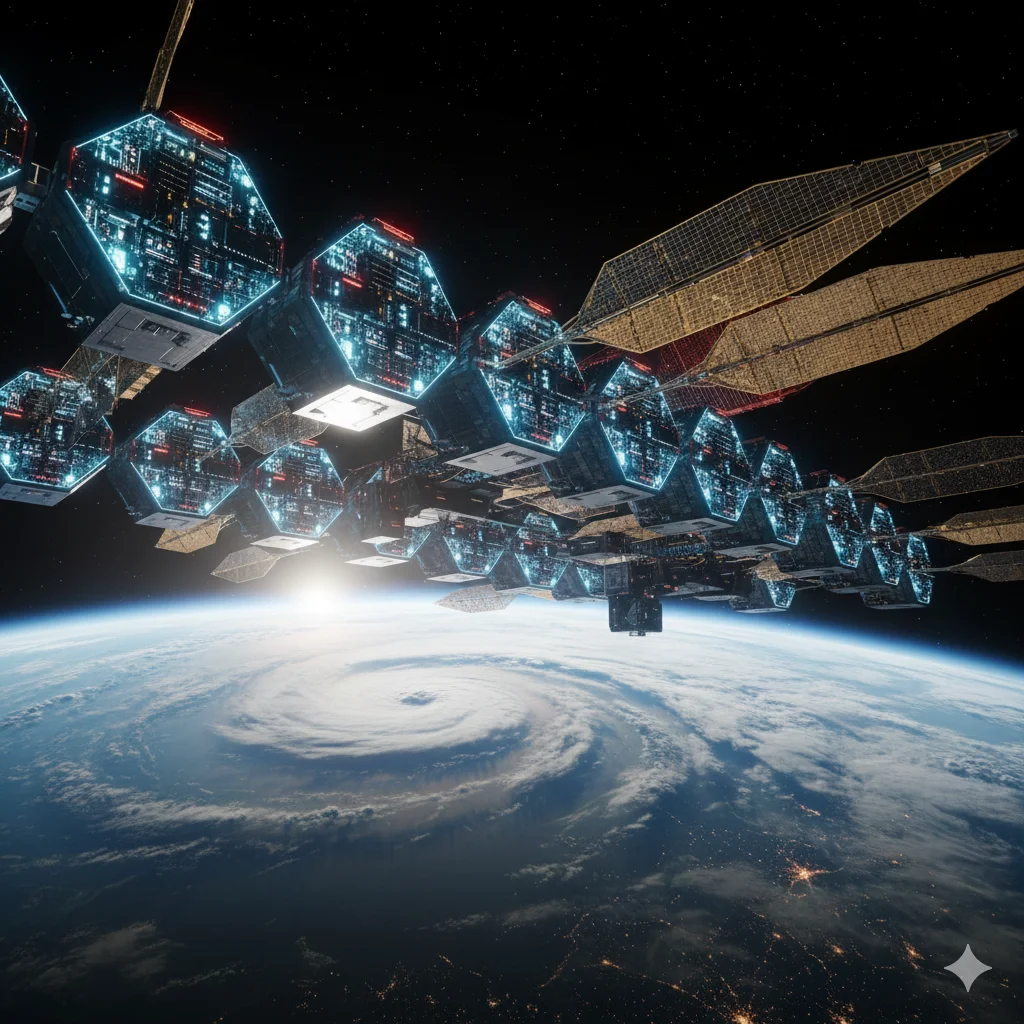
In a move that sounds straight out of a Liu Cixin novel, China is accelerating plans to build the world’s first AI-powered space supercomputer. We aren’t talking about a simple satellite; we’re talking about a massive, orbital data center designed to process the world’s most complex AI workloads from 500 kilometers above our heads. This isn't merely an upgrade to existing space technology; it's a paradigm shift, envisioning an entirely new realm for humanity's most demanding computational tasks.
Why Move AI Off-Planet? The Compelling Case for Orbital Computing:
You might wonder: Why go through the trouble of launching thousands of pounds of hardware into orbit when we have perfectly good ground to build on? The answer comes down to three things that are becoming increasingly scarce or problematic on Earth: Energy, Water, and Speed. But beyond these immediate concerns, there are strategic and environmental advantages that make this audacious leap into space not just feasible, but increasingly necessary.
-
Abundant, Clean Energy: On Earth, traditional data centers are energy vampires, consuming massive amounts of electricity, often sourced from fossil fuels, straining power grids and contributing to carbon emissions. In space, solar energy is unfiltered, constant (especially in geosynchronous orbits), and virtually limitless. An orbital supercomputer could operate almost entirely on renewable solar power, drastically reducing its carbon footprint and dependency on terrestrial energy infrastructure. This offers a compelling answer to the energy dilemma faced by AI's insatiable hunger for power.
-
The Cooling Crisis Solved: Keeping supercomputers cool on Earth requires enormous amounts of water for evaporative cooling towers, putting a significant strain on local water supplies, particularly in already arid regions where many data centers are located. In the vacuum of space, heat can be dissipated more efficiently through radiation, eliminating the need for vast quantities of water. This fundamental advantage not only saves a precious resource but also simplifies the engineering challenge of thermal management for extremely powerful computing clusters.
-
Real-Time, Low-Latency Processing: Currently, Earth-observing satellites collect vast amounts of raw data (imagery, climate readings, communication signals) which must then be transmitted back to ground stations for processing. This "download-and-process" model introduces latency and bandwidth limitations. A space-based supercomputer can analyze data in situ, directly from the satellites collecting it. Imagine instant climate modeling, real-time disaster response, immediate intelligence gathering, or truly global, instantaneous communication. This capability would revolutionize fields from environmental monitoring to defense, providing insights and actions far quicker than ever before.
-
Strategic Advantage & Data Security: The nation or consortium that controls these orbital supercomputing assets will gain an unparalleled strategic advantage. They will possess superior capabilities in AI research, defense applications, global communication networks, and secure data processing that are less vulnerable to terrestrial disruptions, be it natural disasters or geopolitical conflicts. Data processed and stored in orbit could potentially offer new layers of security and resilience compared to ground-based centers.
The Players: Beijing vs. The Tech Titans – A Global Race to Orbit:
The Institute of Computing Technology (ICT) at the Chinese Academy of Sciences in Beijing is currently leading the charge, with plans to deploy a system featuring roughly 10,000 high-performance computing cards. This isn't just an academic exercise; it's a national strategic priority backed by significant investment and technical expertise. China's progress suggests they may be closer than any other nation to making space-based supercomputing a tangible reality.
But they aren’t alone in looking upward. The American response is a "Who's Who" of tech giants and innovative startups, all vying for their piece of this new orbital frontier:
- Elon Musk (Starlink/SpaceX): With thousands of Starlink satellites already in orbit, SpaceX is not just providing internet; they are laying the foundational network for distributed computing in space. Future iterations of Starlink could very well incorporate advanced processing capabilities, transforming the constellation into a vast, interconnected orbital supercomputing grid.
- Jeff Bezos (Blue Origin): While currently focused on heavy-lift rockets and lunar landers, Blue Origin's long-term vision includes extensive space infrastructure, including orbital platforms and space colonies. These future habitats would be ideal locations for large-scale AI data centers, providing the necessary environment and power.
- Sundar Pichai (Google): Google is investing heavily in advanced AI chip designs (like TPUs) and hardware efficiency, crucial for systems that must operate in the extreme conditions of space. Their expertise in AI algorithms and data center management makes them a formidable player in leveraging orbital computing.
- Startup Starcloud (and others): Beyond the giants, innovative startups are emerging, dedicated specifically to building satellite-based computing systems designed to withstand radiation, temperature fluctuations, and the rigors of space. These agile companies could provide the specialized hardware and software necessary to make orbital supercomputing a reality.
A Turning Point for Computing and Humanity:
This isn't just about faster calculations; it's about a fundamental shift in how human knowledge is stored, processed, and utilized. We are moving from a world where "The Cloud" is a building in Virginia or Dublin, to one where it is a shimmering ring of silicon and solar panels surrounding the planet. This new frontier promises unprecedented capabilities, but also raises critical questions about space debris, orbital traffic management, and the potential for a new domain of geopolitical competition.
The race is on. And this time, the winner won't just own the high ground—they’ll own the intelligence that runs the world, from the ultimate vantage point. The implications for scientific discovery, global communication, and even human evolution are profound. We are truly on the cusp of an extraterrestrial computing era.
What do you think? Is space-based AI a brilliant solution to our energy crisis, or are we just creating a new kind of "orbital clutter" and a dangerous new front for international competition? Let’s discuss in the comments!
Support our research
Independent analysis fueled by you.