Beyond Fiction: Texas A&M Scientists Use 'Nanoflowers' to Recharge Your Body’s Aging Batte.
We all know the feeling: that inevitable drop in energy as we age. It's not just about feeling tired; it’s happening at the cellular level, right where our power comes from. The tiny structures responsible for energy—the mitochondria (the "powerhouses" of the cell)—start to decline. This decline isn't just a sign of aging; it's a core factor in major diseases like heart failure and Alzheimer’s. But now, a revolutionary breakthrough from Texas A&M University is changing the game!
🌸 Meet the "Mitochondrial Bio Factories"
Scientists have discovered that microscopic particles they call "nanoflowers"—made from a simple inorganic compound—can be used to supercharge our own cells. Here's how this biological magic works:
- The Boost: When healthy stem cells are exposed to these nanoflowers, they begin producing twice the normal amount of mitochondria. The nanoflowers essentially turn the cells into high-output"mitochondrial bio factories."
- The Donation: These boosted cells don't hoard the energy. They act like good neighbors, transferring their surplus, fully-charged mitochondria to nearby damaged or aging cells—like giving a failing device a brand-new battery pack!
- The Results: The injured cells immediately regain their normal energy production, restore function, and even become incredibly resistant to cell death, including damage from chemotherapy drugs.
- As the lead researcher, Dr. Gaharwar, put it: “We have trained healthy cells to share their spare batteries with weaker ones.”
💻 The Unseen Role of AI:
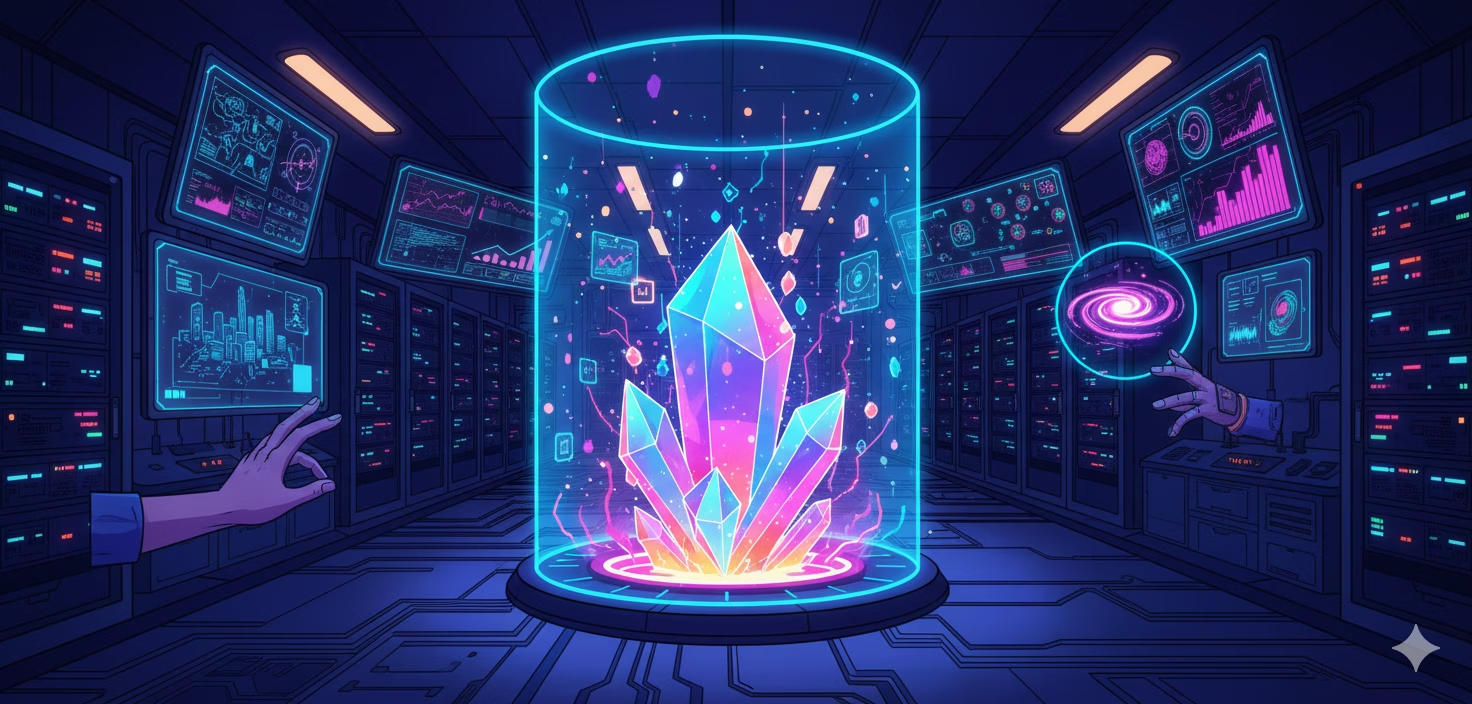
You might be wondering if this sounds like sci-fi, and in a way, it is! While the article focuses on the nanoflowers, cutting-edge science like this often relies on Artificial Intelligence (AI) behind the scenes.
AI and Machine Learning (ML) are the unseen engines:
- Design Detective: AI programs likely helped the team sift through mountains of material data to quickly identify molybdenum disulfide as the best candidate for the nanoflower. It cuts down on months or years of manual lab work.
- Data Cruncher: Analyzing the complex genetic and functional data from thousands of cells—tracking mitochondria movement, counting nanostructures, and checking gene changes—is a job for sophisticated AI algorithms. AI acts as the co-pilot, helping researchers navigate the microscopic world with incredible precision and speed to make discoveries like this possible.
🚀 Why This Matters for All of Us:
This isn't just lab talk. The potential applications for this nanoflower technology are enormous because it enhances the body's natural repair system without needing genetic modification or frequent drug doses.
Imagine a future where treatments for:
- Heart Disease (Cardiomyopathy)
- Muscle Disorders (Muscular Dystrophy)
- Neurodegenerative Diseases
...could involve a simple, long-lasting treatment to replenish the energy of failing tissues. This breakthrough is a massive leap forward, proving that with tiny flower-shaped tools and the power of data-driven science, the dream of recharging aging and damaged tissues is now very real. The road to the clinic is still ahead, but the future of regenerative medicine just got a whole lot brighter! ✨
Support our research
Independent analysis fueled by you.