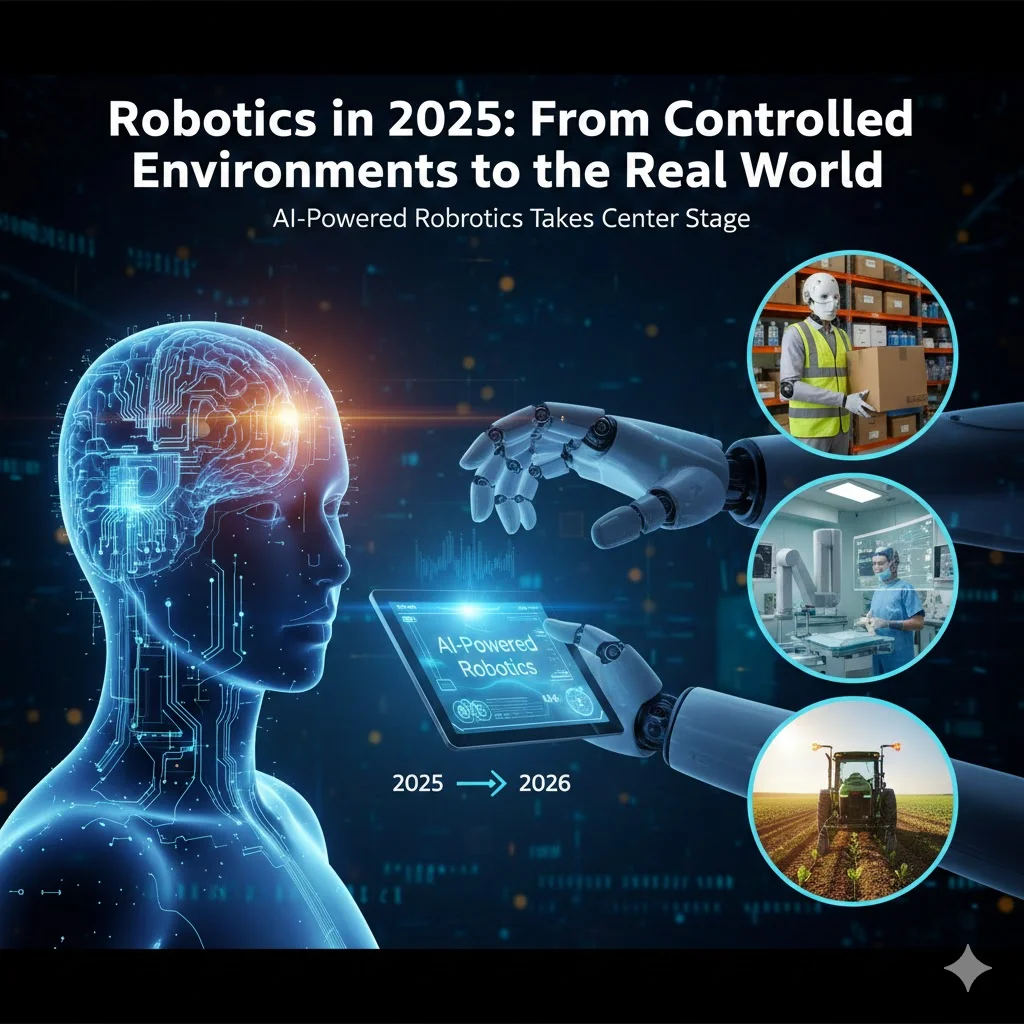

Remember when robotics felt like something out of a sci-fi movie, or at best, an academic pursuit?
For years, Silicon Valley shrugged its shoulders at the idea of investing in clunky hardware, preferring the sleek, scalable world of software. But if you’ve been following the tech world, you might have noticed a seismic shift. Robotics isn't just "having a moment"—it’s finally hitting its stride, and investors are lining up!
I recently read an insightful article that perfectly breaks down why this is happening. After a decade of trial and error, the robotics industry has matured, costs have plummeted, and the demand for automation has skyrocketed.
From Sci-Fi Dream to Savvy Investment:
A decade ago, trying to pitch a robotics startup to a venture capitalist was like pulling teeth. Seth Winterroth, a partner at Eclipse, recalls those days vividly. He was passionate about robotics even back in 2015, but it was anything but "fashionable." Founders struggled to get serious funding for ventures that required deep pockets and even deeper patience.
Fast forward to 2025, and the story couldn't be more different. Investors have poured roughly $6 billion into robotics startups in just the first seven months of this year! That’s a staggering figure, making robotics one of the few non-AI sectors actually seeing a funding boost.
The "Kiva Effect" and Learning from Our Scars:
So, what changed? It wasn't just a sudden AI breakthrough (though AI certainly helps). The roots of this boom go back to a pivotal moment: Amazon's 2012 acquisition of Kiva Systems. As Winterroth puts it, "Kiva’s acquisition launched a thousand robotics startups."
This deal showed everyone that large-scale commercial success was possible. While many of those early companies didn't survive, they left behind a priceless legacy: experienced engineers and founders who learned hard lessons about what customers actually needed. Instead of chasing "lights-out" fully autonomous factories, they realized the true value lay in practical, high-impact tasks like machine tending – where robots work with humans, not just replacing them.
Why It's Cheaper (and Easier) to Build a Robot Now:
Another massive game-changer? Cost. Fady Saad of Cybernetix Ventures explains that advances in sensors, computing power, and battery technology have made robots significantly more affordable to build. This means startups can scale faster, becoming much more attractive to investors. We're seeing the rise of "full-stack" robotics companies that integrate hardware, software, and data into seamless solutions.
The Real-World Problems Robots Are Solving:
Let's be clear: this isn't just about cool tech; it's about solving urgent, real-world problems.
- Labor Shortages: In manufacturing, warehousing, and construction, there simply aren't enough hands. Imperfect robots are often better than no workers at all.
- Aging Populations: Healthcare, surgical assistance, and even eldercare are huge growth areas. Robots can perform physically demanding tasks and provide much-needed support.
Where VCs are cautious: While the future is bright, investors are still wary of consumer robotics, especially humanoid robots for the home. Turns out, people aren't quite ready for a robot butler just yet!
The Future Is Automated, and It's Here:
After years of experimentation, a few failures, and significant refinement, robotics is no longer a wild, speculative gamble. It's a robust, investable industry with proven solutions and clear demand. Customer awareness is higher, the technology is better, and the ecosystem is stronger than ever.
It’s an exciting time to watch this space, as robots move from the fringes to become integral parts of our industries and, eventually, our daily lives.
What do you think? Are you ready for a future with more robots? Let me know in the comments.
Support our research
Independent analysis fueled by you.