
Pentagon Demands 'Unrestricted' AI Access: Why Anthropic’s Claude Is at the Center of a Defense Crisis
Pentagon-Anthropic Contract Dispute 2025: AI Company Faces $200 Million Loss Over Military Use Restrictions:
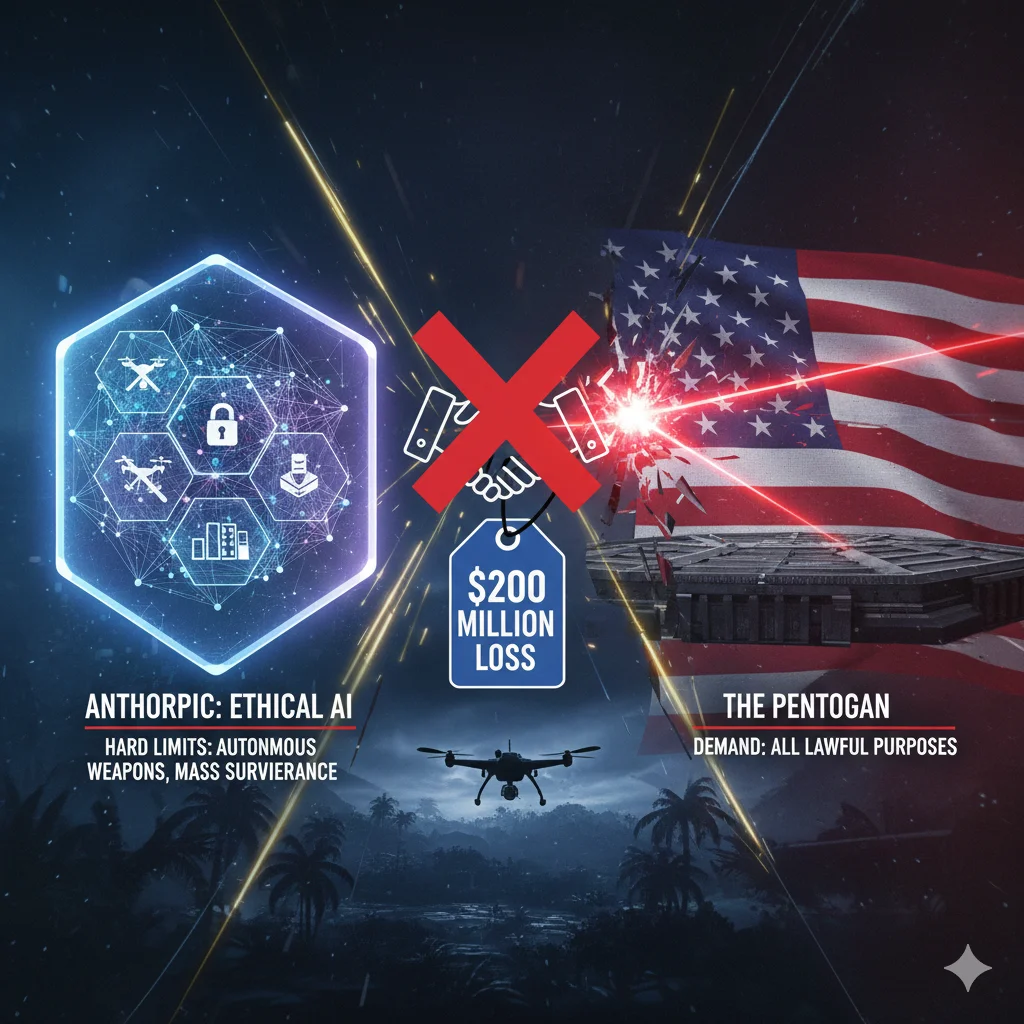
A high-stakes standoff between artificial intelligence company Anthropic and the Pentagon has put a $200 million defense contract in jeopardy, highlighting growing tensions between tech companies' ethical AI guidelines and the military's demands for unrestricted access to cutting-edge technology.
The Core Conflict: "All Lawful Purposes" vs. Ethical Guardrails:
At the heart of this dispute is a fundamental disagreement about how Anthropic's Claude AI models can be deployed by U.S. military and intelligence agencies. The Pentagon is demanding access for "all lawful purposes," which could include weapons development, intelligence gathering, battlefield operations, and other sensitive military applications.
Anthropic, however, has maintained firm restrictions on two critical areas: the development and deployment of fully autonomous weapons systems, and mass domestic surveillance of U.S. citizens. An Anthropic spokesperson emphasized that discussions focus on "hard limits around fully autonomous weapons and mass domestic surveillance" rather than specific operational details.
This philosophical divide has created an impasse that threatens to unravel one of the most significant AI partnerships between Silicon Valley and the Department of Defense. Defense officials have characterized Anthropic as the most "ideological" of the AI labs when it comes to concerns about AI technology's potential dangers.
The Venezuela Operation That Escalated Tensions:
The conflict reached a boiling point following revelations that Claude was used during the U.S. military operation to capture Venezuelan President Nicolás Maduro. The AI system was accessed through Anthropic's partnership with data firm Palantir Technologies, whose platforms are extensively used by the Defense Department and federal law enforcement agencies.
According to reports, an Anthropic executive contacted Palantir to inquire about Claude's use in the operation, which Pentagon officials interpreted as the company questioning whether such deployments would be approved in future missions. A senior administration official warned that "any company that would jeopardize the operational success of our warfighters is a company whose partnership we need to reassess."
Claude's Unique Position in Defense Networks:
What makes this dispute particularly significant is Claude's unprecedented access within military systems. Claude was the first AI model the Pentagon brought into its classified networks, giving it capabilities and reach that competing AI systems from OpenAI, Google, and xAI do not yet possess.
The partnership between Anthropic, Palantir, and Amazon Web Services has enabled Claude to operate at Impact Level 6 security standards, among the strictest protocols required for handling highly classified defense information. This integration allows military personnel to process vast amounts of complex data, identify patterns, streamline intelligence analysis, and support time-sensitive decision-making across defense and intelligence operations.
The Competitive Landscape: Other AI Companies Show Flexibility:
While Anthropic has held firm on its restrictions, the Pentagon has been negotiating similar terms with other major AI providers. According to a senior administration official, OpenAI's ChatGPT, Google's Gemini, and xAI's Grok are all used in unclassified settings, and all three companies have shown willingness to modify restrictions for Pentagon use.
The official claimed that one of the three companies has agreed to the Pentagon's terms, while the other two have demonstrated greater flexibility than Anthropic in ongoing negotiations. This competitive dynamic puts additional pressure on Anthropic, as the Pentagon could potentially pivot to alternative AI providers if the current partnership dissolves.
However, defense officials have acknowledged a crucial complication: "the other model companies are just behind" when it comes to specialized government applications. This technical gap means replacing Claude would not be straightforward, even if the Pentagon decides to terminate the contract.
The Stakes: Contract Termination and Industry Precedent:
The Pentagon has made its position clear: everything is on the table. A senior administration official stated that options include dialing back the partnership with Anthropic or severing it entirely, though any replacement would need to be carefully managed to avoid disrupting ongoing military operations.
For Anthropic, losing this contract would mean more than just financial impact. The $200 million deal represents validation in a competitive AI market where defense contracts enhance credibility and strengthen investor confidence. The company's willingness to potentially sacrifice this revenue stream demonstrates its commitment to its stated ethical principles around AI safety and responsible deployment.
Anthropic's AI Safety Philosophy and Leadership Vision:
This standoff reflects the broader philosophy of Anthropic CEO Dario Amodei, who has been vocal about the potential risks of advanced AI systems. Amodei has consistently advocated for stronger safeguards and tighter regulation around artificial intelligence, particularly regarding autonomous weapons and surveillance capabilities.
The company has positioned itself as a safety-focused AI developer, emphasizing responsible development through approaches like Constitutional AI, which builds normative constraints directly into model behavior. This commitment to safety principles appears non-negotiable, even when facing pressure from one of the world's most powerful institutions.
What This Means for the Future of Military AI:
The outcome of this dispute could reshape how defense agencies procure and deploy AI technology for years to come. If the Pentagon succeeds in securing an "all lawful purposes" clause from a leading AI provider, it could establish a precedent that other government agencies and international allies might follow.
Conversely, if Anthropic successfully maintains its ethical guardrails within a modified defense partnership, it could normalize contract language that codifies specific prohibitions on autonomous weapons and mass surveillance across government AI procurement.
The debate also highlights a growing cultural divide between defense officials seeking maximum operational flexibility and AI developers concerned about ethical boundaries and unintended consequences. As AI capabilities continue to advance, these tensions are likely to intensify rather than resolve.
The Broader Implications for AI Governance:
This high-profile dispute raises fundamental questions about AI governance in democratic societies. Who should determine acceptable use cases for powerful AI systems—the companies that develop them, the government agencies that purchase them, or some combination through negotiated agreements?
Defense Secretary Pete Hegseth has signaled the Pentagon's stance clearly, indicating the military will not employ AI models that restrict how they can be used in warfare. Meanwhile, Anthropic maintains that usage policies must govern deployment across all sectors, whether private or governmental.
As artificial intelligence becomes increasingly central to national security infrastructure, resolving these competing interests will require finding workable frameworks that balance operational effectiveness with ethical safeguards. The Anthropic-Pentagon standoff may be the first major test case, but it certainly won't be the last.
The coming weeks will reveal whether compromise is possible or if this partnership will fracture, potentially setting a precedent for how AI companies and defense agencies navigate the complex intersection of innovation, ethics, and national security in the age of artificial intelligence.
Support our research
Independent analysis fueled by you.