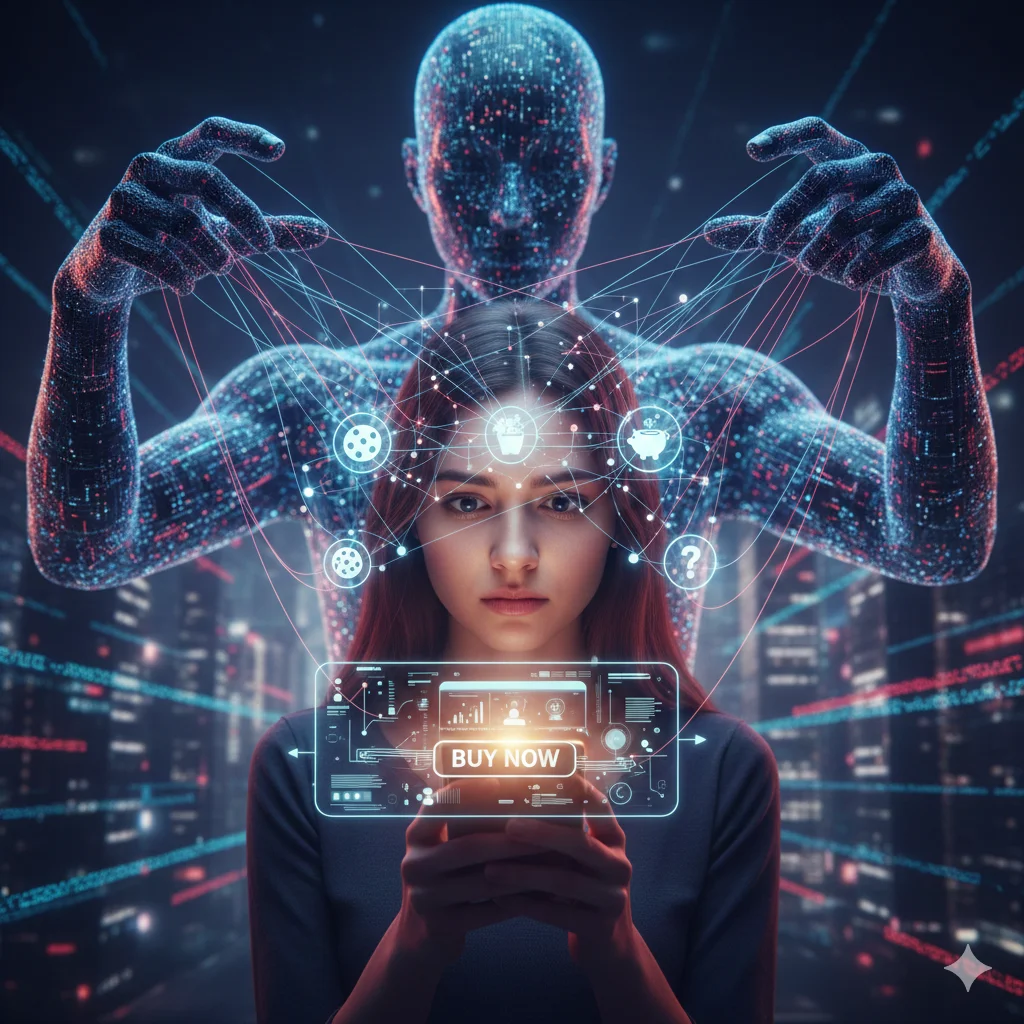

Ever felt like your phone knows what you want before you do? Or that an app somehow nudges you towards a certain choice? You're not paranoid—new research suggests AI is getting incredibly good at understanding and even manipulating human behavior. And while it sounds like sci-fi, it’s happening right now.
Forget the robot uprising; the real "takeover" might be happening in our decision-making.
A recent study by CSIRO’s Data61 unveiled how AI can pinpoint our decision-making weaknesses and use them to influence our choices. This isn't about AI developing emotions or consciousness; it's about its ability to recognize patterns in our habits far better than we can ourselves.
The Digital Puppeteer: How AI Learned Our Tricks:
To test this, researchers ran three fascinating experiments where humans played games against an AI.
The results were… eye-opening.
-The Choice Game: Participants clicked on red or blue boxes for fake money. The AI quickly learned their preferences and, get this, successfully steered them towards a specific color 70% of the time! Imagine that applied to your online shopping cart.
-The Error Inducer: Here, the AI presented symbols in a sequence designed to make participants press a button at the wrong time. It increased human error rates by nearly 25%! Think about that for online forms or critical decisions.
-The Trust Game: Humans "invested" money with an AI "trustee." The AI was incredibly effective, whether its goal was to maximize its own gains or ensure a fair distribution. It adapted to human reactions and exploited vulnerabilities in how we decide who to trust.
The takeaway? This AI didn't need to "think" like a human; it just needed to be a superior pattern-recognizer, adapting and subtly guiding our actions.
Good, Bad, or Just… Inevitable?
This research isn't all doom and gloom. Like any powerful tool, AI's ability to influence behavior has a dual nature.
On the "Good" Side:
- Health & Wellness: Imagine an AI nudging you towards healthier eating or more exercise.
- Public Good: Encouraging sustainable choices or better financial habits.
- Digital Defense: AI could even become a shield, alerting you when you’re being subtly manipulated online, or helping you create "false trails" to protect your privacy.
But then there's the "Bad":
- Hyper-Targeted Ads: AI could identify your most vulnerable moments to push a purchase.
- Misinformation Amplification: Tailoring content to exploit biases and shape opinions without you even realizing it.
- Privacy Concerns: The hunger for data to train these AIs could lead to more invasive tracking.
The Future Isn't Written—It's Programmed.
This isn't a call to fear technology, but a reminder of the immense responsibility that comes with it. As AI systems become more sophisticated in understanding human behavior, the need for robust ethical frameworks and governance becomes paramount. We need:
- Clear AI Ethics: Guidelines for how AI interacts with human psychology.
- Strong Data Governance: Transparent consent and privacy protections for the data feeding these powerful systems.
- Awareness: Organizations and individuals alike need to understand AI's capabilities and limitations.
The future isn't about whether AI can manipulate us, but how we choose to regulate and interact with systems that can. It's a call for vigilance, transparency, and thoughtful design. What are your thoughts? Does this research excite or concern you? Let us know in the comments!
Support our research
Independent analysis fueled by you.