
Remember 2024 and 2025?
It felt like every other headline was about AI, right? ChatGPT was dropping jaws, AI art was blowing up our feeds, and everyone was trying to get an AI assistant to write their emails. It was awesome, don’t get me wrong, but let's be real: most of that AI lived inside our screens. It could talk, write, and even code, but it mostly stayed in the digital ether.
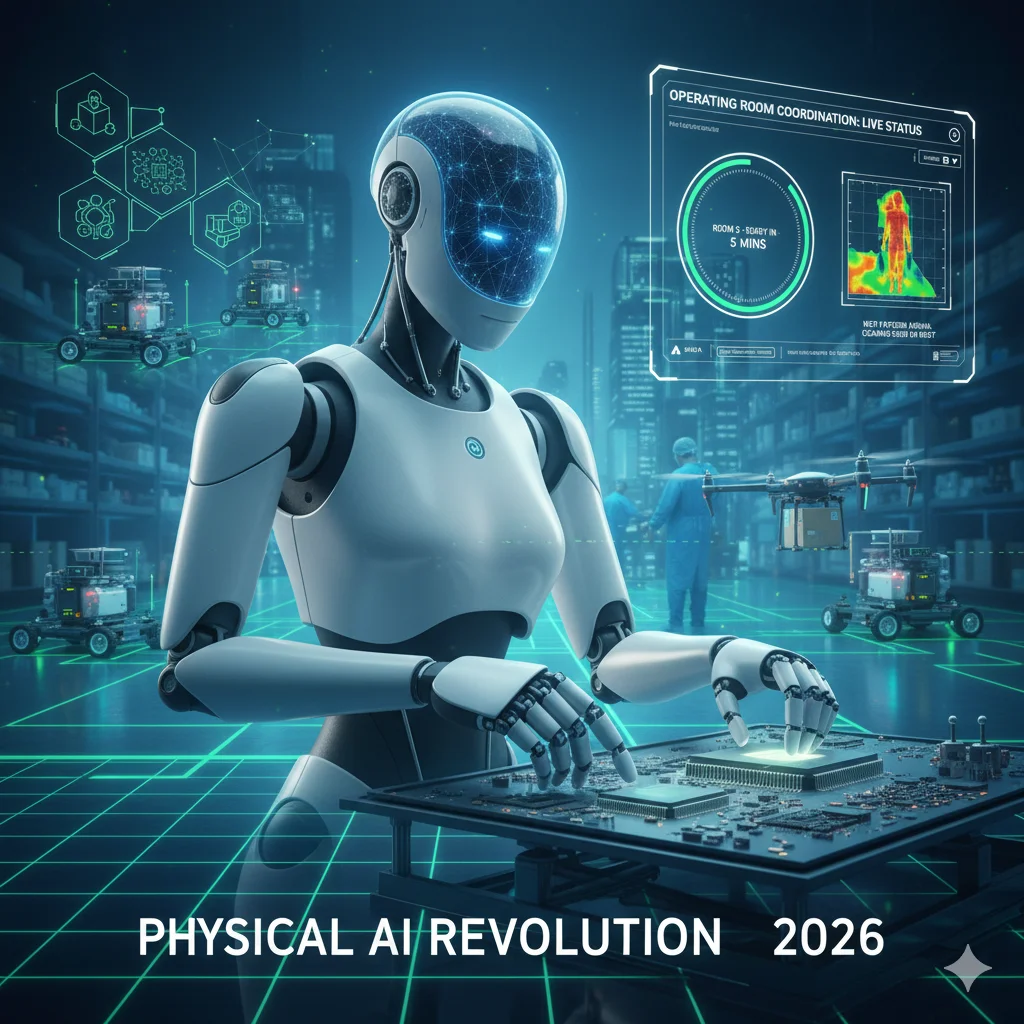
Well, get ready for a serious upgrade, because the tech world is buzzing about what's coming in 2026: Physical AI. We're talking about robots and intelligent machines that don't just think, but do! They're stepping out of the virtual world and into our factories, hospitals, and maybe even our homes.
This isn't just another tech trend; it's a monumental shift that could redefine how we interact with technology and the world around us.
The Big Leap: From Digital Brains to Real-World Brawn:
Think about the AI we’ve been using. Large Language Models (LLMs) are brilliant at understanding and generating text. They’re like super-smart librarians who know everything ever written. But ask them to, say, make you a cup of coffee, and they're stumped. They don't understand gravity, spilled milk, or the layout of your kitchen.
This is where Physical AI swoops in. It's about AI that can:
- Perceive: See, hear, and feel the real world.
- Reason: Understand how objects move, what causes what, and anticipate outcomes.
- Act: Physically interact with its environment – pick things up, move around, build, or fix.
The secret sauce? World Models. Forget just predicting the next word; these AIs are learning to simulate how the entire world works. They can "imagine" what happens if they push a box, drop a tool, or walk around an obstacle. This means robots can now adapt, learn on the fly, and make intelligent decisions in our unpredictable world, instead of just following rigid pre-programmed instructions.
Why 2026 Is THE Year for Robots:
For years, robots were cool but often clumsy, expensive, and confined to very specific tasks in highly controlled environments. 2025 felt a bit slow for robotics, but that was actually a crucial "maturation phase."
Here's why things are different now:
- Learning in the Metaverse: Robots are now getting thousands of years of "life experience" in hyper-realistic simulations before they ever roll onto a factory floor. This "Sim2Real" training means they're smarter and safer right out of the gate.
- Smarter Brains, Smaller Packages: Specialized AI chips (NPUs) are putting powerful AI processing directly onto the robots themselves. This means faster reactions, less reliance on cloud internet, and more autonomous decision-making.
- No More Hiding: Remember those stealth-mode startups that stayed hidden for years? That's over! Companies like Figure, 1X Technologies, and Agility Robotics are openly showcasing their progress, moving from cool demos to actual pilot programs in real-world factories. They're proving their tech works.
- "Show Me the Money": Investors are less interested in abstract AI promises and more focused on tangible results. Robots that can move goods, assist workers, or automate repetitive tasks are suddenly incredibly attractive because they deliver real economic value.
- The Safety First Approach: Governments are starting to put in place regulations (like the EU AI Act) for "high-risk" AI. This pushes robotics companies to build safety, transparency, and reliability into their designs from day one, leading to more trustworthy machines.
Where You'll See Physical AI First:
So, where will these intelligent machines make their mark?
- Factories & Warehouses: Humanoid robots are stepping in to handle the "dull, dirty, and dangerous" jobs, working alongside humans to boost efficiency and safety.
-Healthcare: Imagine "passive" AI systems, like the ones Akara is developing, using smart sensors to manage hospital operating room logistics, making things run smoother and faster, reducing costs, and easing staff burnout. (Yes, we talked about this before – it's already happening!)
-Logistics & Delivery: Smarter, more agile robots navigating complex environments to move packages and materials, revolutionizing supply chains.
The Future is Moving (Literally!)
If 2025 was the year AI got really good at talking, 2026 is shaping up to be the year it gets really good at doing. This isn't just about cool new gadgets; it’s about a fundamental shift in how intelligence integrates with the physical world around us.
The next generation of AI won't just respond to your commands on a screen. It will move, adapt, learn, and assist in ways we've only dreamed of. Get ready, because the future isn't just intelligent – it's tangible.
What do YOU think? Are you excited (or a little nervous) about robots becoming a bigger part of our physical world? Let me know in the comments!
Support our research
Independent analysis fueled by you.