Tesla Robotaxi Expands to Dallas and Houston: Everything You Need to Know About Tesla's Self-Driving Ride Service in Texas
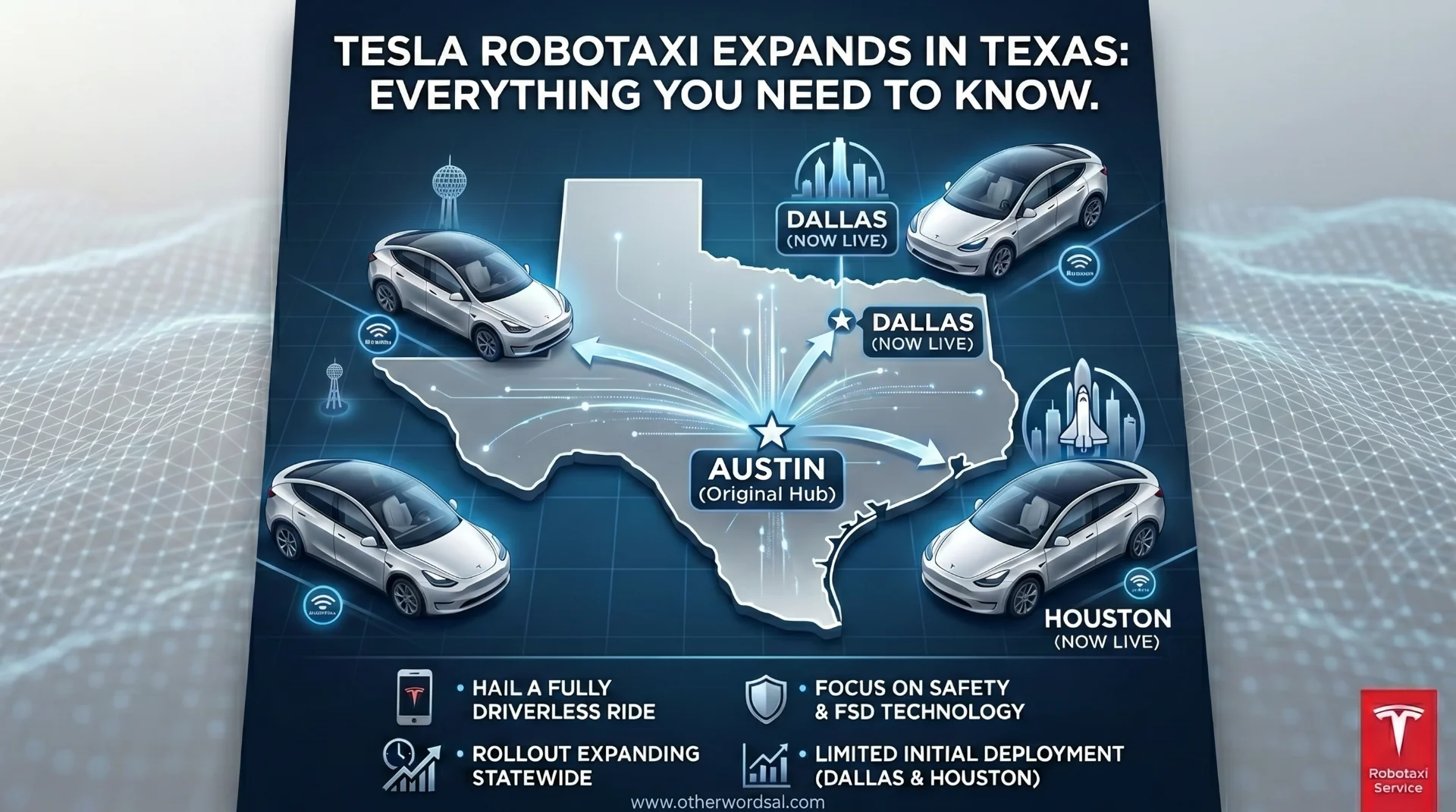
Tesla has officially expanded its highly anticipated robotaxi service to two major Texas cities — Dallas and Houston — marking a significant milestone in the autonomous vehicle industry. The announcement, shared via Tesla's official social media channels, included a short 14-second video clip showing Tesla vehicles navigating city streets entirely without a human driver or safety monitor in the front seat.
If you've been following the rise of autonomous ride-sharing, Tesla FSD (Full Self-Driving), or the broader robotaxi market, this is a development you don't want to miss.
What Is Tesla's Robotaxi Service: A New Era of Driverless Rides:
Tesla's robotaxi service is a fully autonomous, driverless ride-hailing platform — think Uber or Lyft, but without a human at the wheel. Powered by Tesla's Full Self-Driving (FSD) software and onboard AI hardware, the vehicles navigate roads, pick up passengers, and complete trips with zero human intervention.
Unlike Waymo, which operates in select cities with a geofenced approach, Tesla is leveraging its massive existing fleet and over-the-air software updates to scale its autonomous taxi service rapidly — a strategy that sets it apart from every other player in the self-driving car market.
Tesla Robotaxi Expansion: From Austin to Dallas and Houston:
Tesla first launched its robotaxi service in Austin, Texas — making it the company's pilot city for driverless rides. What began as a cautious rollout has now evolved into a multi-city operation that spans the entire state. Here's a quick timeline of how the service has grown:
-
• Austin Launch: Tesla began operating its robotaxi service in Austin, establishing it as the first city for fully autonomous Tesla rides.
-
• January 2026 — No Safety Drivers: Tesla removed safety drivers from its Austin fleet in January 2026, transitioning to 100% driverless operation — a landmark moment for the self-driving industry.
-
• April 2026 — Dallas & Houston Expansion: Tesla rolled out robotaxi service in two new cities — Dallas and Houston — making Texas the undisputed epicenter of autonomous vehicle ride-sharing in the US.
Currently, Tesla operates robotaxi service exclusively in Texas, with three active markets: Austin, Dallas, and Houston. The company also offers a more limited ride service with human safety drivers in the San Francisco Bay Area, California — signaling that a national rollout may still be in its early chapters.
How Many Tesla Robotaxis Are Operating in Dallas and Houston: Early Rollout Numbers:
While the announcement is exciting, the real-world rollout appears to be in very early stages. According to crowdsourced data from the Robotaxi Tracker website, both Dallas and Houston currently have only a single active Tesla robotaxi vehicle each logged in the system.
For comparison, Austin — Tesla's most mature robotaxi market — has approximately 46 active vehicles logged. This stark contrast suggests the Dallas and Houston rollouts are soft launches or limited pilots, carefully designed to test operations and collect real-world driving data before a wider fleet deployment.
Tesla Robotaxi Safety Record: What the Data Says About Autonomous Vehicle Crashes:
Safety is the central concern whenever autonomous vehicles are discussed — and Tesla's record deserves a close look. In a February 2026 regulatory filing, Tesla disclosed that its Austin-based robotaxis had been involved in 14 crashes since the service launched.
To put this in context: Tesla has not specified the severity of these incidents or whether any involved injuries. Regulators and industry analysts will be watching closely as the fleet expands to new cities. As with any emerging technology, transparency in reporting accidents — even minor ones — is critical for public trust in self-driving cars.
How does Tesla's safety record compare to competitors? Waymo, which operates the largest driverless ride-hailing service in the US, has disclosed its own incident reports. Independent comparisons of autonomous vehicle safety statistics remain an active area of research and regulatory attention — and a space worth monitoring as Tesla scales.
Tesla vs. Waymo: The Autonomous Ride-Hailing Race Heats Up:
The robotaxi market is quickly becoming one of the most competitive spaces in tech. Two giants dominate the conversation — Tesla and Waymo — and their approaches couldn't be more different. Here's how Tesla stacks up against its biggest rival:
-
• Market Reach: Waymo operates in San Francisco, Los Angeles, Phoenix, and Austin — with thousands of rides completed daily. Tesla is newer to the commercial driverless space but has an enormous hardware advantage with millions of vehicles already on the road.
-
• Technology Approach: Tesla uses a camera-only vision system (no LiDAR), while Waymo relies on a sensor fusion approach combining cameras, radar, and LiDAR — a fundamental philosophical difference in how each company believes AI should "see" the road.
-
• Scalability Potential: Tesla's FSD technology, if it scales successfully, could allow any Tesla owner to eventually offer their car as a robotaxi when not in use — a peer-to-peer model that could disrupt the entire ride-sharing industry.
Why Texas: The Strategic Logic Behind Tesla's Robotaxi Rollout
Texas is not a random choice — it's a calculated bet. Several factors make the Lone Star State an ideal proving ground for autonomous vehicles, and Tesla has clearly done its homework:
-
• Favorable Regulations: Texas has relatively permissive laws around autonomous vehicle testing and deployment compared to California, giving Tesla more operational freedom.
-
• Tesla's Home Base: Tesla's Gigafactory and corporate headquarters are located in Austin, providing logistical advantages and a supportive local environment.
-
• Wide, Grid-Based Roads:Texas cities like Houston and Dallas feature sprawling road networks that may be easier for AI driving systems to navigate compared to dense urban grids.
-
• High Population Density: Dallas and Houston are two of the largest US cities by population, offering a large potential rider base and rich real-world data for FSD training.
What's Next for Tesla's Robotaxi Service: The Road Ahead:
The expansion to Dallas and Houston signals that Tesla is accelerating its autonomous ride-hailing ambitions — and the industry is watching. Here are the key developments worth monitoring in the months ahead:
Meta's Next Big Bet: This New App Lets You Build Games Simply by Typing a Prompt
-
• Fleet Growth: Dallas and Houston will need far more than one vehicle each before Tesla's robotaxi service becomes a meaningful transportation option in those cities.
-
• California Expansion: Will Tesla's Bay Area service eventually go fully driverless? This is the next logical step — and one that will require navigating California's stricter AV regulations.
-
• Regulatory Approvals: Additional US cities and potentially international markets will require fresh regulatory approvals — a process that could accelerate or slow Tesla's expansion plans.
-
• Consumer App Availability: When will everyday users be able to open the Tesla app and hail a robotaxi in Dallas or Houston? That answer will define how quickly this service becomes mainstream.
Final Thoughts: Tesla's Robotaxi Is No Longer a Concept — It's Here:
The expansion of Tesla's robotaxi service to Dallas and Houston is a concrete sign that fully autonomous ride-hailing is moving from science fiction to everyday reality. While the current deployment is small — just one vehicle per city according to available tracking data — it marks the beginning of what could be a transformative shift in urban transportation.
As Tesla continues to refine its FSD technology, gather crash and performance data, and expand its fleet, the robotaxi industry is set to become one of the defining technology stories of 2026 and beyond.
Whether you're an EV enthusiast, tech investor, or simply curious about the future of getting around — Tesla's Texas robotaxi story is one worth following closely.
Support our research
Independent analysis fueled by you.