
AI 3D animation tools vs traditional tools like Blender, Maya, and Unreal Engine:
68% of Studios Have Changed Their 3D Pipeline. Are You Being Left Behind?
AI 3D Animation Tools vs. Blender, Maya & Unreal Engine: The Complete 2026 Guide:
From AI-automated texturing and rigging workflows to real-time rendering pipelines — a deep-dive comparison of the tools reshaping every 3D production studio in 2026.
AI 3D animation tools, Blender vs AI, Maya AI rigging, Unreal Engine AI integration,
AI texturing software: automated 3D workflow: AI character animation:3D pipeline automation generative AI 3D:
AI vs traditional animation:
The 3D animation industry is undergoing its most significant transformation in thirty years. For decades, the creative pipeline ran on a dependable trinity — Blender, Autodesk Maya, and Unreal Engine — and every studio, from indie game developers in Lahore to Hollywood VFX houses, built their workflows around these foundational tools. Then artificial intelligence arrived, and it didn't knock politely at the door. It walked straight in and started rearranging the furniture.
In 2026, the real question is no longer whether AI 3D animation tools are capable — they clearly are, in specific domains. The question is: are they replacing traditional 3D software, augmenting it, or creating an entirely new category of automated workflow? This comprehensive guide compares both worlds discipline by discipline, reveals where each genuinely excels, and gives you an honest, evidence-based verdict.
                                       $370B
                        Global 3D animation market by 2030

                                        68%
                      Studios using AI tools in pipeline by 2025

                                        10×
                     Faster asset creation with AI-assisted tools

                                        40%
                     Reduction in texture creation time via AI
The Traditional Titans: What Blender, Maya & Unreal Engine Actually Offer:
Before any meaningful comparison can happen, we need to understand why traditional 3D animation software has dominated so completely. These tools aren't just applications — they are decades of accumulated craft, community knowledge, pipeline trust, and professional infrastructure. Understanding that context is essential for evaluating where AI genuinely disrupts versus where it merely assists.
Blender: The Open-Source Powerhouse:
Blender has become one of the most remarkable success stories in software history. Free, open-source, and community-driven, it covers the entire 3D pipeline — modelling, UV unwrapping, texturing, rigging, animation, simulation, rendering, compositing, and video editing — within a single application.
For independent creators, freelancers, and small studios, Blender represents an unmatched cost-to-capability ratio that no paid tool can compete with. Its Cycles and EEVEE render engines produce photorealistic and real-time output respectively, while its Python API enables deep customisation and automation.
Autodesk Maya: The Character Animation Gold Standard:
When Hollywood needs a character to emote, cry, or breathe convincingly, Maya is almost always the tool behind it. Autodesk Maya has been the industry gold standard for character rigging and animation for over two decades. Its advanced skeleton system, deformer stack, blend shape workflows, and graph editor give animators a level of precision and expressiveness that remains unmatched. Every major VFX house — from ILM to DNEG to Weta — runs a Maya-centric character pipeline. That institutional trust is not easily displaced by newer tools, however capable.
Unreal Engine: Real-Time Rendering Redefined:
Epic Games' Unreal Engine didn't just change game development — it redefined virtual production entirely. With Nanite virtualized geometry and Lumen global illumination, Unreal delivers near-photorealistic real-time rendering that has made it the backbone of LED volume stages used in major film productions, architectural visualisation pipelines, and AAA game development. The introduction of MetaHuman and Control Rig further deepened Unreal's claim on the animation pipeline, moving it from a rendering endpoint to a full creative environment.
The AI Challengers: Automated 3D Workflows in 2026:
The AI tooling ecosystem for 3D animation has expanded at a pace that has genuinely surprised even industry veterans. Across the three core disciplines — AI-powered texturing, automated rigging, and AI character animation — purpose-built tools now offer automated 3D workflows that are not merely novelties. They are production-viable solutions being adopted by real studios at scale.
AI Texturing Tools: From Prompt to PBR in Minutes:
AI-powered texturing represents perhaps the most mature and immediately useful category of AI 3D tools. Adobe Firefly's generative texture features, Poly.cam's AI material system, and integrated text-to-texture pipelines inside tools like Meshy and Tripo3D can generate complete PBR texture sets — albedo, roughness, metallic, normal, ambient occlusion — from a text prompt in minutes.
What previously required a skilled texture artist spending 4–8 hours on a single asset can now produce a usable first pass in under ten minutes. For studios building games or animations with hundreds of secondary assets, this is a transformational efficiency gain in AI texturing software.
AI Rigging Software: Automating the Skeleton:
Rigging has historically been one of the most specialised, time-consuming, and unforgiving disciplines in the entire 3D pipeline. Tools like AccuRIG, Mixamo (now part of Adobe's AI ecosystem), and the AI-assisted features within Auto-Rig Pro have fundamentally changed the accessibility of this discipline.
AI rigging software can detect mesh geometry, identify joint positions, generate a complete humanoid skeleton, and apply skinning weights automatically — a process that once demanded hours from an experienced technical director. For standard bipedal characters, results are production-ready. For creatures and stylised characters, they provide an excellent starting foundation that a TD can refine rapidly.
AI Character Animation and Motion Synthesis:
Cascadeur has emerged as the most compelling proof that AI character animation is a serious production tool, not a gimmick. Its physics-aware AI system assists animators by generating physically plausible poses, suggesting trajectory corrections, and helping maintain centre of mass during complex action sequences. Meanwhile, tools like DeepMotion
and Move.ai convert video footage directly into 3D animation data, and Runway Gen-3 and OpenAI's Sora have demonstrated convincing AI-generated video that increasingly overlaps with traditional previz and short-form animation workflows. The automated workflow pipeline from concept to rough animation has never been faster.
"AI tools have compressed what was a week-long asset pipeline into a single day — not by replacing artists, but by eliminating the groundwork that was never the art anyway."
Head-to-Head Comparison: AI Tools vs Traditional 3D Software:
A direct discipline-by-discipline comparison reveals a nuanced picture that defies simple narratives. Neither side wins comprehensively. The outcome depends entirely on the task, the production context, and the level of artistic control required.
Discipline Traditional tools AI tools Winner Speed edge
-
Texturing: Substance Painter, Mari — full layer control, complex PBR workflows, industry standard Firefly, Meshy AI — prompt-to-PBR in minutes, excellent for secondary assets Tie AI +10×
-
Rigging Maya — ultimate precision, custom deformers, corrective shapes, facial systems AccuRIG, Auto-Rig Pro AI — fast humanoid auto-rigging, limited on non-standard meshes Traditional AI +5×
-
Character animation Maya, Blender— frame-by-frame precision, graph editor mastery, nuanced performance Cascadeur, DeepMotion — physics assist, mocap cleanup, rapid blocking
-
Traditional AI+3×
Environment build Unreal Engine, Houdini — procedural world tools, massive asset libraries Luma AI, NeRF tools — scan-to-scene from phone video overnight Tie AI +8×
-
FX simulations Houdini — absolute leader in fire, fluid, destruction, particles Early-stage AI FX; no production-viable alternatives yet Traditional N/A
-
Previz & concept Slow to build; requires skilled blocking by artists Runway, Sora — rapid storyboard-to-motion; rough but dramatically faster AI AI +15×
Asset creation High skill floor; even simple props take experienced time Kaedim, Tripo3D — 2D-to-3D game-ready assets in minutes AI AI +10×**
Learning curve Steep — years to master Maya or Houdini professionally Shallow — prompt-or-click interfaces accessible to non-artists
Where AI 3D Tools Genuinely Excel: The Honest Strengths:
Setting aside the hype, there are specific contexts where AI 3D animation tools aren't just convenient — they are fundamentally superior to any traditional approach. These are not edge cases. They represent high-value, high-frequency tasks in modern production pipelines.
Rapid asset prototyping at scale: AI 3D asset generators like Kaedim, Meshy, and Tripo3D allow studios to generate hundreds of game-ready 3D objects for concepting and populating environments without burning senior artist time on secondary props.
Motion capture data cleanup and retargeting: AI dramatically compresses the post-processing time for raw mocap data — a task that could take days in traditional pipelines now takes hours with AI-assisted motion cleanup tools.
Automated texture variation generation: For games with massive asset libraries requiring multiple variants of the same object, AI texturing tools generate convincing variations instantly — a task that would otherwise occupy a team of artists for weeks.
Real-world location scanning and NeRF reconstruction: Luma AI and similar NeRF-based tools turn a phone walkthrough of a location into a usable 3D environment overnight — a revolution for productions that rely on real-world reference environments.
Democratising 3D creation for independent creators: Solo creators and small studios can now produce content previously requiring full production teams — the accessibility of AI animation tools is genuinely opening the medium to new voices.
Where Traditional 3D Software Still Wins: Irreplaceable Strengths:
The limitations of AI 3D animation tools become most visible precisely where the craft matters most. For productions where artistic intentionality, emotional nuance, technical precision, and pipeline reliability are non-negotiable, traditional tools retain a clear and significant advantage.
Expressive performance animation: The micro-expression of a grieving character, the precise timing of a comedic beat — this requires a human animator's intentionality and cannot be reliably generated by AI. Maya's graph editor gives that control; AI animation tools do not.
Complex creature and facial rigging: Custom deformers, skin sliding simulation, corrective blend shapes for extreme poses, and full facial action coding systems still demand the expertise of a skilled technical director working in Maya or Blender. VFX simulations — fire, fluid, destruction: Houdini's FLIP fluid, pyro, and constraint-based destruction systems remain completely unchallenged. AI FX simulation is years from production viability at this level.
Pipeline reproducibility and version control: Feature film and broadcast productions require deterministic, versioned, auditable outputs. Traditional 3D pipelines, built around standardised file formats and version control, provide this. Most AI tools still lack this production maturity.
Artistic direction and creative intentionality: AI generates statistically plausible. Human artists using traditional tools generate meaningfully intentional. For any production with a distinct visual signature or narrative purpose, that distinction remains everything.
The Evolution of the 3D Pipeline: A Timeline of AI Integration
The integration of AI into the 3D animation pipeline has not been a sudden disruption — it has been a progressive layering of capability over several years, with the pace accelerating sharply from 2023 onward.
**2019–2020**
AI-assisted rendering: NVIDIA's OptiX AI denoiser becomes standard in render pipelines. Machine learning used for the first time in mainstream 3D post-processing. The term "AI in 3D animation" enters the industry conversation.

Meta's Next Big Bet: This New App Lets You Build Games Simply by Typing a Prompt
**2021**
Auto-rigging goes mainstream: AccuRIG and Mixamo's AI rigging system gain wide adoption. Studios begin integrating automated skeleton generation into pre-production pipelines for non-hero character assets.
Support our research
Independent analysis fueled by you.
**2022**
Text-to-image shockwave: Stable Diffusion, DALL-E 2, and Midjourney demonstrate generative AI's creative potential. Studios begin experimenting with AI concept art and AI-generated texture references. The pipeline disruption conversation intensifies.
**2023**
3D AI tools reach production viability: NeRF tools go mainstream. Kaedim and Cascadeur gain real production traction. Mocap AI cleanup saves weeks. The first major productions credit AI tools in their pipelines. Unreal Engine integrates AI features natively.
**2024**
Video generation redraws the map: Sora's demo shocks the industry. AI-generated video begins overlapping with 3D animation use cases in advertising and short-form content. Studios begin restructuring junior artist workflows in response.
**2025–2026**
Hybrid pipelines become the new standard: Traditional tools integrate AI modules natively. Blender and Maya introduce AI-assisted features in core releases. The industry consensus solidifies: the future is not AI versus traditional tools — it is AI-augmented traditional pipelines, operated by artists who understand both.
The Hybrid Pipeline: How Smart Studios Are Combining Both Worlds:
The most forward-thinking studios in 2026 are not choosing between AI tools and traditional 3D software — they are engineering hybrid pipelines that deploy each where it has genuine advantage. This is not a compromise position. It is the highest-performance configuration available.
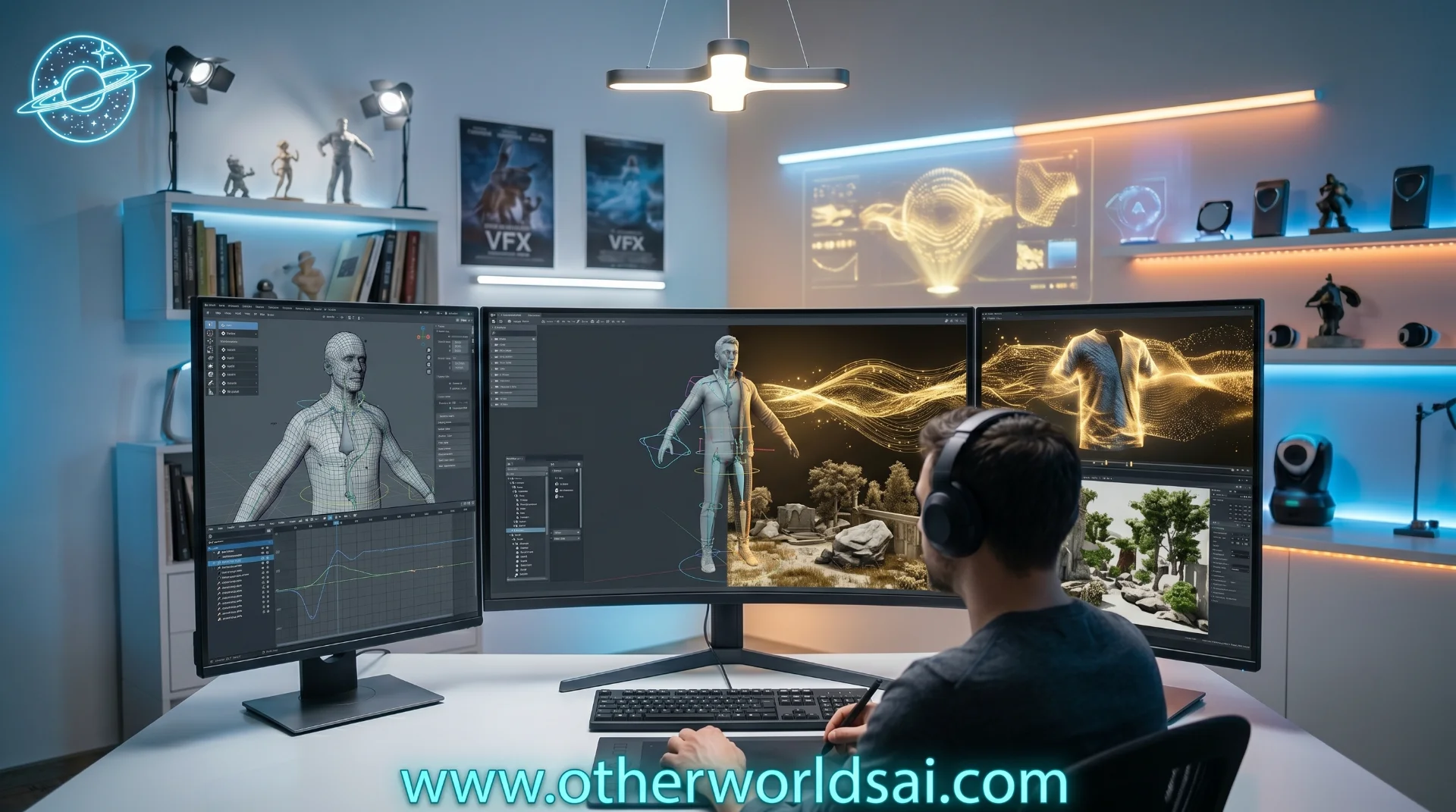
A typical hybrid pipeline in a mid-size game studio or animation house now looks roughly like this: AI tools handle early-stage asset generation, secondary prop creation, first-pass auto-rigging for background characters, and texture variant generation. Traditional tools — Blender, Maya, Unreal Engine — take over for hero asset modelling, expressive character animation, complex rigging, technical effects, and final-render pipeline. The result is dramatically faster overall production timelines without sacrificing the quality ceiling on hero assets.
"The artists who will thrive are those who treat AI tools as intelligent assistants and traditional 3D software as their precision instruments. The studios that win will redesign their pipelines to use both intelligently — AI for velocity, traditional tools for mastery."
The workforce implications are also significant and deserve honest discussion. AI-automated 3D workflows are compressing the entry-level tier of the industry. Junior artists who once spent years mastering routine tasks will increasingly find AI handling those first-pass functions. This reduces some entry-level roles while simultaneously creating new roles
— AI pipeline supervisors, prompt engineers for 3D generation, AI QA specialists — that did not exist five years ago. The net effect on employment remains contested, but the structural shift is undeniable.
FAQ: Common Questions About AI 3D Animation Tools vs Traditional Software:
Frequently asked questions:
- Will AI replace Blender or Maya entirely?
Not in the foreseeable future. AI tools lack the precision, pipeline maturity, and artistic control that Blender and Maya provide for complex productions. The trajectory is integration, not replacement — both Maya and Blender have already begun incorporating AI-assisted features natively.
- What is the best AI tool for 3D animation in 2026?
It depends on the task. For AI texturing: Adobe Firefly and Poly.cam AI. For automated rigging: AccuRIG and Auto-Rig Pro AI. For physics-assisted animation: Cascadeur. For AI-generated 3D assets: Kaedim, Meshy, and Tripo3D. For previz and concept animation: Runway Gen-3.
- Is Unreal Engine compatible with AI animation tools?
Yes — Unreal Engine 5.x includes native AI-assisted features including MetaHuman's AI-driven facial animation system and Control Rig. It also integrates with external AI tools via standard FBX and USD pipelines.
- Are AI 3D tools suitable for professional production pipelines?
For specific tasks — asset generation, auto-rigging of secondary characters, texture creation, and previz — yes, they are increasingly production-viable. For hero character animation, complex VFX simulation, and deliverables requiring deterministic pipeline outputs, traditional tools remain the professional standard. Should I learn traditional 3D tools or AI tools first?
Learn traditional tools first. Understanding the fundamentals of modelling, rigging, and animation makes you a far more effective user of AI tools. AI tools amplify existing skill — they do not replace the need to understand what good output looks like.
Final Verdict: Partnership, Not Replacement:
Let's be direct about what the evidence shows. AI 3D animation tools are not replacing Blender, Maya, or Unreal Engine in 2026. What they are doing — decisively — is restructuring the pipeline around these tools, compressing the groundwork layer, democratising creation, and enabling smaller teams to produce at a scale previously impossible.
Traditional 3D animation softw are retains absolute dominance in the areas that matter most for high-quality production: expressive character performance, complex simulation, precision rigging, and reliable pipeline infrastructure. These are not legacy advantages soon to be eroded — they are fundamental requirements of serious production work that AI tools are genuinely years away from matching.
The next five years will be defined by how fluently the industry learns to operate in both registers simultaneously. The studios and individual artists who invest in understanding both worlds — the craft of traditional tools and the velocity of AI-automated workflows — will shape what 3D animation looks and feels like by 2030. The tool belt just got significantly larger. The question is who picks up the new tools without putting down the ones that still matter.
Stay ahead of the 3D animation pipeline shift:
Whether you're a studio evaluating AI 3D tools, an artist navigating the changing landscape, or an educator building the next generation's curriculum —
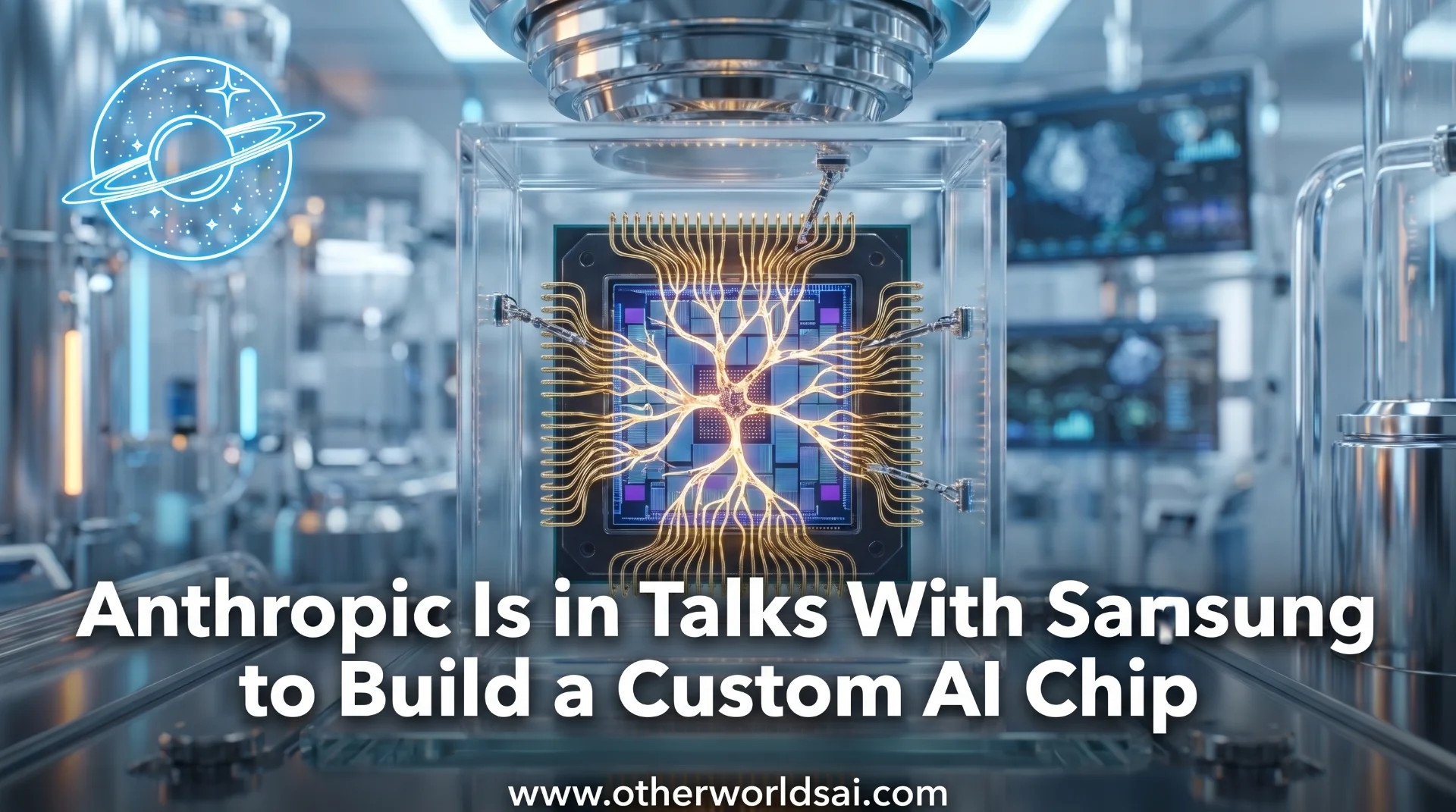
Move Over Nvidia: Anthropic and Samsung Team Up to Break the AI Chip Monopoly
the future belongs to those who master both the traditional craft and the AI-augmented workflow
By Creative Technology Desk · June 2026 · 14 min read · Updated for AI animation tools 2026: 3D Animation · AI Technology · Creative Pipeline