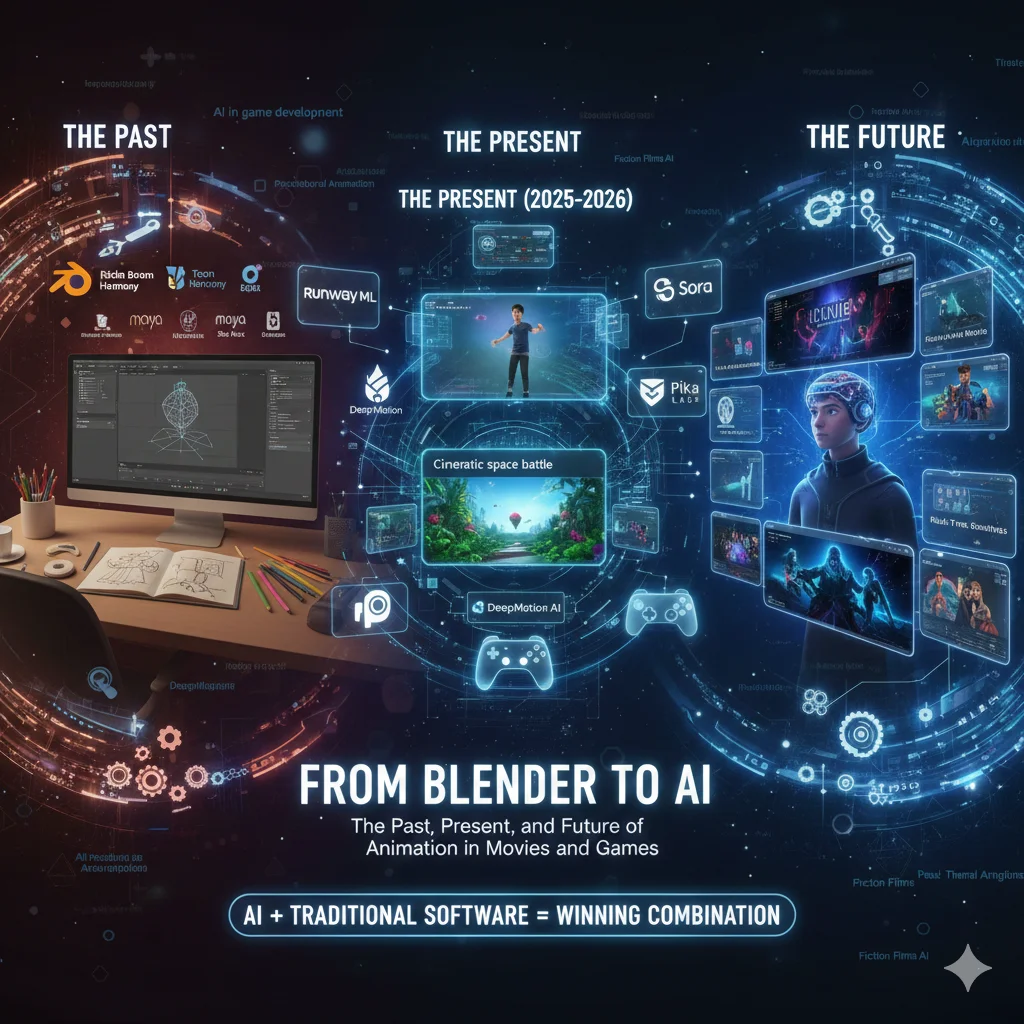

The animation industry has undergone a radical transformation over the last three decades.
From hand-drawn frames and traditional 3D modeling software to today’s AI-powered animation tools, the way animated movies, video games, and fictional worlds are created has changed forever. Artificial Intelligence (AI) is no longer just an assistant—it is becoming a core creative force in animation, game development, and visual storytelling.
This blog explores the past tools of 2D and 3D animation,the AI-driven present, and the future of AI in animated movies, animated games, and fiction films.
The Past: Traditional 2D and 3D Animation Software:
Before AI entered the scene, animation relied heavily on manual creativity and technical expertise. Animators spent years mastering complex tools to bring characters and environments to life.
Popular 2D Animation Software (Pre-AI Era)
-
Adobe Flash (Animate) – Widely used for cartoons and web animations.
-
Toon Boom Harmony – Industry standard for TV animation.
-
TVPaint – Known for frame-by-frame animation.
-
After Effects – Motion graphics and compositing.
2D animation required artists to draw each frame, manage timelines, and manually sync audio and motion—making production slow and labor-intensive.
Popular 3D Animation Software (Pre-AI Era)
-
Blender – Open-source powerhouse for 3D animation, modeling, and rendering.
-
Autodesk Maya – Industry standard for animated movies and games.
-
3ds Max – Game assets and architectural animation.
-
Cinema 4D – Motion graphics and visual effects.
-
ZBrush – High-detail sculpting.
Creating animated movies or games involved modeling, rigging, texturing, lighting, animation, rendering, and post-production—each step handled manually by specialized teams.
The Present: AI Tools Revolutionizing Animation and Game Development:
Today, AI has not replaced creativity—but it has transformed execution. AI tools now automate repetitive tasks, speed up workflows, and even generate animations, characters, voices, and environments.
Trending AI Animation Tools (2025–2026).
-
Runway ML – AI video generation and animation.
-
Pika Labs – Text-to-animation and cinematic scenes.
-
Sora (OpenAI) – AI-generated realistic video and animated sequences.
-
Kaiber AI – AI-powered animated storytelling.
-
DeepMotion – AI motion capture from video.
-
Cascadeur – AI-assisted character animation.
-
Leonardo AI – AI game assets and character design.
-
Adobe Firefly – AI motion graphics and effects.
These tools dramatically reduce production time for:
-
Animated movies.
-
Indie game development.
-
Fiction and fantasy films.
-
YouTube animated series.
How AI Is Used in Animation Movies Today.
AI assists in:
-
Automatic character rigging.
-
AI motion capture without suits.
-
Facial animation using AI.
-
AI lip-syncing and voice generation.
-
Environment generation.
-
Scene lighting and camera automation.
Major studios and independent creators:
alike now use AI animation software to prototype ideas in hours instead of months.
AI in Animated Games: A Game-Changer
The gaming industry has embraced AI faster than film studios. AI is now deeply embedded in game development pipelines.
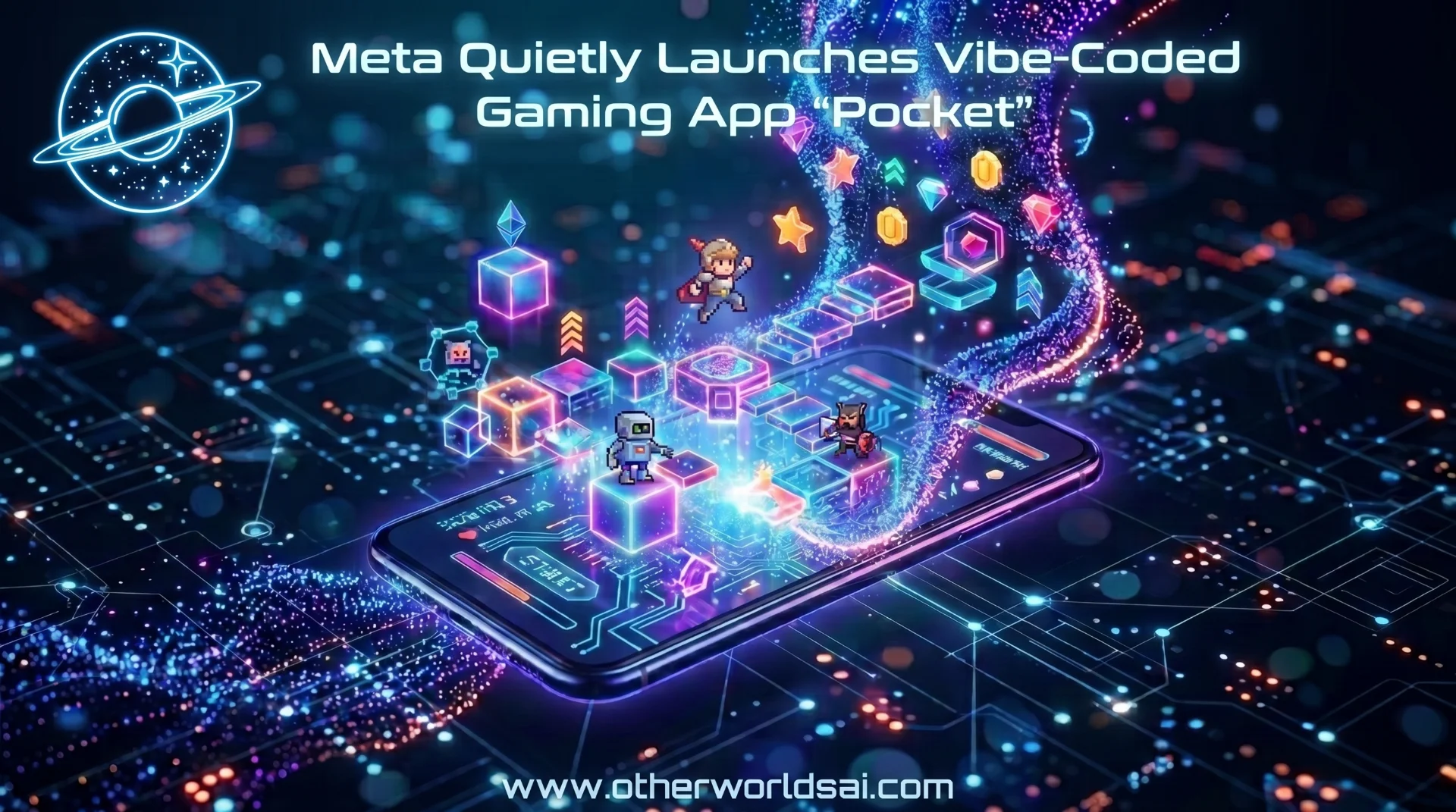
Meta's Next Big Bet: This New App Lets You Build Games Simply by Typing a Prompt
AI Applications in Game Animation:
-
Procedural character animation.
-
AI-generated NPC behavior.
-
Real-time physics-based movement.
-
AI-powered level design.
-
Voice and dialogue generation.
With tools like Unity AI, Unreal Engine AI, and machine learning animation systems,
Developers can create immersive animated games with smaller teams and lower budgets.
Trending SEO keywords:
-
AI in game development.
-
AI-generated game assets.
-
Procedural animation.
-
AI NPC behavior.
-
Real-time animation AI.
Fiction Movies and AI-Driven Visual Storytelling:
AI has unlocked new creative possibilities in fiction and fantasy movies.
Support our research
Independent analysis fueled by you.
Creators can now:
-
Generate alien worlds instantly.
-
Animate mythical creatures realistically.
-
Create cinematic scenes from text prompts.
-
Produce entire animated short films using AI.
AI tools help storytellers focus more on narrative and emotion rather than technical barriers.
This is especially powerful for:
-
Sci-fi movies.
-
Horror animation.
-
Fantasy films.
-
Supernatural storytelling.
Has AI Replaced Blender and Traditional Tools?
The answer is No—but it has transformed their role.
Blender, Maya, and Unreal Engine are still essential. However:
-
AI now integrates with these tools.
-
AI automates repetitive tasks.
-
Artists focus more on creativity and direction.
In reality, AI + traditional software is the winning combination.
The Future: AI-First Animation and Autonomous Studios:
The future of animation and gaming is AI-first.
What’s Coming Next?
-
Fully AI-generated animated movies.
-
Real-time AI animation engines.
-
Personalized animated games.
-
AI-driven storytelling based on viewer choices.
-
Solo creators producing studio-quality films.
We are moving toward autonomous animation pipelines, where a single creator can:
Move Over Nvidia: Anthropic and Samsung Team Up to Break the AI Chip Monopoly
-
Write a script.
-
Generate characters with AI.
-
Animate scenes automatically.
-
Add AI voices and music.
-
Render and publish globally.
This will redefine animation careers, studios, and budgets.
Conclusion: AI Is Not the End—It’s the Evolution:
The animation industry has evolved from hand-drawn sketches to AI-generated cinematic worlds. While traditional tools like Blender and Maya laid the foundation, AI has accelerated creativity to unprecedented levels.
Whether it’s animated movies, AI-generated games, or fiction films, the future belongs to creators who understand both art and artificial intelligence.
AI is not replacing animators—it is empowering them.